
Mold Remediation in Long Beach, NY
When the Water Leaves, the Real Problem Starts
Hear from Our Customers
Certified Mold Remediation Long Beach, NY
When mold is handled correctly not just sprayed over or painted around you stop second-guessing every musty smell. You stop wondering if the remediation you got after Sandy actually worked. You walk into your home and it just feels clean. That is the outcome that matters.
In Long Beach, that outcome is harder to achieve than it sounds. The coastal humidity off the Atlantic rarely drops below the threshold where mold thrives, especially from late spring through fall. Older homes in the West End and the Walks many of them built before 1939 have narrow spacing between structures, aging foundations, and construction methods that were never designed to handle the kind of moisture that a barrier island environment delivers year after year. Mold does not need a flood to grow here. It just needs time and the right conditions, and Long Beach gives it both.
What you get on the other side of a proper remediation is documentation you can actually use written lab results, clearance testing, a report that holds up with your insurance company. You get a moisture source that has been identified and addressed, not just a surface that looks clean. And in a city where median home values exceed $700,000, that thoroughness is not optional. It is the difference between protecting your investment and quietly losing it.
Mold Remediation Companies Long Beach, NY
We have been serving Nassau County for close to three decades. That includes the South Shore, the barrier island communities, and Long Beach specifically through storm cycles, through Sandy, and through the years of hidden damage that followed. We are not a franchise that opened a Long Beach territory recently. We are a company with a real track record in the exact environment you are dealing with.
Every technician who arrives at your property holds individual IICRC certification not a company-level credential hanging on a wall, but personal training that each technician has completed themselves. Our trucks arrive fully equipped with air movers, dehumidifiers, infrared imaging tools, and moisture monitors. Work starts when the truck pulls up.
We also handle full reconstruction after mitigation meaning if building materials need to come out, we can replace them ourselves. No coordinating between a remediator and a separate contractor. One call covers the entire job from discovery to a finished wall.
Professional Mold Cleanup Long Beach, NY
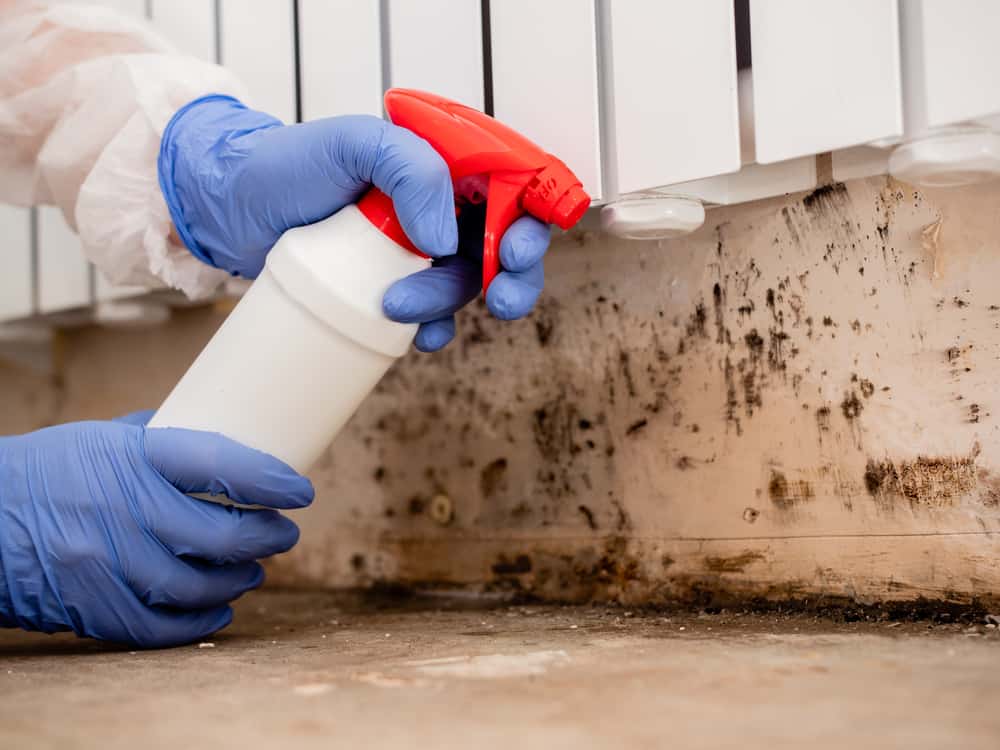
It starts with a 13-point inspection. Air testing, swab sampling, infrared imaging, moisture measurements all of it. Lab results come back within two to three business days, and you receive a written report, not a verbal summary. In Long Beach, where homeowners are frequently navigating both standard insurance claims and NFIP flood insurance documentation simultaneously, that written report is not a courtesy. It is a necessity.
Once the assessment is complete and remediation is confirmed, the work begins with containment. Affected areas are isolated to prevent cross-contamination to the rest of the home. Then comes removal any material that cannot be saved comes out. In older Long Beach homes, that often means drywall, insulation, or subfloor material that absorbed saltwater during a storm surge event and was never fully dried. Saltwater intrusion requires different handling than freshwater damage, and the process accounts for that.
After removal and treatment, the moisture source gets addressed. This is the step that most incomplete remediations skip. In a coastal environment with a naturally high water table and humidity that rarely lets up, fixing the surface without fixing the source just means the mold comes back. Once the moisture issue is resolved and the space passes clearance testing, reconstruction begins same company, same crew, no handoff.
Ready to get started?
Emergency Mold Remediation Long Beach, NY
Mold remediation in Long Beach is not the same job it is in Garden City or Levittown. The entire city sits in a FEMA-designated flood zone. Reynolds Channel can back-flood from the north while an Atlantic storm pushes surge from the south. Approximately 77% of Long Beach’s housing stock was damaged enough by Superstorm Sandy to qualify for federal assistance and a significant portion of that damage was never fully remediated to professional standards. Years later, that hidden mold is still surfacing during renovations and home sales.
The service we provide accounts for all of that. Inspections cover the areas that post-Sandy emergency remediations commonly missed wall cavities, crawl spaces, subfloors, and attic spaces in older bungalows. The process complies fully with New York State’s 2016 mold law, which requires that assessment and remediation be conducted by separate entities. That law exists specifically because of what happened in communities like Long Beach after Sandy, when unlicensed contractors exploited distressed homeowners. Compliance with that law is not a technicality here it is a baseline.
We are available 24 hours a day, seven days a week for emergency response. When a nor’easter pushes Reynolds Channel water into your basement at 2 a.m., waiting until morning is not a real option. We arrive with a fully equipped truck ready to respond not a call center that schedules you for next week.
Does mold remediation in Long Beach get covered by flood insurance?
It depends on the source of the mold and the type of policy you carry. Standard NFIP flood insurance policies generally cover direct physical loss from flooding, which can include mold damage that results directly from a covered flood event but only if the damage is documented properly and promptly. If mold developed because of a flood and you did not take reasonable steps to mitigate it quickly, the claim can be denied.
This is where documentation matters enormously. In Long Beach, where many homeowners carry both NFIP flood insurance and standard homeowners insurance, you often need to demonstrate which damage came from which source. A written inspection report with lab results, moisture readings, and photographic evidence gives your adjuster something concrete to work with. Verbal assurances from a remediator do not. Getting a certified inspection done quickly before additional damage accumulates is the most important thing you can do to protect your claim.
How much does mold remediation typically cost in Long Beach, NY?
The honest range is wide because the scope varies significantly. A contained mold issue in a single bathroom or crawl space might run $1,500 to $3,500. A more extensive remediation one that involves multiple rooms, wall cavity removal, or subfloor replacement can reach $10,000 to $30,000 or more. In Long Beach specifically, post-Sandy homes that were not fully remediated at the time often require more extensive work when the hidden damage is finally uncovered, which can push costs toward the higher end.
What matters more than the initial number is what is included. A cheaper quote that leaves mold behind or that does not address the moisture source will cost you more in the long run, both in recurring remediation and in property value. With Long Beach home values averaging over $700,000, an incomplete job is not a savings. It is a liability. Get a written estimate with a clear scope of work before agreeing to anything.
What is the difference between mold remediation and mold removal?
Mold removal implies that mold can be entirely eliminated from a space which is not accurate. Mold spores are naturally present in almost every environment, indoors and outdoors. The goal of professional remediation is to bring indoor mold levels back to a normal, safe range and eliminate the active colony causing the problem. That is why the industry uses the term remediation rather than removal.
In practice, remediation involves containment, removal of affected materials that cannot be cleaned, treatment of surfaces, and critically addressing the moisture source that allowed mold to grow in the first place. In Long Beach, where coastal humidity and recurring flood risk create near-constant moisture pressure on older homes, skipping that last step is the most common reason mold comes back. Remediation done correctly does not just clean what is visible. It changes the conditions that made growth possible.
Is mold in my Long Beach home dangerous, and how do I know if I have it?
Some mold species are more hazardous than others, but any active mold growth in a living space is a problem worth addressing. Common symptoms of mold exposure include respiratory irritation, persistent coughing, headaches, and worsening allergy or asthma symptoms particularly in children and older adults. Long Beach’s year-round coastal humidity means that mold, once established, tends to persist and spread more aggressively than it would in a drier inland environment.
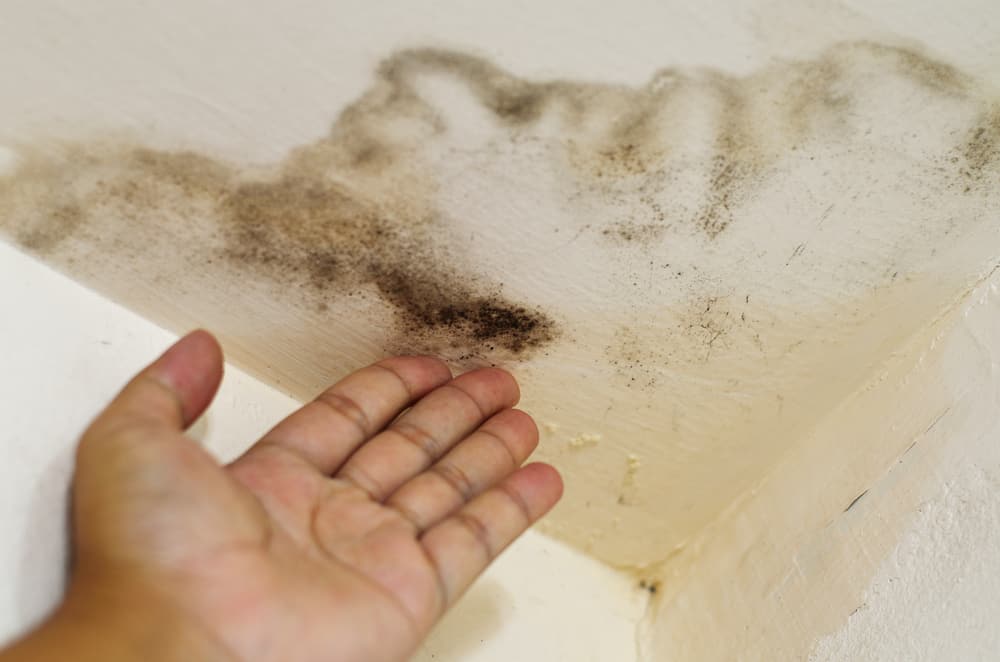
Visible mold is the obvious sign, but it is often not the first one. A persistent musty smell especially in basements, crawl spaces, or rooms that have experienced any water intrusion is frequently the earliest indicator. In Long Beach homes built before 1969, which make up the majority of the city’s housing stock, mold commonly hides behind drywall, beneath flooring, and in attic spaces where it can grow undisturbed for months. If you have had any water intrusion in the last few years and have not had a professional inspection, that is worth looking into before visible signs appear.
How do I find a licensed mold remediator in New York State?
New York State requires all mold assessment and remediation professionals to hold a license issued by the New York State Department of Labor. You can verify any company’s license status directly through the NYS DOL website before hiring anyone. This is not a minor administrative detail it is a legal requirement, and working with an unlicensed contractor exposes you to significant risk if something goes wrong.
The 2016 law that established these licensing requirements also prohibits the same company from performing both mold assessment and mold remediation on the same property. This separation exists to prevent a conflict of interest specifically, a remediator inflating or fabricating mold findings to generate work. After Sandy, Long Beach was one of the communities most heavily targeted by exactly this type of fraud. Asking to see a company’s NYS DOL license before any work begins is a straightforward way to protect yourself, and any legitimate company will provide it without hesitation.
My home flooded years ago and was already remediated can mold still be an issue?
Yes, and this is one of the most common situations in Long Beach. The post-Sandy emergency remediation period was chaotic. Many homes were treated quickly, under time pressure, by contractors who did not follow IICRC S520 standards the industry benchmark for mold remediation. In some cases, affected materials were dried on the surface but not fully treated. In others, wall cavities and subfloor spaces were sealed rather than properly remediated. Years later, that hidden mold continues to surface particularly when homes are renovated, when walls are opened up, or when a property changes hands and a thorough inspection is finally done.
If your home was flooded during Sandy or any subsequent storm event and you have not had a professional inspection since, it is worth having one done especially if you are planning to sell, renovate, or if anyone in the home has developed unexplained respiratory symptoms. A 13-point inspection with infrared imaging and lab analysis can identify hidden moisture and mold in areas that a visual walkthrough would completely miss. In a city where this situation applies to a significant portion of the housing stock, that inspection is not an overreaction. It is due diligence.
Useful Links
Other Services we provide in Long Beach