
Hear from Our Customers
When mold gets handled the right way, you stop wondering. You stop second-guessing the air your kids are breathing. You stop worrying about what a buyer’s inspector might find. That’s what professional mold removal in Bayville, NY actually delivers — not just a cleaner-looking surface, but documentation you can hand to an insurance adjuster or a real estate attorney without hesitation.
Bayville’s housing stock tells its own story. With roughly half the village built before 1960 — beach cottages, mid-century capes, early ranch homes — moisture has had decades to find its way in. Add the fact that approximately half of all homes here sit in a FEMA-designated flood hazard area, and you’re dealing with a mold risk profile that’s genuinely different from what most Nassau County homeowners face. The Long Island Sound doesn’t just sit there. It pushes water into crawl spaces and basements during nor’easters, and the ambient humidity it generates year-round creates conditions where mold can take hold in 36 hours or less.
What changes after remediation is done right isn’t just the smell or the visible growth. It’s the clearance report. It’s knowing the source was found and fixed — not just wiped down. It’s having a record that holds up whether you’re filing a claim, listing the property, or simply trying to stop the cycle of mold coming back every season.
We’ve been serving Nassau County since the early 1990s — through storm cycles, flood seasons, and the kind of slow, cumulative moisture damage that aging coastal homes in Bayville and across the North Shore accumulate over decades. We’re based in West Babylon and work across all of Long Island, including the waterfront communities along Oyster Bay and the Bayville peninsula.
Every technician who comes to your home is individually IICRC-certified — not just the company, every person on the crew. We hold New York State licensure for mold remediation, we document everything with chain-of-custody lab records, and we handle water damage restoration alongside mold removal because one rarely exists without the other.
We’re not a national franchise routing calls through a call center. We’re a Long Island company that knows what it means to work in a community where the only way in is across a drawbridge — and where the homes on the other side have been absorbing salt air and storm surge for generations.
It starts with a thorough inspection. Before anything is removed or treated, we assess the full scope of what you’re dealing with — air sampling, surface swab sampling, non-invasive moisture measurement, and boroscopic wall cavity examination when needed. That last one matters more than most people realize. In older Bayville homes, mold often lives inside wall cavities long before it shows up on a surface. We look inside without tearing walls apart unnecessarily.
Once the inspection is complete, remediation begins. Containment goes up to protect unaffected areas. Affected materials are removed, treated, and disposed of properly. If there’s an underlying water intrusion issue — a leaking foundation, inadequate crawl space drainage, storm surge damage — we address that as part of the same scope of work. This is where a lot of companies fall short: they remove the mold and leave the moisture problem in place, and six months later you’re calling someone again.
After remediation, we conduct post-clearance testing using the same lab analysis as the initial inspection. You receive a written report within 2 to 3 business days. That report documents what was found, what was done, and that the space now meets clearance standards. It’s what your insurance carrier needs, what a buyer’s attorney will ask for, and what gives you actual peace of mind — not just our word that it’s done.
One important note for Bayville homeowners: New York State law requires that mold inspection and mold remediation be performed by separately licensed entities. We’re fully compliant with that requirement and will walk you through exactly how the process works so there are no surprises.
Ready to get started?
Whether it’s black mold removal in a basement that’s flooded twice this decade, attic mold removal in a beach cottage with inadequate ventilation, crawl space mold removal in a low-lying property near Oyster Bay Harbor, or bathroom mold that’s been building behind tile for years — the approach is the same: find it, document it, fix it, prove it.
For residential mold removal in Bayville, that often means working in older structures with original plumbing, aging rooflines, and wall cavities that haven’t seen the inside of a moisture meter in decades. We scope every job based on what’s actually there, not a standard package that may or may not fit your home. Mold remediation costs typically range from $10 to $25 per square foot depending on the affected area and materials involved. Attic, basement, and crawl space jobs in older housing stock — the most common scenarios in Bayville — often run toward the higher end of that range, and we’ll give you a clear, specific number before any work begins.
For commercial mold removal in Bayville and the surrounding Oyster Bay area, the same standards apply. IICRC-certified technicians, New York State–licensed remediation, lab-confirmed clearance. We also offer a deductible coverage program of up to $500 for qualifying insurance claims — something no other mold removal company in this area provides. If you’re navigating a flood insurance or homeowners claim after a Long Island Sound storm event, that’s one less cost you’re absorbing out of pocket.
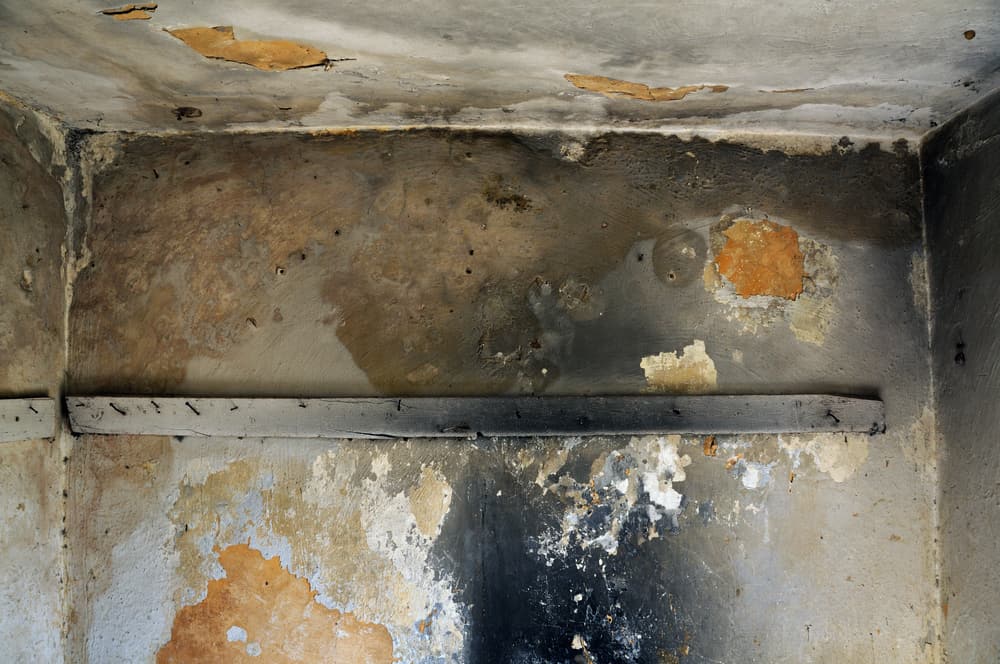
Mold can begin colonizing wet surfaces within 24 to 48 hours of water exposure — and in Bayville’s coastal environment, that window can shrink to 36 hours or less. The ambient humidity coming off the Long Island Sound keeps moisture levels elevated even after standing water is removed, which accelerates mold growth in wall cavities, subfloors, and crawl spaces.
This is why response time matters so much in a community like Bayville, where approximately half of all homes sit in FEMA-designated flood hazard areas and are regularly exposed to storm surge from the Sound to the north and Oyster Bay Harbor and Mill Neck Creek to the south. If your home has taken on water — whether from a nor’easter, a backed-up drainage system, or a burst pipe — the clock starts immediately. Waiting even a few days before calling a professional mold removal company significantly expands the scope of the problem and the cost of fixing it.
It depends on the cause and how the claim is documented. Mold that results directly from a covered water event — like storm surge damage or a sudden pipe failure — is often covered under homeowners or flood insurance, provided the damage is properly documented and reported in a timely way. Mold that developed gradually over time due to deferred maintenance is typically excluded.
Because so many Bayville properties are in FEMA flood hazard areas and carry National Flood Insurance Program policies, this question comes up frequently. The key is documentation. Insurance carriers need to see a clear chain of evidence connecting the mold to a covered event — air sampling results, moisture readings, photographs, and a written remediation report. That’s exactly what our process produces. We also offer up to $500 toward your out-of-pocket deductible for qualifying claims, which is something worth asking about when you call.
Older homes — and Bayville has a lot of them, with roughly a quarter of the village’s housing stock built before 1940 — present specific challenges that newer construction doesn’t. Original plumbing is more prone to slow leaks that go undetected for months. Wall cavities in pre-insulation-era homes have little to no vapor barrier, which means moisture migrates freely from the exterior into the structure. Single-pane windows generate condensation. Attics in beach cottages are often underventilated, which creates ideal conditions for mold growth during temperature swings between seasons.
The other complicating factor is that many Bayville beach properties are used seasonally or part-time. A home that sits closed from October through April can accumulate significant mold growth before anyone notices. When you open the cottage in May and something smells off, there’s a good chance mold has been developing in the attic, crawl space, or wall cavities all winter. A thorough inspection — including boroscopic wall cavity examination and air sampling — is the only way to know the full extent of what you’re dealing with.
In New York State, mold inspection and mold remediation must be performed by separately licensed entities — the same company cannot legally do both on the same property. So the testing and the remediation are, by law, two distinct steps handled by two different licensed parties. This consumer protection requirement is often misunderstood, and some homeowners don’t realize it until they’re already mid-process.
What this means practically is that you’ll want a licensed mold assessor to conduct the initial inspection and testing first. That assessment identifies what type of mold is present, where it is, and how extensive the growth is. We then use that assessment to scope and execute the remediation. After the work is complete, post-clearance testing is conducted to confirm the space meets acceptable air quality standards. You receive a written lab report documenting the results. That report is what matters for insurance claims, real estate transactions, and your own peace of mind.
It depends on the location and extent of the mold growth. For small, contained areas — a bathroom, a single room, a section of a basement — it’s often possible to remain in the home while work is being done in a contained area, as long as proper containment barriers are in place and the HVAC system is not circulating air through the affected zone. For larger infestations, particularly those involving black mold or toxic mold cleanup in a central area of the home, temporary relocation during active remediation is usually the safer choice.
In Bayville, where many properties are older and have open floor plans, older HVAC systems, and limited interior compartmentalization, the risk of mold spore cross-contamination during remediation is worth taking seriously. We’ll give you a straightforward assessment of what’s appropriate for your specific situation before work begins — not a blanket answer. If temporary relocation is recommended, we’ll tell you that upfront so you can plan accordingly.
Significantly. Studies have shown that discovered mold can reduce a home’s resale value by 20 to 37 percent — and in a market where Bayville properties routinely sell for $800,000 and above, that’s a substantial dollar figure. Buyers’ attorneys and home inspectors in the North Shore market are well-versed in mold risk, particularly in waterfront and flood-zone communities like Bayville, and mold findings during a home inspection can derail a sale entirely or trigger significant price renegotiations.
The good news is that properly documented, professionally remediated mold doesn’t have to kill a deal. What buyers and their attorneys want to see is a clear record: what was found, what was done, and lab-confirmed clearance showing the problem was resolved. That documentation — not just a verbal assurance — is what protects your sale price and keeps a transaction on track. If you’re preparing to list a property in Bayville or the surrounding Locust Valley area, getting ahead of a mold issue before it shows up on a buyer’s inspection report is almost always the smarter financial move.
Useful Links
Other Services we provide in Bayville