
Hear from Our Customers
When mold is properly removed — not painted over, not temporarily masked — you stop worrying about what’s growing inside your walls. You breathe easier, literally. Your home stops working against you and starts feeling like the investment it actually is.
For Locust Valley homeowners, that matters more than most people realize. The pre-World War II architecture throughout this hamlet — the stone foundations, original plaster walls, old-growth wood framing — was built long before anyone understood moisture management the way we do now. These homes hold moisture in ways modern construction doesn’t, and mold finds every opportunity. Once it’s gone and the source is addressed, that cycle stops.
There’s also the financial side. With median home sale prices in Locust Valley sitting above $1.6 million — and estate properties in surrounding Matinecock, Lattingtown, and Mill Neck reaching well beyond that — mold isn’t a minor inconvenience. It’s a documented threat to your property’s value. Studies consistently show mold can reduce resale value by 20% to 37%, and half of prospective buyers walk away entirely once they know it exists. Documented, lab-confirmed remediation doesn’t just fix the problem — it protects what you’ve built here.
We’ve been operating in Nassau and Suffolk County for over three decades. That means the team showing up to your Locust Valley home has worked in homes exactly like yours — pre-war Colonials, Gold Coast estates, older foundation types that behave differently than anything built in the last 40 years. This isn’t a national franchise routing your call to whoever’s available. We’re a locally rooted company that knows the North Shore.
Every technician on every job we send holds IICRC certification — not just the owner, every person who enters your property. We also carry New York State licensing for both mold inspection and remediation, as required by NY State Department of Labor law. That licensing requirement exists for a reason, and not every company serving this area actually meets it.
From the hamlet’s historic downtown near the LIRR station out to the waterfront villages of Bayville and Centre Island, we’ve been the team Nassau County homeowners call when the problem is real and the stakes are high.
It starts with a thorough inspection — and in a Locust Valley home, that means going beyond what’s visible. Many of the homes here have plaster walls, finished basements with older drainage systems, and attic spaces that haven’t been properly ventilated in decades. Our inspection uses boroscopic wall cavity examination, air sampling, and surface swab testing to find mold where a standard visual check would miss it entirely. Samples go to the lab with full chain-of-custody documentation, and results come back within two to three business days.
Once the scope is confirmed, we set up containment before any remediation begins. Plastic sheeting barriers, negative air pressure systems, and HEPA air scrubbers protect the unaffected areas of your home while the work happens. In a large historic property, this typically allows the rest of the household to remain in place. We remove affected materials, treat them, and dispose of them properly — and critically, we identify and address the moisture source driving the mold at the same time. Removing mold without fixing what caused it is not a solution.
After remediation, post-clearance testing confirms the space is clean with the same lab-grade analysis used at the start. You receive the full documentation — something that matters whether you’re managing an insurance claim, preparing to list the property, or simply want proof the problem is resolved.
Ready to get started?
Mold removal in Locust Valley covers more ground than most homeowners expect. Basement mold removal is one of the most common calls — older foundations in this area allow groundwater to migrate through clay-rich glacial soil and seep into basement walls, especially in homes built before modern waterproofing existed. Attic mold removal is equally common here, because inadequate ventilation in pre-war attic construction lets warm, moist air condense on the underside of roof sheathing every winter. Crawl space mold removal, bathroom mold removal, and full toxic mold cleanup are all within our scope as well.
Under New York State law, any mold remediation project involving more than 10 square feet requires a licensed contractor — and the same company cannot legally perform both the mold assessment and the remediation on the same property. We operate in full compliance with those requirements, which means the inspection and the remediation are handled with the separation the law requires and your interests deserve.
For Locust Valley’s commercial properties — the boutiques, offices, and service businesses operating out of the hamlet’s historic Tudor-style buildings along Forest Avenue — the same standards apply. Mold doesn’t distinguish between residential and commercial, and neither do we. Whether it’s a private home in Matinecock or a commercial space near Birch Hill Road, the process, the documentation, and the standard of work are the same.
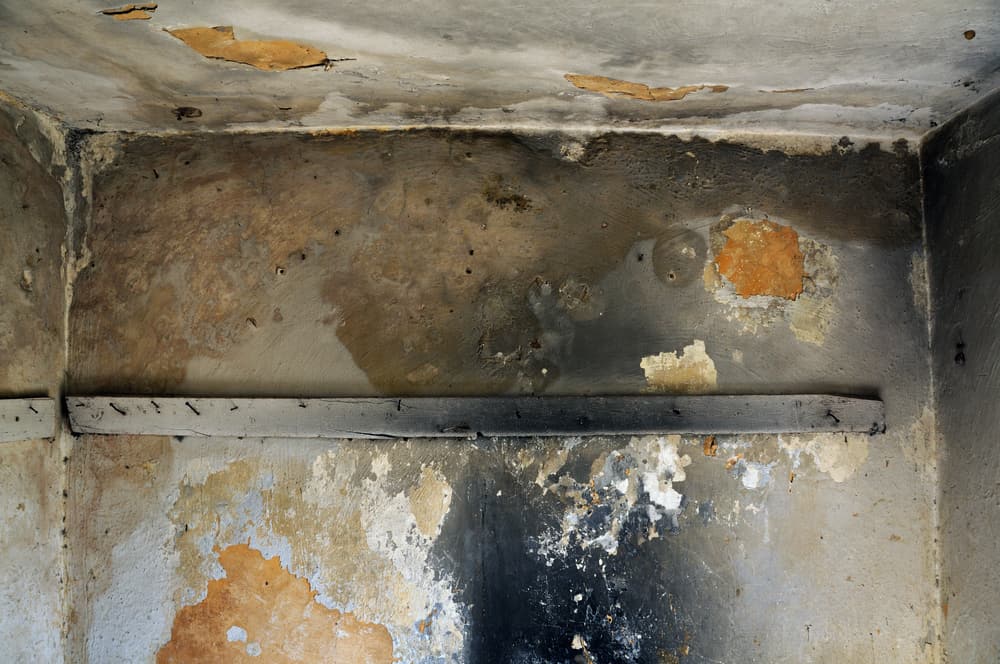
Mold can begin growing within 24 to 48 hours of water intrusion — and that window matters enormously in a home with the kind of building materials common throughout Locust Valley. Original plaster walls, old-growth wood framing, and century-old structural timbers absorb moisture differently than modern drywall and engineered lumber. Once mold takes hold in those materials, it spreads faster and goes deeper, which makes early response critical.
If you’ve had a burst pipe, a flooded basement after a nor’easter, or any kind of water intrusion event, the clock starts immediately. Calling us at 516-541-0500 in the hours after water damage occurs is the single most effective thing you can do to limit how much mold removal you’ll need later.
Mold removal costs vary based on the size of the affected area, where the mold is located, and how far it has spread into building materials. Nationally, the average remediation cost runs around $2,300, with a typical range of $373 to $7,000. Attic, basement, and crawl space work generally falls between $15 and $30 per square foot, depending on the extent of the damage and the materials involved.
In Locust Valley specifically, the age of the housing stock is a real factor. Pre-war homes often have mold in places that require more careful, more methodical removal — inside plaster walls, behind original wood paneling, in stone foundation cavities — which can affect the overall scope of the project. The best way to get an accurate number is a proper inspection first, not a phone estimate based on square footage alone. We provide thorough assessments so you know exactly what you’re dealing with before any work begins.
No — and this is one of the most important things to understand before you hire anyone for this work in New York State. Under NY State Department of Labor regulations, the same company and its employees are prohibited from performing both the mold assessment and the mold remediation on the same property. This law exists specifically to protect homeowners from a conflict of interest, where the company doing the testing has a financial incentive to find more mold than actually exists.
What this means practically is that if a company offers to inspect and remediate in the same visit under one contract without any separation of those functions, they may not be operating legally. We hold New York State licensing for both mold inspection and mold remediation and operate in full compliance with this requirement. You’ll know exactly what the assessment found before any remediation work is proposed — and the documentation will reflect that clearly.
Attic mold is one of the most frequently discovered problems in Locust Valley’s older housing stock, and it almost always comes down to ventilation. Homes built in the early 1900s — the Gold Coast era that defined this hamlet — were constructed before modern building science understood how attic airflow works. Warm, moist air from the living space rises and gets trapped in the attic, where it condenses on the cold underside of roof sheathing during winter months. Over time, that condensation creates the sustained moisture that mold needs to grow.
The problem is that attic mold is often completely invisible until a roof replacement or home inspection uncovers it. By that point, it’s typically been growing for years. If your Locust Valley home was built before 1960 and the attic hasn’t been inspected recently, it’s worth having it looked at — not because mold is guaranteed, but because the conditions that produce it are common in this type of construction. Our inspection process specifically includes attic assessment for exactly this reason.
Yes — and this is the most common reason homeowners end up calling a second company after the first one left. Mold removal without addressing the underlying moisture source is not remediation; it’s a temporary cosmetic fix. The mold will return, often in the same location, because the conditions that caused it in the first place haven’t changed.
In Locust Valley, the moisture sources are often structural and specific to the area’s older homes: aging foundation waterproofing that no longer performs, inadequate attic ventilation, deteriorating plumbing systems, and condensation that builds up on cold basement walls during Long Island’s humid summers. We’re a full-service restoration company, which means water damage restoration, drying, and dehumidification are handled alongside mold remediation — not as a separate job you have to coordinate with a different contractor. The moisture source gets identified and addressed as part of the same process, so the mold doesn’t come back six months later.
In a market where the median home sale price recently crossed $1.6 million — and where estate properties in surrounding Matinecock, Lattingtown, and Mill Neck regularly list at $4 million and above — a mold problem carries serious financial consequences. Research consistently shows that mold can reduce a home’s resale value by 20% to 37%. On a $1.6 million property, that’s a potential loss of $320,000 to $590,000. And 50% of prospective buyers walk away entirely once they learn a home has a mold history.
The good news is that properly documented remediation changes that equation. When mold is removed by a licensed contractor and confirmed clean through post-clearance lab testing — with full chain-of-custody documentation — that paperwork becomes a legitimate asset in a real estate transaction. Buyers, their attorneys, and their inspectors can review the documentation and verify the work was done correctly. In Locust Valley’s active luxury market, where pre-purchase inspections are thorough and buyers are sophisticated, having that paper trail is often the difference between a deal that closes and one that falls apart.
Useful Links
Other Services we provide in Locust Valley