
Hear from Our Customers
The air in your home feels different when the source has been found and dealt with — not just wiped down, but genuinely addressed. For families in East Norwich, that matters more than most places. Nearly half of households here have children under 18, and when mold is growing somewhere in the house, that’s not a background concern — it’s the only thing on your mind.
East Norwich’s housing stock is dominated by mid-century colonials, ranches, and split-levels — homes that were built before modern vapor barriers, before current insulation standards, and long before anyone thought much about crawl space moisture management. The Harbor Hill Moraine that East Norwich sits on creates variable soil drainage across the hamlet. In sections where clay-heavy soils slow water movement, groundwater can push against foundations for days after a heavy rain. That’s not a South Shore problem or a generic Long Island problem — it’s a North Shore reality, and it shows up in basements and crawl spaces throughout this community.
When mold remediation is done right, you get more than a clean surface. You get documentation — lab-backed, written, and defensible. In a market where East Norwich homes routinely sell above $800,000, that paperwork matters. A mold disclosure can stop a sale cold. A clean clearance report from a certified remediation company keeps your transaction on track and your property’s value intact.
We’ve been serving Nassau County homeowners since the late 1990s. That’s not a marketing number — it’s the actual length of time we’ve been showing up on Long Island, doing the work, and building a reputation that holds up job after job. In a field where national franchises and content-farm competitors cycle in and out, nearly 30 years of continuous local operation means something real.
We serve East Norwich through a dedicated Nassau County line — 516-698-1776 — not a national dispatch center. Every technician who arrives at your door is individually IICRC certified, which is a different standard than a company simply holding a certification badge. The people doing the work in your home have been trained to our industry’s S520 mold remediation standard. That’s what you should expect, and that’s what you get.
From the residential streets off Northern Boulevard and Oyster Bay Road to the wooded neighborhoods surrounding Pine Hollow Country Club, we’ve worked in this corner of Nassau County long enough to know what these homes face — and how to fix it properly.
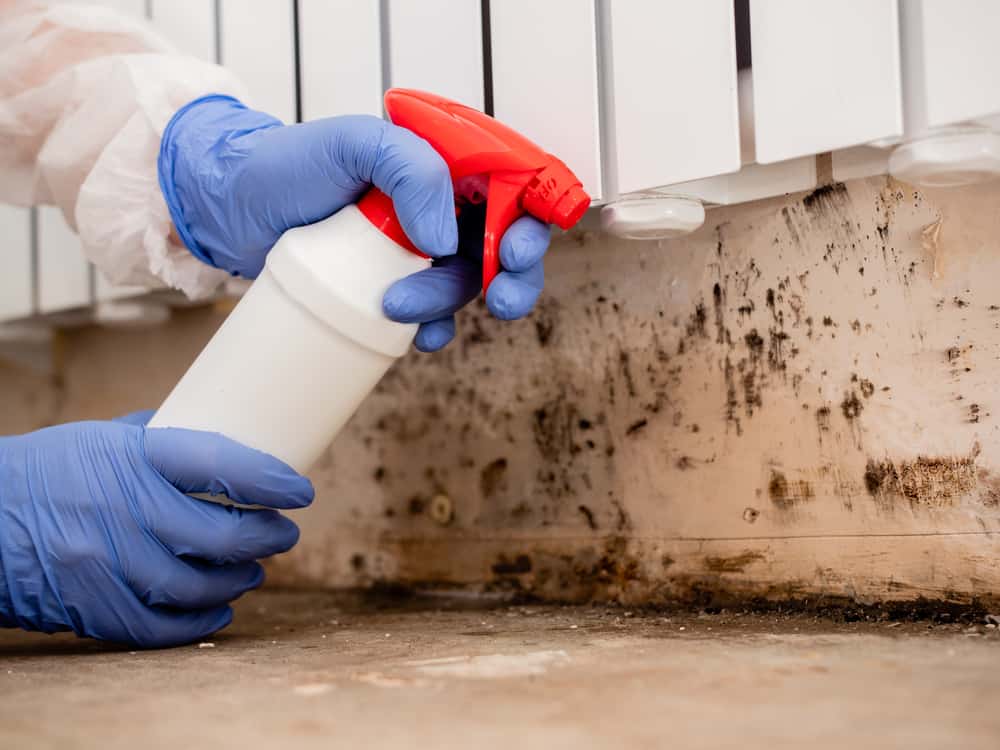
It starts with a 13-point mold inspection. Air testing, swab sampling, moisture level readings, infrared imaging to find what’s hiding behind walls or under floors — and a full written report with lab results delivered within two to three business days. Under New York State’s Article 32 mold law, the company that inspects cannot be the same company that remediates. We comply with that fully, which means your assessment is independent and your remediation scope is based on real findings, not inflated estimates.
Once the scope is confirmed, containment goes up before any work begins. HEPA air filtration runs throughout the job to prevent spores from spreading to unaffected areas of your home. Affected materials are removed, treated, and disposed of properly. The moisture source — whether it’s a foundation seep from hillside drainage, an aging crawl space vapor barrier, or an attic ventilation issue — gets addressed directly. Remediating mold without fixing the source is just cleaning a symptom. The problem comes back.
After remediation is complete, post-clearance testing confirms the space is clean before the job is closed. If structural repairs or reconstruction are needed — drywall, flooring, framing — we handle that too. You don’t need to find a separate contractor. One company, one process, from discovery through rebuild. For East Norwich homeowners managing busy schedules, that matters.
Ready to get started?
Mold remediation in East Norwich isn’t one-size-fits-all, because the conditions driving moisture problems here aren’t generic. Basement mold in a 1960s colonial on the moraine terrain is a different situation than attic mold in a ranch with inadequate soffit ventilation — and the remediation scope reflects that. Every job is scoped based on the inspection findings, not a flat package that treats every home the same way.
What you can expect across every job: full containment setup, HEPA air scrubbing throughout the work area, removal and proper disposal of affected materials, treatment of structural surfaces, and a post-remediation clearance test. Infrared imaging is part of our inspection process, which means hidden moisture behind walls and under subfloors gets identified before remediation begins — not discovered mid-job when the scope suddenly expands. That transparency upfront is what keeps the process predictable.
For homes in East Norwich that have experienced post-storm flooding — and Nassau County has had its share, including the August 2024 disaster declaration following record rainfall — we offer emergency mold remediation around the clock. Trucks arrive fully equipped: air movers, dehumidifiers, moisture monitors, and everything needed to start immediately. If your situation involves an insurance claim, the documentation we produce throughout the process — inspection reports, lab results, remediation records, clearance testing — is exactly what Nassau County insurers need to process a claim. We’ve navigated that process with Long Island homeowners for nearly three decades.
East Norwich sits on the Harbor Hill Moraine — a glacially deposited ridge of mixed clay, sand, and gravel that creates uneven drainage across the hamlet. In areas where clay-heavy soils dominate, water moves slowly after rain events, and groundwater can press against foundations for extended periods. Combine that with the rolling terrain that channels hillside runoff toward lower-lying properties, and you have conditions that consistently push moisture into basements and crawl spaces.
The housing stock makes it worse. Most homes in East Norwich were built in the 1950s through 1980s, before modern waterproofing standards, before vapor barriers were standard in crawl spaces, and before attic ventilation requirements reflected what we know now about moisture management. Long Island summers regularly push relative humidity above 60% — the threshold where mold growth is actively supported — and the wooded, shaded character of East Norwich’s residential streets means less direct sunlight and slower evaporation after rain. Those factors stack on top of each other in a way that makes moisture intrusion, and the mold that follows within 48 hours, a consistent reality for homeowners here.
The honest answer is that cost depends heavily on what the inspection finds — the type of mold, how far it has spread, which materials are affected, and whether the moisture source requires structural repair. Nationally, the average mold remediation runs around $2,300, but jobs involving significant material removal, crawl space encapsulation, or attic remediation in older homes can reach $10,000 or more.
For East Norwich homeowners, the more useful frame is this: the median home value here exceeds $800,000. A mold problem left unaddressed — or addressed improperly — can reduce that value by 20% to 37% and cause half of interested buyers to walk away. That’s a potential six-figure loss on a property that’s likely your largest asset. The cost of certified mold remediation, done once and done correctly, is a fraction of that exposure. What you’re really paying for is documentation, clearance testing, and a moisture source fix that prevents the problem from returning — not just a surface clean that buys you a few months.
In many cases, yes — but it depends on the location and extent of the mold, and how sensitive your household members are. If mold is isolated to a basement, crawl space, or attic and proper containment is in place, most families can remain in the home during remediation. HEPA air filtration runs throughout the work area to prevent spores from spreading into living spaces, and containment barriers keep the affected zone separated from the rest of the house.
That said, if you have young children, anyone with asthma, allergies, or a compromised immune system, or if the mold growth is extensive enough to require significant material removal, temporary displacement is worth considering. East Norwich households with children under 18 — which is roughly half the community — should have that conversation directly with our remediation team before work begins. We’ll give you an honest assessment of whether staying is reasonable for your specific situation.
Mold removal typically refers to physically cleaning or wiping away visible mold — surface treatment. It sounds like a solution, but in most cases it isn’t one. If the moisture source driving the mold growth isn’t identified and fixed, the mold returns. In East Norwich homes with groundwater pressure from the moraine terrain or aging crawl space vapor barriers, surface cleaning without addressing the underlying moisture issue is almost guaranteed to produce recurring growth.
Mold remediation is the complete process: inspection, containment, HEPA filtration, removal of affected materials, treatment of structural surfaces, moisture source correction, and post-clearance testing to confirm the space is clean. It follows the IICRC S520 standard — the procedural benchmark the industry uses for mold-damaged structures. Remediation doesn’t just clean what you can see; it addresses why the mold was there in the first place and verifies through testing that the problem has been resolved. For a home in East Norwich, where the conditions that create mold are tied to the geology and the age of the housing stock, remediation is the only approach that produces a durable result.
It depends on the cause. Most standard homeowners insurance policies in Nassau County will cover mold remediation when it results directly from a covered event — a burst pipe, storm-driven water intrusion, or an appliance failure, for example. The August 2024 disaster declaration for Nassau County following record rainfall is a good example of the kind of triggering event that can open a valid claim. What policies typically exclude is mold that developed gradually from long-term neglect, chronic moisture, or a maintenance issue the homeowner was aware of and didn’t address.
The documentation we produce during remediation — inspection reports, lab results, photos, moisture readings, and clearance testing — is exactly what insurers need to process a claim. Without that paper trail, adjusters have more room to push back. We’ve been navigating Nassau County insurance claims with Long Island homeowners for nearly 30 years, and that experience means the documentation produced on your job is structured in a way that supports your claim, not just your peace of mind. If you’re unsure whether your situation qualifies, that’s worth discussing before any work begins.
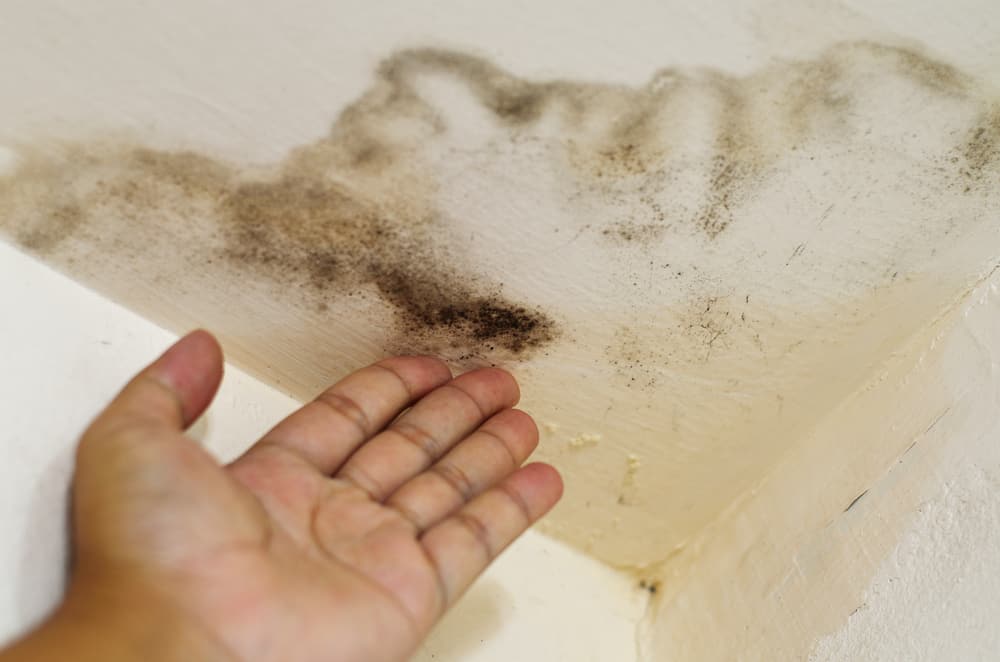
The most common signs are things you might notice but not immediately connect to mold: a persistent musty smell in a basement or crawl space, unexplained allergy symptoms that improve when you leave the house, water stains on walls or ceilings from a leak you thought you fixed, or visible moisture on basement walls after a heavy rain. In East Norwich’s older ranches and colonials, these signs often point to mold that’s growing behind drywall, under subfloors, or in attic sheathing — places a visual inspection alone won’t find.
That’s why infrared imaging is part of our inspection process. Thermal imaging detects temperature differentials caused by moisture behind walls and under floors — areas where mold can be actively growing without any visible surface indication. Air testing and swab sampling then confirm what’s present and at what levels. For a home on the North Shore where the combination of moraine drainage patterns, aging construction, and Long Island humidity creates persistent moisture risk, a thorough inspection that goes beyond a flashlight walk-through isn’t an upsell — it’s the only way to know what you’re actually dealing with.
Useful Links
Other Services we provide in East Norwich