
Hear from Our Customers
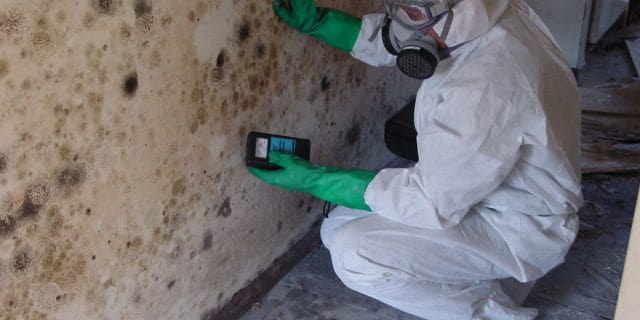
Massapequa was built fast — most of the housing stock went up between the 1940s and 1960s, and those homes weren’t designed with today’s moisture management standards in mind. Block foundations let groundwater seep in. Crawl spaces sit without vapor barriers. Attics trap heat and humidity all summer long. When you’re living a few blocks from South Oyster Bay in a 70-year-old house, the conditions for mold growth aren’t seasonal — they’re structural.
What changes after a proper remediation isn’t just the air quality, though that matters enormously, especially if you have kids in the house. It’s the confidence that the problem was actually fixed. Not bleached over. Not masked. Fixed — with documentation, lab results, and a clear picture of what was found, where it was, and what was done about it. That’s what you can take to an insurance adjuster, a future buyer, or just keep for your own peace of mind.
For homes in Biltmore Shores, Nassau Shores, and Harbor Green — neighborhoods where canal-adjacent lots and high water tables are facts of life — that kind of thorough, documented remediation isn’t optional. It’s the only version that actually holds up.
First Response Restoration and Cleaning Inc. has been serving Nassau County homeowners for close to three decades. That’s not a marketing number — it means we were here before Sandy, during Sandy, and in the years after when homeowners south of Merrick Road in Massapequa were still finding damage they didn’t know existed. We know what the South Shore does to homes, because we’ve been inside thousands of them.
Every technician who walks into your home holds individual IICRC certification — not a company-level credential on a wall somewhere, but personal, verified training to the S520 mold remediation standard. We also carry full reconstruction capability, so when building materials need to come out, you’re not left coordinating a second contractor to put things back together.
We maintain a dedicated Nassau County line at 516-698-1776, available 24 hours a day. When you call, you’re reaching a local team — not a call center routing your job to whoever’s available.
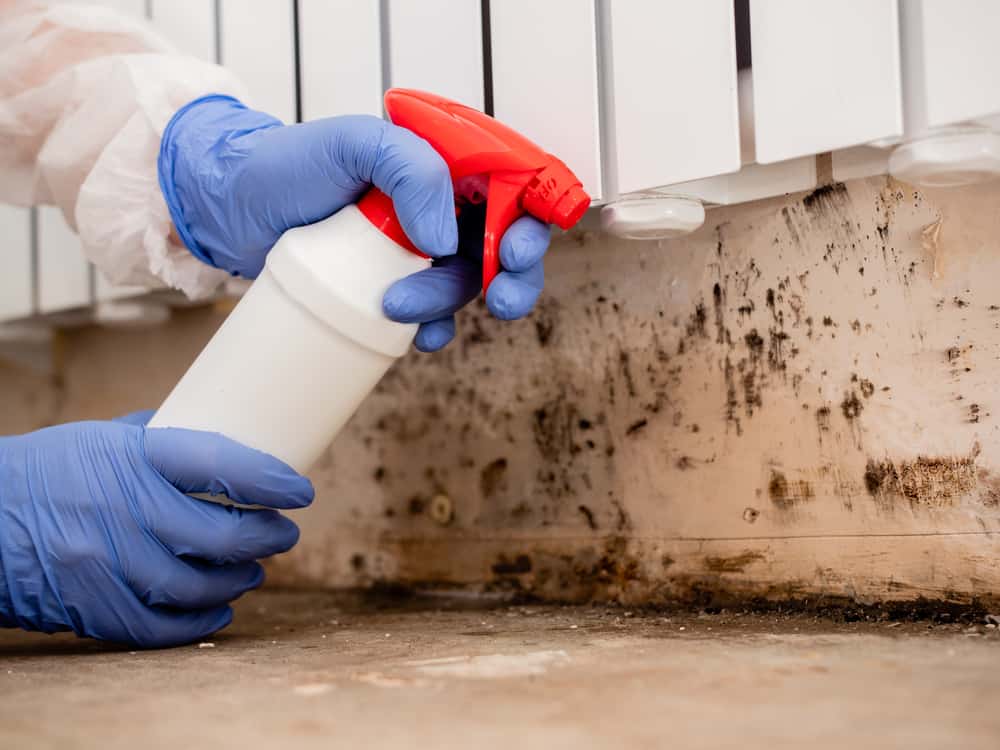
It starts with a thorough inspection — not a flashlight walkthrough and a verbal estimate. We test the air, take swab samples, measure moisture levels throughout the structure, and use infrared imaging to find mold that’s hidden behind walls or under flooring. Within two to three business days, you have a written report backed by lab results. That report is yours to keep and use however you need it.
From there, containment goes up before any remediation begins. Affected areas are isolated to prevent spores from spreading to clean parts of the house — a step that matters especially in older Massapequa homes where HVAC systems can carry contamination through the whole structure if the work isn’t properly contained. HEPA filtration runs throughout the process. Any building materials that can’t be saved — drywall, insulation, subflooring — are removed and disposed of correctly.
Here’s the part most companies skip: we address the moisture source. If there’s a foundation issue, an attic ventilation problem, or a crawl space that’s been pulling in groundwater, we identify it. Because mold that comes back three months later means the source was never fixed. Once remediation is complete, we run post-clearance testing to confirm the space is clean before we close anything up. If reconstruction is needed, we handle that too — same company, start to finish.
Ready to get started?
Mold remediation in Massapequa isn’t a one-size situation. A finished basement in Nassau Shores that took on water during a nor’easter is a different job than attic mold in a Harbor Green colonial with inadequate ridge venting. What’s consistent across every job is the scope of what we bring to it.
Every remediation we perform includes the full inspection and lab analysis, written documentation, containment setup, HEPA air filtration, physical removal of all affected materials, antimicrobial treatment of the remediated area, and post-clearance testing to confirm the space is clean. For waterfront properties and canal-adjacent homes — which make up a significant portion of south Massapequa — we apply marine-grade antimicrobial treatments where appropriate, because standard treatments aren’t built for the moisture levels those homes deal with year-round.
New York State’s 2016 mold law also plays a role here. The law requires that the company doing the assessment and the company doing the remediation be separate entities — a rule designed to protect you from the “free inspection” scam where a company finds alarming problems and then charges to fix them. Our process is structured to comply with that law, which means you’re protected from the start. If reconstruction is required after materials are removed, we handle that in-house — no handoff to a third contractor, no gap in accountability.
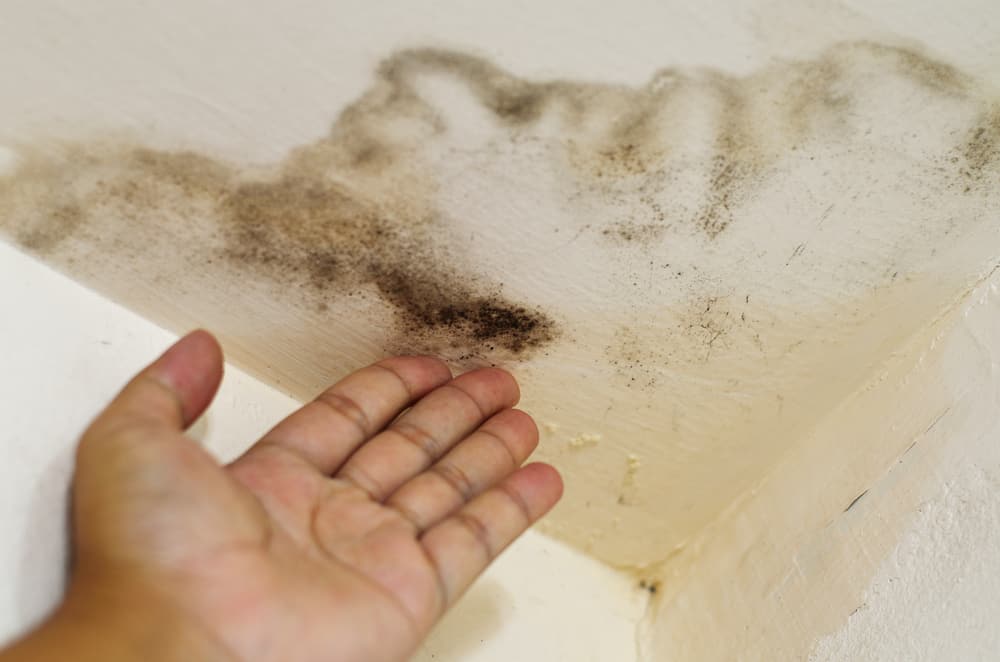
This is one of the most common questions we hear from homeowners south of Merrick Road in Massapequa, and it’s a fair one. Mold doesn’t always announce itself with a visible patch or a strong smell — especially in homes that were flooded during Hurricane Sandy or a more recent nor’easter and then dried out without professional remediation. It can sit behind drywall, under subflooring, or inside wall cavities for years before it becomes visible or symptomatic.
The clearest signs are persistent musty odors, unexplained allergy or respiratory symptoms in household members, or visible discoloration on walls and ceilings that keeps coming back after you clean it. But the only way to know for certain is a proper inspection — air sampling, swab testing, and moisture mapping with infrared imaging. A visual walkthrough alone won’t catch what’s hiding inside a 70-year-old block foundation wall. If your home flooded and wasn’t professionally dried and remediated within 48 to 72 hours, there’s a real chance mold established itself somewhere you can’t see it.
The national average for mold remediation runs around $2,300, but that number covers a wide range of project sizes and doesn’t reflect what’s typical for older South Shore homes. In Nassau County — where a significant portion of the housing stock is 60 to 80 years old and built with materials and ventilation standards that predate modern moisture management — remediation jobs tend to be more complex than they would be in newer construction.
Cost is driven primarily by square footage of affected area, how many building materials need to be removed, and whether the moisture source requires any structural repair. A small, contained bathroom mold issue might fall well below the national average. A crawl space or basement that’s been accumulating moisture for years — common in Massapequa’s high-water-table neighborhoods — can run significantly higher, particularly when insulation, subflooring, or framing is involved. Post-remediation reconstruction, if needed, is a separate line item. The best way to get an accurate number is a proper inspection with lab results — not a visual estimate from a company that hasn’t tested anything yet.
Mold removal implies that mold can be completely eliminated from a space — which isn’t accurate and isn’t what reputable companies should be promising. Mold spores exist naturally in the environment, including indoors. The goal of professional mold remediation is to bring indoor mold levels back to a normal, non-harmful range and eliminate the active growth and the conditions that allowed it to develop.
In practical terms, remediation means containing the affected area, physically removing materials that can’t be cleaned, treating surfaces with appropriate antimicrobial agents, running HEPA filtration throughout the process, and confirming with post-clearance testing that the space has returned to acceptable levels. For Massapequa homeowners dealing with bay-adjacent moisture conditions, that last step — the post-clearance test — is especially important. It’s the only objective confirmation that the remediation worked, and it’s the documentation you’ll want if the property is ever sold or if an insurance claim is involved.
It depends on where the mold is located and how extensive the remediation needs to be. For a small, contained area — an isolated bathroom wall or a section of attic — most homeowners can remain in the house while work is underway, as long as the affected area is properly sealed off and HEPA filtration is running. The containment barriers we set up are specifically designed to prevent spores from migrating to clean living areas during the remediation process.
For larger jobs — whole-basement remediation, significant crawl space work, or situations where the HVAC system may have been involved in spreading contamination — temporary relocation is often the safer and more practical choice, particularly if there are children or anyone with respiratory sensitivities in the household. Massapequa’s summer humidity also plays a role: working in a partially remediated home during peak humidity season without proper climate control in the affected area can complicate the drying process. We’ll give you a straight answer on this during the inspection, based on what we actually find — not a blanket policy either way.
Coverage depends on the cause of the mold and the specific language in your policy — and the answer varies more than most people expect. Generally speaking, if mold resulted from a sudden, covered event — a burst pipe, storm-related water intrusion, or an appliance failure — your standard homeowners insurance may cover remediation costs. If the mold developed gradually from a long-term moisture issue that wasn’t addressed, most policies will not cover it, because insurers treat that as a maintenance issue rather than a covered loss.
For Massapequa homeowners who also carry flood insurance — and many in Biltmore Shores and Nassau Shores do, especially after Sandy — flood-related mold damage may fall under that policy rather than your standard homeowners coverage. The documentation we provide — written inspection reports, lab results, photographic evidence, and moisture readings — is exactly what insurance adjusters need to process a legitimate claim. Having that paperwork in order from the start prevents the back-and-forth that leads to delayed or underpaid claims. If you’re unsure what your policy covers, we can help you understand what to ask your adjuster.
Mold can begin establishing itself within 24 to 48 hours of water intrusion — and in Massapequa’s summer humidity, that window can be even shorter. When indoor humidity climbs above 60%, which happens regularly on the South Shore from June through September, mold doesn’t need a flooding event to get started. A slow foundation leak, a condensation problem in a poorly ventilated crawl space, or a bathroom exhaust fan that’s been venting into the attic instead of outside can all create enough sustained moisture for mold to colonize building materials.
That 48-hour window is why emergency response speed matters so much here. If your basement took on water after a storm and you’re waiting on a callback from a company that doesn’t answer on weekends, you’re already inside the window where mold growth becomes likely. We’re available around the clock at 516-698-1776 — including nights, weekends, and the middle of a nor’easter — because that’s when Massapequa homeowners actually need us. The faster the water is addressed and the structure is dried, the smaller and less expensive the remediation job becomes.
Useful Links
Other Services we provide in Massapequa