
Hear from Our Customers
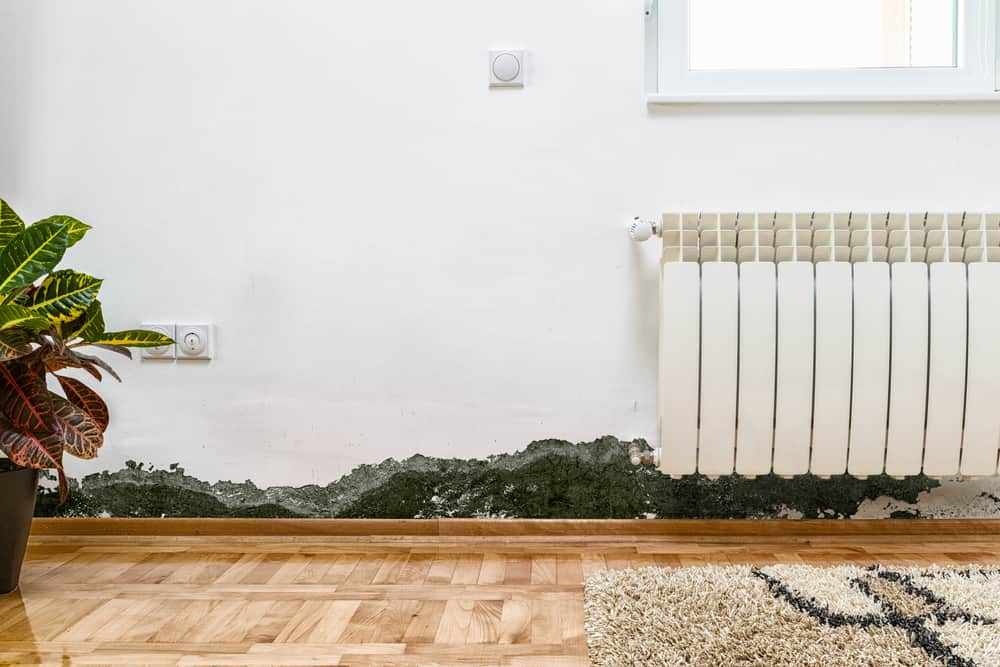
Mold doesn’t just look bad — it works against you quietly. It degrades air quality, weakens building materials, and in a home worth over $600,000, it chips away at the investment you’ve spent years protecting. The moment it’s properly remediated, that pressure lifts. You’re not wondering anymore. You know.
For South Floral Park homeowners specifically, that relief hits differently. Your home is likely a mid-century Cape Cod or colonial — built between the 1930s and 1960s — with a full basement that was never designed to handle modern moisture loads. The Hook Creek Watershed runs through this area, and when heavy rain saturates the soil, that water has to go somewhere. For a lot of homes here, it goes into the foundation. Mold follows within 48 hours.
Once remediation is done right — source identified, contamination removed, materials replaced, air tested — you get your home back. Not a patched version of it. The actual thing. Clean air, sound structure, and documentation that holds up with your insurance company or your real estate attorney if you ever need it.
First Response Restoration and Cleaning Inc. has been working in South Floral Park and Nassau County for close to three decades. That means we’ve been in homes just like yours — older builds, aging plumbing, basements that have taken on water more than once — across South Floral Park, Floral Park, Elmont, and the surrounding communities that share the same housing conditions and moisture challenges.
Every technician we send carries individual IICRC certification. Not a company-level credential that gets handed to whoever shows up — each person on our team has met the industry’s professional standard for mold remediation personally. That matters when someone is walking through your home making decisions that affect your family’s health.
We’re also fully compliant with New York State’s 2016 mold law, which requires that the company doing your assessment and the company doing your remediation be separate. We’ll explain exactly what that means for you and how it protects you — because in this industry, that transparency isn’t common.
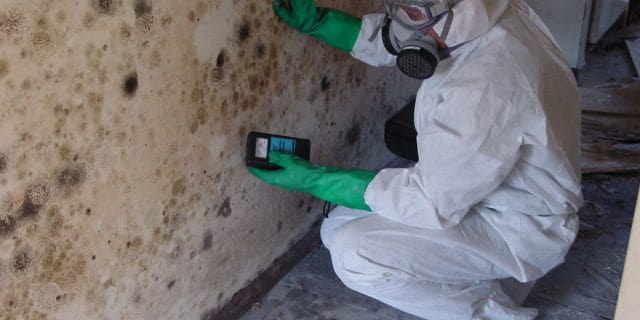
It starts with a 13-point inspection. Air samples, swab samples, moisture readings, and infrared imaging to find mold that isn’t visible yet — behind plaster walls, under original hardwood, inside unencapsulated crawl spaces. In a home built 60 or 70 years ago, what you can see is rarely the full picture. You get a written report with lab results within 2 to 3 business days. That’s not a verbal opinion — it’s documentation.
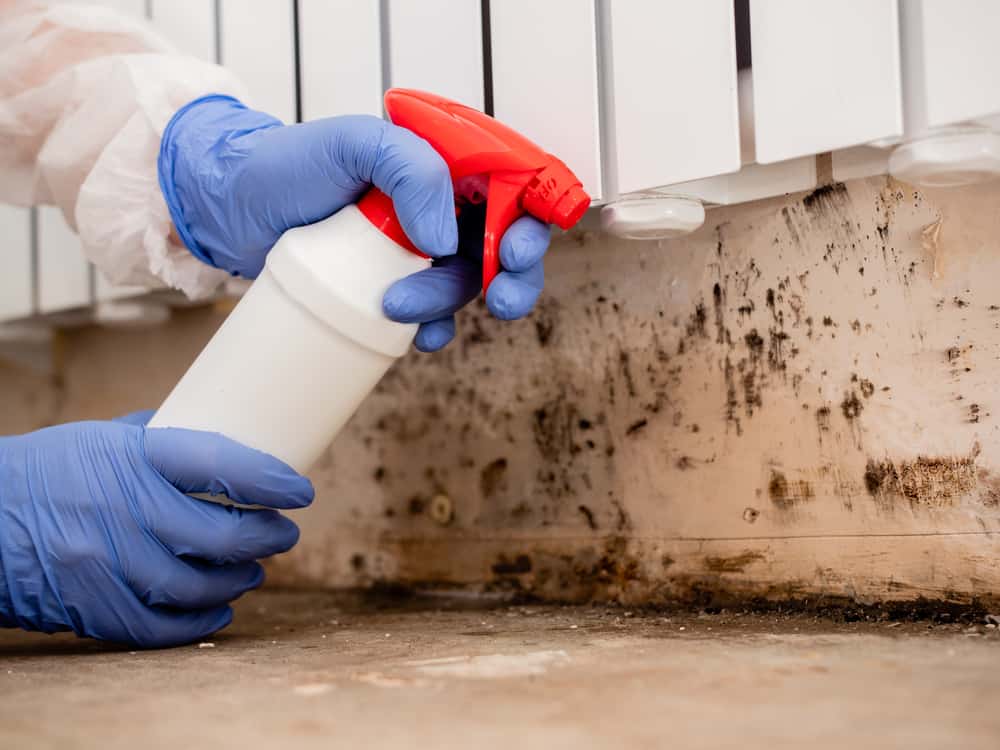
From there, remediation begins with containment. Affected areas are isolated to prevent spores from spreading through the rest of the home. Materials that can’t be salvaged — drywall, insulation, framing in some cases — are removed and disposed of properly. The underlying moisture source gets addressed at the same time, because removing mold without fixing the water problem is just scheduling the next call.
After remediation, we don’t hand you back a gutted room. We handle reconstruction too — drywall, insulation, finishing — so the job ends with your home restored, not just remediated. If your situation involves a Nassau County building permit for structural work, we walk through that with you. The process is straightforward. The communication is consistent. And because we’re available 24/7, it starts whenever you need it to.
Ready to get started?
Whether you’re dealing with black mold remediation in a South Floral Park basement after a flooding event, attic mold from years of inadequate ventilation in an older Cape Cod, or crawl space mold remediation beneath a home that was never properly sealed — we handle the complete scope. We bring air movers, dehumidifiers, HEPA filtration equipment, and moisture monitors on every truck, every call. Nothing gets scheduled for a second trip that should have been handled on the first.
South Floral Park’s housing stock is almost entirely mid-century residential. That means porous original materials, older pipe systems with a history of slow leaks, and attic spaces that trap Long Island’s summer humidity well above the 60% threshold where mold thrives. We know what we’re walking into before we arrive, and we come prepared for it.
The written documentation we provide — lab results, inspection reports, photographic records including infrared imaging — is built to hold up with homeowners insurance carriers. Many mold problems in South Floral Park originate from covered events: burst pipes, storm flooding, appliance failures. If yours does, that paperwork is what gets your claim processed. We’re not just remediating your home. We’re making sure you have what you need on every front.
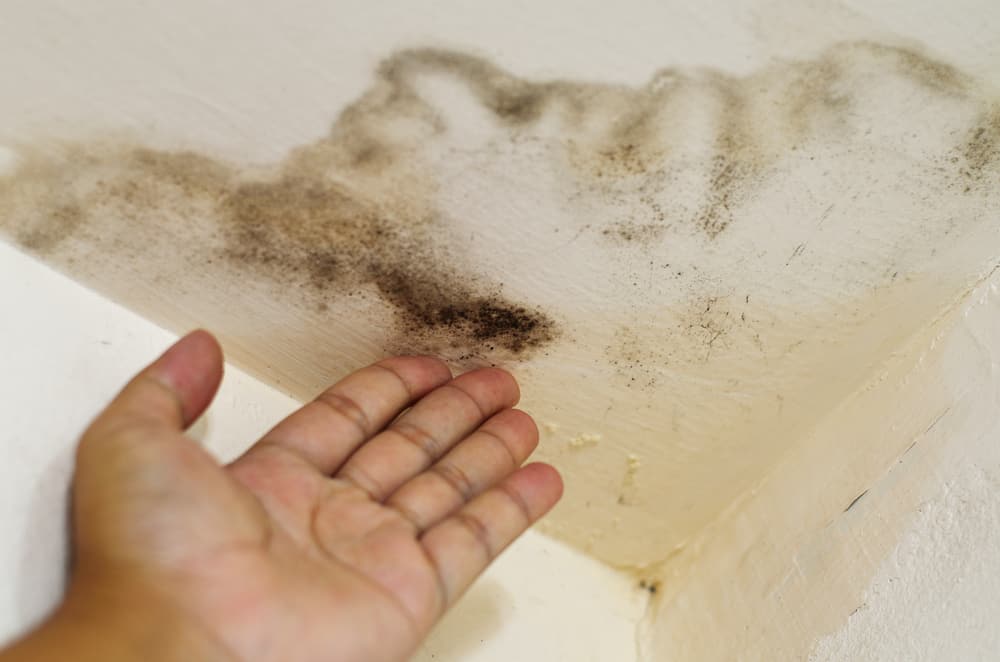
The EPA recommends professional remediation for any mold contamination covering more than 10 square feet. But in South Floral Park’s older housing stock, visible mold is often just the surface of a larger problem. Mold growing on a basement wall or ceiling tile is usually a symptom — behind it, inside the wall cavity or subfloor, the contamination can be significantly more extensive than what you’re seeing.
If you’ve had any water intrusion event — a basement flood, a slow pipe leak, storm-driven moisture — and you’re noticing a musty smell, discoloration on walls, or unexplained respiratory symptoms in your household, those are reasons to get a professional inspection. An IICRC-certified assessment with air sampling and infrared imaging will tell you exactly what you’re dealing with, where it is, and what it’s going to take to fix it. That’s a very different starting point than a visual guess.
The national average for professional mold remediation runs around $2,300, but the actual cost depends on the size of the affected area, how deep the contamination goes, and whether structural materials need to be removed and replaced. Smaller contained jobs — a bathroom ceiling, a section of basement wall — can fall in the $1,000 to $3,000 range. Larger infestations that have spread through wall cavities, floor joists, or attic sheathing can reach $10,000 to $30,000 when reconstruction is factored in.
In South Floral Park specifically, the age of the housing stock is the biggest cost variable. Homes built in the 1940s and 1950s often have mold that has been growing slowly for years behind original plaster and wood framing. By the time it’s discovered, the scope is larger than it would be in a newer home with more moisture-resistant materials. Getting a written inspection with lab results upfront — rather than a verbal estimate — gives you an accurate scope before any work begins, so there are no surprises mid-project.
Mold removal typically refers to physically cleaning or wiping away visible mold — which sounds straightforward but misses most of what actually needs to happen. Mold is a living organism that spreads through spores, and those spores are microscopic. Removing what you can see doesn’t eliminate what’s already airborne or embedded in porous materials like drywall, insulation, or wood framing.
Mold remediation is the complete process: identifying the source of moisture that caused the growth, containing the affected area to prevent cross-contamination, removing and properly disposing of materials that can’t be salvaged, treating surfaces, and verifying through post-remediation air testing that spore counts are back within normal range. In an older South Floral Park home where original materials are far more porous than modern equivalents, surface removal alone would leave the problem largely intact. Remediation addresses the full scope — and a company that only offers removal isn’t giving you a finished job.
It depends on the origin of the mold. Most homeowners insurance policies in New York cover mold remediation when it results directly from a sudden and accidental covered event — a burst pipe, an appliance failure, storm-driven water intrusion. What they typically don’t cover is mold that developed from long-term neglect or a slow leak that went unaddressed for an extended period.
South Floral Park homes average a commute time of nearly 49 minutes each way for residents, which means many homes sit unoccupied for 10 or more hours a day. A pipe that starts leaking on a Monday morning can go undetected until Tuesday evening — and by then, mold has already had more than 48 hours to establish itself. If the event that caused the moisture was sudden and covered under your policy, the key is documentation: written inspection reports, lab results, and photographs taken before any remediation begins. That’s exactly what we provide, and it’s what gives your insurance claim the best possible footing.
For a contained area — a single room, a section of basement, a crawl space — remediation typically takes one to three days. Larger jobs that involve multiple areas, structural material removal, and reconstruction can run one to two weeks. The timeline depends on the scope identified in the initial inspection, not a ballpark estimate given over the phone before anyone has seen the property.
One thing that extends timelines in older homes like those throughout South Floral Park is discovery during the job. When you open a wall in a 1940s colonial, what’s behind it isn’t always what the exterior suggested. That’s not a reason to avoid the work — it’s a reason to work with a company that handles the full scope from remediation through reconstruction, so you’re not left coordinating a separate contractor mid-project when the actual extent of the damage becomes clear.
Attic mold is one of the most common and most overlooked mold problems in the mid-century housing stock that makes up South Floral Park. Homes built in the 1930s through 1960s were not designed with modern attic ventilation standards in mind. During Long Island’s humid summers — when coastal humidity regularly exceeds 60% — warm moist air rises into the attic and has nowhere to go. It condenses on the underside of the roof sheathing and on rafters, and mold follows.
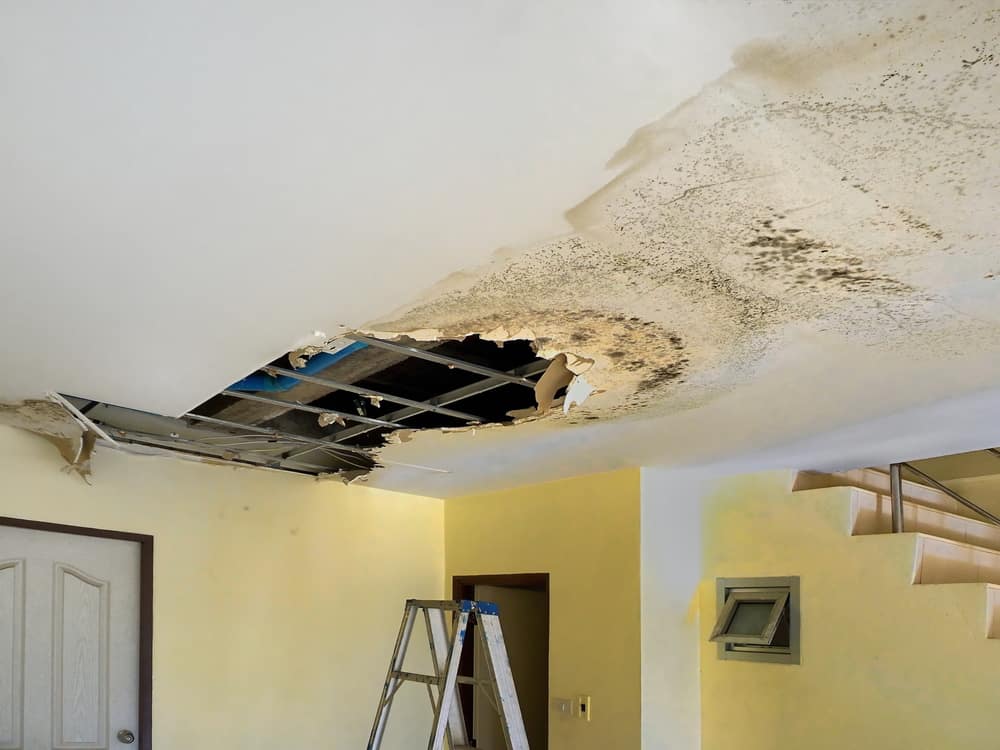
The challenge with attic mold is that it’s usually invisible from inside the living space. Homeowners don’t find it until they’re selling the home and an inspector flags it, or until the problem has progressed far enough to show up as staining on ceiling drywall. Remediation involves treating affected wood surfaces, improving ventilation to address the underlying cause, and in more advanced cases, replacing sheathing that has been compromised. Because attic mold in South Floral Park is almost always a ventilation problem first and a mold problem second, fixing the airflow is what prevents it from coming back.
Useful Links
Other Services we provide in South Floral Park