
Hear from Our Customers
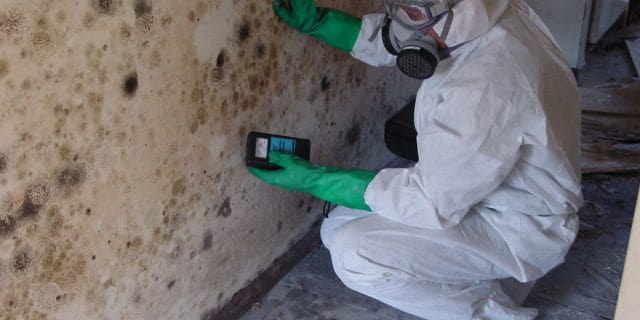
Most mold problems in Huntington Bay don’t start with a flood. They start quietly — inside a crawl space beneath a converted 1920s cottage, behind a wall cavity where salt air found a gap in the window seal, or in the attic of a Cape Cod roofline that was never ventilated for year-round living. By the time you see it or smell it, it’s already been growing for a while.
When mold remediation is done correctly, the difference isn’t just visual. The air quality in your home improves. The musty smell that you stopped noticing is gone. You’re not watching the same corner of the basement ceiling every few months waiting for it to come back. That’s what happens when the moisture source gets addressed, not just the mold on the surface.
For a home on the East Neck — where Huntington Bay, Northport Bay, and the Long Island Sound all push humidity at your building envelope simultaneously — that matters more than it does almost anywhere else on Long Island. Your home is working harder against moisture than an inland house in Commack or Dix Hills ever has to. The remediation has to account for that, or it won’t hold.
We’ve been working on Long Island homes for over three decades. That’s not a number thrown out to sound impressive — it means our team has been in the crawl spaces and attics of North Shore coastal communities long enough to know exactly what drives mold in Huntington Bay’s housing stock and in this specific climate.
Richard Peterson, our owner, holds personal New York State licenses in both mold assessment and mold remediation contracting under Article 32 of the Labor Law — the same law that makes unlicensed mold work illegal in New York. His license isn’t a company credential filed in a drawer somewhere. It’s his name, his accountability, on every job.
Every technician on our team is IICRC-certified, which means the people doing the actual work in your Huntington Bay home have been individually trained and tested against the industry’s benchmark standard. We also run an integrated cleaning division, so when remediation is complete, you’re not coordinating a second vendor to finish the job. One team, start to finish.
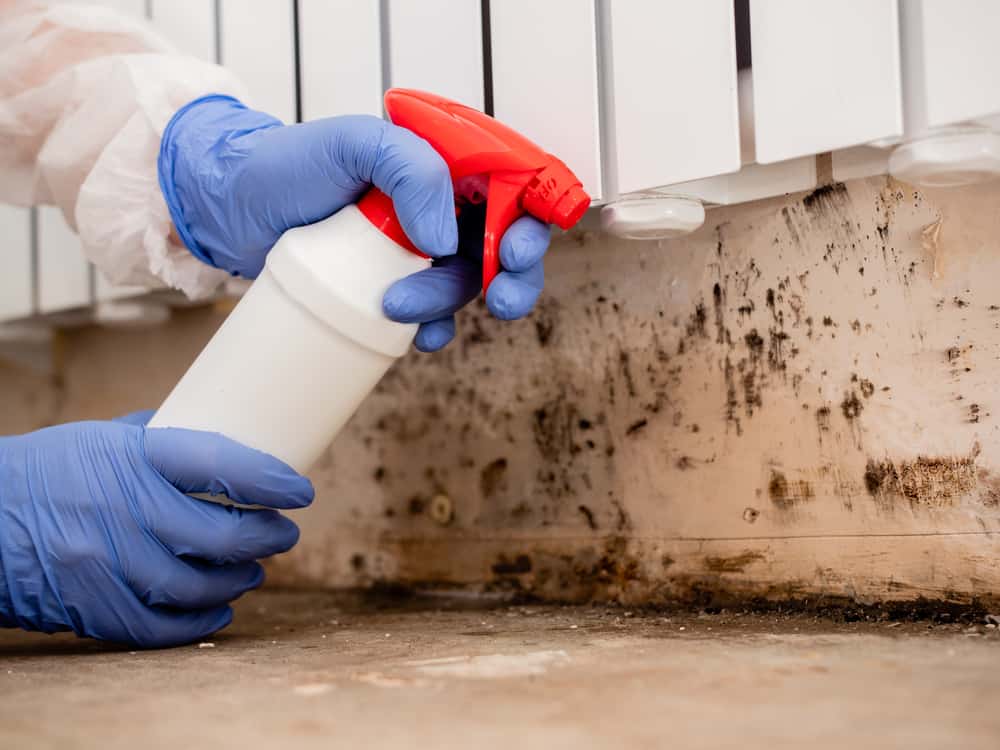
It starts with a thorough assessment — not a quick visual scan, but actual moisture mapping to find where water is entering, where it’s accumulating, and what it’s already affected. In a Huntington Bay home, that means looking beyond the obvious. Salt air degrades window seals and flashing in ways that don’t show up until you’re checking wall cavities. Crawl spaces in older East Neck cottages that were converted to year-round use often have vented foundations that were fine for summer occupancy but that pull coastal humidity directly into the structure every season.
Once the moisture source is identified, we set up containment to protect the rest of your home while remediation work is underway. Affected materials are removed, treated, or replaced depending on the extent of involvement. Structural drying follows, and antimicrobial treatment is applied to eliminate what’s left and discourage regrowth. Because New York State’s Article 32 licensing law governs every step of this process, the work is performed in full compliance with state requirements — which matters for your insurance documentation and for any future real estate transaction.
After remediation is complete, independent air quality testing verifies that mold spore counts have returned to normal levels. You get a clearance report — written documentation that the job was done and confirmed. In a market where median home values in Huntington Bay exceed $1.99 million and buyers walk away from mold history, that clearance report isn’t optional. It’s the proof that protects your investment.
Ready to get started?
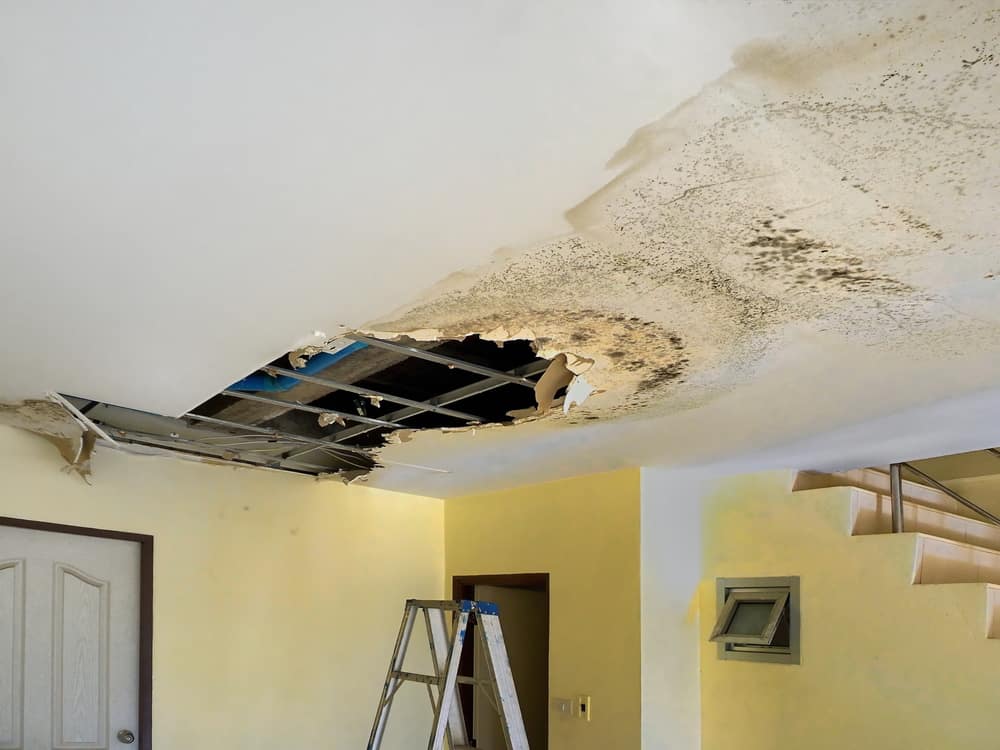
Our mold remediation service in Huntington Bay, NY covers the full range of what coastal homes on the East Neck actually deal with. Attic mold is one of the most common issues in the village’s Cape Cod-style homes — the roofline creates enclosed attic spaces with limited airflow, and when humid summer air from the surrounding water bodies meets a cooler roof deck, condensation builds over time. Left alone, it becomes a mold colony that spreads through the decking and framing before most homeowners ever think to look up there.
Crawl space mold remediation is equally common here, particularly in the Knollwood Beach area where many homes trace their origins back to 1920s summer cottages. Those structures were built for seasonal use, and their vented crawl space designs were never meant to manage the year-round moisture load of a peninsula surrounded by open water. Basement mold remediation addresses the flooding risk that comes with every significant nor’easter on the North Shore, where the Long Island Sound’s geometry can amplify storm surge in ways that catch homeowners off guard.
We handle black mold remediation, emergency mold remediation after storm events, and full mold cleanup and remediation following water damage. Our integrated cleaning division means the job doesn’t stop at structural completion — your home is cleaned, documented, and ready for occupancy when we leave. For Huntington Bay homeowners managing high-value properties in a demanding coastal environment, that full-cycle capability is what a thorough mold restoration service actually looks like.
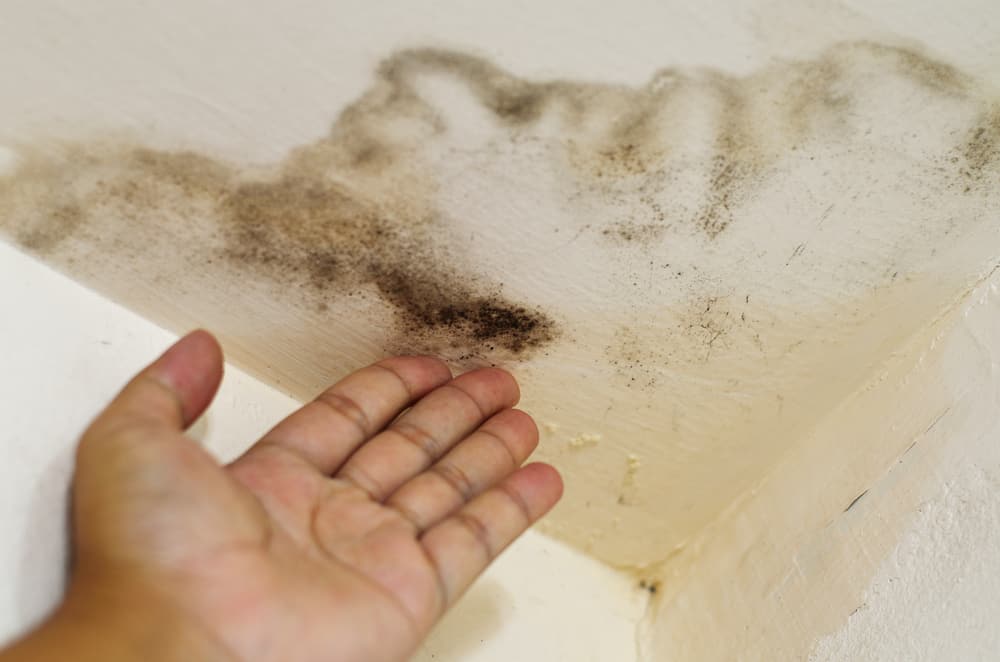
Cost depends on where the mold is, how far it’s spread, and what materials are involved. For most residential projects in Huntington Bay, professional mold remediation runs between $1,200 and $3,800. Attic mold remediation typically falls in the $1,500 to $9,000 range depending on how much of the decking and framing is affected. Crawl space remediation generally runs $500 to $4,000, though it can exceed that when encapsulation is needed or when structural wood has been compromised. Basement mold can range from $500 for surface-level issues to well over $10,000 when framing and subfloor materials are involved.
Huntington Bay’s older housing stock — particularly the converted summer cottages in the Knollwood Beach area — often involves more extensive remediation than newer homes, simply because the original construction wasn’t designed for year-round moisture management in a coastal environment. The best way to get an accurate number is a proper assessment that maps the moisture source and the full extent of involvement, not just a visual estimate of what’s visible on the surface.
It depends on what caused the mold. Insurance typically covers mold remediation when it results from a sudden, covered event — a burst pipe, a storm-related roof failure, or documented flooding from a named storm. What most policies don’t cover is mold that developed gradually from long-term moisture accumulation, poor ventilation, or deferred maintenance. That distinction matters a lot in Huntington Bay, where the persistent coastal humidity from the surrounding water bodies can slowly compromise a building envelope over years without any single triggering event.
The documentation you provide to your insurance company matters significantly. A remediation performed by a licensed contractor — one who can produce a proper assessment report, a scope of work, and a post-remediation clearance — carries far more weight with an adjuster than a job done by an unlicensed operator with no paperwork trail. We help customers understand what their coverage includes and document the damage in the format insurers require, which reduces the friction in the claims process considerably.
Mold removal typically refers to physically cleaning or removing visible mold from a surface. It’s a step in the process, but it’s not the whole process. Mold remediation in Huntington Bay, NY means addressing the full picture — identifying the moisture source, containing the affected area, removing contaminated materials, treating what remains, drying the structure, and verifying through air quality testing that the problem is actually resolved.
The reason this distinction matters is simple: if you remove the visible mold without fixing what caused it, it comes back. In a coastal home on the East Neck peninsula — where elevated humidity from three surrounding water bodies is a year-round reality — the moisture source is rarely obvious. It might be a degraded window seal, inadequate attic ventilation, or a crawl space that’s pulling in salt air through a vented foundation. Remediation that skips source identification is remediation that fails. That’s the difference between a lasting fix and a job you’re paying for again in eighteen months.
Mold begins growing within 24 to 48 hours of water intrusion under the right conditions — and in Huntington Bay, the conditions are almost always right. The ambient humidity from the surrounding water bodies means that building materials don’t dry out as quickly here as they do in inland communities. After a nor’easter pushes water into a basement or a roof failure lets rain into an attic, the moisture lingers in the wood framing, insulation, and drywall far longer than most homeowners expect.
That 24 to 48 hour window is why emergency mold remediation response time matters so much. The longer water sits in a structure, the deeper it penetrates and the more material becomes involved. A flooding event that’s addressed within hours might result in a $2,000 to $4,000 remediation job. The same event left untreated for a week in a humid coastal environment can turn into a $10,000 to $15,000 project with structural material replacement. We’re available around the clock specifically because storm events on the North Shore don’t follow business hours.
Yes, and the severity depends on the type of mold, the extent of the growth, and how sensitive the people in your home are. The CDC estimates that one in three people has some sensitivity to mold, and for children, elderly individuals, and anyone with asthma or a compromised immune system, the health effects can be significant. The American College of Allergy, Asthma, and Immunology estimates that mold triggers roughly 25% of all asthma attacks.
Black mold — Stachybotrys chartarum — gets the most attention, but the reality is that any mold growth inside a living space warrants professional attention, regardless of color or species. In Huntington Bay’s older housing stock, mold often develops in areas that aren’t part of daily living — crawl spaces, attic cavities, inside wall assemblies — but the spores it produces circulate through the air in the rest of the home. You don’t have to be standing next to a visible mold colony to be affected by it. If anyone in your home is experiencing unexplained respiratory symptoms, persistent headaches, or worsening allergy-like reactions, mold in a hidden location is worth investigating.
Start with licensing. New York State’s Article 32 law requires that anyone performing mold assessment or mold remediation contracting hold a valid state-issued license. This has been the law since January 1, 2016, but not every company operating in the Huntington area is compliant. You can verify a contractor’s license through the New York State Department of Labor before you agree to anything. Hiring an unlicensed operator puts you at risk — the work may not meet legal standards, and your insurance company can deny a claim if the remediation wasn’t performed by a licensed contractor.
Beyond licensing, look for IICRC certification at the technician level, not just a company-wide badge. Ask whether post-remediation air quality testing is included as a standard step or whether it’s an add-on. In Huntington Bay’s real estate market — where homes regularly list above $1.99 million and buyers scrutinize mold history closely — a clearance report from a licensed, certified contractor is documentation you’ll want to have, whether you’re staying in the home or eventually selling it. The cheapest quote rarely accounts for all of this, and in a coastal environment where mold comes back if the moisture source isn’t properly addressed, a remediation that doesn’t hold isn’t a bargain.
Useful Links
Other Services we provide in Huntington Bay