
Hear from Our Customers

When the water is gone and the fans are off, what you actually want is to walk through your home and not wonder what’s still hiding in the walls. That’s the real outcome — not just a dry floor, but confirmed dry framing, subfloor, and drywall, with documentation your insurance adjuster can work with.
For Farmingdale homeowners, that matters more than it might in a newer community. South Farmingdale sits on a flat outwash plain with no natural elevation to carry groundwater away from your foundation. When the water table rises after a nor’easter or a heavy summer storm overwhelms the village’s older storm drain infrastructure, it doesn’t just come in from above — it pushes against your basement walls from the sides and below simultaneously.
Homes built between 1940 and 1969, which make up the majority of the housing stock here, were not designed with that kind of sustained hydrostatic pressure in mind. The result of proper restoration isn’t just a dry basement. It’s knowing the moisture is gone from inside the walls, not just off the surface. It’s having a clear record of what happened and how it was addressed — which protects your insurance claim, your home’s resale value, and your family’s health down the line.
We’re headquartered in West Babylon — just over the county line from Farmingdale, in the Town of Babylon. That proximity isn’t incidental. East Farmingdale is itself a Suffolk County community, and the broader Greater Farmingdale area spans both Nassau and Suffolk. We maintain dedicated coverage for both counties, with separate local numbers for each, and the teams that respond to your home are not dispatched from a regional call center three counties away.
Our technicians are IICRC-certified, which means we follow the industry’s established protocols for water damage assessment, structural drying, and documentation — the same standards Nassau County insurance adjusters expect to see when a claim comes across their desk. We’re also licensed, bonded, and insured, and fully compliant with Nassau County’s Fire Prevention Ordinance requirements for restoration contractors operating in the county.
Nearly three decades of working on Long Island homes means we’ve seen what happens inside a 1950s block foundation when water sits for 36 hours. We know how these homes absorb moisture, where it travels, and what it takes to actually get it out.
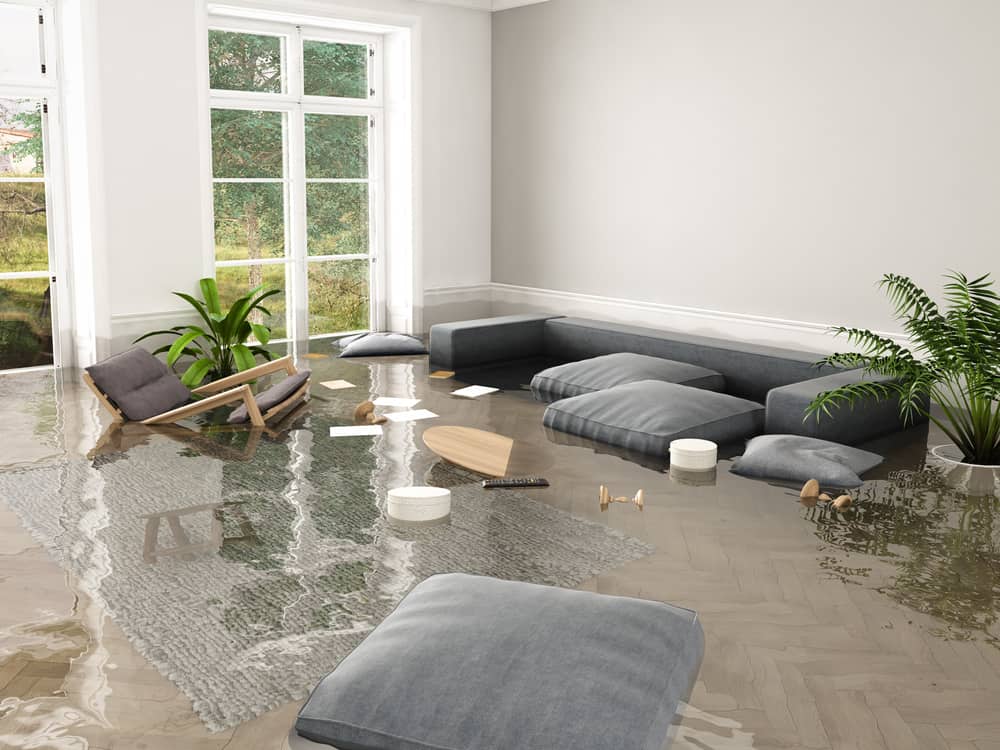
The first call triggers our 24/7 emergency response. For Farmingdale residents dealing with a sump pump failure at midnight during a nor’easter, or a storm drain backup that pushed water into a finished basement, that immediate availability is not a marketing claim — it’s the difference between a manageable remediation and a mold problem six weeks later.
The EPA is clear: water-damaged areas need to be dried within 24 to 48 hours to prevent mold growth. Every hour matters.
Once we arrive, the first priority is stopping the water source and beginning extraction. Industrial-grade equipment pulls water from surfaces, but that’s only the beginning. We use moisture meters and thermal detection equipment to map what’s happening inside walls, under flooring, and in structural cavities — the places consumer-grade fans never reach. In Farmingdale’s older housing stock, where plaster walls and block foundations behave differently than modern construction, this step is critical. A surface-level reading is not enough.
From there, the structural drying phase begins — typically three to five days for most homes, though the flat terrain and high water table conditions common in South Farmingdale can extend that timeline depending on severity. Throughout the process, every step is documented for your insurance claim. If mold remediation is needed, New York State’s Article 32 mold law requires a licensed assessor to produce a written work plan before remediation begins — we coordinate that process so you don’t have to navigate it alone.
Ready to get started?
Water damage restoration in Farmingdale isn’t a single service — it’s a sequence that has to be done in the right order or the problem comes back. We handle the complete scope: water extraction, structural drying and dehumidification, moisture mapping, antimicrobial treatment, and full reconstruction when structural repairs are needed. One company, one point of contact, from the moment you call through the day the job is closed.
The insurance coordination piece is built into every job. We work directly with your insurance company, handle the documentation, and manage the billing. For homeowners dealing with sudden events like burst pipes, sump pump failures, or storm drain backups — the types of water damage events that are common in Farmingdale and are typically covered under standard homeowners insurance — having someone who understands how to document the damage correctly from the start makes a real difference in how the claim is processed.
For Farmingdale’s commercial properties along the Route 110 corridor or in the downtown district currently undergoing revitalization, the same full-service approach applies. Commercial water damage has its own timeline pressures, and we’re equipped to handle both the remediation and the documentation that commercial property owners and their insurers require. Whether it’s a finished basement in South Farmingdale or a commercial space off Conklin Street, the process is thorough, documented, and built to hold up.

It depends on the cause, and the distinction matters more than most people realize. Standard homeowners insurance typically covers sudden, accidental water damage from internal sources — a sump pump that fails mechanically during a storm and allows water to enter your basement often falls into this category, provided you have the right coverage. However, standard policies do not cover flooding from external groundwater, storm surge, or overland water flow.
If water entered your basement in Farmingdale because the water table rose and pushed through your foundation — which is a real and documented scenario in South Farmingdale’s flat outwash plain geography — that would typically require a separate flood insurance policy through the National Flood Insurance Program to be covered.
The practical takeaway is that the cause of the water intrusion determines your coverage, and how that cause is documented in the initial assessment determines whether your claim is approved or denied. We work directly with insurance companies and document the damage in a way that gives your claim the strongest possible foundation. If you’re unsure what your policy covers before you file, calling us first — before the adjuster arrives — allows the damage to be properly documented while the evidence is still fresh.
The EPA’s guidance is 24 to 48 hours — that’s the window within which water-damaged areas need to be dried to prevent mold growth. Mold spores can begin germinating within the first 24 hours under the right conditions, and visible growth typically appears within 48 to 72 hours. By the time you can see it, the problem is already established.
For homes in Farmingdale — particularly those with finished basements, which are common in the post-war colonials and Cape Cods throughout South Farmingdale and East Farmingdale — the risk is compounded by the materials involved. Drywall, carpet padding, and wood framing absorb and retain moisture in ways that make mold growth faster and harder to detect. A basement that looks dry after you’ve run your shop vac and a box fan for two days may still have moisture levels inside the wall cavity that are well above the threshold for mold growth.
Industrial moisture meters measure what you can’t see, and that’s the only way to know for certain that the drying is actually complete.
The most common causes in this area break down into a few recurring categories. Sump pump failure is one of the most frequently documented triggers — in a community built predominantly on flat, high-water-table terrain between the Massapequa Creek and Seaford Creek drainage areas, sump pumps are not optional equipment. When they fail during a storm, water enters fast.
Storm drain backups are another common source: Farmingdale’s older village infrastructure was not designed for current rainfall intensity, and heavy rain events regularly overwhelm the drainage system, pushing water back into basements. Burst and frozen pipes are a significant winter risk, particularly in homes built in the 1940s through 1960s with plumbing in exterior walls or poorly insulated areas. Nor’easters create rapid temperature swings that put aging pipe systems under stress.
Beyond that, aging water heaters, washing machine supply line failures, and original cast-iron plumbing approaching the end of its service life are all documented causes of water damage in the post-war housing stock that dominates this area. Most of these are sudden, accidental events — which is exactly the type of damage that standard homeowners insurance is designed to cover.
For most residential water damage situations, the full process takes approximately two weeks from initial response through final repairs. The water extraction phase typically takes one to three days. Structural drying — using industrial air movers and dehumidifiers to pull moisture out of walls, floors, and framing — generally runs three to five days, though that timeline can extend depending on the severity of the intrusion and the specific conditions of the home.
For Farmingdale homes, a few factors can affect the timeline. The flat terrain and high water table in South Farmingdale mean that groundwater pressure can continue pushing moisture into a basement even after the primary water source has been addressed, which requires monitoring throughout the drying phase. Older block foundations and plaster walls, common in the village’s post-war housing stock, retain moisture differently than modern construction and may require longer drying times to reach safe moisture levels.
If mold remediation is also required, New York State’s Article 32 process adds additional time — a licensed assessor must complete a written work plan before remediation begins, and a post-remediation clearance assessment is required before the job can be closed. We’ll give you a realistic timeline after the initial assessment so you know what to expect.
In most cases, yes — but it depends on the extent of the damage and which areas of your home are affected. For a contained basement flood that doesn’t involve sewage contamination or significant structural damage, most Farmingdale homeowners are able to remain in the home during the drying phase. The industrial equipment we use — air movers, dehumidifiers, and negative air machines — is loud and will be running continuously, which some families find disruptive, but it doesn’t make the home uninhabitable in most situations.
The exceptions are important. If the water damage involves Category 3 contamination — sewage backup, floodwater, or groundwater that has picked up contaminants — the affected areas should not be occupied until remediation is complete. If the damage has spread to living areas, HVAC systems, or structural components, temporary relocation may be necessary. If mold remediation is underway, containment barriers are erected and the affected areas are off-limits during the process.
We’ll assess the situation and give you a clear, honest answer about whether staying in the home is safe and practical for your specific situation — not a blanket policy either way.
IICRC certification means the technicians working in your home are trained to the industry’s established standards for water damage assessment, structural drying, and documentation — specifically the S500 Standard for Professional Water Damage Restoration. Insurance companies know this standard, and adjusters expect to see work that follows it. When a non-certified company handles your restoration, the documentation may not hold up in the claims process, which can result in partial payment or denial even when the damage itself would have been covered.
In Nassau County specifically, there’s an additional layer to this. A 2016 amendment to the Nassau County Fire Prevention Ordinance requires companies providing restoration and board-up services to be licensed with the Nassau County Fire Marshal. This is a county-specific licensing requirement that not every restoration provider operating in the Farmingdale area meets. Working with a company that is both IICRC-certified and properly licensed under Nassau County’s ordinance means your claim is supported by documentation that meets the standard insurers expect, and the work itself is being done by a contractor who is legally authorized to perform it in this county. We hold both — and have been operating to that standard on Long Island for nearly 30 years.
Useful Links
Other Services we provide in Farmingdale