
Hear from Our Customers

Water damage in Lattingtown isn’t a standard suburban problem. The village’s estate homes — many built before 1950, with plaster walls, original hardwood floors, and sprawling basement systems — respond to water intrusion differently than post-war construction elsewhere in Nassau County. When a pipe fails or a nor’easter pushes water off Long Island Sound into a waterfront property on Bayville Road or near Mill Neck Creek, the damage doesn’t stay in one room. It travels behind walls, under floors, into structural cavities that basic cleanup will never reach.
What you get from proper restoration isn’t just dry floors. It’s the confidence that moisture has been located and eliminated everywhere it went — not just where it was obvious. For a home worth over a million dollars, that distinction matters enormously. Irreplaceable finishes, historic millwork, original flooring — these aren’t things you can simply order replacements for. Restoration done right protects them. A rushed job risks them.
There’s also the insurance side. Water damage claims on high-value Lattingtown properties can be complicated, particularly when separate flood policies or high-value home endorsements are involved. When the documentation is thorough and the work is performed to IICRC standards, claims move more smoothly. That’s often the difference between a claim that gets paid and one that gets disputed.
We’re based in West Babylon, Nassau County — a real Long Island company, not a franchise operation or a lead-generation service routing calls out of state. We’ve been serving Nassau and Suffolk County homeowners for close to three decades, which means we’ve worked in the kinds of large, complex, historically significant homes that define Lattingtown and the surrounding North Shore.
Lattingtown is directly on our service map — this isn’t our first call to the Gold Coast. Our technicians are fully IICRC-certified, and we’re licensed, bonded, and insured. That matters everywhere, but it matters especially in an incorporated village like Lattingtown, where restoration work involving structural repairs requires proper permitting through the Town of Oyster Bay’s Building Division and where homeowners expect a professional, accountable team on their property.
When you call our Nassau County line, you’re reaching a local team — not a call center. That’s been true for nearly 30 years, and it shows in the work.
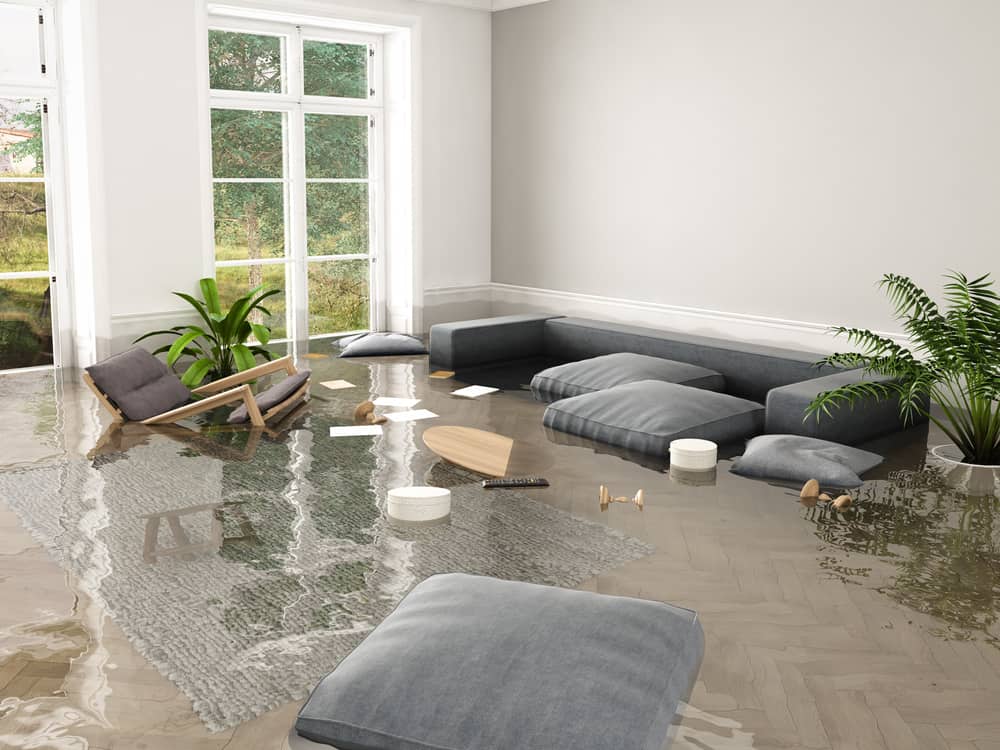
The process starts the moment you call. We offer 24/7 emergency response because water damage doesn’t pause for business hours — and in Lattingtown, where a nor’easter can push coastal flooding inland from Long Island Sound overnight, waiting until morning is rarely an option. A team is dispatched, and the first priority on arrival is stopping any ongoing source of water and assessing the full scope of what you’re dealing with.
That assessment goes beyond what’s visible. Older estate homes in Lattingtown — particularly those built before the 1950s with stone foundations, plaster walls, and complex basement configurations — hold moisture in places that look completely dry on the surface. We use professional moisture meters and thermal imaging to locate water that has migrated into wall cavities, under original flooring, and into structural framing. This step is what separates real restoration from surface cleanup that leaves a mold problem behind.
From there, industrial-grade water extraction equipment removes standing water, followed by structured drying using commercial dehumidifiers and air movers positioned specifically for your home’s layout. The drying phase typically runs three to five days, monitored with daily moisture readings until the structure reaches safe levels. If structural repairs are needed — drywall, framing, flooring — we handle that too, including coordinating the permit process with the Town of Oyster Bay’s Building Division where required.
Throughout all of it, we document everything for your insurance claim, working directly with your insurer so you’re not caught in the middle.

Ready to get started?
The water damage situations that come up in Lattingtown tend to fall into a few distinct categories, each with its own complications. Burst pipe water damage is one of the most common — and one of the most dangerous for older homes. Galvanized steel pipes and cast-iron drains installed decades ago are well past their designed lifespan, and when they fail in a 5,000 or 6,000 square foot estate, water can reach multiple rooms before anyone notices. Seasonally unoccupied properties carry real risk of undetected damage that progresses for days before a caretaker or neighbor spots it.
Coastal and storm damage restoration is equally relevant here. The Lattingtown Harbor Beach Community sits directly on Long Island Sound, and nor’easters regularly generate coastal flood watches for this stretch of the North Shore. When storm surge or heavy rainfall drives water into a waterfront property, the response window before mold begins to develop is 24 to 48 hours. Flooded basement cleanup, basement water extraction, and structural drying are all part of what we handle in these situations.
We also manage fire damage restoration, mold remediation, mold inspection, and severe odor deodorizing — so if water damage has already led to a secondary problem, that can be addressed under the same roof. Insurance coordination runs through every service: we handle documentation, direct billing, and adjuster communication so you’re not managing that process on top of everything else.

It depends on the source of the water, and that distinction matters a great deal. Standard homeowners insurance typically covers sudden, accidental water damage from internal sources — a burst pipe, an appliance that fails, a water heater that gives out. What it does not cover is flooding. If water enters your home from the outside — storm surge from Long Island Sound, groundwater pushing up through a foundation, or surface runoff from heavy rain — that falls under flood insurance, which is a separate policy entirely.
For Lattingtown homeowners, particularly those in waterfront or near-waterfront areas along Bayville Road or near Mill Neck Creek, this distinction is critical. Properties in FEMA-designated flood zones may be required to carry separate flood coverage, and even properties outside those zones can be caught off guard when a nor’easter causes water intrusion that a standard policy won’t touch. If you’re not sure what your policy covers, call us before you call your insurer — proper documentation of the damage before an adjuster arrives strengthens your claim significantly. We work directly with insurance companies and can help you understand what’s covered as part of the assessment process.
Faster than most people expect. The EPA’s guidance is clear: water-damaged areas need to be dried within 24 to 48 hours to prevent mold growth. Mold spores can begin germinating within the first 24 hours under the right conditions — and older homes create ideal conditions. Plaster walls, original hardwood floors, and stone or brick foundation walls common to Lattingtown’s pre-war estate homes absorb and retain moisture in ways that modern drywall and concrete don’t. That moisture stays warm and trapped, which is exactly what mold needs.
The other complication in older Lattingtown homes is that moisture hides. A pipe that bursts inside a plaster wall may look like a small stain on the surface while the cavity behind it is saturated. Consumer-grade fans and wet-vacs can’t reach that moisture, and if it’s left there, visible mold growth typically appears within 48 to 72 hours. By the time you see it, the remediation scope has already expanded significantly. This is why calling for professional water damage restoration — not just cleanup — matters so much in the first hours after a water event.
The first thing is safety. Before you go into a flooded basement, confirm that the electrical panel serving that area has been shut off — water and live circuits are a serious hazard, especially in older homes where wiring may not meet current standards. If you’re not certain, stay out and call us.
Once it’s safe to enter, document everything with photos and video before moving or removing anything. That documentation becomes important when your insurance claim is filed. Then call us for water damage restoration. The goal in the first few hours is water extraction — getting standing water out as quickly as possible to slow the spread of moisture into walls, framing, and flooring. In Lattingtown’s older estate homes with deep basements and stone foundation walls, water can wick upward and outward quickly. The longer it sits, the more it travels. We offer 24/7 emergency response specifically because that first window is the most important one. Don’t wait to see how bad it gets — by the time it’s obviously bad, the damage has already expanded well beyond what you can see.
The honest answer is that it varies, but for a large home with significant water intrusion, you should plan for more time than you might expect. For a moderate water damage event affecting a few rooms, the drying phase alone typically runs three to five days — and that’s with industrial-grade equipment running continuously. The full restoration process, from initial extraction through structural repairs and final rebuild, averages around two weeks for a standard event. For more extensive damage — widespread flooding, mold involvement, or structural issues — it can run considerably longer.
In Lattingtown specifically, a few factors affect the timeline. Older estate homes with plaster walls and original flooring take longer to dry than modern construction because the materials are denser and hold moisture differently. If structural repairs require permits through the Town of Oyster Bay’s Building Division, that adds a step to the process. If a property has been vacant for any period before the damage was discovered — which is a real scenario in a village with a number of seasonally occupied estates — the damage has often progressed further by the time restoration begins, which extends the timeline. We’ll give you a realistic scope assessment at the outset so you know what to expect before work begins.
In many cases, yes — but it depends on where the damage is, how extensive it is, and what phase of restoration is underway. If the affected area is contained to a basement or a single room and the rest of the home is structurally sound and dry, most homeowners can remain in place during the drying and dehumidification phase. The equipment is loud and the dehumidifiers run continuously, but it’s manageable for most people.
The situations where staying in place becomes more difficult are when damage is widespread across multiple floors, when mold remediation is underway (which requires containment and air filtration that can be disruptive), or when structural repairs involve significant demolition. In a large Lattingtown estate where a pipe failure has affected multiple rooms across a sprawling floor plan, the scope of work may make temporary relocation the more practical choice. We’ll walk you through what the work involves and what daily life looks like during the process so you can make an informed decision — there’s no pressure either way, and the goal is always to minimize disruption to your household as much as the work allows.
FEMA flood maps are useful, but they’re not the whole picture — especially on Long Island’s North Shore. The maps are based on historical data and modeling that doesn’t always account for the specific drainage characteristics of individual properties, the influence of local waterways, or the way storm patterns have shifted in recent years. In Lattingtown, several factors create flooding risk that doesn’t always show up on a standard FEMA map.
The village sits on land that was originally marshland — the Matinecock people harvested marsh reeds here in the 17th century, and remnant wetland areas, Factory Pond, and Mill Neck Creek still influence how water moves through the landscape after heavy rain or storm surge. Properties on or near these low-lying areas can experience groundwater intrusion and surface flooding even when they’re technically outside a designated flood zone. The high water table on the North Shore compounds this — during prolonged rain events, the ground simply can’t absorb water fast enough, and it finds its way into basements through foundation walls and floor drains. Nor’easters hitting the Long Island Sound shoreline can push water further inland than FEMA projections account for. If your property has flooded before — even once — that’s a more reliable indicator of your actual risk than your flood zone designation alone.
Useful Links
Other Services we provide in Lattingtown