
Hear from Our Customers

There’s a version of this that ends with your home dry, documented, and back to the condition it was in before water ever touched it. No lingering smell. No hidden moisture sitting inside a plaster wall waiting to become a mold problem three months from now. No loose ends with your insurance company. That’s what a properly executed water damage restoration looks like — and it’s a very different outcome from what you get when the job is rushed or handed off to someone who doesn’t know what they’re dealing with.
For homes in Locust Valley and the surrounding communities of Lattingtown, Matinecock, and Mill Neck, the stakes are higher than average. Many of these properties were built in the early 20th century, during the Gold Coast era, and feature original plaster walls, period hardwood floors, and architectural details that simply cannot be sourced from a catalog. When water gets into a home like that, the restoration approach matters as much as the response time. The goal isn’t just to dry the space — it’s to dry it correctly, protect what can be saved, and document everything in a way that holds up when your insurance adjuster arrives.
The rolling glacial terrain of the North Shore also creates drainage behavior that surprises a lot of homeowners. Water doesn’t move predictably across a moraine landscape. It pools in hollows, follows subsurface channels, and can push into a basement from directions you wouldn’t expect — especially after a nor’easter or a late-summer storm off Long Island Sound. Getting the outcome right in Locust Valley means understanding how water moves through these specific properties, not just running a standard protocol and calling it done.
We’ve been serving Nassau and Suffolk County homeowners for nearly three decades. That’s not a marketing number — it’s the length of time it takes to actually learn how Long Island homes behave, how water moves through different construction types, and how to work with insurance companies in a way that protects the homeowner rather than complicating the claim.
Our Nassau County team covers Locust Valley and the North Shore communities surrounding it, and the difference between a company with that kind of history and one that showed up last year with a local phone number is significant. Our technicians are fully certified by the IICRC — the industry credential that insurance companies recognize and adjusters expect to see on a claim. We’re also licensed, bonded, and insured, which matters considerably when the property in question is worth what North Shore homes are worth.
Every job starts with a free on-site assessment. No pressure, no obligation — just an honest look at what you’re dealing with and a clear explanation of what needs to happen next.
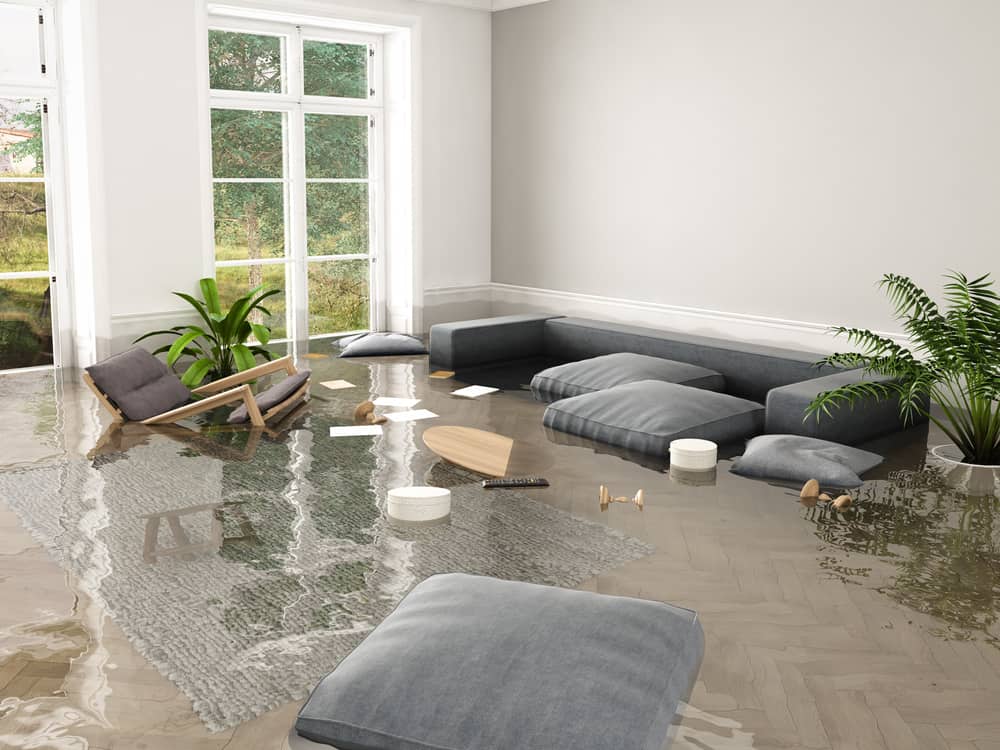
When you call, the first thing that happens is an immediate response — not a callback window, not a next-day appointment. Water damage runs on a 24-to-48-hour clock before mold begins to take hold, and that window doesn’t pause for business hours. Whether it’s a burst pipe behind a finished wall or a basement that took on water during a nor’easter, we arrive, assess the full scope of the damage, and get to work.
The assessment phase uses professional moisture meters and thermal imaging to find water that’s already moved beyond where you can see it. In the older homes common throughout Locust Valley — properties with thick plaster walls, original subfloors, and complex structural cavities — this step is critical. Consumer-grade fans don’t reach what’s inside those walls. Industrial dehumidifiers, high-velocity air movers, and targeted drying equipment do. The drying phase typically runs three to five days, with moisture readings tracked throughout to confirm the structure is genuinely dry, not just surface-dry.
Once the space is confirmed dry, we compile the documentation and submit it directly to your insurance company. We handle that communication on your behalf — the paperwork, the billing, the back-and-forth with the adjuster. If reconstruction is needed, that’s handled under the same roof. One call covers the whole process, from water extraction through rebuild. Work in the Town of Oyster Bay follows standard permitting requirements, and we’re familiar with what that process involves for restoration and reconstruction projects in this area.

Ready to get started?
The range of water damage situations that come up in and around Locust Valley is broader than most homeowners expect. Burst pipe water damage is one of the most common calls — especially in winter, when the freeze-thaw cycle on the North Shore’s rolling terrain puts aging plumbing systems under significant stress. Many of the homes in Locust Valley, including the estate properties in Lattingtown and Matinecock, are running on original or early-replacement pipe systems that were never designed to last this long. When one of those pipes lets go, the water moves fast and it moves far.
Flooded basement cleanup is another frequent need, particularly in the spring when April rainfall — the heaviest month of the year here, averaging around 3.7 inches — combines with saturated ground and pushes water through foundation walls. Storm damage restoration follows the late-summer and early-fall pattern that coastal Nassau County knows well: tropical storm remnants and nor’easters that bring heavy rain and, in some cases, coastal flooding alerts for communities this close to Long Island Sound.
The full scope of services we offer includes water extraction, structural drying, dehumidification, mold prevention treatment, contents protection, and complete reconstruction. Mold remediation is available when needed — and given the 24-to-48-hour window in which mold begins to grow, it’s often needed when a water event wasn’t caught quickly. Every job includes direct insurance coordination, which for high-value Nassau County properties means the documentation is thorough, the billing goes straight to the carrier, and you’re not left managing that process on your own.

In most cases, yes — standard homeowners insurance covers sudden and accidental water damage from internal sources like a burst pipe, a failed water heater, or a washing machine overflow. The key word is “sudden.” If the pipe burst without warning, that’s typically a covered event. What insurance does not cover is gradual damage — a slow leak that’s been seeping behind a wall for months, or a drainage issue that was never addressed. It also does not cover flooding from external sources like storm surge or groundwater, which requires a separate flood insurance policy.
For homeowners in Locust Valley, this distinction matters because many of the homes in this area are running on aging plumbing systems. If a pipe fails and there’s evidence that it had been deteriorating for some time, an adjuster may attempt to classify the damage as a maintenance issue rather than a sudden event. Having a restoration company that documents the damage thoroughly from the start — with photos, moisture readings, and a clear timeline — significantly strengthens your position in that conversation. We work directly with your insurance company and handle that documentation process as part of the job.
The EPA is straightforward on this: water-damaged areas need to be dried within 24 to 48 hours to prevent mold growth. That’s not a worst-case estimate — that’s the standard window under normal indoor conditions. In a basement that’s already dealing with the humidity levels common to Nassau County’s North Shore in summer, or one that hasn’t had great ventilation to begin with, mold can begin taking hold even faster.
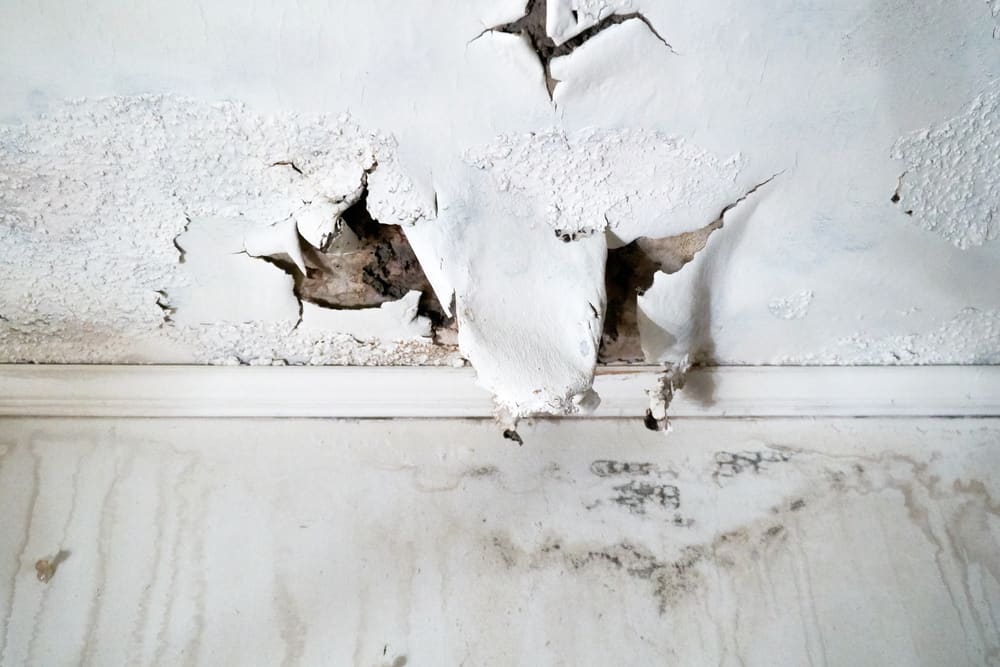
What makes this especially relevant for Locust Valley homes is the construction. Older properties with plaster walls, original wood framing, and thick subfloors hold moisture longer than modern construction. A basement that looks dry on the surface after you’ve run a shop vac and some fans may still have significant moisture content inside the wall cavity or under the flooring. That hidden moisture is exactly where mold establishes itself before you ever see it. Professional moisture meters and thermal imaging can detect what you can’t see — and that’s the only way to know with confidence that the space is actually dry, not just visually dry.
For a typical water damage event — a burst pipe affecting one or two rooms, or a basement flood from a storm — the drying phase alone generally takes three to five days using industrial equipment. The full restoration process, from initial water extraction through final repairs, averages around two weeks for moderate damage. More extensive situations involving structural repairs or mold remediation can extend that timeline significantly.
For the older homes throughout Locust Valley, the timeline can run slightly longer than average, and for good reason. Thick plaster walls, original hardwood floors, and dense structural framing hold moisture differently than modern drywall and engineered lumber. The drying process has to be monitored with actual moisture readings — not just time — to confirm the structure has reached an acceptable level before reconstruction begins. Rushing that phase is one of the most common causes of mold problems that show up weeks after a homeowner thought everything was resolved. The goal is to get it right, not just get it done fast.
The most important thing you can do in the first few minutes is stop the source if you can — shut off the water supply valve to the affected fixture, or the main shutoff if you’re not sure where the problem is. After that, don’t wait to call a restoration company. The 24-to-48-hour mold window starts the moment water contacts your walls, floors, and framing — not when you decide you’ve assessed the situation enough to make a call.
While you’re waiting for our team to arrive, move valuables and furniture out of the affected area if it’s safe to do so, and avoid using electrical outlets or appliances in the wet area. Don’t attempt to dry the space with household fans alone — they circulate air but don’t have the capacity to pull moisture out of wall cavities or subfloors, which is where the real damage accumulates in homes like those found throughout Locust Valley and its surrounding communities. Take photos of everything before anything is moved or cleaned up. That documentation is valuable for your insurance claim, and having it from the very beginning makes the process smoother.
It depends on the scope of the damage and which areas of the home are affected. For a contained event — a burst pipe in one bathroom, or a section of finished basement — most homeowners can remain in the house while the drying equipment runs. Industrial dehumidifiers and air movers are loud, and they run continuously, but they don’t typically require you to vacate the property.
If the damage is more extensive, involves Category 3 water — which includes sewage backup or floodwater that may carry contaminants — or if mold remediation is required, temporary relocation is often the safer and more practical option. In those cases, your homeowners insurance policy may cover additional living expenses while the work is completed, so it’s worth checking your policy or asking your adjuster directly. For the larger estate properties in Locust Valley, where a significant water event might affect multiple floors or outbuildings, the scope assessment at the start of the job will give you a clear picture of what to expect and whether staying put is realistic.
Water damage doesn’t follow a schedule, and neither do we. We operate around the clock — which means if a pipe lets go at 2 AM on a Saturday or a storm pushes water through your foundation on a holiday weekend, we’re reachable and ready to respond. The call gets answered, the situation gets assessed over the phone, and a crew is dispatched.
For homeowners in Locust Valley and the surrounding North Shore communities, this matters more than it might in other parts of Nassau County. Many of these properties sit on larger lots, have finished basements with high-end materials, or include outbuildings and carriage houses that are also at risk. A water event that goes unaddressed from Friday night until Monday morning can cause tens of thousands of dollars in additional damage — to original flooring, to plaster, to structural framing that’s been holding up for a century. Getting someone on-site quickly isn’t just about convenience. It’s about preserving what makes these homes worth what they are.
Useful Links
Other Services we provide in Locust Valley