
Hear from Our Customers

The typical home in Plainview was built around 1957. That’s nearly 70 years of cast-iron drain lines, galvanized supply pipes, and basement drainage systems that were never designed to last this long. When one of those systems fails — and eventually, they do — water doesn’t just sit on the floor. It wicks into original plaster walls, soaks through tongue-and-groove subfloors, and settles into structural cavities that a shop vac and a box fan will never reach.
What you get from our restoration isn’t just a dry floor. It’s documented moisture readings at every affected surface, industrial drying equipment running until the numbers confirm the job is done, and a written record of the work that holds up when your insurance adjuster reviews the claim. That last part matters more than most people realize until they’re in the middle of a dispute.
Plainview homeowners are also carrying a lot on the line financially. With median home values pushing well past $800,000 and property taxes averaging over $10,000 a year, a water damage event that isn’t handled correctly doesn’t just cost you money now — it creates disclosure headaches, complicates resale, and can quietly reduce the value of an asset you’ve spent years building. Getting it right the first time isn’t optional here. It’s the whole point.
We’ve been serving Nassau and Suffolk County homeowners for nearly three decades. We’re based in West Babylon and cover all of Nassau County — including Plainview — with dedicated local teams, not crews dispatched from out of state when the phones get busy after a storm.
Our technicians are fully certified by the IICRC, which is the industry’s most recognized standard for water damage restoration. That certification matters because Nassau County insurance carriers know what IICRC-standard documentation looks like, and they expect it. It also means the work follows a defined protocol — not a rough estimate of what seems dry enough.
Plainview sits right off the NY 135 corridor, which puts us within a direct and fast drive when you need someone there quickly. We’re not learning the area — we’ve been working in Nassau County homes, including homes built in the same post-war era as the ones on your street, for decades.
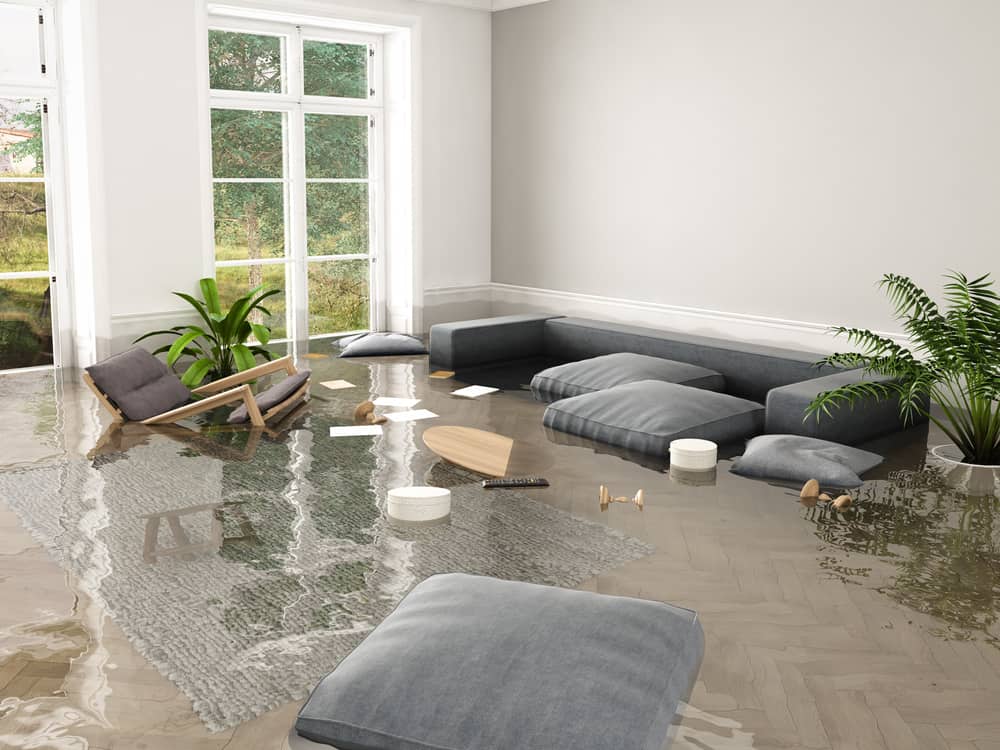
When you call, our first priority is getting someone to your home quickly. In a community like Plainview, where most households are empty for eight to ten hours on a workday, water damage is often discovered hours after it started. A washing machine line that let go at 8 in the morning can flood a finished basement by the time you pull into the driveway at 6. The faster the response, the less damage there is to undo.
Once our team arrives, the first step is a thorough assessment — not just a visual walkthrough, but actual moisture readings using professional meters and, where needed, thermal imaging to find water that has moved behind walls or under flooring. From there, extraction equipment removes standing water, and industrial air movers and dehumidifiers are set up to begin the structural drying process. This phase typically runs several days, with moisture levels checked regularly until the readings confirm the structure is dry throughout.
Because Plainview is an unincorporated hamlet governed through the Town of Oyster Bay, any reconstruction work that follows — drywall replacement, flooring, structural repairs — is permitted through the Town of Oyster Bay Building Department. We handle the full scope from extraction through rebuild, so you’re not coordinating between multiple contractors while also managing an open insurance claim. The process is documented at every stage, which is exactly what your insurer will need.
Ready to get started?
The water damage scenarios that show up most often in Plainview follow a predictable pattern. Aging supply lines and drain systems in homes built during the 1950s development boom fail without warning. The high regional water table pushes against foundation walls and floor drains during heavy rain, which is why flash flood warnings have explicitly named Plainview during significant storm events. Winter cold snaps freeze pipes in exterior walls and uninsulated spaces that 1957-era construction never accounted for. And when summer storms overwhelm aging gutters and downspouts, the water goes straight toward the foundation.
We handle all of it — flooded basement cleanup, burst pipe water damage, storm damage restoration, sewage backup, and mold remediation when moisture has been sitting long enough to create a secondary problem. The full service runs from initial water extraction and basement water extraction through structural drying, antimicrobial treatment, contents evaluation, and complete reconstruction. Under New York State Labor Law Article 32, mold remediation projects above a certain size require a licensed mold assessor and a licensed mold remediator operating separately — we work within those requirements, which protects both you and the integrity of your insurance claim.
There are no named service packages or published price tiers — every assessment is scoped to what your specific home actually needs, which is the only honest way to handle a job where no two situations are exactly alike.

In most cases, yes — standard homeowners insurance covers sudden, accidental water damage from internal sources like burst pipes, failed appliance supply lines, or an overflowing water heater. The key word is sudden. If the damage resulted from a pipe that let go without warning, your policy will typically cover the restoration costs, including water extraction, structural drying, and repairs.
What it won’t cover is flooding from outside the home — storm surge, groundwater, or overland water coming in through a window well or foundation crack during a heavy rain event. That type of damage requires a separate flood insurance policy, and it’s worth knowing that distinction before you file. It also won’t cover damage that resulted from a slow, ongoing leak that went unaddressed — insurers call that a maintenance issue rather than a sudden event.
If you’re not sure which category your situation falls into, a documented assessment from an IICRC-certified company gives you the clearest possible picture before you file anything. We work directly with your insurance carrier and handle the documentation and billing, so you’re not navigating that process on your own.
The EPA’s guidance is clear: mold can begin growing within 24 to 48 hours of water damage under the right conditions. Mold spores are already present in the air — they don’t need to travel in from outside. They just need moisture and a surface to land on, and a wet wall, wet subfloor, or damp insulation gives them exactly that.
In a Plainview home built in the 1950s, this is especially relevant because older construction materials — original plaster, older insulation, tongue-and-groove wood subfloors — absorb and retain moisture differently than modern materials. They hold water longer, which extends the window during which mold can establish itself before anyone realizes it’s there.
This is why the timing of your call matters as much as who you call. We operate around the clock specifically because waiting until the next business morning can mean the difference between a water damage job and a combined water and mold remediation project.
The first thing to do is make sure it’s safe to enter. If there’s any chance the electrical panel, outlets, or appliances in the basement were submerged, don’t go in until the power is confirmed off. Water and live electrical circuits are a serious hazard, and it’s not worth the risk.
Once it’s safe, call a restoration company before you start pulling things out or running fans. The order matters. A professional assessment documents the full scope of damage before anything is disturbed, which strengthens your insurance claim significantly. Moving furniture, pulling up carpet, or running consumer-grade fans before the assessment can actually complicate the claim — it changes the scene before the damage is formally recorded.
Don’t assume that because the water is gone, the problem is over. In a 1957-era Plainview home, moisture travels into wall cavities, under flooring, and into structural framing. What looks dry on the surface can have significant moisture content inside the wall. Professional moisture meters tell the real story — visible inspection alone does not.
For most water damage situations — a burst pipe, an appliance failure, or a flooded basement that was caught within a day — the drying phase alone typically runs three to five days. That’s the time it takes for industrial dehumidifiers and air movers to pull moisture out of the structure to the point where readings confirm it’s safe to close up walls and move into repairs.
The full timeline from initial extraction through final reconstruction depends on how much damage occurred and how long the water was present before it was discovered. In Plainview, where many households are empty during the workday, water damage that started in the morning and wasn’t found until evening can extend the drying timeline compared to a situation that was caught within the first hour. A general estimate for a moderately affected basement — extraction, drying, and basic repairs — runs around two to three weeks from start to finish.
If mold has already developed, or if structural elements like framing or subfloor need replacement, that adds time. The honest answer is that the timeline is scoped after the assessment, not before — because no two jobs are the same.
In most cases, yes — especially if the damage is contained to one area like a basement or a single room. Our restoration equipment runs continuously during the drying phase, which means industrial dehumidifiers and air movers will be operating in the affected space around the clock. That’s noise and airflow, but it doesn’t make the home uninhabitable for the rest of the family.
The exception is when the damage is extensive enough to affect HVAC systems, when mold remediation is underway in a living area, or when structural repairs require sections of the home to be sealed off. In those situations, temporary relocation may be necessary — and if your homeowners insurance covers the damage, additional living expenses during displacement are often part of the claim.
For families in Plainview with children in the Plainview-Old Bethpage school district, disruption to the household routine is a real concern. Our goal is always to restore the home as efficiently as possible so that life gets back to normal — and a clear timeline, communicated upfront, helps families plan around the process rather than being blindsided by it.
We work directly with your insurance company — meaning we handle the documentation, the scope of damages, and the billing on your behalf. You don’t have to serve as the go-between for your insurer and your contractor, which is one of the most stressful parts of the process for most homeowners.
The IICRC certification that our technicians hold is directly relevant here. Nassau County insurance adjusters are familiar with IICRC-standard documentation, and claims backed by that documentation move more smoothly than those produced by non-certified companies. Every step of the restoration process is recorded — moisture readings, equipment logs, scope of damage, drying progress — and that paper trail is what an adjuster needs to process the claim accurately.
One thing worth knowing: you don’t have to call your insurance company before you call us. In fact, calling First Response Restoration & Cleaning Inc. first means the damage is professionally documented before anything is disturbed, which gives your claim the strongest possible foundation. We can walk you through what’s likely covered, what documentation your carrier will need, and how the billing process works — before any work begins.
Useful Links
Other Services we provide in Plainview