
Hear from Our Customers

When the water is gone and the drying is done right, you’re not just looking at a clean floor — you’re looking at a home with no hidden moisture behind the walls, no mold developing inside the structure weeks later, and no insurance headache left unresolved. That’s the difference between a surface cleanup and a real restoration.
For Syosset homeowners, the stakes are higher than most. Nearly three-quarters of the hamlet’s housing was built between the 1940s and 1960s, which means galvanized pipes that are now pushing 70 or 80 years old, original plumbing systems that were never designed to last this long, and wall cavities that hold moisture in ways newer construction simply doesn’t. A water event in a home like this isn’t just a wet floor — it’s a hidden damage problem that requires professional moisture detection, not a fan and a prayer.
Add to that the commuter reality of Syosset: most households are empty for eight to ten hours on any given weekday. A pipe that lets go at 7 a.m. has all day to work before anyone walks back through the door. The EPA is clear that mold can begin forming within 24 to 48 hours of water intrusion. By the time you’re back on the platform at Syosset station, the clock has already been running. Getting the right team in fast — and getting the drying done completely — is what protects a home worth close to $900,000 from damage that compounds every hour it goes unaddressed.
First Response Restoration & Cleaning Inc. has been working in Nassau County for close to three decades. That’s not a marketing number — it means the technicians showing up to your Syosset home have been inside the capes, split-levels, and colonials that line the residential streets south of Syosset station long enough to know exactly what those homes look like from the inside out.
The aging pipe configurations, the moisture patterns in post-war construction, the specific ways water moves through a 1958 Long Island home — none of that is new to our team. We’re IICRC-certified, licensed, bonded, and insured, and we work directly with your insurance company so you’re not stuck managing that process on top of everything else.
There’s no national franchise behind our name, no call center routing your emergency to whoever is available. When you call the Nassau County line — 516-541-0500 — you’re reaching a Long Island company that has been doing this work in communities like Syosset, Woodbury, Jericho, and the broader Town of Oyster Bay for nearly three decades.
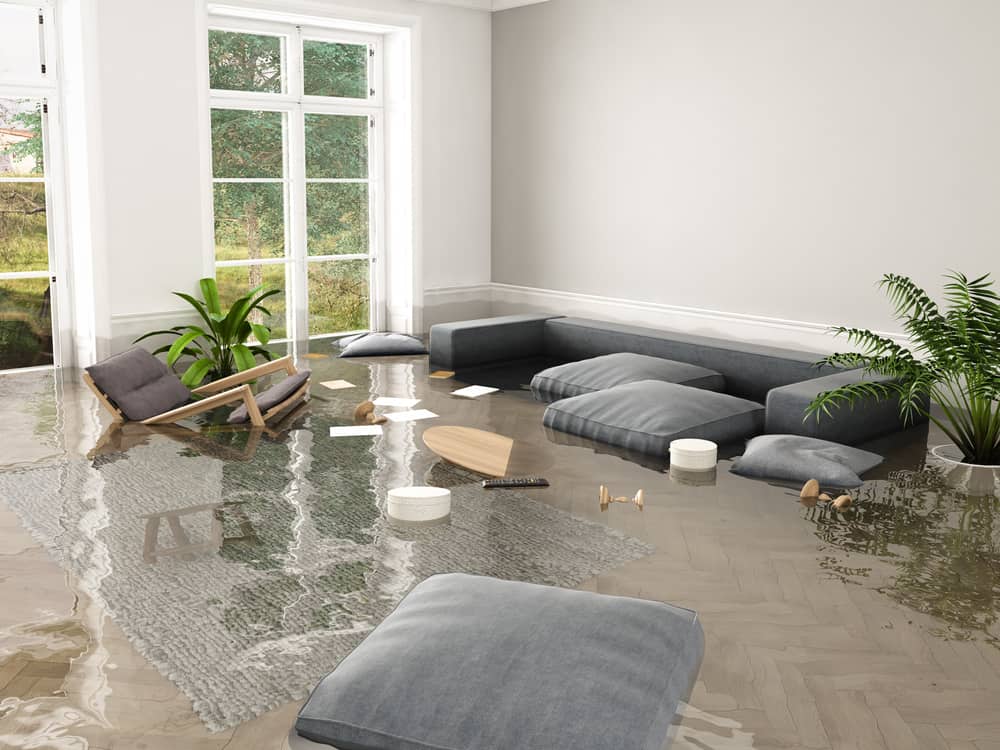
The process starts the moment you call. Whether it’s a burst pipe discovered when you get home from your commute or a basement seep that a neighbor spotted mid-morning, the first step is getting our team on-site quickly — because every hour between the water event and professional extraction increases the damage and the cost.
Once on-site, we do a full assessment using professional moisture meters and detection equipment. This matters especially in Syosset’s older housing stock, where water migrates into wall cavities, under original hardwood flooring, and behind baseboards in ways that aren’t visible to the eye. The assessment determines the true scope of the damage — not just what’s wet on the surface, but what’s saturated inside the structure.
From there, industrial extraction equipment removes standing water, and commercial-grade air movers and dehumidifiers begin the structural drying process. This phase typically runs three to five days for most homes, though the timeline depends on the extent of the damage and the materials involved.
Throughout the job, everything is documented — photos, moisture readings, drying logs — in a format that holds up with insurance adjusters. Restoration work in Syosset falls under the Town of Oyster Bay’s permitting jurisdiction, and any structural repairs or reconstruction are handled in compliance with local building requirements. If mold remediation is part of the scope, that work is performed under New York State’s mold remediation licensing requirements under Labor Law Article 32 — not just IICRC certification alone.
When the job is complete, you have a dry home, a documented file, and a direct insurance claim — not a stack of paperwork to sort through yourself.
Ready to get started?
Water damage restoration in Syosset isn’t a single service — it’s a sequence of connected steps, and every one of them matters. We handle the full scope: water extraction, structural drying, moisture mapping, mold prevention, odor treatment, and complete reconstruction when structural repairs are needed. You don’t coordinate multiple contractors. One call covers it all.
The specific conditions in Syosset shape how we do this work. The post-war housing stock along the residential blocks south of Syosset station — capes, split-levels, colonials built in the 1950s and 1960s — presents particular challenges. Galvanized pipes corrode from the inside out, often failing without visible warning. Original bathroom exhaust fans in homes of this era were sometimes vented into attic spaces rather than to the exterior, creating chronic moisture accumulation that a water event can accelerate into a serious mold situation.
We know what to look for in these homes because we’ve been working in them across Nassau County for nearly 30 years. Flooded basement cleanup, storm damage restoration, burst pipe water damage, and basement water extraction are all part of the regular work in this area — particularly during the freeze-thaw cycles of Nassau County winters and the spring groundwater rise that follows snowmelt.
Every job includes direct insurance coordination, with First Response Restoration & Cleaning Inc. handling the documentation and billing directly with your insurer so the claim process doesn’t fall on you. If you’re in Syosset or the surrounding Woodbury, Jericho, Plainview, or Hicksville areas, we’re the team to call.

In most cases, yes — standard homeowners insurance covers sudden and accidental water damage, and a burst pipe is one of the clearest examples of that. If a pipe fails unexpectedly and water damages your floors, walls, or structure, that’s typically a covered event. What insurance does not cover is flooding from an external source, like groundwater or storm surge — that requires a separate flood insurance policy.
The distinction matters in Syosset because the most common water damage scenarios here involve internal failures: aging galvanized pipes, appliance supply lines, and water heaters in homes that are 60 to 70 years old. These are exactly the types of events that standard homeowners insurance is designed to cover. Where claims get complicated is when there’s evidence of a slow, ongoing leak that you knew about and didn’t address — insurers can deny those claims on maintenance grounds.
That’s one reason it helps to have a restoration company that documents everything from the moment we arrive. We handle the documentation and work directly with your insurer, which makes a real difference in how the claim goes.
The EPA’s guidance is clear: mold can begin developing within 24 to 48 hours of water intrusion. That’s not a worst-case scenario — that’s the standard window under normal indoor conditions. In a Syosset home where the water event happened while the household was out for the day, you may already be partway through that window before you even know there’s a problem.
The risk is compounded by the housing stock. Homes built in the 1950s and 1960s — which make up the majority of Syosset’s residential properties — have structural configurations that trap moisture in ways that are hard to detect without professional equipment. Wall cavities, original subfloors, and attic spaces that were improperly vented for decades can all harbor moisture long after the visible water is gone.
Mold doesn’t need much: warmth, moisture, and an organic surface are enough. The only reliable way to prevent it after a water event is professional drying that reaches the moisture inside the structure, not just the surface. Waiting to see if it dries on its own is how a manageable restoration job turns into a mold remediation project.
The first thing to do is make sure it’s safe to enter the space. If there’s any chance the water has reached electrical outlets, panels, or appliances, don’t go in until the power is off. Once it’s safe, call a restoration company — not after you’ve tried to clean it up yourself, but as the first call. The reason is that professional extraction equipment removes water from places a wet-vac or consumer fan simply cannot reach, and every hour of delay increases the damage.
In Syosset, basement flooding most commonly comes from one of a few sources: groundwater pressure during spring thaw or heavy rain, sump pump failure, or a plumbing failure inside the home. The cause matters because it affects what’s covered by insurance and what the remediation scope looks like. A groundwater event, for example, is typically not covered under standard homeowners insurance — it falls under flood coverage. A burst supply line or water heater failure usually is covered.
Documenting the source and the damage from the start — which is part of what we do when we arrive — protects your claim and gives the adjuster what they need.
For most water damage jobs — a burst pipe, an appliance failure, a moderate basement flood — the full restoration process takes roughly two to three weeks from initial extraction through final repairs. The drying phase alone typically runs three to five days, depending on how much moisture has penetrated the structure and what materials are involved.
Older homes tend to take longer because original materials like plaster walls, solid hardwood floors, and dense subfloor assemblies hold moisture more stubbornly than modern construction. In Syosset specifically, the post-war housing stock means our team is often working with materials and structural configurations that require more careful drying management than a newer build would.
If mold remediation becomes part of the scope — which can happen when water has been sitting for more than 24 to 48 hours, or when hidden moisture is found in wall cavities — that adds time to the project. The honest answer is that the timeline depends on what the moisture assessment reveals, and that’s something that can only be determined on-site. What you can count on is a clear explanation of the scope and timeline before work begins, not after.
Yes, and this is one of the more meaningful things we do. We work directly with your insurance company — handling the documentation, the moisture readings, the photo evidence, and the direct billing so you’re not stuck managing that process while also dealing with a damaged home.
For Syosset homeowners who are often managing careers and commutes alongside a home emergency, handing off the insurance coordination is genuinely useful. The average water damage insurance claim runs between $11,000 and $14,000, and the difference between a claim that goes smoothly and one that gets disputed often comes down to documentation quality.
Restoration companies that don’t document the job thoroughly — moisture readings at each stage, drying logs, photos of affected areas before and after — leave homeowners in a difficult position when the adjuster pushes back. Our process is built around documentation from the first hour on-site, which means the claim file is built as the work happens, not assembled afterward.
It comes down to the age and construction of the housing stock. Roughly 73% of Syosset’s homes were built between the 1940s and 1960s — a period when galvanized steel pipes were standard, insulation practices were different from today, and building codes didn’t require the moisture barriers and ventilation standards that newer construction includes. Galvanized pipes corrode from the inside out over decades, often developing pinhole leaks inside wall cavities long before anything is visible on the surface. By the time a stain appears on drywall or a floor starts to feel soft, the moisture has typically been there for a while.
There’s also a specific issue common to Cape Cod homes from this era — a style that’s widespread in Syosset — where bathroom exhaust fans were originally vented into the attic rather than to the exterior. Over decades, that creates chronic moisture accumulation in the attic space that a water event can push into active mold territory quickly.
Consumer-grade equipment can’t detect moisture inside wall assemblies or attic structures — that requires professional moisture meters and thermal imaging. It’s the reason a professional assessment matters even when the visible damage looks minor. What’s behind the wall is often the bigger problem.
Useful Links
Other Services we provide in Syosset