
Hear from Our Customers

When water gets into your home, the damage doesn’t pause while you figure out your next move. Moisture travels fast — into walls, under floors, behind baseboards — and in a coastal environment like Asharoken, where salt-air humidity is already working against your home year-round, it doesn’t take long for a manageable situation to become a mold problem. Getting the right team in quickly means the difference between a restoration job and a full remediation months down the road.
For homeowners along Asharoken Avenue and the beach corridor, storm damage isn’t a hypothetical. Long Island Sound sits to the north, Northport Bay to the south, and when a nor’easter hits this peninsula, it can push water from both directions at once. That kind of double-sided coastal exposure is unique to Asharoken, and it requires a restoration response that accounts for more than a burst pipe or an overflowing appliance. It requires people who understand what surge flooding does to a home built in 1962, with original plumbing, limited vapor barriers, and framing that’s been absorbing coastal moisture for decades.
What you get on the other side of a proper restoration is straightforward: a home that’s genuinely dry, documented thoroughly for your insurance claim, and treated in a way that doesn’t leave hidden moisture behind to become your next problem. That’s the outcome that actually matters.
We’ve been serving Long Island homeowners for nearly three decades. That means we were working through the 1992 nor’easter and Hurricane Sandy — the two storms most referenced in Asharoken community memory — long before restoration became a crowded industry full of national franchises dispatching crews from out of state.
We’re a Suffolk County-based operation with dedicated coverage across the Town of Huntington area. When you call the 631 number, you’re reaching a local team that knows this coastline, not a call center routing your emergency to whoever’s available. Our technicians are IICRC-certified, we’re licensed, bonded, and insured, and we work directly with your insurance company so you’re not stuck in the middle of a claims process during one of the most stressful situations a homeowner can face.
For a village this small — fewer than 800 residents, one road in and out — word travels fast. A company that’s been doing right by Long Island homeowners for thirty years has earned that reputation the hard way.
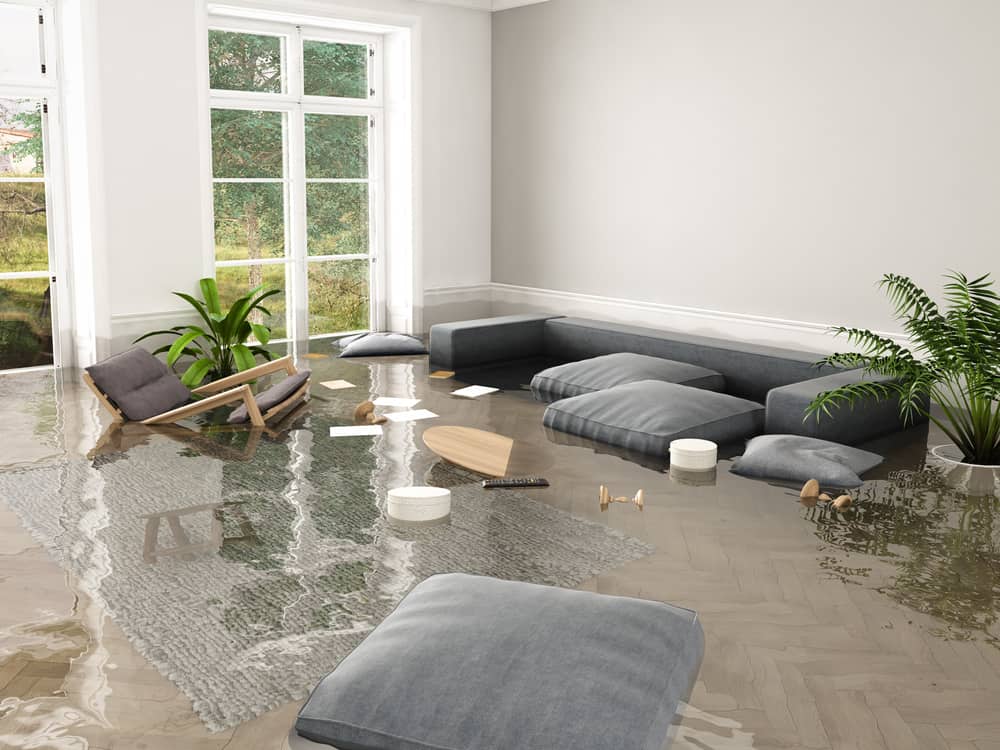
The process starts with a free on-site assessment. One of our certified technicians comes to your home, evaluates the full scope of the damage — including areas you can’t see — and gives you a clear picture of what you’re dealing with before anything else happens. In Asharoken, where storm surge can push Category 3 water into a home from multiple directions, that initial assessment matters more than it does in a typical burst-pipe situation. The source of the water determines the entire protocol: what equipment we use, what materials need to come out, and how the insurance documentation gets structured.
From there, water extraction begins immediately using industrial-grade equipment that pulls moisture from places a shop vac will never reach. After extraction comes the drying phase — air movers, dehumidifiers, and moisture meters tracking conditions inside walls and under floors until readings confirm the structure is genuinely dry. This typically takes three to five days, though the timeline depends on how much water entered and how long it sat before we arrived.
One thing worth knowing for Asharoken specifically: the village has its own building permit process, separate from the Town of Huntington, and any reconstruction work that follows restoration may require a village permit with a ten-business-day review window. We handle the restoration and reconstruction scope together, so you’re not left coordinating that process alone after the drying is done.
Ready to get started?
Our water damage restoration service covers the full scope — from the moment water enters your home to the point where it’s structurally sound and restored. That includes water extraction, structural drying, dehumidification, antimicrobial treatment to prevent mold colonization, moisture mapping to verify hidden areas are clear, and reconstruction where materials need to be replaced. There are no handoffs to a separate contractor for the rebuild phase. One team, one process.
For Asharoken homes specifically, a few conditions shape how we do this work. Most homes in the village were built before 1980, and many before 1962. Older construction absorbs water differently than modern builds — galvanized pipes corrode from the inside, older framing holds moisture longer, and the absence of modern vapor barriers means water migrates further into structural cavities before it stops. We account for this in every job. We’re not running a standard checklist designed for a 2005 subdivision — we’re working in homes that have been dealing with coastal moisture for decades.
Mold remediation is also available when needed, and given the EPA’s guidance that mold can begin forming within 24 to 48 hours of water intrusion, it’s often part of the conversation after any significant water event in a coastal environment like Asharoken. New York State requires a DOL Mold license for remediation work, and we carry the credentials to handle that scope without bringing in a separate provider.

This is one of the most common questions after a storm event, and the answer depends on where the water came from. Standard homeowners insurance typically covers sudden, accidental water damage from internal sources — a burst pipe, a failed water heater, an appliance overflow. What it does not cover is flooding, meaning water that enters your home from outside as a result of storm surge, rising groundwater, or overland flow. That’s a separate policy entirely — flood insurance through the National Flood Insurance Program.
In Asharoken, this distinction matters a great deal. Given the village’s location on a coastal tombolo flanked by Long Island Sound and Northport Bay, storm events here frequently produce the kind of water intrusion that falls under flood coverage rather than standard homeowners coverage. Many residents carry both policies, which means navigating two separate claims processes with different documentation requirements and coverage triggers. We work directly with insurance companies and handle the documentation for both types of claims, so you’re not left trying to figure out which policy applies to which damage while your home is still wet.
The EPA’s guidance is clear: water-damaged areas need to be dried within 24 to 48 hours to prevent mold growth. Mold spores don’t need much — warmth, moisture, and a surface to land on are enough to get started. Visible growth typically appears within 48 to 72 hours, but microscopic colonization begins earlier than that.
In a coastal environment like Asharoken, the conditions for mold are more favorable than in most inland communities. Salt-air humidity is present year-round, and homes built before 1980 often lack the vapor barriers and moisture-resistant materials that help slow the process in newer construction. If water has been sitting in wall cavities or under flooring — even just overnight — the risk is real. This is why the 24 to 48 hour window isn’t just an industry talking point. It’s the reason calling immediately, the moment Asharoken Avenue is passable after a storm, is genuinely important.
Nationally, the average cost of water damage restoration runs around $3,864, though the range is wide — from roughly $450 for minor incidents up to $16,000 or more for extensive damage involving multiple rooms, contaminated water, or significant structural involvement. The final number depends on how much water entered, how long it sat, what category of water it is, and how much of the structure needs to come out and be rebuilt.
As for insurance coverage, the short answer is: it depends on the cause. If a pipe burst, an appliance failed, or a roof leak let water in suddenly, your standard homeowners policy is likely to cover it. If the water came in from outside during a storm — which is a realistic scenario for homes along Asharoken Avenue — you’re looking at flood insurance territory. We document the damage thoroughly from the start, which matters when an adjuster reviews the claim. A well-documented file from an IICRC-certified restoration company holds up better in the claims process than one assembled after the fact.
In many cases, yes — but it depends on the extent of the damage and what category of water is involved. If the water came from a clean source like a burst pipe and the affected area is limited to one part of the home, staying put is often fine. The equipment runs continuously during the drying phase, which means industrial dehumidifiers and air movers will be operating around the clock for several days. It’s noisy, and the humidity levels in the home will be actively managed during that time, but it’s livable.
Where it gets more complicated is when the water is contaminated — Category 2 or Category 3, which includes gray water from appliances or black water from sewage backup and storm surge. In those situations, the affected areas need to be contained, and depending on the scope, temporary relocation may be the safer and more practical option. In Asharoken, where storm surge from Long Island Sound or Northport Bay is a realistic damage source, the water entering a home during a major weather event is often not clean. The assessment at the start of the job will give you a clear answer on what the living situation looks like during restoration.
For a typical flooded basement — a single space affected by a burst pipe or moderate water intrusion — the water extraction phase usually takes one to three days, followed by a structural drying period of three to five days. From start to finish, a moderate job often wraps up in about two weeks when you factor in the drying, any mold prevention treatment, and minor reconstruction.
That timeline stretches when the damage is more extensive, when contaminated water is involved, or when the water sat for a significant period before extraction began. In Asharoken, the access dynamic is worth factoring in: if a storm closes Asharoken Avenue for hours or days after a flooding event, restoration crews can’t reach the property until the road reopens. Every hour the water sits is an hour of additional absorption into flooring, framing, and wall materials. The faster you can get a team on-site once access is restored, the shorter and less complicated the overall restoration timeline tends to be. Calling immediately — even before the road clears — means a crew is already staged and ready to move the moment conditions allow.
The source of the water determines almost everything about how the job gets handled. A burst pipe produces what the industry classifies as Category 1 water — clean, from a pressurized supply line, with no contamination at the point of entry. The protocols for Category 1 are the most straightforward: extract the water, dry the structure, treat for mold prevention, and repair or replace what’s damaged. Insurance coverage for burst pipes under a standard homeowners policy is generally more predictable than for storm-related flooding.
Storm flooding in Asharoken is a different situation entirely. Water that enters from Long Island Sound or Northport Bay during a surge event is Category 3 — it carries contaminants, sediment, and biological material that require a more intensive remediation protocol. Affected materials often need to be removed rather than dried in place, and the documentation requirements for a flood insurance claim are more detailed than for a standard homeowners claim. For Asharoken homes built before 1980, both scenarios are realistic risks — aging pipes are vulnerable to the freeze-thaw cycles that Long Island winters bring, and the village’s coastal position makes storm surge flooding a lived reality, not a remote possibility. We handle both, with the certified protocols each type of water damage requires.
Useful Links
Other Services we provide in Asharoken