
Hear from Our Customers

When the water is gone and the fans are off, what matters is what you can’t see. Moisture that gets left behind inside walls, under floors, or in the framing of your home is what turns a manageable cleanup into a mold problem six weeks down the road. We don’t just dry the surface — we make sure nothing is hiding where your eyes can’t reach.
For homeowners in Coram, Medford, and Farmingville, that’s not hypothetical. The Central Pine Barrens aquifer sits close to the surface beneath these communities, and after heavy rain, the water table rises and pushes groundwater through hairline cracks in foundation walls and slabs. It often shows up a day or two after the storm ends — right when you thought the worst was over. That kind of intrusion requires industrial-grade moisture mapping and structural drying equipment, not a shop vac and a box fan.
We’ve been working on Long Island homes since the mid-1990s. That’s not a marketing number — it means our team was here for Floyd, for Irene, and for Sandy, when south shore communities across Brookhaven took some of the worst damage Suffolk County had seen in decades. Between Mastic Beach, Shirley, and the Moriches communities, the 2012 storm alone condemned dozens of homes and damaged hundreds more. The crews who responded to those calls know what Brookhaven flooding actually looks like.
We’re based in West Babylon with a dedicated 631 number for Suffolk County, and we operate with IICRC-certified technicians on every job. Licensed, bonded, and insured — and we work directly with your insurance company so you’re not left navigating that process alone. For a town as geographically varied as Brookhaven, that kind of grounded, local experience isn’t a bonus. It’s the baseline you should be looking for.
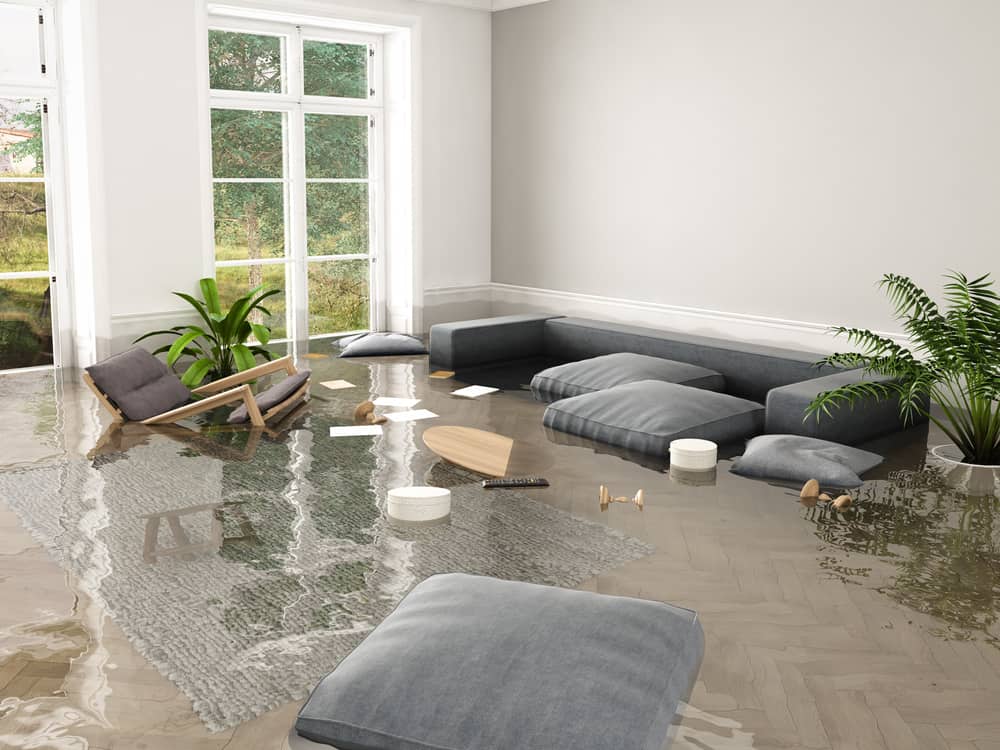
When you call, our first priority is stopping the problem from getting worse. That means water extraction starts as quickly as possible — because the EPA is clear that mold can begin forming within 24 to 48 hours of water exposure, and every hour counts. We deploy industrial pumps and extraction equipment to remove standing water from the affected area, whether that’s a flooded basement in Holbrook, a storm-damaged room in Patchogue, or a burst pipe situation in a Port Jefferson Colonial.
Once the visible water is out, the real diagnostic work begins. We use moisture meters and thermal imaging to identify where water has traveled inside your walls, under your flooring, and into structural cavities. In older homes — and Brookhaven has a lot of them, from pre-war Colonials in Stony Brook and Setauket to mid-century construction throughout Centereach and Selden — water moves in ways that aren’t obvious from the surface. Our drying phase uses industrial air movers and dehumidifiers placed strategically based on where the readings are highest, not just where the damage looks worst.

Ready to get started?
Water damage restoration in Brookhaven covers a wide range of scenarios — and we’re built to handle all of them. Emergency water removal, structural drying, basement water extraction, mold prevention treatment, dehumidification, and full reconstruction are all part of what we deliver under one roof. You’re not managing multiple contractors or waiting for a handoff. One call covers the scope from start to finish.
For south shore homeowners in Bellport, Mastic Beach, Shirley, or East Patchogue dealing with flood restoration after Great South Bay storm surge, the documentation component is just as important as the physical work. We coordinate directly with your insurance company, handle billing, and provide claim documentation that meets the standards adjusters and NFIP representatives expect. If you’re in a designated flood zone and the FEMA 50% Rule is in play, we can walk you through your exposure before work begins.

It depends on what caused the flooding, and this distinction matters a great deal in Brookhaven. Standard homeowners insurance typically covers sudden, accidental water damage — a burst pipe, a washing machine overflow, or a water heater failure. What it does not cover is flooding from an external water source, including storm surge from the Great South Bay or groundwater rising from below your foundation. For that, you’d need a separate flood insurance policy through the National Flood Insurance Program.
This is a critical point for homeowners in south shore Brookhaven communities like Mastic Beach, Shirley, Patchogue, and Bellport, where NFIP coverage is common because these areas have been designated repetitive-loss zones. If you’re in one of these communities and you don’t have a separate flood policy, a storm surge event may not be covered under your standard homeowners policy regardless of how severe the damage is. For interior Brookhaven communities like Coram or Medford where groundwater intrusion through the foundation is the issue, coverage can be murky — it often comes down to whether the cause is classified as a sudden event or a gradual condition. We work directly with your insurance company to document the cause and scope of damage in a way that supports your claim from the start.
Mold spores can begin germinating within 24 hours under the right conditions, and visible growth typically appears within 48 to 72 hours. The EPA’s guidance is clear: water-damaged areas need to be dried within 24 to 48 hours to prevent mold growth. That window is not flexible, and it doesn’t pause because the water looks like it’s drying on its own.
The reason this matters so much in Brookhaven specifically is that the town’s water damage scenarios often involve water that isn’t fully visible. In interior communities like Coram, Medford, and Farmingville, groundwater can push through foundation walls and sit inside insulation, behind drywall, and under flooring for days before a homeowner realizes the extent of the problem. By the time it’s obvious, the 24 to 48 hour window has already closed. That’s why professional moisture mapping — not just surface drying — is the only reliable way to know whether your home is actually dry or just appears that way. If mold does get a foothold, the remediation process becomes significantly more involved and more costly than a straightforward drying job would have been.
The FEMA Substantial Damage Rule — commonly called the 50% Rule — states that if the cost of restoring a flood-damaged structure equals or exceeds 50% of the structure’s pre-damage market value, the entire structure must be brought into compliance with current floodplain management standards. In practice, this can mean elevating the structure, which is a significant and expensive undertaking that many homeowners don’t see coming.
This rule applies directly to properties in Brookhaven’s designated flood zones, which include large portions of the south shore communities — Mastic Beach, Shirley, Patchogue, Bellport, Center Moriches, and East Moriches among them. If your home has a relatively modest market value and sustained serious structural damage, the 50% threshold can be reached more quickly than you’d expect. The Town of Brookhaven Building Department, located at One Independence Hill in Farmingville, is responsible for making Substantial Damage determinations, and their permit review timelines can run longer than in smaller Nassau County townships given the volume of applications the department handles. Having a restoration contractor who understands this regulatory landscape — and who documents costs carefully from the start — can make a significant difference in how the process unfolds for you.
For most residential water damage situations, you’re looking at roughly two weeks from initial extraction through final repairs — though that range stretches significantly based on severity. Minor damage from a single source, like a burst pipe in one room, might be resolved in 24 to 48 hours for the drying phase with repairs following shortly after. A more extensive scenario involving widespread flooding, structural damage, or mold remediation can take several weeks or longer.
In Brookhaven specifically, a few factors can affect the timeline beyond the damage itself. Permit approvals through the Town of Brookhaven Building Department can add time to projects requiring structural repairs, and the department’s workload means turnaround isn’t always fast. In south shore flood zone communities where FEMA documentation is involved, the insurance and compliance process can run parallel to the physical work and extend the overall timeline. For interior communities dealing with groundwater intrusion, the drying phase itself can take longer because moisture inside walls and under flooring needs to reach acceptable levels before any reconstruction begins — and that’s measured with equipment, not estimated by eye.
Groundwater intrusion — the kind driven by the Pine Barrens aquifer pushing up through your foundation after sustained rainfall — is one of the more complicated coverage situations in the insurance world. Standard homeowners insurance generally covers sudden and accidental water damage, but groundwater seeping through a foundation slab or walls is often classified differently. Whether it’s covered depends heavily on how the cause is documented and how your specific policy defines flooding versus water damage.
If you have an NFIP flood insurance policy, groundwater intrusion may be covered under certain circumstances, but flood policies have their own definitions and exclusions that vary. The honest answer is that coverage in this situation is not automatic, and the way the damage is documented from the start has a direct impact on whether a claim gets accepted. That’s one of the reasons working with a restoration company that handles insurance coordination directly matters in these situations. We document the water source, the water category, and the full scope of damage in a format that insurance adjusters can work with — giving your claim the strongest possible foundation rather than leaving the documentation to chance.
The most reliable indicator is IICRC certification. The Institute of Inspection, Cleaning and Restoration Certification sets the industry standard for water damage restoration — including the protocols for water extraction, structural drying, moisture documentation, and mold prevention. Insurance companies recognize IICRC-certified work, and in communities like Mastic Beach, Shirley, and Patchogue where NFIP claims are common, having a certified contractor document your damage correctly can directly affect whether your claim moves forward smoothly or gets complicated.
Beyond certification, look for a company that is licensed, bonded, and insured in New York State, and that has a verifiable local presence — not a national call center routing jobs to whoever is available. After Sandy, Brookhaven’s south shore communities were targeted by out-of-state contractors who offered fast work at low prices and left homeowners with incomplete jobs, billing disputes, and insurance headaches. A local company with a 631 area code, a Suffolk County base of operations, and nearly three decades of Long Island experience is a fundamentally different situation than a franchise dispatching crews from out of the area. Ask directly whether we handle insurance billing, whether our technicians are IICRC-certified, and whether we can walk you through the process before any work begins. Those three questions will tell you most of what you need to know.
Useful Links
Other Services we provide in Brookhaven