
Hear from Our Customers

The most common call we get from Coram homeowners isn’t after a burst pipe. It’s after a spring rainstorm — when groundwater pressure builds against the foundation and water starts coming up through the slab or floor drain. That’s hydrostatic intrusion, and it’s a direct consequence of Coram’s position on Long Island’s central glacial outwash plain, where the water table can sit as shallow as three to five feet below grade.
A consumer wet-vac handles the puddle. It doesn’t handle what’s already wicking into your wall framing and subfloor. When we finish the job, you’re not just looking at a dry floor — you’re looking at moisture readings that confirm the structural cavities are actually dry, not just the surface. That matters because mold doesn’t grow where you can see it first. It grows in the wall, behind the baseboard, under the subfloor.
The EPA is clear: water-damaged materials need to be dried within 24 to 48 hours to prevent mold growth. That window is real, and it closes fast. For Coram homeowners specifically, this means understanding what you’re dealing with before the next spring thaw arrives. The older ranch homes and Cape Cods that line the streets off Middle Country Road and Route 112 weren’t built with today’s waterproofing standards. They’re dealing with aging materials and a water table that doesn’t care about the calendar. Getting a thorough, professional dry-out done right the first time is the difference between a one-time restoration and an annual problem.
We’ve been restoring homes across Suffolk County for nearly three decades. That means we’ve worked through every water event pattern that affects central Brookhaven — from the hydrostatic groundwater flooding that comes with Coram’s shallow water table to the storm damage that follows a nor’easter tearing through the wooded interior of the island.
We’re based in West Babylon and maintain dedicated Suffolk County coverage with a local team, not a national call center routing jobs to whoever’s available. Our technicians are IICRC-certified, and we’re licensed, bonded, and insured. That matters when you’re filing a claim or navigating a grant application through the Town of Brookhaven’s storm damage assistance program, because documentation done to IICRC standards is documentation that holds up.
We’ve genuinely seen what water does to the post-war housing stock in communities like Coram — the plaster walls, the older subflooring, the galvanized plumbing that corrodes when wet. We know how to fix it completely.
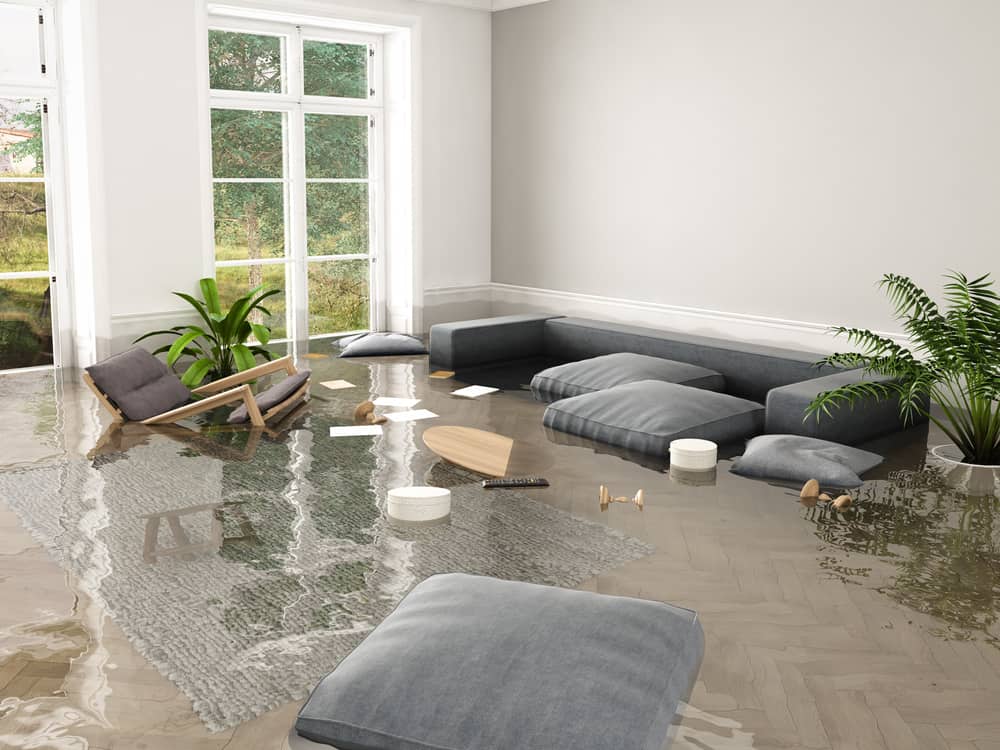
The first call starts the clock. When you reach us, the goal is to get someone to your home as fast as possible — because every hour of standing water or saturated material increases the scope of what needs to be done. For Coram homeowners dealing with a flooded basement, that urgency is compounded by the fact that groundwater intrusion doesn’t stop when the rain does. The water table takes time to drop, and moisture continues to move through porous concrete and older building materials long after the visible water is gone.
Once on site, we do a full moisture assessment — not just a visual check, but calibrated readings inside wall cavities, under flooring, and in any structural areas where water could have traveled. This step is what separates a real restoration from a surface cleanup. From there, industrial water extraction equipment pulls standing water, followed by commercial-grade air movers and dehumidifiers that dry the structure from the inside out.
For jobs involving structural damage, mold remediation, or reconstruction, we handle any required permits through the Town of Brookhaven’s Building Department — something worth knowing upfront if your home sustained damage during a storm event. Throughout the process, we document everything for your insurance claim and work directly with your insurance company, handling the billing and paperwork so you’re not caught between your adjuster and us. From initial extraction through final repairs, it’s one company managing the full scope — not a handoff to a second crew halfway through.

Ready to get started?
Water damage restoration in Coram covers more ground than most homeowners expect when they first make the call. The visible water is just the starting point. We handle the complete sequence: emergency water removal, structural drying, dehumidification, mold prevention treatment, and full reconstruction when walls, flooring, or structural components need to be replaced.
For Coram’s older housing stock — the mid-century ranches, Cape Cods, and split-levels that make up a large share of the detached single-family homes here — that reconstruction step comes up more often than it does in newer builds. Original plaster walls, older subfloor materials, and galvanized plumbing that corrodes when wet all behave differently under water exposure than modern construction. Our experience with this specific type of home means the drying protocols and repair approach are matched to what’s actually in the walls, not a one-size approach.
We also provide mold remediation and mold inspection for situations where water damage wasn’t caught quickly — which is common after the kind of slow groundwater intrusion events that Coram basements see every spring. We handle sewage backup cleanup, fire and smoke damage restoration, and board-up service. If your home was affected by a storm event and you’re also looking at roof penetration from a downed tree — a real risk in Coram’s wooded, inland neighborhoods — that’s handled as part of the same job, not a separate call to a separate company.

This is one of the most common questions from homeowners in central Brookhaven, and the answer comes down to geology. Coram sits on Long Island’s glacial outwash plain, where the soil is sandy and highly permeable. During spring snowmelt and heavy rainfall, the water table rises — sometimes to within three to five feet of the surface in lower-elevation neighborhoods. When that happens, groundwater builds hydrostatic pressure against your foundation walls and slab, and it pushes water through cracks, floor drains, and slab joints regardless of what’s above grade.
A standard cleanup removes the water that’s already inside. It doesn’t address the pressure causing it. If your basement floods repeatedly every spring, the underlying drainage condition hasn’t been resolved — and professional restoration after each event is still necessary to prevent the moisture from staying in your walls long enough to grow mold. We can assess the full scope of what’s happening structurally and help you understand what a complete solution actually looks like, rather than just treating the symptom each time.
It depends entirely on the cause. Standard homeowners insurance typically covers sudden, accidental water damage — a burst pipe, a washing machine supply line that fails, a water heater that gives out. What it does not cover is flooding from external groundwater, which is exactly the hydrostatic intrusion pattern that affects many Coram basements during spring and heavy rain events. For that type of damage, you’d need a separate flood insurance policy through the National Flood Insurance Program.
The distinction matters a lot in Coram because the two damage types can look similar on the surface but are treated completely differently by insurers. We work directly with insurance companies and can help document the cause of damage clearly from the start — which affects whether your claim gets approved and for how much. Getting the documentation right on day one is far easier than trying to reconstruct it after the fact, and it’s one of the reasons working with an IICRC-certified company matters when a claim is involved.
The EPA’s guidance is 24 to 48 hours — that’s how long it takes for mold to begin developing in water-damaged materials under the right conditions. In practice, mold spores can start germinating within the first 24 hours, and visible growth typically appears between 48 and 72 hours after exposure. The tricky part is that the growth often starts inside wall cavities, under flooring, and behind baseboards — places you can’t see until the problem is already established.
For Coram homes, this timeline is particularly relevant because the older building materials common in the area’s post-war housing stock — original plaster, older insulation, wood subfloors — absorb and hold moisture more readily than modern materials. A basement that looks dry on the surface 48 hours after a flood may still have wet framing inside the wall. That’s why professional moisture assessment with calibrated equipment matters — it tells you what’s actually happening inside the structure, not just what you can see from the floor.
For most residential water damage jobs, the drying phase alone takes three to five days using commercial-grade dehumidifiers and air movers. Full restoration — from initial water extraction through repairs and reconstruction — averages around two weeks for moderate damage, though the range runs from as little as 24 hours for minor events to several months for extensive structural damage or widespread mold remediation.
In Coram specifically, the timeline can be affected by a few local factors. Homes with older construction materials — the kind common in the mid-century ranches and Cape Cods throughout the community — sometimes require longer drying cycles because those materials hold moisture differently than newer builds. If structural repairs require permits through the Town of Brookhaven’s Building Department, that process adds time to the reconstruction phase. We walk you through a realistic timeline after the initial assessment so you’re not guessing about how long you’ll be displaced or managing around an active job site.
The most important thing is to stop contributing to the damage if you safely can. If the water source is internal — a burst pipe, a failed appliance — shut off the water supply to your home. If it’s groundwater coming through the slab, you can’t stop the source, but you can start moving items off the floor to reduce what gets saturated. Do not use standard household fans or a shop vac and assume the job is done — those tools move surface water but don’t reach moisture inside walls or under flooring.
Avoid entering the basement if there’s any chance the electrical panel or outlets have been exposed to water. Document everything with photos before anything is moved or removed — your insurance claim will be stronger with a clear visual record of the damage as it was found. When we arrive, that documentation becomes part of the claim file. The faster you call, the more of the 24 to 48 hour window before mold growth begins is still available to work with.
Yes. We maintain dedicated Suffolk County coverage with a local team operating out of West Babylon. Coram sits squarely within that service area — accessible via Route 112 to the Long Island Expressway, a straightforward route that keeps response times realistic for a 24/7 emergency service. Our Suffolk County number is 631-587-5300, and it connects directly to the local operation, not a national routing center.
Beyond Coram itself, we regularly serve the surrounding communities in central Brookhaven — including Selden, Middle Island, Miller Place, and Medford — many of which share the same shallow water table conditions and aging housing stock that make this part of Suffolk County particularly prone to recurring water damage. If you’re in one of the neighborhoods off Middle Country Road or along the Route 112 corridor and you’re dealing with a water event, the response is the same as for any other Suffolk County customer: IICRC-certified technicians, direct insurance coordination, and a full-service scope from extraction through rebuild.
Useful Links
Other Services we provide in Coram