
Hear from Our Customers

When water gets into a Great River home, the problem almost never stops at what you can see. The Connetquot River wraps around this hamlet on two sides before emptying into Nicoll Bay and the Great South Bay — which means the ground beneath your foundation is already working against you before the first drop hits your basement floor. When the water table rises after a storm or a heavy nor’easter, moisture pushes through foundation walls, seeps under slabs, and wicks into framing that’s been in place since the 1950s or 60s. Getting the surface dry isn’t enough.
What you actually get from us is confirmation — through industrial moisture meters and thermal imaging — that the problem is fully resolved, not just surface-level managed. We provide structural drying that reaches inside wall cavities, under subfloors, and behind baseboards where consumer fans simply don’t reach. And we deliver documentation: a detailed record of what was found, what was done, and how the work was performed, which matters significantly when you’re filing a claim with your homeowners insurer, your NFIP flood policy, or both.
For Great River homeowners, that last part is especially relevant. Given the hamlet’s official designation across four hurricane evacuation zones, many residents here carry dual coverage — and navigating two separate policies after a single water event is one of the more stressful things you can face. Having a restoration company that handles the insurance side directly means you’re not caught in the middle while also managing a damaged home.
We’re based in West Babylon — a South Shore Suffolk County community just west of Great River along the same bay corridor. This isn’t a national franchise routing calls through a 1-800 number or a lead aggregator with a Texas area code. We’re a real Long Island company that has been responding to water emergencies in Great River and communities like it for close to three decades.
That matters here specifically. Great River’s mid-century housing stock, its position between the Connetquot River and the Great South Bay, and its high water table create conditions that a company without genuine South Shore experience won’t fully understand on arrival. Our technicians are fully IICRC-certified, and we’re licensed, bonded, and insured — which is a requirement, not a selling point, when structural repair work requires Town of Islip building permits.
When you call us, you’re getting a crew that has worked in this environment before. We’ve dried homes in Great River after nor’easters pushed bay water through foundation cracks. We’ve extracted water from basements where the water table itself was the problem. We understand how moisture behaves in aging plaster walls and under original hardwood floors. That’s not a small thing when water is actively spreading through your home.
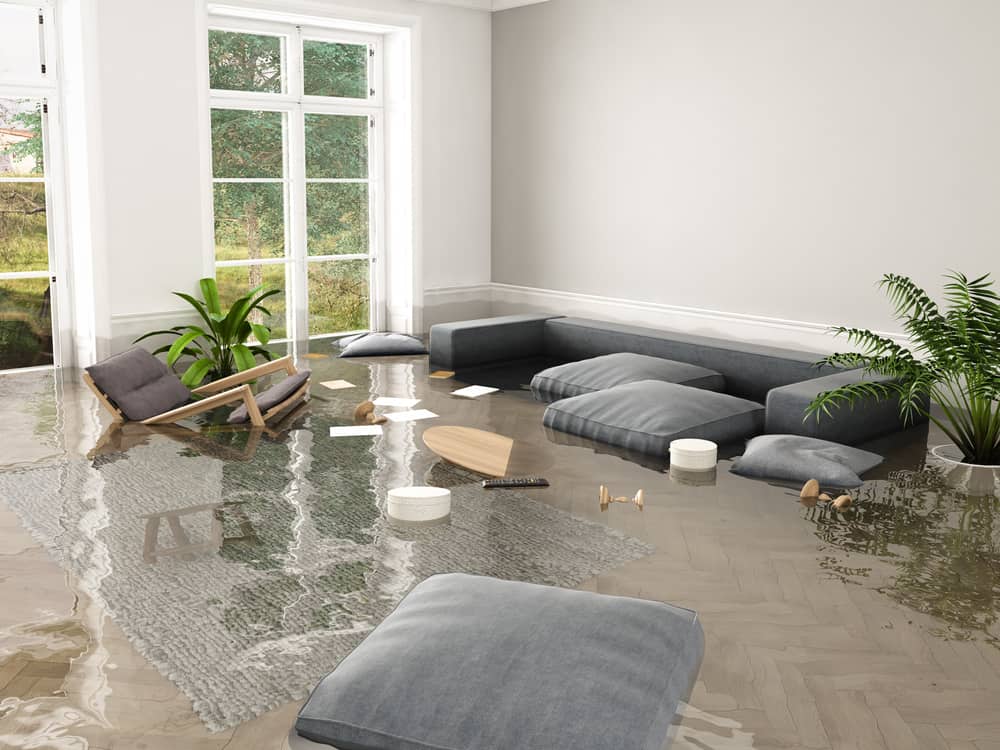
The first step is getting there. We operate 24 hours a day, seven days a week, because water damage doesn’t schedule itself around business hours — and in Great River, where the nearest hardware store is in East Islip and there’s no commercial district to fall back on, waiting until morning isn’t a realistic option. When you call, a crew is dispatched to your address.
On arrival, our first priority is assessment. We use moisture meters and thermal imaging to map exactly where water has traveled — not just where it’s visible. In Great River homes, where original plaster walls, hardwood floors, and aging concrete foundations are common, moisture often migrates well beyond the obvious damage zone. That initial mapping drives everything that follows: water extraction, structural drying, dehumidification, and antimicrobial treatment to prevent mold from establishing in the 24 to 48 hour window the EPA identifies as critical.
Once the structure is confirmed dry, we handle any repair work — drywall replacement, subfloor restoration, structural framing — under the appropriate Town of Islip permits. New York’s 2016 Mold Law also requires licensed contractors for remediation above certain thresholds, and we meet that requirement. Throughout the entire process, we document each phase for your insurance claim, whether that’s a standard homeowners policy, an NFIP flood policy, or both. You don’t have to manage that paperwork on your own.

Ready to get started?
Water damage in Great River can come from several directions at once. A nor’easter pushing Great South Bay water inland through drainage backflow. A burst pipe in a 1960s home where galvanized steel has finally given out. A flooded basement from hydrostatic pressure building against an aging foundation after three days of heavy rain. Storm damage opening a roof to the elements. Each of these scenarios requires a different response, and we handle all of them without subcontracting the work out.
Our full scope includes water extraction and basement water removal, structural drying and dehumidification, mold inspection and remediation, fire and smoke damage restoration, board-up service, and complete rebuild from damaged structure back to livable condition. For Great River homeowners dealing with sewage backup — a real risk when storm surge overwhelms drainage systems along the South Shore — we’re equipped to handle Category 3 black water contamination, which requires a significantly different protocol than a clean water pipe burst.
What you won’t get from us is a company that dries the surface, hands you a report, and leaves you to coordinate contractors for the rest. We work from the initial emergency call through final repairs, with direct insurance billing throughout. For a community where residents are accustomed to handling things through trusted relationships rather than transactional service, that continuity matters.

Standard homeowners insurance typically covers sudden, accidental water damage — a burst pipe, a washing machine overflow, a roof breach from storm damage. What it does not cover is flooding, which is defined as water entering from an external source like storm surge, overflow from a body of water, or groundwater intrusion. That distinction matters enormously in Great River, where the Connetquot River, Nicoll Bay, and the Great South Bay create multiple potential flood sources during a major storm event.
Many Great River homeowners carry a separate flood insurance policy through the National Flood Insurance Program precisely because of the hamlet’s documented flood zone designations. If you have both policies, the coverage split between them depends on the source and path of the water — which is something an adjuster will assess. We work directly with both homeowners insurers and NFIP flood adjusters, handle the documentation, and bill directly so you’re not managing two competing claims processes while also dealing with a damaged home.
The EPA states that water-damaged areas need to be dried within 24 to 48 hours to prevent mold growth. In practice, mold spores can begin germinating within the first 24 hours under the right conditions, and visible growth typically appears within 48 to 72 hours. That window is not generous, and in Great River it’s further compressed by the ambient moisture environment — homes adjacent to the Connetquot River and the Great South Bay exist in a naturally humid, high-water-table setting where moisture doesn’t evaporate the way it might in a drier inland community.
This is why calling a restoration company immediately — not the next morning, not after you’ve tried to dry it yourself — is the decision that determines whether you’re dealing with water damage restoration or a mold remediation on top of it. Consumer fans and wet-vacs don’t reach inside wall cavities or under subfloors, which is exactly where mold establishes itself after a flood. Industrial drying equipment and moisture mapping are what actually close that window.
The honest answer depends on the severity and source of the damage. For a contained event — a single burst pipe, a localized appliance overflow — the drying phase typically takes three to five days, with extraction happening in the first one to three days. A full restoration project for a moderately flooded basement, including repairs, generally runs about three weeks from start to finish.
For Great River homes, a few factors can extend that timeline. Older mid-century construction — the kind common throughout the Town of Islip’s South Shore communities — often means original plaster walls, hardwood flooring, and concrete foundations that hold moisture differently than modern materials. Structural repairs also require Town of Islip building permits, which add a step to the process. And if the flooding involved bay water or drainage backflow, the contamination classification affects how the space must be treated before it can be closed back up. We’ll give you a realistic timeline on arrival, based on what’s actually in front of us — not a generic estimate.
The first thing is safety. If there’s any possibility that floodwater has reached electrical outlets, panels, or appliances, don’t enter the space until power to that area is confirmed off. In Great River homes where the electrical panel may be located in or near the basement — common in mid-century construction — that’s a real consideration before you step in to assess the damage.
Once it’s safe to enter, the most useful thing you can do is document everything with photos or video before moving anything. Don’t discard damaged materials — insurers and adjusters need to see the extent of the loss. Then call us. Don’t wait to see how it dries on its own, and don’t rely on fans and a dehumidifier from the hardware store in East Islip — those tools don’t have the capacity to pull moisture from structural cavities, and every hour you wait narrows the window before mold becomes part of the problem. We’re available around the clock, and the earlier the call, the more of your home can be saved.
In many cases, yes — but it depends on where the damage is, how extensive it is, and what category of water is involved. If the flooding was from a clean water source like a burst pipe and is contained to one area of the home, most families can remain in the unaffected parts of the house while drying and repairs are underway. The industrial dehumidifiers and air movers we use during structural drying are loud and generate heat, which some families find disruptive, but they’re not a health hazard in themselves.
Where displacement becomes necessary is when the damage involves Category 3 water — sewage backup, storm surge, or groundwater intrusion — which carries contamination that makes the affected area genuinely unsafe until it’s been fully remediated. Given Great River’s position on the South Shore and the risk of drainage system backflow during major storm events, that scenario is worth knowing about in advance. If displacement is required, your homeowners policy may cover additional living expenses during restoration — we can help document that portion of your claim as well.
Most homes in Great River were built during the mid-20th century, consistent with the broader South Shore Islip development pattern of the 1950s through 1970s. New York has the oldest median home age in the country, and these older structures behave differently under water intrusion than newer builds. Original plaster walls absorb and hold moisture more readily than modern drywall. Older concrete foundations develop micro-cracks over decades of seasonal water table fluctuation — the same fluctuation driven by the Connetquot River and the Great South Bay — and those cracks become pathways for hydrostatic water intrusion that repeat with every significant rain event.
Galvanized steel plumbing, common in homes of this era, corrodes from the inside out and is a leading cause of sudden pipe failures — often without visible warning signs until the pipe lets go. During restoration in a home like this, our technicians need to assess not just the immediate damage but the condition of surrounding materials that may have been compromised by decades of moisture exposure before this particular event. That’s a different scope than walking into a 10-year-old house with modern materials, and it’s why experience with Long Island’s South Shore housing stock matters when you’re choosing who to call.
Useful Links
Other Services we provide in Great River