
Hear from Our Customers

Water damage in Laurel isn’t always a burst pipe you catch the same afternoon. Sometimes it’s a bayfront cottage on Peconic Bay Boulevard that sat closed from October through April, and the damage has had months to settle into the subfloor and crawlspace framing before you ever walk back through the door. That’s a different situation than a suburban basement flood — and it needs a different level of response.
When the job is done correctly, there’s no hidden moisture left behind walls or under the floor. The crawlspace — one of the most common construction types in the North Fork’s older housing stock — is fully dried, treated, and documented. The structure is sound. The air quality is clean. And you have a complete record of everything that was done, which matters enormously if you’re filing a claim with your homeowners insurance or a separate flood policy covering Peconic Bay storm surge.
For year-round Laurel residents, that means getting your home back without the anxiety of wondering whether mold will show up in six months. For seasonal property owners, it means returning in spring to a home that’s been properly restored — not one where a contractor did a surface-level cleanup and left moisture to work its way through the structure all winter. Either way, the outcome is the same: the problem is actually solved, not just dried out on the surface.
We’ve been serving Suffolk County homeowners for close to three decades, with deep roots in the North Fork communities including Laurel. That’s not a marketing number — it means we’ve worked through multiple hurricane and nor’easter cycles in this region, including the kind of Peconic Bay storm surge that Sandy brought in 2012. We know what that kind of flooding does to a crawlspace-built home. We know how the high water table in this corridor behaves after a heavy spring thaw. That experience doesn’t come from a franchise manual.
Our team is IICRC-certified, which is the certification that insurance companies actually recognize when they’re reviewing a claim. We’re also licensed, bonded, and insured — and we work directly with your insurance company so you’re not stuck in the middle trying to translate between an adjuster and a contractor. For Laurel homeowners managing a property along Peconic Bay Boulevard or anywhere in the Southold Town corridor, that kind of coordination is worth a lot, especially if you’re not on-site every day.
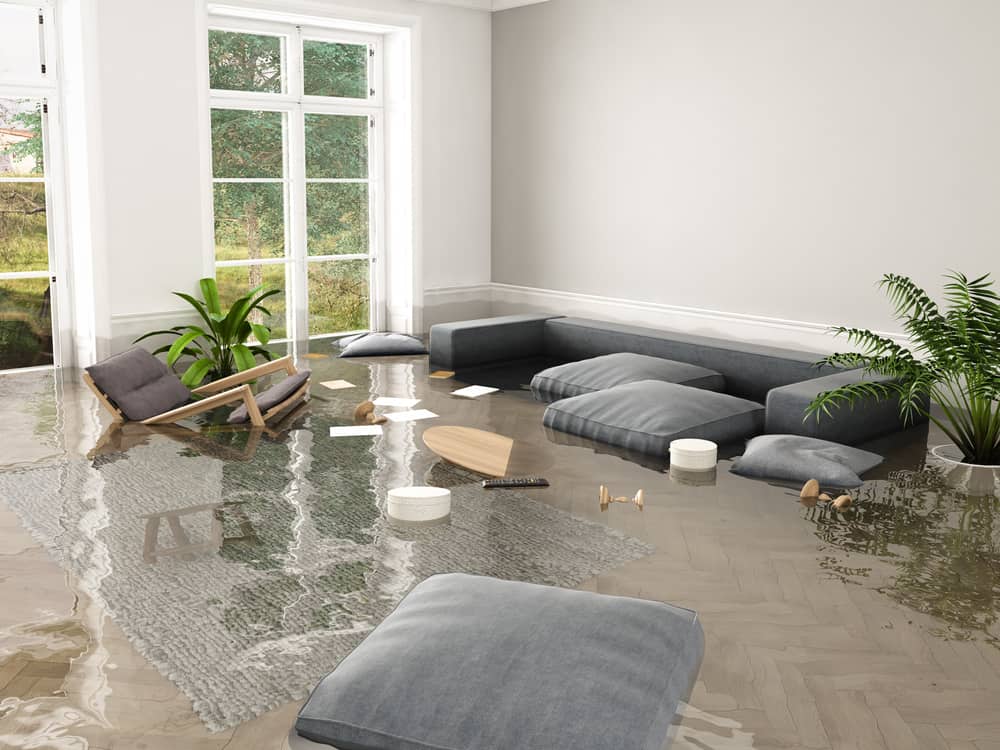
The first step is assessment, and it’s free. A technician comes to your property, does a full moisture inspection using professional-grade meters and thermal imaging, and tells you what you’re actually dealing with — not just what’s visible on the surface. In Laurel’s older homes and crawlspace-construction properties, that matters a lot, because moisture hides in places a visual inspection won’t catch.
From there, water extraction begins. Industrial pumps and wet-extraction equipment pull standing water out of the structure. Then the drying phase starts — commercial air movers and dehumidifiers run continuously, typically for three to five days, pulling moisture out of wall cavities, subfloor assemblies, and crawlspace framing. This is not something a box fan from the hardware store can replicate. The equipment is a different category entirely.
If your situation involves a septic system backup — which is a real risk in Laurel given the hamlet’s dependence on private systems and the high water table — the process escalates to full Category 3 decontamination protocols, including antimicrobial treatment and proper disposal of contaminated materials.
Throughout the job, everything is documented: moisture readings, photos, equipment logs, and a written scope of work. That documentation is what your insurance company needs. If the Town of Southold Building Department requires permits for structural repairs following the damage, we handle that as part of the process. Once drying is complete and the structure passes moisture testing, repairs and reconstruction begin — and we handle that too, so you’re not sourcing a second contractor to finish what we started.

Ready to get started?
Water damage restoration in Laurel covers a wider range of scenarios than most people expect when they first call. The obvious ones are burst pipes and basement flooding after a storm. But in this hamlet, the list also includes storm surge damage from Peconic Bay events — the kind of coastal flooding that produces road flooding along Peconic Bay Boulevard and pushes water into the lower levels of bayfront homes.
It includes septic system backups caused by saturated drain fields during high-water-table events in spring. And it includes the slow, silent damage that happens in seasonal homes left vacant through winter — a frozen pipe that lets go in January, or an HVAC failure that lets humidity build unchecked for months.
Every job starts with a free on-site assessment. From there, the scope depends entirely on what the moisture mapping actually shows — not on a default package. Water extraction, structural drying, dehumidification, mold prevention treatment, and full reconstruction are all handled under one roof. If mold has already taken hold — which is common in crawlspace homes that have had undetected moisture for an extended period — we fold mold remediation into the same project. No separate contractor, no coordination headache.
For Laurel homeowners with properties in FEMA-designated flood zones along the Peconic Bay shoreline, the documentation we provide is specifically structured to meet the requirements of both standard homeowners insurance and separate flood insurance policies. That distinction matters — and getting it wrong in the paperwork can cost you a claim.

This is one of the most important questions to get right before you file anything, because the answer depends on exactly how the water entered your home. Standard homeowners insurance covers sudden, accidental water damage from internal sources — a burst pipe, an appliance overflow, a roof leak from wind damage. It does not cover flooding.
If water entered your Laurel home because Peconic Bay surged during a storm and came in through the ground or through openings at or below grade, that is classified as flood damage, and it requires a separate flood insurance policy through the National Flood Insurance Program to be covered.
The practical issue for Laurel homeowners along Peconic Bay Boulevard and nearby waterfront areas is that a single storm event can produce both types of damage simultaneously — wind-driven rain that comes through the roof or windows, and storm surge that enters from below. Documenting the two sources of damage separately, with the right evidence for each, is something that requires experience with how insurance adjusters review these claims. We work directly with your insurance company and know how to structure the documentation so each type of damage is presented correctly to the right policy. Getting that wrong from the start can result in a denied claim that should have been covered.
Faster than most people expect. The EPA’s guidance is clear: water-damaged areas need to be dried within 24 to 48 hours to prevent mold growth. In practice, mold spores can begin germinating within the first 24 hours under the right conditions — meaning warmth, moisture, and an organic surface like drywall or wood framing. Visible mold typically appears within 48 to 72 hours, but microscopic growth starts earlier than that.
For Laurel homeowners, the risk is compounded by two local factors. First, the North Fork’s summer humidity — consistently above 70% from June through August — gives mold everything it needs to accelerate once moisture is present. Second, and more critically, the seasonal home dynamic in this hamlet means that a water intrusion event in a closed-up property can go undetected for weeks or months.
By the time you discover a burst pipe from last January in your Peconic Bay cottage, you’re not dealing with a 48-hour window anymore. You’re dealing with a mold situation that has had months to colonize wall cavities, crawlspace insulation, and subfloor assemblies. Professional moisture mapping and remediation at that point is not optional — it’s the only way to make the structure safe and habitable again.
Water damage is classified into three categories based on contamination level. Category 1 is clean water — a burst supply pipe or appliance overflow. Category 2 is gray water — moderately contaminated, like a washing machine overflow or toilet overflow without solids. Category 3 is black water — highly contaminated water from sewage backup, groundwater intrusion, or floodwater that has picked up contaminants from the ground or drainage systems.
In Laurel, Category 3 events are more common than in municipalities with public sewer infrastructure, because every property in the hamlet relies on a private septic system or cesspool. During periods of heavy rainfall, spring snowmelt, or storm surge from the Peconic Estuary, the water table in this area can rise significantly, saturating drain fields and causing septic systems to back up into homes.
When that happens, the water entering your home is not clean — it carries pathogens and contaminants that require full decontamination protocols, not just drying. Attempting to clean up a Category 3 event with standard household methods or hiring a contractor who doesn’t follow IICRC remediation standards creates serious health risks and can void your insurance coverage for the event. Our IICRC-certified technicians are trained specifically for Category 3 response, with the equipment and protocols to handle it safely and completely.
The honest answer is that it depends on the scope, but there are reliable benchmarks. Water extraction typically takes one to three days. The drying phase — running commercial-grade air movers and dehumidifiers continuously — usually takes three to five days for most homes. After that, moisture readings are taken to confirm the structure has reached acceptable levels before any repairs begin. From initial dry-out through completed structural repairs, most water damage projects take around two to three weeks. Extensive damage involving structural compromise or significant mold remediation can take longer.
For Laurel specifically, a few local factors can affect the timeline. Crawlspace-construction homes — common in the North Fork’s older housing stock — take longer to dry than homes with full basements, because airflow through a crawlspace is more restricted and moisture tends to concentrate in insulation and subfloor assemblies. If your property is a seasonal home that has had undetected water intrusion over a period of months, the remediation scope is larger from the start, and the timeline reflects that.
If the Town of Southold Building Department requires permits for structural repairs — which may apply depending on the extent of the damage — that permitting process is factored into the project schedule. We handle that coordination so you’re not managing it separately.
In many cases, yes — but it depends on the type and extent of the damage. For a localized event like a burst pipe in one room, with damage contained to that area, most homeowners can remain in the rest of the house while drying equipment runs. The equipment is loud and the affected area will be inaccessible during the process, but the rest of the home is typically livable.
The situations where staying becomes more complicated are Category 3 events — septic backups or contaminated floodwater — where the affected areas pose genuine health risks until full decontamination is complete. In those cases, particularly if the contamination has spread to living areas or HVAC systems, temporary relocation is the safer call. The same applies if mold remediation is required, since the remediation process involves containment barriers and negative air pressure that disrupts normal use of the home.
For Laurel’s seasonal property owners, this question is often less relevant — many are managing the restoration remotely and aren’t planning to be on-site during the process anyway. We handle the project with regular updates and documentation so you don’t need to be there every day to know what’s happening.
This is a question that comes up a lot for North Fork property owners, and it’s worth taking seriously because the cost of getting it wrong is significant. The most common source of winter water damage in vacant homes is frozen pipes — supply lines that weren’t properly drained or insulated before the property was closed. The standard advice is to shut off the main water supply, drain the pipes, and set the thermostat no lower than 55 degrees Fahrenheit if the heat is staying on. But if the heat fails — a furnace that stops working in February, for example — that thermostat setting won’t protect you.
Beyond pipe winterization, it’s worth having a trusted neighbor, property manager, or caretaker check the home periodically through the winter, especially after major storms. The October 2025 nor’easter produced coastal flood warnings for Peconic Bay with breaking waves up to eight feet — the kind of event that can compromise a roof, push water through a foundation, or damage an exterior wall without anyone noticing until spring.
Smart home leak detectors and water sensors are an inexpensive addition that can alert you remotely the moment water is detected. If you do return in spring to find damage that happened over the winter, call us before you start cleaning anything up. The documentation of the damage as it was found is important for your insurance claim, and disturbing the scene before a professional assessment can complicate that process.
Useful Links
Other Services we provide in Laurel