
Hear from Our Customers

In North Sea, where more than one in three homes sits vacant for part of the year, the real danger isn’t always the event itself — it’s what happens in the weeks nobody’s watching. A pipe that freezes and bursts in January in a closed-up North Sea home doesn’t just wet the floor. It wicks into wall cavities, saturates subfloor decking, and creates the exact conditions mold needs to take hold. By the time you’re back on North Sea Road in the spring, what started as a plumbing failure can look like a full remediation project.
Getting the water out is step one. Getting the moisture out of places you can’t see is what actually protects your home. We use industrial moisture meters and structural drying equipment to reach inside walls and under floors — the spots a shop vac and a box fan will never touch. That’s what separates a real restoration from a surface cleanup that leaves a problem behind a wall.
In a market where median home values in North Sea exceed $1,000,000, the stakes of an incomplete job aren’t abstract. A home inspector during a future sale will find what a careless restoration company left behind. Our proper documentation, verified drying, and clean restoration record protect your property’s value — not just its structure.
We’ve been restoring Suffolk County homes since the early 1990s. That means our team has worked through every storm cycle, every hard winter, and every seasonal-property scenario North Sea and the South Fork have produced over three decades. The nor’easters that push Little Peconic Bay water onto Towd Point Road. The February cold snaps that drain oil tanks and freeze pipes in homes that haven’t been checked since Thanksgiving. We’ve handled all of it, more times than we can count.
We’re licensed, bonded, and insured, and every technician is IICRC-certified — the credential that insurance adjusters and home inspectors actually recognize. When you call our 631 number, you’re reaching a real Suffolk County operation, not a national franchise routing calls through a dispatch center somewhere else. That distinction matters when you need someone on-site fast and you need the work done right.
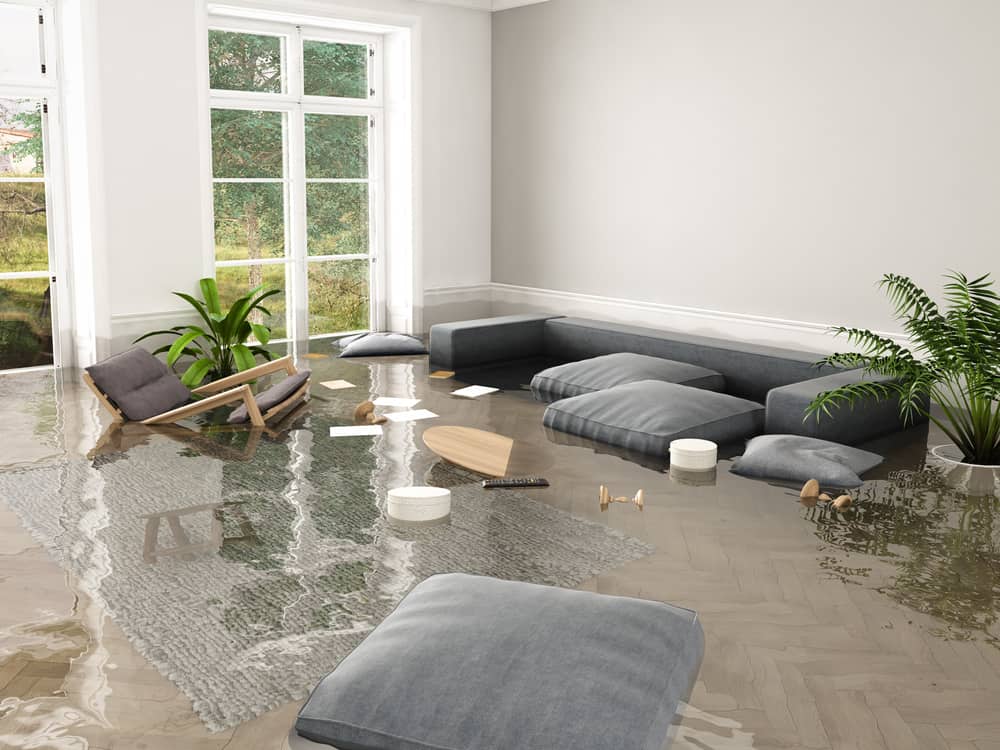
The first call sets everything in motion. Whether you’re standing in a flooded basement off North Sea Road or you’re still in the city after getting an alert from a smart home sensor, the process starts the same way: we get someone to your property fast, assess the full scope of the damage, and stop it from spreading. Emergency water extraction comes first — getting the standing water out before it travels further into structural materials.
Once the water is out, the real work begins. We use moisture mapping with industrial-grade meters to identify exactly where water has traveled — inside walls, under floors, behind baseboards. Air movers and commercial dehumidifiers run continuously until readings confirm the structure has reached acceptable dryness levels.
North Sea’s coastal humidity along Little Peconic Bay slows the drying process compared to inland Suffolk County locations. We account for this when setting up equipment and monitoring — it means running equipment longer and checking readings more frequently. If mold remediation is needed, that work follows a separate protocol under New York State’s Article 32 mold law, which requires a licensed assessor to write the remediation plan and a separate licensed remediator to perform the work. We operate in full compliance with that requirement.
Throughout the entire process, we document everything — moisture readings, photos, drying logs — and we handle the insurance coordination directly so you’re not stuck managing paperwork on top of everything else.

Ready to get started?
Water damage restoration in North Sea covers a wide range of events, and the response has to match the source. A burst pipe from a frozen plumbing line in a vacant seasonal property is a Category 1 clean water event — serious, but the least contaminated scenario. Storm surge from Little Peconic Bay during a nor’easter is a Category 3 event, meaning the water carries bay sediment, bacteria, and organic contaminants into the structure. That requires full removal of affected porous materials, EPA-registered antimicrobial treatment, and post-remediation air quality verification. The protocol is completely different, and applying the wrong one creates liability.
We handle the complete scope regardless of the category: emergency water extraction, structural drying and dehumidification, moisture mapping and documentation, mold prevention treatment, contents assessment, and reconstruction of damaged materials. There’s no handoff to a separate contractor for the rebuild — one company carries the project from the first extraction through the final walk-through.
For bayfront properties in areas like Bay View Oaks and along Towd Point Road, storm surge flooding often triggers FEMA flood zone compliance considerations and Southampton Town building permit requirements for any structural reconstruction. We’re familiar with how those requirements apply to restoration work in this part of Southampton Town, and we factor them into the project scope from the start.

This is one of the most common questions we hear from seasonal property owners on the South Fork, and the answer depends on the specific language in your policy. Standard homeowners insurance typically covers sudden, accidental water damage from internal sources — a burst pipe, for example — even if the home was unoccupied when it happened. However, many policies contain vacancy exclusions or maintenance requirements, such as a clause requiring that the home be maintained at a minimum interior temperature during winter months. If your oil heat ran out during a February cold snap and pipes froze as a result, your insurer may argue that the damage resulted from a failure to maintain the property — which can affect coverage.
The distinction between water damage and flood damage also matters here. Standard homeowners insurance never covers flooding from an external source, including storm surge from Little Peconic Bay. For that, you’d need a separate flood insurance policy through the National Flood Insurance Program. We work directly with insurance companies on your behalf, and part of what we do is help document the damage in a way that supports your claim — whether that’s establishing the cause of loss, providing moisture readings and photos, or communicating directly with your adjuster.
Faster than most people expect. The EPA’s guidance is clear: mold can begin developing within 24 to 48 hours of a water intrusion event. In a North Sea home that’s been closed up for winter — with no airflow, no dehumidification, and no one to notice the problem — those conditions are exactly what mold needs. Mold spores are always present in the air; they just need moisture and a surface to colonize. Once a pipe bursts and water sits inside wall cavities or under flooring, visible mold growth can appear within 48 to 72 hours.
The reason this matters specifically for North Sea’s seasonal property owners is that the window between when damage happens and when it’s discovered can be days, weeks, or even months. A homeowner who closed their property in November and doesn’t return until April may be walking into a mold situation that has been developing since January. That’s why professional moisture mapping — not just surface drying — is so critical. If hidden moisture is left behind after a water event, mold follows. The goal of a proper restoration is to eliminate all moisture, not just the water you can see.
The difference matters both for remediation protocol and for insurance purposes. A burst pipe produces what the industry classifies as Category 1 water — clean water from a potable source that, while damaging, doesn’t carry biological contaminants. The restoration process for Category 1 damage focuses on extraction, structural drying, and moisture elimination. It’s serious, but it’s the most straightforward category to remediate.
Storm surge from Little Peconic Bay is a Category 3 event. That water carries bay sediment, bacteria, organic matter, and whatever else was in the water column when it came ashore. Category 3 flooding requires a fundamentally different approach: all porous materials that absorbed the water — drywall, insulation, carpet, subfloor — typically have to be removed, not just dried. The structure needs EPA-registered antimicrobial treatment, and post-remediation air quality testing verifies that the environment is safe before reconstruction begins. For bayfront properties in North Sea, particularly in the Bay View Oaks community and along Towd Point Road, nor’easter surge events produce Category 3 conditions. Treating them like a burst pipe is a mistake that shows up later as a health problem or a failed home inspection.
The honest answer is that it depends on the scope, but you can expect the drying phase alone to take three to five days under normal conditions. For a straightforward water extraction and structural drying job — a burst pipe in one room, caught relatively quickly — the full process from extraction through completion might run one to two weeks. For more extensive damage, including situations where water has been sitting in a vacant property for an extended period or where mold remediation is required, the timeline extends accordingly. Significant flooding with structural repairs can take several weeks to complete.
One factor that’s specific to North Sea and the broader Hamptons area is the coastal humidity. Properties near Little Peconic Bay experience sustained moisture in the air year-round, and that ambient humidity slows the drying process compared to inland Suffolk County locations. We account for this when setting up drying equipment and monitoring moisture readings — it means running equipment longer and checking readings more frequently than we would in a drier environment. If you’re managing a restoration remotely as a seasonal property owner, we communicate the drying progress clearly so you’re not left guessing about where the project stands.
Yes, and it’s worth understanding before you hire anyone for mold-related work. New York State’s Article 32, which took effect in 2016, applies statewide — including all of Suffolk County and North Sea. Under this law, any mold remediation project covering 10 square feet or more requires a licensed NYS Mold Assessor to write a formal Mold Remediation Plan before any work begins. The actual remediation must then be performed by a separately licensed Mold Remediator. The same contractor cannot both assess and remediate the same project — that’s explicitly prohibited by the law.
This matters for North Sea homeowners because water damage that goes undetected in a vacant seasonal property often produces mold growth that exceeds the 10-square-foot threshold by the time it’s discovered. Hiring a company that isn’t operating in compliance with Article 32 — either because they’re not licensed or because they’re doing both assessment and remediation themselves — creates legal and insurance complications that can follow you through a future sale or insurance renewal. We operate in full compliance with NYS mold law requirements.
Call the restoration company first. This is counterintuitive for a lot of homeowners, but it’s the approach that actually protects your claim. When water damage is active or recent, the priority is stopping it from spreading and documenting the full extent of the damage before conditions change. Our team can extract water, set up containment, and begin thorough documentation — moisture readings, photographs, damage mapping — before an insurance adjuster ever visits the property. That documentation becomes the foundation of your claim.
If you call your insurer first and wait for an adjuster to schedule a visit, you’re losing time that matters. The EPA’s guidance is that water-damaged areas need to be dried within 24 to 48 hours to prevent mold growth. An adjuster visit that’s scheduled three days out doesn’t stop the damage clock. Insurers also understand this — most policies include a duty to mitigate, meaning you’re expected to take reasonable steps to prevent further damage after a loss. Calling a restoration company immediately fulfills that obligation. We work directly with insurance companies and handle the billing and documentation process on your behalf, so you’re not navigating that process alone while also managing a damaged property.
Useful Links
Other Services we provide in North Sea