
Hear from Our Customers

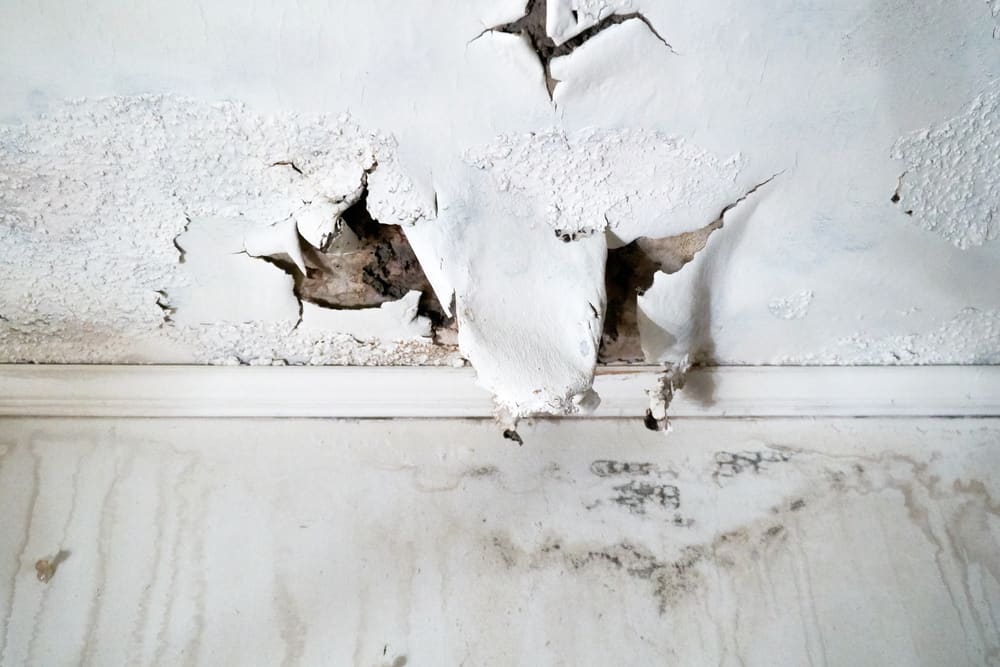
When water gets into a Poquott home, the clock starts immediately. The EPA is clear that mold can begin developing within 24 to 48 hours of a water intrusion event — and in a coastal village surrounded by tidal water, ambient humidity doesn’t give you any buffer. That window is shorter here than it is in an inland community, and it’s one of the reasons our fast, thorough response matters so much in this specific place.
What you’re left with after proper restoration isn’t just a dry floor. It’s a home where hidden moisture has been located and eliminated — inside wall cavities, under hardwood floors, behind baseboards — not just on the surface. For Poquott homeowners whose properties sit close to Little Bay or Setauket Harbor, that kind of thoroughness is the difference between a resolved problem and a mold situation that shows up six months later.
The other outcome that matters here is documentation. Many Poquott homes are in FEMA-designated flood hazard zones, and a significant number of residents carry both a standard homeowners policy and a separate flood insurance policy. When both policies are in play, the quality of your damage documentation directly affects what gets paid and when. A properly documented, IICRC-certified restoration gives you the strongest possible footing going into that process — not just a cleaned-up home, but a clean paper trail.
We’ve been serving Long Island homeowners for nearly three decades — including the Three Village area and Poquott specifically. That’s not a franchise timeline. It’s the kind of history that only comes from being a real Long Island company, working through real nor’easters, in real homes like yours. We’re based in West Babylon, Suffolk County, which means the 631 number you call connects to people who actually work this area — not a national dispatch center routing a crew from out of state.
We’re IICRC-certified, licensed, bonded, and insured — and we work directly with insurance companies to handle the documentation and billing on your behalf. In a village where dual-policy coverage is common and restoration documentation has real financial consequences, that experience isn’t a minor detail. It’s the part that protects your claim.
The call comes first, and it can come at any hour. Nor’easters don’t peak during business hours — they tend to hit overnight, and storm surge into Port Jefferson Harbor doesn’t wait for morning. Our emergency line is live around the clock, and when you call, we dispatch a team immediately. The assessment begins as soon as we arrive on site.
The first thing that happens on arrival is a full moisture assessment — not just a visual inspection of what’s wet, but a systematic check using moisture meters and detection equipment that finds water inside wall cavities, under flooring, and in structural spaces you can’t see from the surface. This step matters especially in Poquott’s older housing stock, where pre-WWII cottages and mid-century homes don’t have the moisture barriers that newer construction does. Water moves differently in these homes, and our assessment accounts for that.
Once we map the scope, extraction begins — commercial-grade equipment removes standing water, and industrial dehumidifiers and air movers are positioned to begin the structural drying process. This phase typically runs several days, with moisture readings taken throughout to confirm drying progress. If your Poquott home is in one of the village’s FEMA-designated flood hazard zones and the damage qualifies as a substantial improvement under the Flood Damage Prevention ordinance, we flag that early so the permit process doesn’t become a surprise later. From there, the scope moves into any needed repairs and reconstruction, all coordinated through our team — no handoffs, no gaps.

Ready to get started?
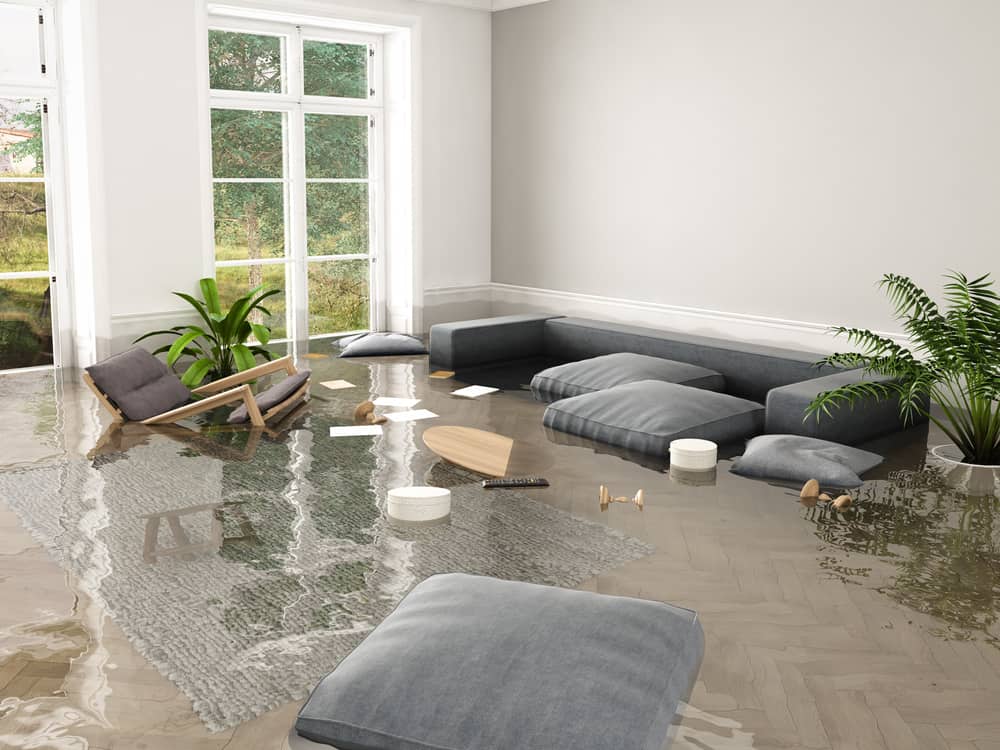
Water damage restoration in Poquott covers a wider range of scenarios than it does in most Long Island communities. The flooding risk here isn’t seasonal in the traditional sense — it runs from October through April via nor’easters pushing Long Island Sound water into Port Jefferson Harbor, extends into summer with tropical storm remnants, and includes year-round pipe vulnerability in a housing stock that ranges from pre-WWII to 1980s Tinker Bluff construction. We handle all of it: flooded basement cleanup, burst pipe water damage, storm-driven water intrusion, and sewage backup.
The Tinker Bluff homes, developed after the sale of the Tinker Estate and now roughly 40 years old, present a specific set of vulnerabilities. Original sump pumps, aging waterproofing membranes, and drainage systems from the 1980s are reaching the end of their service life — and the coastal environment accelerates that deterioration. Our assessment process is calibrated to find the failure points in homes like these, not just treat the visible water.
For waterfront and near-waterfront properties in Poquott, our service scope also includes Category 3 water damage response — the protocol for floodwater and tidal intrusion, which carries contamination risks that require a different remediation approach than a clean-water pipe burst. Insurance documentation for Category 3 events is more detailed, and having an IICRC-certified team that understands both the technical and the insurance side of that process is exactly the kind of support that makes a difference when you’re filing against two separate policies.

It depends on how the water got in, and that distinction matters a lot in Poquott. Standard homeowners insurance typically covers sudden, accidental water damage from internal sources — a burst pipe, a failed appliance, a roof breach from wind. What it does not cover is flooding, which the insurance industry defines specifically as water that enters from the ground up or from an overflowing body of water. A nor’easter that pushes Port Jefferson Harbor water into your Poquott home through the foundation or ground-level openings is almost certainly a flood event — and that falls under a separate flood insurance policy, typically through the National Flood Insurance Program.
Many Poquott homeowners carry both policies because of the village’s FEMA flood zone designations, but the line between what’s covered by which policy isn’t always obvious after a storm. Wind-driven rain through a damaged roof is generally a homeowners claim. Tidal surge coming through the basement is a flood claim. A single nor’easter can produce both types of damage in the same Poquott home. We work directly with both carriers, document the damage in a way that clearly distinguishes the two types of intrusion, and handle the billing process so you’re not left trying to sort that out on your own.
The EPA’s guidance is 24 to 48 hours — that’s the window in which mold spores can begin establishing in wet materials. Visible growth typically appears after 48 to 72 hours, but the process starts earlier than that, before you can see anything. In a coastal environment like Poquott, where ambient humidity is higher than it would be in an inland community, that timeline can compress. A basement that’s been wet for 36 hours in a home near Little Bay is in a different situation than a basement in a dry inland neighborhood that’s been wet for the same amount of time.
The practical implication is that calling quickly matters — not as a sales tactic, but because the longer water sits in materials like drywall, insulation, and wood framing, the more remediation expands beyond drying and into mold treatment and material removal. A fast response that gets extraction and drying equipment in place within the first 24 hours gives you a much better chance of keeping the project contained. Waiting to see how things dry on their own, or running consumer fans and thinking the job is done, is where most mold problems in residential water damage actually start.
The IICRC — the industry’s standard-setting body — classifies water damage into three categories based on contamination level. Category 1 is clean water from a supply line or appliance, the least hazardous and least expensive to remediate. Category 2 is gray water, which carries some contamination — think washing machine overflow or a toilet that backed up without sewage. Category 3 is black water, which includes sewage backup, groundwater intrusion, and tidal floodwater — the most contaminated and the most involved to remediate properly.
For Poquott homeowners, this matters because tidal flooding from Port Jefferson Harbor or Setauket Harbor is Category 3 by definition. That changes the remediation protocol significantly — affected materials often need to be removed rather than dried in place, antimicrobial treatment is required, and the documentation for insurance purposes is more detailed. The category of water damage also affects what your insurance adjuster will authorize and how the claim is scoped. Having an IICRC-certified team that correctly identifies and documents the water category from the start protects both the quality of the remediation and the integrity of your claim.
Yes, in a few important ways. Poquott has formal FEMA flood zone designations under the village’s Flood Damage Prevention ordinance — Chapter 85 of the village code, with FEMA Community Number 361518. If the restoration work constitutes what the code defines as a “substantial improvement” to a structure in a designated flood hazard area, a floodplain development permit is required from the Village Building Inspector before that work can proceed. This is a step that surprises some homeowners, and it’s one reason working with a licensed, experienced restoration company matters — we know to flag it early rather than run into a compliance issue mid-project.
Beyond the permit question, FEMA flood zone status affects your flood insurance policy directly. Properties in designated special flood hazard areas are required to carry flood insurance if they have a federally backed mortgage, and the documentation standards for filing a claim under an NFIP policy are specific. Our process includes the kind of thorough, category-specific damage documentation that NFIP claims require — not just a general damage report, but a detailed account of what was affected, how, and to what extent.
For most residential water damage situations — a flooded basement, a burst pipe affecting one or two rooms — the drying phase alone runs three to five days once extraction is complete. Water extraction itself typically takes one to three days depending on volume and access. After drying is confirmed through moisture readings, any needed repairs and reconstruction begin. For a moderate basement flood in a Poquott home, a realistic total timeline from first call to completed repairs is somewhere around two to three weeks, though that varies based on the extent of the damage and whether materials need to be removed and replaced.
In Poquott’s older housing stock — pre-WWII cottages, mid-century ranches, and 1980s Tinker Bluff homes — drying timelines can run slightly longer because older construction materials like plaster, original hardwood, and uninsulated wall cavities hold moisture differently than modern materials. We monitor the drying process with equipment readings, not estimated by eye, so the timeline is driven by actual moisture data rather than a fixed schedule. If mold remediation is also required, that adds time and scope, which is why the speed of the initial response has such a direct effect on how long and how involved the overall project becomes.
Call us first. This is counterintuitive for a lot of homeowners, but it’s the sequence that actually protects your claim. When you call your insurance company first and an adjuster comes out before any professional assessment, you’re relying on that adjuster’s initial inspection to define the scope of your damage — and adjusters work for the insurance carrier, not for you. We can document the full extent of the damage, including hidden moisture inside walls and under floors that a visual inspection won’t catch, before any materials dry out or secondary damage progresses.
For Poquott homeowners dealing with potential dual-policy situations — a nor’easter event that may involve both a homeowners claim and a flood insurance claim — getting proper documentation in place before the adjuster visit is especially important. We work directly with insurance companies and can coordinate the communication with your carrier once the damage is fully assessed and documented. That sequence — restoration company first, insurance coordination second — gives you the most complete picture of what happened and the strongest foundation for whatever claims you’re filing.
Useful Links
Other Services we provide in Poquott