
Hear from Our Customers

When water damage restoration is done right, you stop worrying about what’s hiding inside your walls. Moisture gets pulled from places you can’t see — behind baseboards, under subfloors, inside the structural cavities that consumer fans never reach. The result is a home that’s genuinely dry, not just dry on the surface.
For Setauket homeowners, that distinction matters more than most. The housing stock here spans colonial-era structures in the Old Setauket Historic District all the way to post-war construction near Route 347 — and both carry the same risk: aging building materials that absorb water deeply and hold it long after the visible flooding is gone. A home worth $900,000 deserves more than a surface-level cleanup.
The other outcome that matters is your insurance claim. After the 2024 disaster, many homeowners in Setauket discovered their standard policy didn’t cover flood damage — and those who had covered losses still needed proper documentation to support their claims. When we handle your restoration, the work follows IICRC-certified protocols that insurance adjusters recognize, and we work directly with your insurer so you’re not stuck managing that process alone while your home is still wet.
First Response Restoration and Cleaning Inc. has been serving Suffolk County for nearly three decades. That’s not a number pulled from a marketing sheet — it means we were already established and working Long Island homes long before the 2024 storm hit Brookhaven, long before Sandy reshaped the Island’s understanding of flood risk, and long before restoration became a crowded market full of national franchises routing calls through 800 numbers.
We’re based in West Babylon, with a dedicated Suffolk County line at 631-587-5300. That matters when you’re in Setauket and need someone who can actually get to Strongs Neck or Old Field without figuring out the local geography on the way. Our technicians are IICRC-certified, and we’re licensed, bonded, and insured — not because it’s a talking point, but because the homeowners in the Three Village area have too much at stake to work with anyone who isn’t.
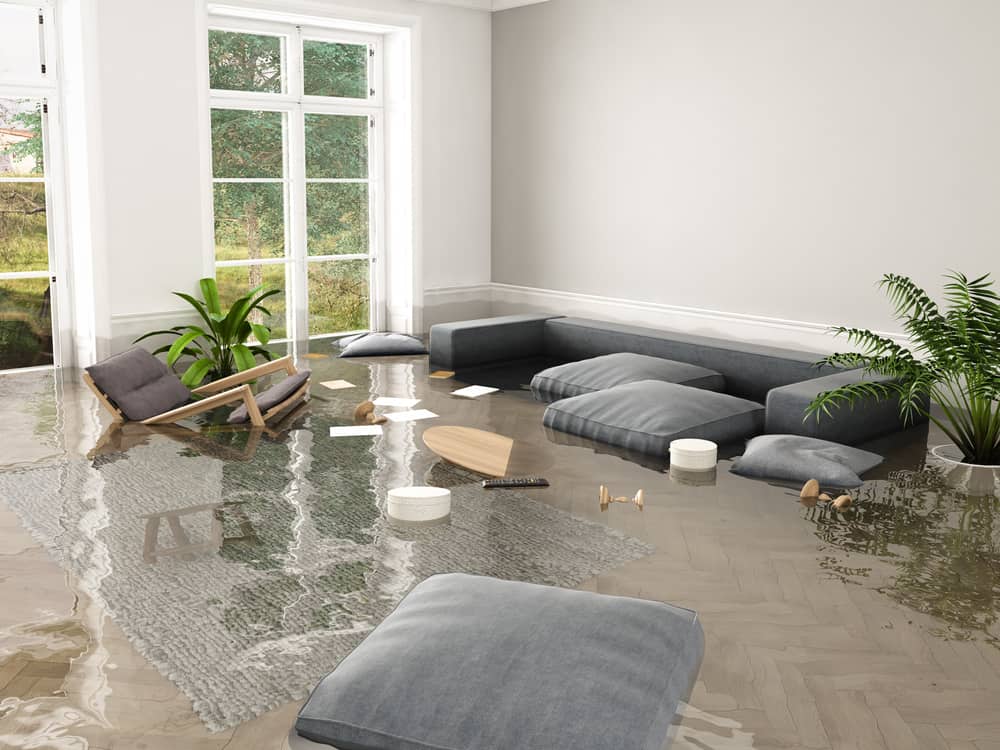
When you call, the first thing that happens is a response — not a callback queue. We operate 24/7 specifically because water damage doesn’t wait for business hours, and in Setauket, that’s not an abstract point. The August 2024 storm hit overnight. Pipe bursts in older homes near Route 25A tend to happen during January cold snaps at 2 a.m. Your call gets answered, and our team gets moving.
On arrival, our first priority is assessment — not just what you can see, but what moisture mapping equipment reveals inside walls, under floors, and in structural cavities. This step matters especially in Setauket’s older housing stock, where water wicks into materials differently than it does in newer construction. Once the scope is clear, water extraction begins using industrial-grade equipment, followed by structural drying with commercial dehumidifiers and air movers placed strategically based on the moisture readings.
Throughout the process, everything is documented. For homeowners filing insurance claims — and given the coverage confusion that followed the 2024 storm, that’s a real concern in Setauket — the documentation we produce during restoration is what supports the claim. Any reconstruction work that follows, whether drywall replacement or structural repairs, may require permits through the Town of Brookhaven’s Building Department, and we handle that coordination so you’re not managing a separate bureaucratic process while your home is still being dried out.
Ready to get started?
Water damage restoration in Setauket isn’t a single service — it’s a sequence that has to be done completely or it doesn’t work. We handle the entire scope: emergency water extraction, structural drying, dehumidification, mold prevention treatment, and reconstruction. One company, one call, no handoffs between contractors.
Our services are built around what North Shore homes actually face. Waterfront properties on Strongs Neck and in Poquott deal with coastal storm surge from Conscience Bay and Long Island Sound — a different kind of flooding than a burst pipe, and one that requires Category 3 water protocols given the contamination levels involved. Homes along Route 25A and in the historic district face the more common burst pipe and appliance failure scenarios, where the damage is often less dramatic but hidden moisture is equally dangerous if the drying phase is rushed or incomplete.
Mold remediation is included in our scope when moisture readings indicate it’s needed — and in Setauket’s older housing stock, that’s not uncommon. The EPA’s guidance is clear: water-damaged areas need to be dried within 24 to 48 hours to prevent mold growth. When that window closes before restoration starts, mold remediation becomes part of the job. We also work directly with your insurance company, handling documentation and billing coordination so the claims process doesn’t become a second full-time job on top of dealing with a damaged home.

This is one of the most important questions coming out of the August 2024 storm in Setauket, and the honest answer is: it depends on the source of the water, not just the fact that your home flooded. Standard homeowners insurance covers sudden, accidental water damage from internal sources — a burst pipe, an appliance failure, a roof leak that lets water in during a storm. It does not cover flooding, which is defined as water entering your home from the outside, including storm surge, overflowing waterways, and groundwater intrusion.
The August 2024 event in the Town of Brookhaven was classified as a flood event — meaning many Setauket homeowners discovered, after the fact, that their standard policy provided no coverage. Flood coverage requires a separate flood insurance policy, typically through the National Flood Insurance Program. If your damage came from a burst pipe or a roof failure during the storm rather than direct flood intrusion, your standard policy may still apply. The distinction matters enormously, and it’s one of the first things we help clarify when we arrive — because documenting the source of the damage correctly from the start directly affects what your insurer will cover.
Faster than most homeowners expect. The EPA states that water-damaged areas need to be dried within 24 to 48 hours to prevent mold growth — and that clock starts from the moment water contacts your walls, subfloor, and framing, not from when you notice the problem. In Setauket’s older housing stock, where basements often have unfinished walls with exposed framing and older insulation materials, moisture absorbs deeply and creates ideal conditions for mold to take hold quickly.
After the August 2024 storm, some Setauket homeowners were left waiting days for water to recede before cleanup could even begin. That delay is exactly the kind of situation where mold becomes a secondary problem on top of the original flood damage. Visible mold typically appears within 48 to 72 hours, but microscopic growth starts earlier — which means by the time you can see it, the remediation scope has already expanded. Getting professional extraction and drying started as quickly as possible is the single most effective way to prevent mold from becoming part of your restoration bill.
Yes, you need both — and confusing them is one of the most common reasons water damage restoration fails. Water extraction is the process of physically removing standing water from your home using industrial pumps and wet-vac equipment. It handles what you can see: the water on your floor, in your basement, pooled against your walls. Most homeowners who attempt a DIY cleanup stop here, thinking the job is done once the visible water is gone.
Structural drying is what happens next, and it’s where the real work is. Even after all standing water is removed, moisture has already wicked into your drywall, subfloor, framing, and insulation. In Setauket homes — particularly the colonial-era and post-war construction that makes up much of the housing stock near Route 25A and in East Setauket — those materials can hold moisture for weeks without industrial drying equipment. Commercial dehumidifiers and air movers, placed based on moisture meter readings, pull that embedded moisture out before it causes structural damage or feeds mold growth. Skipping structural drying is the single most common reason homeowners end up dealing with mold problems months after they thought the restoration was complete.
For most residential water damage situations — a burst pipe, an appliance failure, or moderate storm intrusion — the drying phase alone typically takes three to five days using professional equipment. The full restoration process, from initial extraction through any necessary reconstruction, averages around two weeks, though the range is wide depending on the extent of the damage and how quickly it was addressed.
For Setauket homes that experienced the August 2024 flooding — particularly those with multiple feet of water in the basement — the timeline extends considerably. When water sits for an extended period before extraction begins, structural materials absorb more moisture and require longer drying cycles. If mold is present, remediation adds time before reconstruction can start. Homes in the Old Setauket Historic District may also face additional considerations around preserving historic materials during the restoration process, which can affect the timeline. The most reliable way to get an accurate estimate for your specific situation is a professional assessment — we provide that on-site evaluation so you know the real scope before any work begins.
In many cases, yes — but it depends on the extent of the damage, where in your home it occurred, and whether mold is present. If the water damage is contained to a basement or a single room and the rest of your home is structurally sound and dry, most homeowners can remain in place during the drying and restoration process. The equipment runs continuously, which means noise and humidity levels in the affected area will be elevated, but the rest of your home is typically livable.
Where it gets more complicated is when the damage is extensive, when Category 3 water — sewage backup, floodwater, or contaminated groundwater — is involved, or when mold remediation is required. In those situations, the affected areas need to be contained and treated with antimicrobial agents, and occupying your home during that phase isn’t advisable. For Setauket homeowners dealing with the aftermath of a major storm event like the 2024 flooding, where contaminated stormwater entered your home, the Category 3 protocols apply and temporary relocation for at least part of the remediation process is often the safer choice. We’ll give you a straight answer about this during the initial assessment — not a one-size-fits-all recommendation.
Setauket’s housing stock skews old — and older homes have older plumbing. Galvanized steel pipes, which were standard in homes built through the mid-20th century, corrode from the inside over decades. Cast iron drain lines develop cracks. Supply line connections to water heaters and washing machines wear out quietly. These aren’t problems that announce themselves — they fail suddenly, often during the exact conditions that accelerate the stress on the system.
Winter on the North Shore creates those conditions reliably. When temperatures drop hard and stay there — which happens regularly in Setauket given its exposure to Long Island Sound weather patterns — pipes running through exterior walls, crawl spaces, or unheated areas freeze. When they thaw, they burst. The post-war homes near Route 347 and the colonial-era structures in the historic district are both particularly vulnerable because their pipe routing often predates modern insulation standards. The result is a burst pipe water damage scenario that can release hundreds of gallons before anyone realizes what’s happening. Getting extraction and drying started quickly after a pipe burst is critical — not just to limit the immediate damage, but to close the 24 to 48 hour window before mold takes hold in the walls and flooring that absorbed the water.
Useful Links
Other Services we provide in Setauket