
Hear from Our Customers

When water gets into a Sound Beach home, the damage rarely stops at what you can see. These are older homes — many started as summer cottages in the 1920s and were converted to year-round living after World War II. That means aging foundations, crawl spaces that were never designed to stay dry through a Suffolk County winter, and plumbing that’s been patched and re-patched over the decades. Water finds every one of those weak points, and it moves fast.
What professional water damage restoration actually gives you is certainty. Not just a dry floor, but confirmation — backed by moisture meters and industrial drying equipment — that there’s nothing hiding inside your walls or under your subfloor that’s going to become a mold problem three months from now. That’s the difference between a cleanup and a real restoration.
Sound Beach’s position on the bluffs above Long Island Sound also means groundwater saturation is a real factor after heavy rain. When the soil is already soaked and another storm rolls through on Route 25A’s side of the bluff, water doesn’t have anywhere to go but into your foundation. We get the moisture out completely, and we get it out fast — that’s what protects your home’s structure and your family’s health long-term.
We’ve been serving Suffolk County for close to three decades. That’s not a number pulled from a brochure — it means we’ve worked through every major storm that’s hit Sound Beach Boulevard and the surrounding neighborhoods, including the events that sent water into basements all along the bluffs.
We’re based in West Babylon, which means when you call 631-587-5300, you’re reaching a local team — not a national call center routing a crew from out of state. That matters when you’re dealing with a flooded basement at 2 a.m. and you need someone who can actually get there.
Every technician is IICRC-certified, and we’re licensed, bonded, and insured. In a community where a lot of the homes predate World War II and a significant number sit on cesspools rather than municipal sewer, those credentials aren’t just reassuring — they’re necessary.
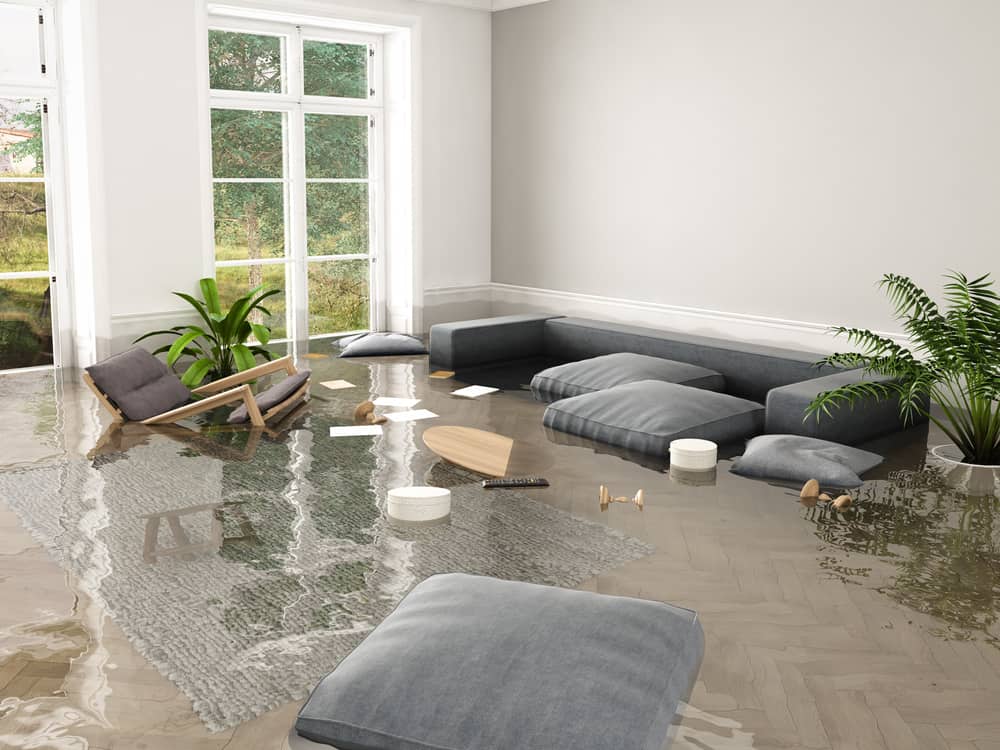
The first step is assessment, and it’s free. A technician comes out, looks at what you’re dealing with, and gives you an honest read on the scope — what’s wet, how far it’s spread, and whether you’re looking at clean water from a burst pipe or something more serious. In Sound Beach, that “something more serious” often means a cesspool component. When a storm drops ten-plus inches of rain in a matter of hours and the ground can’t absorb it, cesspools can back up into basements. That changes the remediation protocol entirely — it’s now a Category 3 contamination event, and it requires a different level of decontamination than a standard water extraction job.
Once the assessment is done and you know what you’re dealing with, the extraction begins. Industrial pumps and wet-vac equipment pull the standing water out. Then the drying phase starts — air movers and commercial dehumidifiers positioned to pull moisture out of the air, the walls, and the structural materials. This typically runs three to five days depending on the extent of the damage and the age of the materials involved.
Older homes absorb and hold moisture differently than newer construction, so the drying timeline in a converted Sound Beach cottage may look different than it would in a newer build. Throughout the process, we document moisture readings — that documentation matters when you’re filing an insurance claim. If your damage qualifies under your homeowners policy, having a certified company with proper records makes the claims process significantly smoother. We work directly with your insurance company, handling the communication and paperwork so you’re not stuck in the middle.

Ready to get started?
Water damage restoration isn’t a single service — it’s a sequence. We handle the entire chain: emergency water removal, structural drying, dehumidification, mold prevention treatment, and reconstruction when it’s needed. You don’t have to coordinate multiple contractors or figure out who handles what. One call covers the whole job.
For Sound Beach homeowners specifically, a few things come up more often than they do in other parts of Long Island. The pre-war housing stock means subfloor and crawl space issues are common — water gets under old tongue-and-groove flooring and sits there long after the surface looks dry. The cesspool dependency across much of the hamlet means any flooding after a major storm needs to be evaluated for contamination before cleanup begins. And the bluff-facing exposure means nor’easter damage and freeze-thaw pipe failures during winter months are seasonal realities, not rare events.
If mold is present or suspected — which can happen within 24 to 48 hours of water intrusion — we handle remediation as well, following New York State’s mold remediation requirements under Labor Law Article 32. Any reconstruction work that requires permits falls under the Town of Brookhaven’s building department, and we’re familiar with navigating that process. From the moment water enters your home to the day it’s fully restored, this is a handled situation — not one you’re managing alone.

It depends on the source of the water, and that distinction matters a lot. Standard homeowners insurance typically covers sudden, accidental water damage from internal sources — a burst pipe, a failed water heater, an appliance overflow. What it does not cover is flooding, meaning water that enters your home from the outside as a result of a storm. For Sound Beach homeowners who experienced basement flooding during the August 2024 storm, that difference is significant. If the water came in through your foundation because the ground was saturated, that’s generally considered flood damage and requires separate flood insurance through the National Flood Insurance Program.
That said, the line between covered and not covered isn’t always obvious, and the documentation you have at the time of the claim makes a real difference. Working with an IICRC-certified company that properly records moisture readings, damage scope, and remediation steps gives your adjuster what they need to process the claim accurately. We work directly with insurance companies on your behalf, so you’re not trying to navigate that process while also dealing with a damaged home.
The EPA’s guidance is clear on this: mold can begin growing within 24 to 48 hours of water intrusion. In practice, that means if your Sound Beach basement flooded on a Saturday night and you’re calling for help on Monday morning, mold growth may already be underway — even if you can’t see it yet. Visible growth typically appears after 48 to 72 hours, but microscopic colonization starts earlier than that.
This is especially relevant in Sound Beach’s older housing stock. Homes that started as summer cottages in the 1920s often have wood subfloors, plaster walls, and crawl spaces that absorb and hold moisture in ways that modern materials don’t. That retained moisture creates exactly the warm, damp environment mold needs. Professional drying equipment — not household fans — is what actually eliminates the moisture from inside those materials. If there’s any chance mold has taken hold, we can assess and handle remediation as part of the same project, following New York State’s requirements for licensed mold remediation work.
The IICRC classifies water damage into three categories based on contamination level. Category 1 is clean water — a burst pipe or appliance overflow. Category 2 is gray water, which carries some contamination. Category 3 is black water, and it’s the most serious — it includes sewage, groundwater, and any water that has come into contact with waste. Cesspool backups fall squarely into Category 3.
Sound Beach, like most of Suffolk County, relies on cesspools and septic systems rather than municipal sewer. During the August 2024 storm, the Suffolk County Executive noted publicly that cesspools were overflowing into local waterways because the ground simply couldn’t absorb that volume of water. If your basement flooded during that event and your cesspool was overwhelmed at the same time, there’s a real possibility your basement water was contaminated — even if it looked like ordinary stormwater. Category 3 events require full decontamination protocols, not just extraction and drying. IICRC-certified technicians are trained specifically for this, and the documentation of proper handling matters for both your health and your insurance claim.
For most water damage situations — a single-room pipe burst, a moderate basement flood — the drying phase alone takes three to five days. Full restoration, including any repairs or reconstruction, typically runs one to three weeks depending on the extent of the damage. Major flooding that reaches structural materials or triggers mold growth can take longer.
For Sound Beach specifically, the age of the housing stock adds a variable. Homes built in the 1920s through 1940s — many of them originally summer cottages — were constructed with materials that behave differently from modern builds. Old-growth wood subfloors, plaster walls, and uninsulated crawl spaces absorb moisture more deeply and dry more slowly than drywall and engineered lumber. That doesn’t mean the job takes dramatically longer, but it does mean the drying process needs to be monitored carefully with moisture meters rather than estimated by eye. Cutting the drying phase short because a surface looks dry is one of the most common reasons homeowners end up with a mold problem months after what seemed like a successful cleanup.
First, shut off the water supply to your home if you can locate the main shutoff. This stops the flow and limits how much water enters the structure. Then get out of any area where water is in contact with electrical outlets, panels, or appliances — water and live electricity are a serious safety risk. Once those immediate steps are handled, call for professional help rather than trying to clean it up with towels and fans.
Burst pipe damage in Sound Beach’s older homes tends to be more extensive than it looks at first. Many of these homes were originally uninsulated summer cottages, and even after conversion to year-round use, pipes sometimes run through walls and crawl spaces that don’t have adequate insulation against a hard Suffolk County freeze. When a pipe bursts in one of those locations, water can travel through wall cavities and under floors before it becomes visible. Industrial moisture mapping is the only way to know how far the water actually traveled. We handle burst pipe water damage from extraction through structural drying and any needed reconstruction, so you’re not managing multiple contractors through what is already a stressful situation.
Most of the extraction, drying, and mold remediation work doesn’t require a building permit. However, if the restoration involves structural repairs — replacing damaged framing, subfloor sections, or walls — those repairs fall under the Town of Brookhaven’s building department permit requirements. Sound Beach is within Brookhaven’s jurisdiction, and any work that changes structural elements needs to be permitted and inspected accordingly.
If your flooding involved a cesspool or septic component, there’s an additional layer: the Suffolk County Department of Health Services has oversight over any work involving septic systems, and repairs or replacements require county approval. This is something Sound Beach homeowners run into more often than residents in sewered Nassau County communities, and it’s worth knowing upfront so it doesn’t create delays mid-project. New York State also requires that mold remediation projects over ten square feet be handled by a licensed mold remediator under Labor Law Article 32 — this applies regardless of town. We’re familiar with all of these requirements and can help you understand what applies to your specific situation before work begins.
Useful Links
Other Services we provide in Sound Beach