
Hear from Our Customers
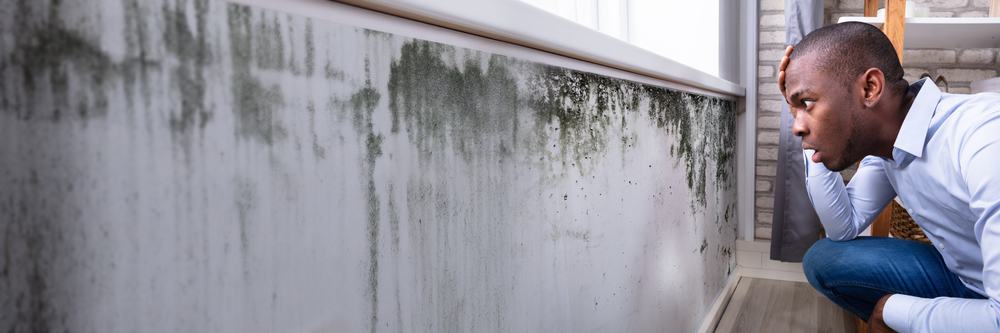
Albertson is a hamlet full of homes that were built quickly and affordably in the late 1940s and 1950s — part of the same post-war building wave that William Levitt brought to Nassau County starting in 1946. Those homes are now 60 to 80 years old. The original basement drainage, the early insulation materials, the plumbing that’s been patched a dozen times — all of it creates the exact conditions where mold takes hold quietly and stays hidden for years. A professional mold inspection in Albertson, NY doesn’t just confirm what you can already see. It tells you what’s happening behind the drywall, above the finished ceiling, and underneath the flooring — the places a visual check will never reach.
When you have a written, lab-confirmed report in hand, you’re not guessing anymore. If you’re buying a home in the Herricks or East Williston school district zone — where prices regularly cross the million-dollar mark — that documentation can protect your investment before the ink dries on a contract. If you’re a long-term homeowner in Albertson who noticed a musty smell after last fall’s nor’easter, it tells you whether you have a surface issue or something that needs real attention. Either way, you leave the process with clarity, not anxiety.
The Northern State Parkway runs along Albertson’s northern edge, and the hamlet sits in a pocket of Nassau County where the water table is close to the surface and basements are common. That combination — old construction, inland humidity, and groundwater pressure — is exactly why mold inspection demand in Albertson is consistent year-round, not just after a flood.
We’ve been operating across Long Island for over 31 years. That’s not a marketing number — it means we’ve been inside the same post-war Nassau County homes that define Albertson long before most of our competitors opened their doors. We know what a 1955 split-level looks like from the inside. We know what happens to a block foundation basement after decades of Nassau County winters and humid summers.
Every technician who walks into your home is IICRC-certified. We’re fully licensed under New York State’s Article 32 mold law — which applies directly to Nassau County — and we hold the NYS Department of Labor mold assessor license that makes every report we produce legally valid. We’re also licensed, bonded, and insured, which matters when someone is walking through a home worth over a million dollars.
We serve Albertson through our dedicated Nassau County line at 516-698-1776. If you’re near the Shelter Rock Library on Searingtown Road, off I.U. Willets Road, or anywhere in between — we’re familiar with this area and we’re ready to help.
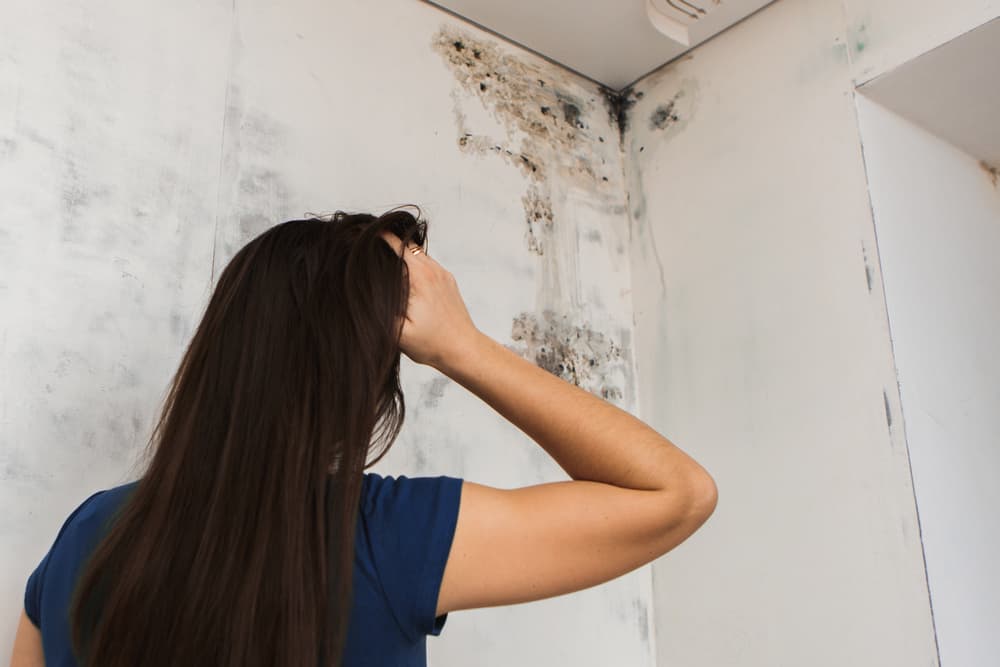
When you call, we schedule a time that works for you — including evenings and weekends, because mold doesn’t wait for business hours and neither do post-storm emergencies. A certified technician arrives and starts with a full walkthrough of the property, paying close attention to the areas that matter most in Albertson homes: basements, attics, crawl spaces, and anywhere water has ever entered or pooled.
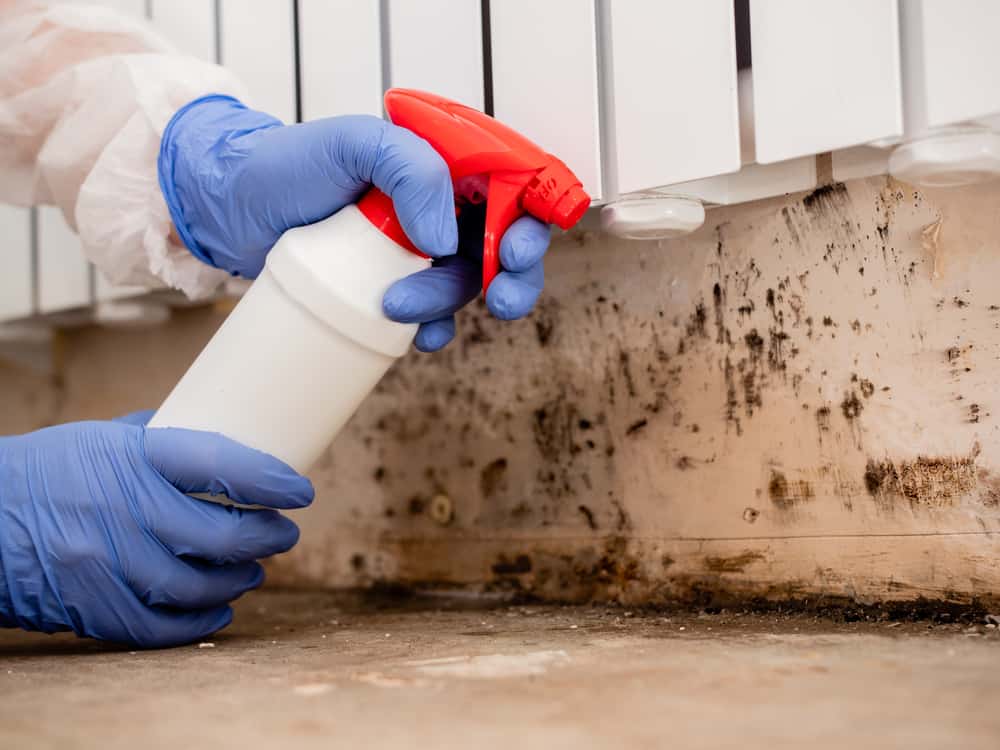
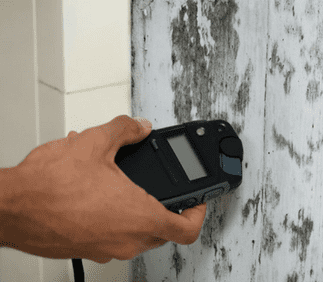
From there, we conduct air sampling, surface swab collection, moisture level measurement with calibrated meters, and infrared scanning to detect hidden moisture behind walls and inside cavities. We also compare your indoor air particle levels against the outdoor baseline — that comparison is what actually tells us whether your home’s air quality is compromised, not just whether mold spores are present. All samples go to a certified third-party laboratory. We don’t interpret results in-house and call it done.
Once the lab results come back, you receive a detailed written report. It identifies every mold species found, spore concentration levels, the internal versus external air comparison data, photographs of all identified sources, and specific recommended next steps. Under New York State’s Article 32 law — which governs all mold work in Nassau County — the company that inspects cannot be the same company that remediates on the same project. That separation protects you, and we follow it without exception. If remediation is needed, we return afterward to conduct the post-remediation clearance assessment.
Ready to get started?
This is a five-point inspection — not a visual walkthrough. Air testing and surface swab sampling give us both airborne and contact data. Moisture level measurement with calibrated meters tells us where water is actively present or has recently been. Infrared technology scanning finds what no one can see with the naked eye. And the internal versus external air particle comparison gives us a scientifically grounded baseline to measure your home’s air quality against — not just a raw number without context.
Every finding is photographed and documented. The written report you receive at the end includes certified lab results, mold species identification, spore concentration levels, and a clear damage assessment with recommended remediation steps. This is the document that Nassau County real estate attorneys will accept, that insurance adjusters will reference, and that a healthcare provider can use to evaluate environmental health concerns. For the pre-purchase buyers in Albertson who are under contract on a 60-year-old home in the Herricks school district zone, this report is often the difference between closing with confidence and walking away from a problem you didn’t know you had.
We also offer commercial mold inspection in Albertson, NY for business properties along the Willis Avenue corridor. Whether it’s a residential mold inspection or a commercial property assessment, the protocol is the same: thorough, documented, and legally compliant under Article 32.
Yes — and this is one of the most important things to understand before you hire anyone. New York State Labor Law Article 32, which has been in effect since January 1, 2016, requires that all mold assessors and mold remediation contractors hold a valid NYS Department of Labor mold license. Nassau County — where Albertson is located — is explicitly named in the jurisdiction covered by this law. Fines for unlicensed mold work reach $10,000.
What this means practically is that any mold inspection report produced by an unlicensed assessor carries no legal standing. It won’t be accepted by a real estate attorney during a home sale, it won’t hold up in an insurance claim, and it won’t protect you in a dispute. When you hire us, you’re getting a fully licensed NYS DOL mold assessor — which means the report you receive is a legally valid document, not just a piece of paper with someone’s opinion on it.
Nationally, professional mold inspections average around $670, with a typical range of $303 to $1,043 depending on the size and complexity of the property. Albertson homes — many of which are 2,000 to 4,000 square feet with finished basements, attic spaces, and aging HVAC systems — generally fall in the mid-to-upper portion of that range. The exact cost depends on the scope of the inspection and how many areas need to be sampled.
The more useful question for most Albertson homeowners is what it costs not to know. If you’re buying a home near the median price point of just over $1 million, or if you’ve had a plumbing leak or basement flood in the past year, a few hundred dollars for a certified, lab-backed inspection is a straightforward investment. The average mold remediation runs between $1,150 and $3,400 for contained situations — and can reach $20,000 or more when it’s found late and has spread through wall cavities and structural materials.
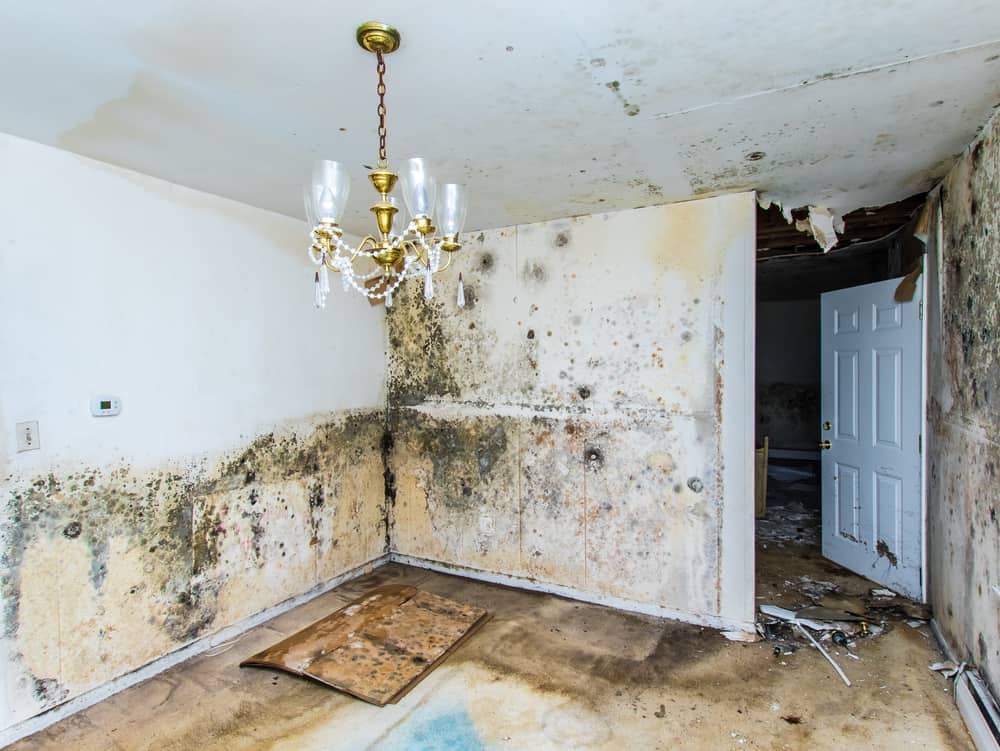
It can, and in Albertson specifically, it does — more often than most homeowners expect. The post-war homes that make up the bulk of Albertson’s housing stock were built with minimal vapor barriers, basic insulation, and wall cavity designs that weren’t engineered with moisture management in mind. When a slow plumbing leak, a roof penetration, or basement condensation introduces moisture into one of those cavities, mold can establish and grow for months without producing any visible sign on the finished surface.
This is exactly why infrared scanning is part of our inspection protocol. Thermal imaging detects the temperature differentials caused by moisture inside walls and ceilings — differentials that are invisible to the eye but clear on an infrared camera. In a hamlet where nearly every home predates 1970, relying on a visual inspection alone means you’re only seeing a fraction of the picture. The homes along I.U. Willets Road and throughout the Herricks school district zone are old enough that hidden mold is a real and common finding — not a worst-case scenario.
These terms get used interchangeably, but they describe different things. Mold inspection refers to the physical assessment of your property — the visual examination, moisture measurement, infrared scanning, and documentation of conditions that could support mold growth. Mold testing refers specifically to the collection and laboratory analysis of samples — air samples, surface swabs — to identify what species are present and at what concentration levels.
A thorough professional mold inspection in Albertson, NY includes both. The inspection without testing tells you where conditions are problematic. The testing without a full inspection gives you data without the context to interpret it correctly. What you need — especially for a real estate transaction or an insurance claim — is both together, delivered as a single documented report with certified lab results attached. That’s what our five-point protocol produces. It’s also worth noting that the $20 hardware store test kits don’t provide either in any meaningful way — they detect the presence of mold spores, which exist in virtually every home. They don’t tell you whether your levels are elevated, what species you’re dealing with, or where the source is.
The best time is whenever you have a reason to be concerned — but there are patterns in Albertson that make certain windows particularly high-risk. Spring is when groundwater rises after winter snowmelt and heavy rains, and basements in older Albertson homes with original drainage systems are especially vulnerable during this period. Summer brings sustained humidity that can push indoor moisture levels above the 60% threshold where mold can begin growing within 24 to 48 hours — particularly in attics where heat builds and in basements where cool surfaces cause condensation.
Fall nor’easters are another common trigger for Albertson residents. A roof leak during a storm or water coming in around an older window frame can introduce enough moisture to start a mold colony before the damage is even discovered. Winter creates its own issue: cold exterior walls combined with heated interiors produce condensation inside wall cavities, and ice dams on roofs — a documented problem in Nassau County’s older housing stock — drive meltwater into attic spaces. There’s no bad time to schedule an inspection if you have a reason to want one. But if you’ve recently had any water event in your home, don’t wait — the 24 to 48 hour window matters.
No — and this is a legal requirement in New York, not just a best practice. Under Article 32 of the NYS Labor Law, the licensed mold assessor who performs the inspection cannot be the same company that performs the remediation on the same project. This separation exists specifically to prevent conflicts of interest — it ensures that the person evaluating your home has no financial incentive to find a problem that requires their own remediation services.
This is one of the most important questions to ask any mold inspection company you’re considering in Nassau County. If a company offers to do both the inspection and the remediation in the same transaction, that’s a red flag — they are either operating outside of Article 32 compliance or structuring the work in a way that may not hold up legally. We follow this separation without exception. We conduct the certified assessment and produce the written report. If remediation is needed, it’s handled by a separate licensed contractor — and we return afterward to perform the post-remediation clearance testing to confirm the job was completed successfully.
Useful Links
Other Services we provide in Albertson