

Hear from Our Customers
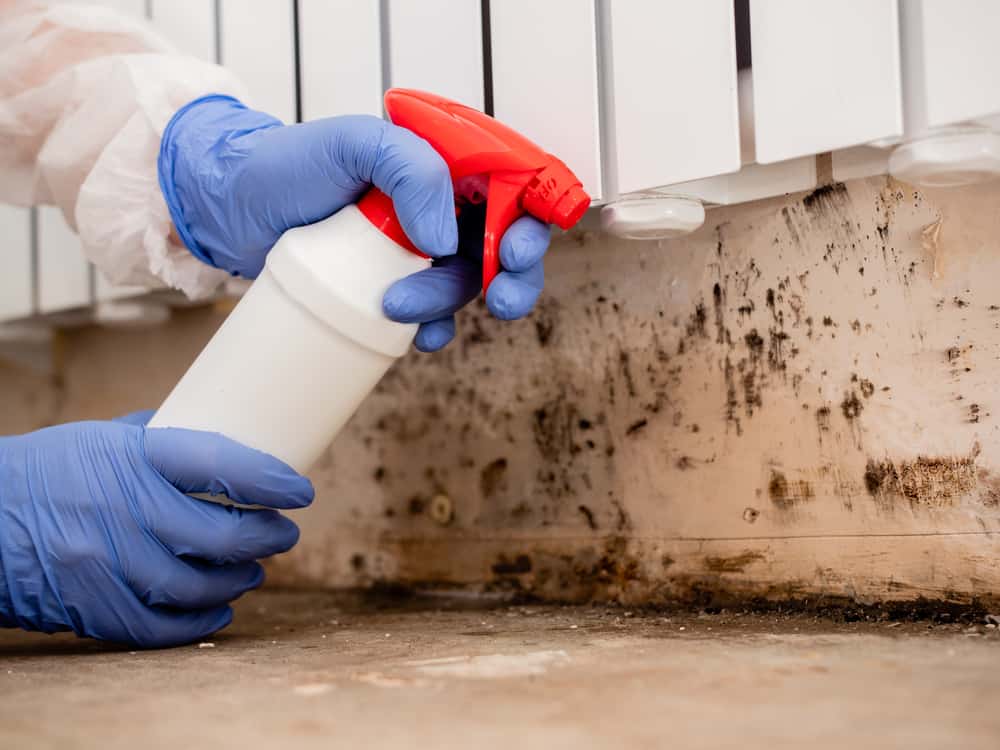
Most homeowners in Hewlett Neck don’t find out they have a mold problem from a smell or a stain. They find out after a storm pushes water through a foundation wall, or after a home inspection flags something during a multi-million-dollar sale. By then, the mold has usually been there for months. A thorough mold inspection tells you exactly what’s growing, where it started, and how far it’s spread — before it becomes a remediation project that derails a closing or drives up your insurance claim.
Hewlett Neck sits along Brosewere Bay and Georges Creek, which means coastal humidity is a constant. When indoor humidity climbs above 60% — which happens regularly in waterfront homes along the South Shore — mold can begin colonizing within 24 to 48 hours of any water intrusion. Knowing your home is clear gives you real peace of mind, not a guess.
For a village where homes list near $6.49 million and several properties date back to the Revolutionary War era, the stakes of missing a mold problem are significant. Older construction means older plumbing, original masonry foundations, and building materials that absorb moisture in ways modern construction doesn’t. A proper inspection — with infrared scanning and certified lab results — is what separates a documented answer from a best guess.
We’ve been serving Nassau and Suffolk County homeowners for over three decades, including the Hewlett Neck area and the Five Towns community. That kind of track record isn’t built on marketing — it’s built on showing up, doing the work right, and producing results that hold up when a real estate attorney or insurance adjuster reviews them. We’ve worked through every major storm event that has hit the South Shore, including the record coastal flooding that swept through the western bays of Nassau County during Hurricane Sandy.
What sets us apart isn’t just longevity. Every technician who enters your Hewlett Neck home holds IICRC certification — not just the owner, not just the estimator. We’re fully licensed under New York State’s Article 32 mold law, which requires separate licensing for mold assessment and mold remediation, and we’re licensed, bonded, and insured. For homeowners in the Five Towns area, that legal standing matters — especially now that New York’s updated Property Condition Disclosure Statement requires sellers to disclose known mold conditions.
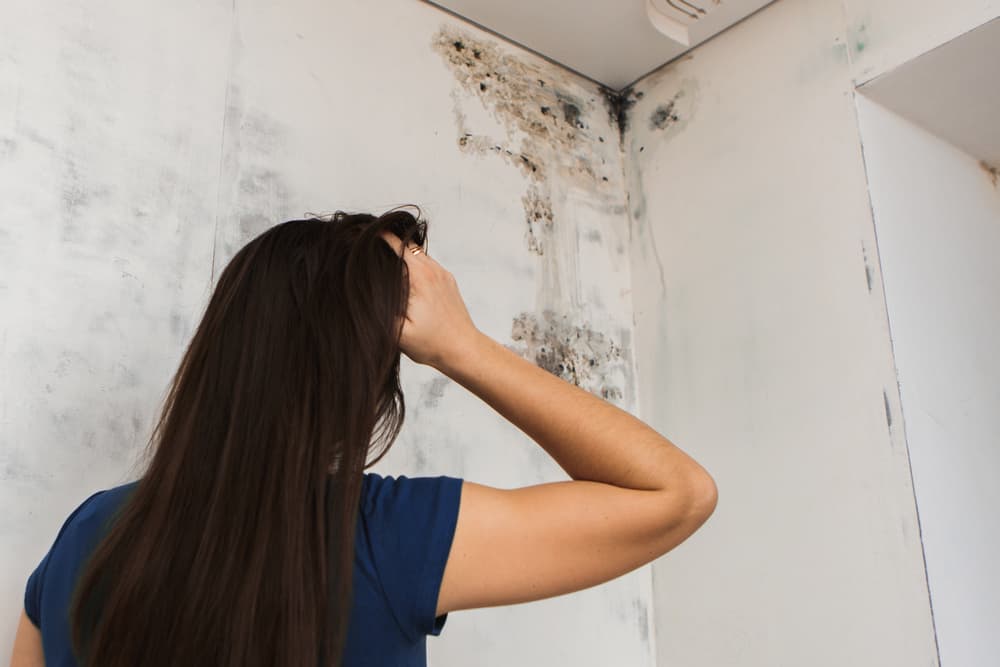
The inspection starts with a full walkthrough — not a quick visual scan, but a structured assessment using moisture meters and infrared thermal imaging to detect temperature and humidity anomalies behind finished surfaces. In Hewlett Neck’s older homes, where walls have been opened, replastered, and drywalled across multiple renovations, this step is where hidden mold colonies are most often found. You can’t see what’s inside a wall. Infrared can.
From there, we collect air samples from inside the home and compare them against outdoor baseline levels. Surface swab samples are taken from any areas of visible concern. All samples are sent to a certified third-party laboratory — not evaluated on-site by the inspector. The lab identifies the specific mold species present and the spore concentration levels, which is the kind of objective data that insurance companies, real estate attorneys, and physicians actually rely on.
Once results are back, you receive a written report that summarizes the lab findings and outlines specific remediation recommendations where needed. If your situation involves a post-storm insurance claim — which is a real possibility for any home on Brosewere Bay or Georges Creek — the documentation we produce during this process is built to support that claim. The whole inspection typically takes three to six hours for a larger home, and the report is yours to keep. You own it. You can take it anywhere.
Ready to get started?
Our mold inspection in Hewlett Neck covers five core components: air testing, surface swab sampling, water intrusion inspection, moisture level measurement, and infrared thermal imaging for hidden mold detection. We compare internal air quality against outdoor particle levels to establish whether your home has an elevated mold burden. Detailed photographs document every source and area of concern. The written report includes certified lab results and specific remediation recommendations — not general guidance, but actionable next steps based on what was actually found in your home.
For Hewlett Neck residents, the inspection is also designed to address the specific conditions of waterfront and historically constructed homes. That means crawl spaces, basement foundations, attic assemblies, and HVAC systems all receive attention — not just the rooms that are easy to access. Salt air infiltration through older building envelopes, condensation within multi-zone HVAC systems, and moisture trapped behind original masonry are all documented patterns in South Shore waterfront communities. We account for all of it.
New York State’s Article 32 mold law requires that mold assessment and remediation be performed by separately licensed professionals. We hold both licenses and operate in full compliance. If remediation is needed after the inspection, we can handle that too — but the inspection report stands on its own, produced under the assessor license, and is yours to use however your situation requires.
As soon as possible — ideally within 24 to 48 hours of the water intrusion. Mold can begin growing that quickly once moisture is present and humidity is elevated, and Hewlett Neck’s waterfront position along Brosewere Bay and Georges Creek means storm-driven flooding is a real and recurring risk. Waiting a week or two to call an inspector doesn’t just give mold more time to grow — it can complicate your insurance claim, because carriers want documentation of conditions as close to the date of loss as possible.
We operate 24 hours a day, seven days a week, and can dispatch to Hewlett Neck for urgent post-flood assessments. The inspection documents moisture levels, identifies active water intrusion points, and establishes the baseline your claim needs. The sooner you have that report, the stronger your position — both for remediation and for working with your insurer.
Nationally, professional mold inspections average around $670, with most falling somewhere between $300 and $1,050 depending on the size of the home and the scope of the assessment. For the estate-scale properties in Hewlett Neck — many of which exceed 5,000 square feet and include finished basements, attic spaces, and complex HVAC systems — expect the inspection to take longer and cover more ground than a standard suburban home. That thoroughness is what the cost reflects.
It’s worth framing that number against what you’re protecting. At Hewlett Neck’s median listing price of approximately $6.49 million, an undetected mold problem isn’t a minor inconvenience — it’s a potential six-figure issue in remediation costs, property value impact, or a derailed real estate transaction. The inspection cost is a small fraction of what it costs to deal with a mold problem that wasn’t caught early.
Yes. Under Article 32 of the New York State Labor Law, anyone performing mold assessment or mold remediation for compensation in New York must hold an active NYS Department of Labor mold license. Nassau County is a covered jurisdiction, and fines for unlicensed work can reach $10,000 per violation. This law has been in effect since 2016, but many homeowners still don’t know to ask for proof of licensing before hiring.
There’s also an important nuance: Article 32 requires that the company performing the mold assessment and the company performing any subsequent remediation be two separate, independently licensed entities. This protects you from a conflict of interest — an inspector who also sells remediation has a financial incentive to find something. We hold both an assessor license and a remediator license, and operate in compliance with the law’s separation requirements. When you request a copy of our license, we’ll provide it without hesitation.
Absolutely — and it’s more common than most homeowners expect. Mold doesn’t need to be visible to be a problem. It grows inside wall cavities, beneath flooring, within attic insulation, and behind finished surfaces where no amount of visual inspection will find it. In Hewlett Neck, where several homes date back generations and have been renovated multiple times, there are often hidden moisture pathways created by previous construction work — places where water has been getting in slowly, long before any stain or odor appears.
This is exactly why infrared thermal imaging is a non-negotiable part of a credible mold inspection for older waterfront homes. Infrared detects temperature and moisture anomalies behind finished surfaces — the signature pattern of hidden mold growth. A walk-through and a couple of air samples won’t tell you what’s inside a wall that was drywalled over in 1987. Infrared will. For Hewlett Neck properties with complex structural histories, this technology is the difference between a real answer and a partial one.
You’re not legally required to commission an inspection before listing — but as of June 14, 2023, New York State amended its Property Condition Disclosure Statement to require sellers to disclose any known indoor mold conditions. That means if you know about a mold problem and don’t disclose it, you’re exposed to legal liability. A pre-listing mold inspection gives you clarity before you’re in that position.
For Hewlett Neck sellers, the math is straightforward. If a buyer’s inspector finds mold during due diligence on a multi-million-dollar transaction, you lose negotiating leverage, face potential remediation demands, and risk the deal falling apart entirely. If you find it first — and address it — you control the narrative and protect your listing price. In a village where buyers are represented by attorneys and transactions are scrutinized carefully, having a clean, lab-backed mold inspection report on file is a competitive advantage.
A visual inspection looks at what’s visible — staining, discoloration, water damage, obvious growth. It’s a starting point, but it misses everything that’s behind walls, inside ductwork, or growing in spaces that aren’t easily accessible. Indoor air quality testing for mold measures what’s actually in the air you’re breathing — spore types, spore concentrations, and how those numbers compare to outdoor baseline levels. That comparison is what tells you whether your home has an elevated mold burden, even if nothing is visible.
In Hewlett Neck, where coastal humidity and older construction create conditions for hidden mold growth, air testing is often where the real findings come from. A home can look perfectly clean and still have airborne spore levels that signal an active colony somewhere in the structure. The lab results from air and surface samples are what give you a documented, defensible answer — not an inspector’s opinion, but objective data from a certified laboratory. That’s the standard your real estate attorney, your physician, and your insurance company will accept.
Useful Links
Other Services we provide in Hewlett Neck