
Hear from Our Customers
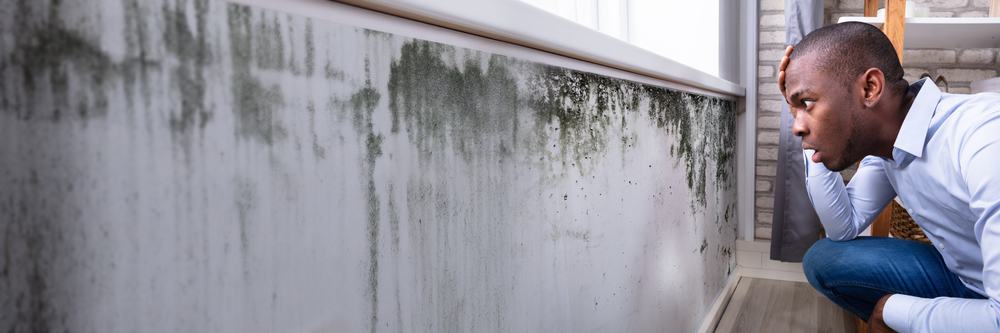
Most mold problems in Melville don’t announce themselves. They grow quietly inside wall cavities, under flooring, and in attic spaces of homes built in the 1960s and 70s — decades before anyone cared about vapor barriers or proper ventilation. By the time you smell something or see a stain, it’s usually been there a while.
A professional mold inspection changes that. Instead of wondering, you get air samples, surface swabs, lab analysis, and a written report that tells you exactly what’s present, where it’s coming from, and what needs to happen next. That’s not just peace of mind — it’s documentation you can use for insurance claims, real estate transactions, or simply making an informed decision about your home.
For Melville specifically, that decision carries real financial weight. With median sale prices recently hitting $1.2 million and rising, undiscovered mold isn’t just a health issue — it’s a liability. Studies consistently show mold can reduce a home’s value by 20 to 37 percent, and nearly half of buyers walk away entirely when they learn a property has had mold history. Whether you’re buying, selling, or just want to know what’s behind your walls, a mold inspection in Melville, NY is one of the smarter calls you can make.
First Response Restoration and Cleaning Inc. has been serving Nassau and Suffolk County homeowners for over 31 years. That’s not a marketing number — it means our technicians have worked throughout Melville and the surrounding communities long enough to know exactly what these homes are dealing with, from the aging housing stock in neighborhoods like Half Hollow Hills to the basement flooding issues that keep waterproofing companies busy year after year.
Every technician we send is IICRC-certified — not just the lead, not just the owner, every person on the job. We hold both the New York State Mold Assessor License and the Mold Remediator License, which have been legally required in this state since January 1, 2016. You can verify both through the NY Department of Labor’s public database before you ever call us.
We also handle everything under one roof. If the inspection finds something, we can remediate it. If remediation requires reconstruction, we handle that too. You won’t be coordinating three different contractors or explaining the situation from scratch to someone new.
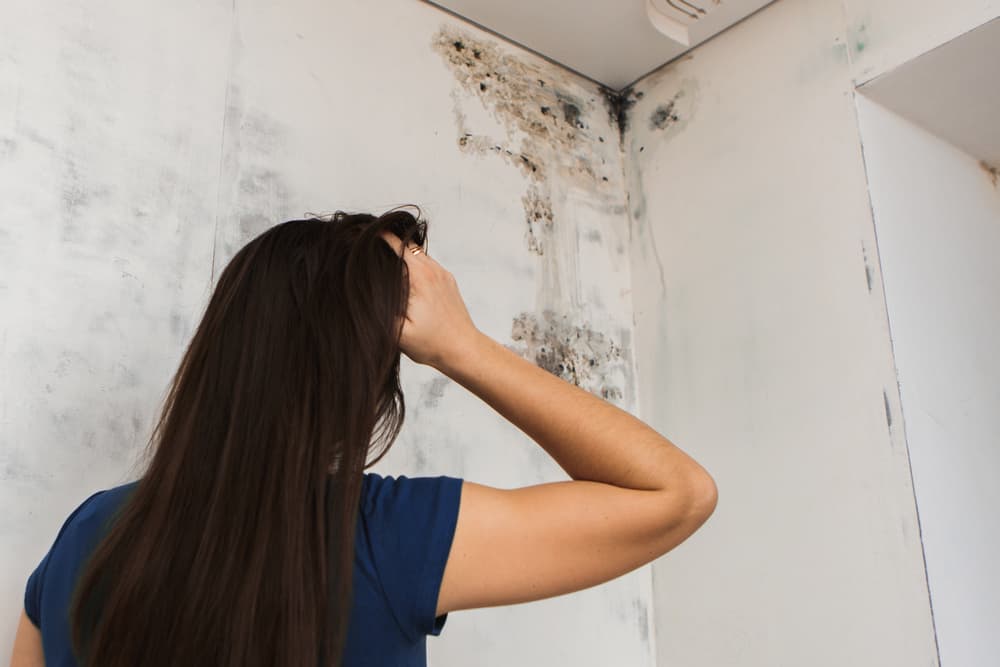
When you reach out, we schedule an inspection at a time that works for you. We know Melville residents aren’t sitting around waiting — many of you are commuting to jobs across Long Island or managing a household with a full schedule. We work around that.
When our technician arrives, the inspection starts with a full walkthrough to identify visible signs of mold and any areas of concern — attics, basements, crawl spaces, and anywhere water has had a chance to intrude. From there, we collect air samples to measure airborne spore levels and take swab samples from any surface growth we find. We also use infrared thermal imaging to detect moisture and mold activity behind walls and under floors — areas that a visual inspection alone would completely miss. Every sample goes to an accredited laboratory for analysis.
Once results come back, you get a written report that includes the lab findings, mold species identified, spore counts, a comparison of indoor versus outdoor particle levels, and specific recommended next steps. If your situation involves an insurance claim — which is common when mold follows water damage — we structure the documentation to meet what your insurer needs. In New York, any remediation work that follows must be performed by a licensed mold remediator, and any structural repairs may require Town of Huntington building permits. We know the process and handle it correctly from the start.
Ready to get started?
There’s a wide range of what passes for a “mold inspection” in this industry. Some companies do a quick walkthrough and hand you a one-page summary. What we do is different, and the difference matters — especially in a market like Melville where the stakes are high for both residential and commercial property owners.
On the residential side, our inspection covers air testing, surface swab sampling, water intrusion assessment to identify the moisture source, calibrated moisture level measurements throughout the property, and full photographic documentation. We also use infrared thermal imaging, which is not standard practice among most mold inspectors but is the only reliable way to find mold growing inside walls or beneath flooring in older Melville homes. The final written report includes everything your real estate attorney, insurance adjuster, or future buyer might ask for.
On the commercial side, we serve businesses throughout Melville — office parks, corporate campuses, and large-square-footage buildings with centralized HVAC systems that can spread mold spores through an entire building in a single cycle. A commercial mold inspection in Melville, NY covers the same rigorous process, scaled to the size and complexity of your space. Whether it’s a basement in a Half Hollow Hills neighborhood or an office suite, the process is thorough, documented, and built to give you answers you can actually act on.
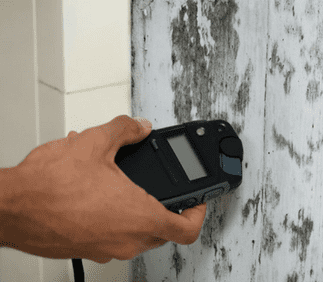
Yes — and both matter for different reasons. Air testing captures what’s floating in the environment, which is often the first sign of a mold problem even before visible growth appears. Surface swab sampling confirms what’s actually growing on a specific material, whether that’s drywall, wood framing, insulation, or HVAC components. Using only one method gives you an incomplete picture.
In Melville specifically, air testing is particularly valuable in older homes where mold may be growing inside wall cavities without any visible signs on the surface. Homes built in the 1960s and 70s — which make up a significant portion of Melville’s residential housing stock — often have inadequate attic ventilation and aging construction materials that hold moisture. Air sampling in those spaces frequently reveals elevated spore counts that a surface-only inspection would miss entirely. Every sample we collect goes to an accredited lab, and your written report includes both sets of findings.
For most residential properties, a professional mold inspection runs between $300 and $700. The range depends on the size of the property, how many samples are collected, and whether additional testing methods like infrared thermal imaging are included. Larger homes or commercial properties in Melville can run higher — typically $1,000 to $2,500 — depending on square footage and the complexity of the HVAC system being assessed.
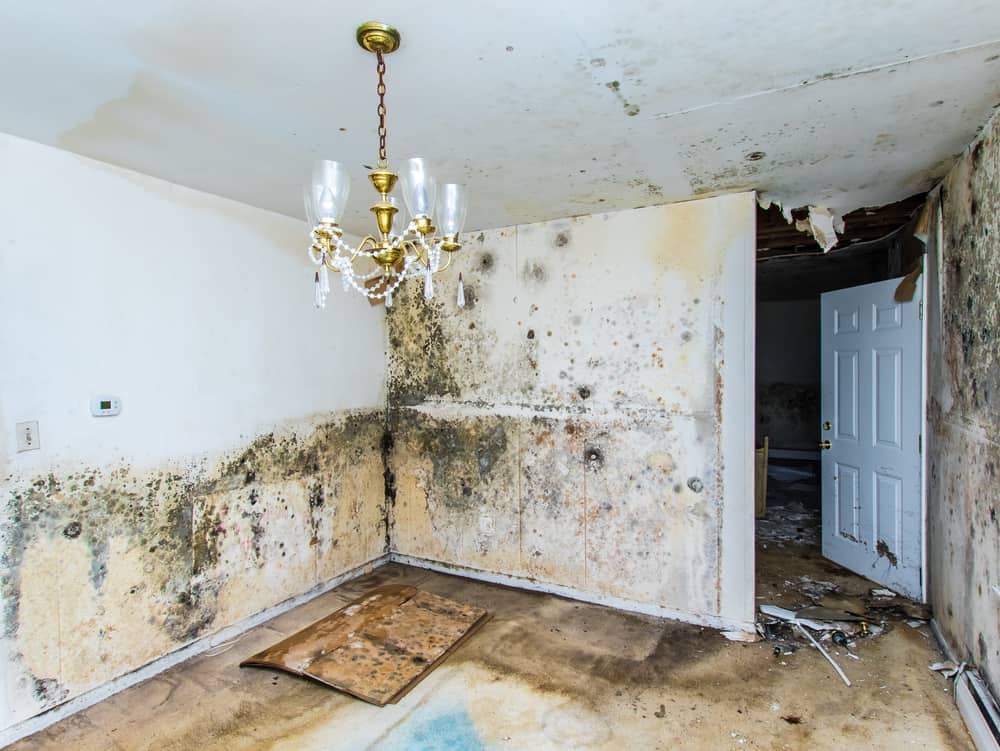
Here’s the context that matters in a market like Melville: the median home sale price recently hit $1.2 million. A $500 inspection on a property worth that much is not a significant line item — but skipping it and discovering a mold problem after closing absolutely is. Remediation costs range from $1,150 on the low end to $20,000 or more for severe cases involving structural materials. The inspection is how you find out which situation you’re in before it becomes your problem to absorb alone.
New York State has required mold assessors and mold remediators to hold licenses issued by the NY Department of Labor since January 1, 2016. These are two separate licenses — one for inspection and assessment, one for remediation — and a company needs both to legally perform the full scope of mold-related work in this state. Operating without them isn’t a gray area; it’s illegal.
You can verify any company’s license status through the NY Department of Labor’s public online database before you hire anyone. We hold both the NY State Mold Assessor License and the NY State Mold Remediator License — look us up. This matters because the licensing requirement exists to protect you: it ensures the person collecting samples and interpreting results has met a defined professional standard, not just bought a moisture meter and printed some business cards. In a community where property values are as high as they are in Melville, this is not a detail worth skipping.
Mold doesn’t discriminate by age of construction — it grows wherever moisture accumulates. That said, older homes do carry more inherent risk. A significant portion of Melville’s residential neighborhoods were built in the 1960s and 70s, before modern moisture management standards existed. Those homes often have attic ventilation that’s no longer adequate, basement construction without waterproofing membranes, and insulation that holds moisture rather than repelling it. These are conditions that create mold problems even without a dramatic water event.
Newer construction in Melville isn’t immune either. Improper flashing around windows, HVAC condensation issues, and even construction moisture trapped during the building process can lead to mold growth within the first few years of a home’s life. Communities like Villages West Melville, which include attached and semi-attached units, present a particular challenge where a moisture issue in one unit can affect shared walls and common building envelopes — a scenario that requires professional assessment, not just a visual check. Regardless of when your home was built, if there’s been any water intrusion, the smart move is to get it tested.
Mold inspection is the assessment phase — it’s how you find out whether mold is present, what type it is, where it’s growing, and what the source of moisture is. Mold remediation is the removal and treatment process that follows. In New York State, these are legally separate functions requiring separate licenses, which is why some companies only do one or the other.
Whether you need both depends on what the inspection finds. If the lab results come back clean, you have documentation confirming your home is clear — which is genuinely useful for a real estate transaction or an insurance record. If mold is found, remediation is the next step, and the written inspection report becomes the blueprint for that work. We hold both required state licenses and can handle the full sequence — inspection, remediation, and reconstruction if structural materials need to be replaced. For Melville homeowners who don’t want to manage multiple contractors through what’s already a stressful process, that matters.
In a market where you’re committing $1.2 million or more to a property in Melville, a mold inspection before closing is one of the most straightforward risk-reduction steps available to you. Standard home inspections don’t include mold testing — they’re visual assessments of structure, systems, and safety. A mold inspection is a separate, specialized process that requires air sampling, lab analysis, and moisture measurement tools that a general home inspector doesn’t carry.
Melville’s competitive real estate environment has pushed many buyers to waive inspection contingencies to win bids. That’s a reasonable strategy in some situations, but it means you’re absorbing whatever comes with the property. A pre-offer mold inspection — done before you submit — gives you the information you need to make that decision with your eyes open. If the results are clean, you have documentation that supports the purchase. If they’re not, you know before you’re legally committed. At $300 to $700, it’s a fraction of what a mold remediation costs post-closing, and a fraction of a fraction of what you’re spending on the home itself.
Useful Links
Other Services we provide in Melville