

Hear from Our Customers

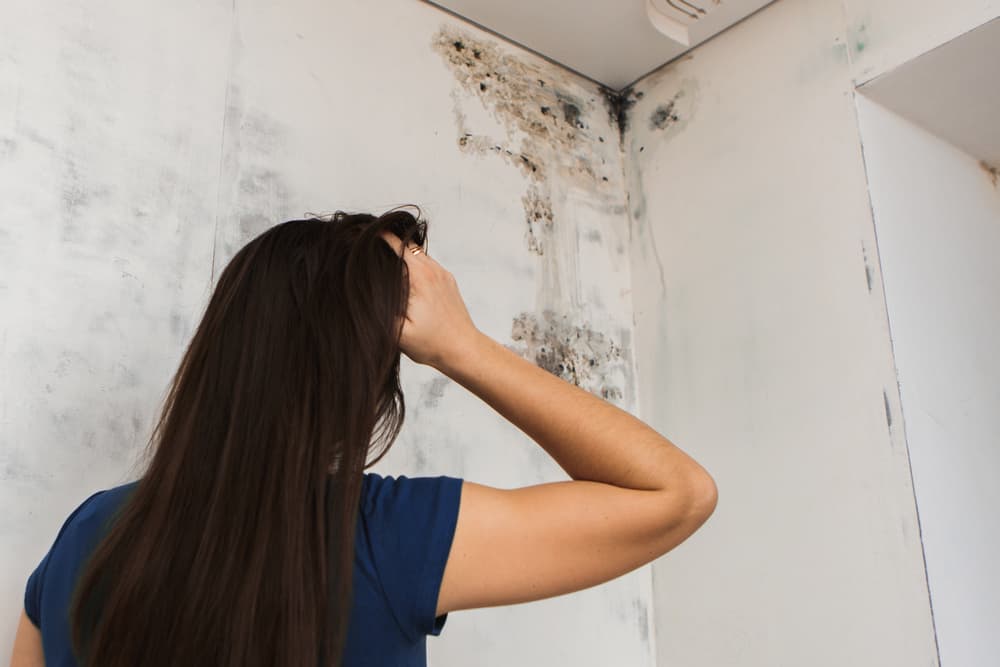
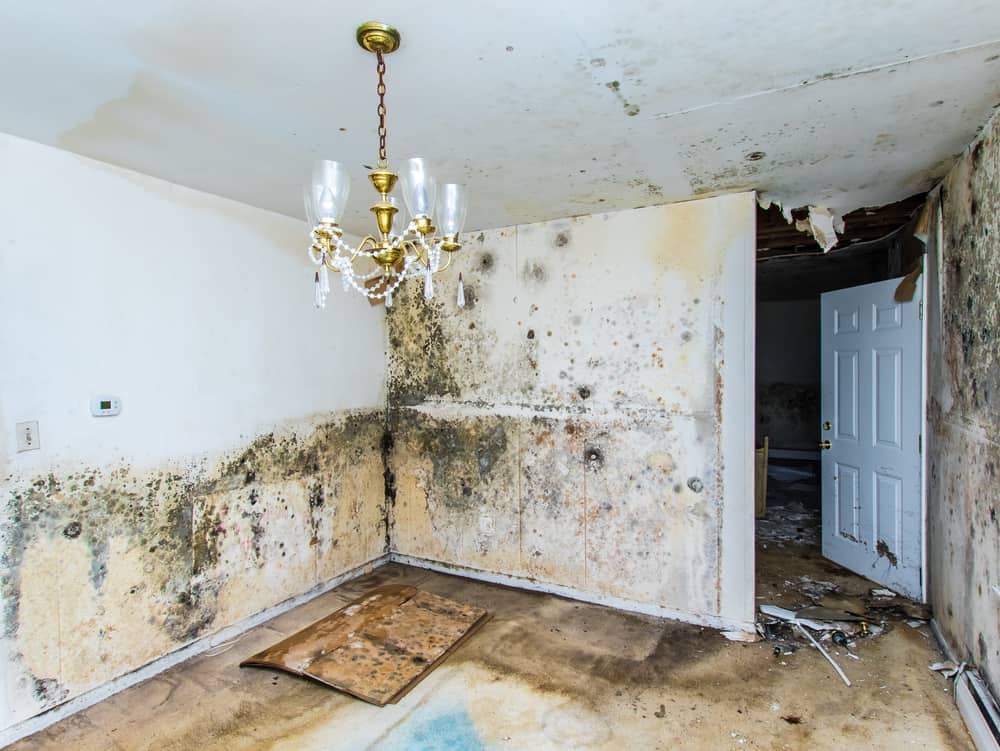
Most mold in North Haven isn’t sitting out in the open. It’s behind the drywall in a waterfront bedroom, underneath subflooring near a crawl space that’s been quietly absorbing moisture from Noyac Bay air all winter, or tucked inside attic insulation that never fully dried after a nor’easter pushed water under the eaves. You can’t smell it clearly until it’s already a problem. And by then, the damage runs deeper than the surface.
A professional mold inspection changes that. Instead of guessing, you get documented findings — airborne spore counts, surface samples sent to an accredited lab, moisture readings, and a clear written report that tells you exactly what was found and what it means. If remediation is needed, you know what you’re dealing with before a single contractor touches anything. If nothing’s found, you have documentation that says so — which matters when you’re in the middle of a real estate transaction or filing an insurance claim.
For North Haven homeowners managing a property that sits vacant for months at a time, that kind of clarity is worth more than any quick visual walkthrough. The inspection protects your investment. It protects your family. And it removes the uncertainty that tends to make mold situations far more expensive than they needed to be.
We’ve been operating on Long Island for 31 years, building a track record property by property across all of Suffolk County, from the western suburbs out to the South Fork. We hold NY State licenses for both mold assessment and mold remediation, and every technician who walks through your door is IICRC-certified. Not just the owner. Everyone.
That matters in a village like North Haven, where homes along North Haven Point and North Haven Manor face conditions that most suburban inspectors have never dealt with — wetland adjacency, tidal humidity, seasonal vacancy, and older estate structures that weren’t built with today’s moisture management standards. This isn’t a franchise or a call center dispatching whoever’s available. We’re a licensed, owner-operated company with the credentials to back up every inspection we conduct.
You can verify our NY State mold assessor and mold remediator licenses through the Department of Labor’s public database before you ever pick up the phone. That level of transparency is rare in this industry — and it should be the standard you hold every company to.
The inspection starts with air testing — airborne spore samples collected from inside your home and compared against an outdoor control sample. This baseline comparison is what separates a real assessment from a visual guess. If indoor spore concentrations are elevated relative to outside, that tells a clear story regardless of whether you can see anything.
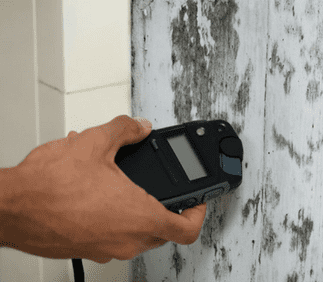
From there, any visible mold gets swab-sampled and sent to a certified, accredited laboratory for species identification. At the same time, our technician runs a full water intrusion inspection to locate the moisture source driving the growth — because treating mold without finding the source is just a temporary fix. Moisture levels are measured throughout the property using calibrated meters, and infrared thermal imaging is used to detect hidden moisture inside walls and ceilings without opening anything up. In a North Haven home where the building envelope is constantly under pressure from marine humidity and seasonal temperature swings, thermal imaging regularly finds what nothing else would catch.
Everything gets photographed and compiled into a written report — lab results, moisture readings, identified sources, and specific recommended next steps. If you’re managing the property from the city, that report gives you everything you need to make decisions and communicate with your attorney, insurance adjuster, or contractor without having to be on-site for every conversation.
Ready to get started?
A mold inspection in North Haven isn’t a one-size situation. The village’s zoning code requires 75-foot setbacks from wetland edges and coastal bluffs — which means many homes here sit directly adjacent to the kind of moisture-saturated ground that quietly feeds foundation and crawl space problems for years before anyone notices. Our inspection accounts for that. Moisture readings are taken throughout the structure, with specific attention to below-grade spaces, exterior walls facing the water, and any area with a history of water intrusion.
The inspection covers attic mold detection, basement mold assessment, indoor air quality testing for mold, and full photographic documentation of every finding. If the property has been closed for the season — common in North Haven, where a meaningful portion of homes sit vacant from fall through late spring — the post-vacancy assessment includes a targeted look at the areas most likely to have accumulated moisture damage during that time: attic spaces where condensation built up, crawl spaces where groundwater crept in, and any room where a heating system failure may have allowed temperatures to drop below the threshold where condensation becomes a recurring problem.
Because we also handle remediation and reconstruction, you’re not left holding a report and trying to coordinate three separate contractors. If the inspection finds something that needs to be addressed, our licensed team can carry the work through from removal to restoration — all under one roof, one insurance policy, and one point of contact.
It raises it significantly — and in ways that aren’t always obvious. North Haven is surrounded on three sides by water: Noyac Bay to the west, Shelter Island Sound to the north and east, and Sag Harbor Cove to the south. That marine environment keeps ambient humidity consistently elevated year-round. Salt air and bay moisture don’t just affect the exterior of a home — they permeate building envelopes over time, especially in older structures that weren’t designed with modern vapor barriers or moisture management systems in mind.
The wetlands woven throughout North Haven add another layer to this. Homes built near wetland edges — and the village code’s 75-foot setback requirement reflects how common that proximity is — face persistent groundwater pressure against foundations and crawl spaces. That moisture doesn’t announce itself. It works quietly for months or years until mold is already well-established inside a wall cavity or beneath a floor. A professional mold inspection with infrared thermal imaging is the only way to know what’s actually happening inside those spaces without tearing anything apart.
For a residential property in North Haven, a professional mold inspection typically runs between $300 and $600 depending on the size of the home and the scope of the assessment. Larger estates or properties with complex structures — multiple crawl spaces, finished attics, or significant square footage — may run higher. That cost includes air sampling, surface swab sampling where visible mold is present, moisture readings throughout the home, infrared thermal imaging, and a full written report with accredited lab results.
What that cost actually represents is straightforward: it’s the smallest possible investment in a property that’s likely worth well over a million dollars. A mold problem discovered after closing — or after a summer of your family breathing elevated spore concentrations — costs far more to address than an inspection would have. And if the inspection comes back clean, you have documentation that says so, which has real value in a real estate transaction or an insurance context. The report is what you’re paying for as much as the inspection itself.
Yes, and this is one of the most common situations we see on the South Fork. A home left unoccupied through the fall and winter — without active climate control, without anyone checking on it regularly — is exactly the kind of environment where mold takes hold before anyone realizes it. A pipe that drips slowly, a roof flashing that lets in moisture after a nor’easter, a heating system that cycles off and lets interior temperatures drop — any of these can create conditions where mold grows unchecked for months.
By the time you return in late spring and notice a musty smell or unexplained allergy symptoms, the growth may already be extensive inside wall cavities or beneath flooring. A post-vacancy mold inspection before your family settles in for the season is the responsible move. It either confirms the home is clean — which is genuinely reassuring — or it catches a problem early enough that remediation is manageable rather than catastrophic. Either outcome is better than finding out the hard way mid-summer.
Black mold — specifically Stachybotrys chartarum — is one of the more concerning mold species because it requires sustained moisture over a long period to grow and is associated with more serious health effects than common surface molds. But the term “black mold” gets used loosely, and not everything dark-colored is Stachybotrys. The only way to know what species you’re dealing with is laboratory analysis of collected samples.
A standard mold inspection includes that lab analysis. Air samples and surface swabs are sent to a certified, accredited laboratory that identifies the specific species present and measures concentrations. If Stachybotrys is found, the report will say so clearly — along with where it was found, what moisture source is feeding it, and what remediation approach is appropriate. In a North Haven property where seasonal vacancy and persistent coastal humidity create exactly the kind of long-duration moisture conditions Stachybotrys needs, knowing definitively what you’re dealing with is not optional. It shapes every decision that follows.
At this price point, it’s not optional — it’s essential. Homes in North Haven regularly trade at seven-figure values, and a mold problem that wasn’t disclosed or detected before closing becomes your problem the moment you sign. Pre-purchase mold inspections are standard practice in the luxury real estate market on the South Fork, and buyers’ attorneys increasingly require documented mold assessments as part of due diligence.
What you’re looking for in a pre-purchase inspection is not just whether mold is visible — it’s whether there’s hidden moisture intrusion that’s already creating conditions for growth, or evidence of past remediation that wasn’t fully resolved. Infrared thermal imaging is particularly valuable in this context because it can detect moisture behind walls and beneath floors without any destructive testing. If the inspection finds an issue, you have leverage in the transaction. If it comes back clean, you have documentation that protects you after closing. Either way, the inspection pays for itself before you ever move in.
Yes — and for North Haven homeowners managing a property from outside the area, that matters more than most people initially realize. Coordinating a mold inspector, a separate remediation contractor, and potentially a reconstruction team across a village accessible only by bridge, causeway, or ferry is a logistical challenge that adds stress to an already stressful situation.
We hold NY State licenses for both mold assessment and mold remediation — two separate license categories under New York law — which means we can legally conduct the inspection, perform the remediation if mold is confirmed, and handle any reconstruction needed after materials are removed. One team, one point of contact, one insurance policy covering the entire scope of work. The inspection report is never used as a sales tool to push unnecessary remediation — the lab results are objective, and mold either shows up in the samples or it doesn’t. But if remediation is warranted, you’re not starting over with a new contractor. Our team that found the problem already knows your property and can move directly into the next phase without delay.
Useful Links
Other Services we provide in North Haven