
Hear from Our Customers

Most mold problems in Riverhead aren’t visible. They’re behind the walls of a 1940s downtown bungalow that flooded twice last decade, under the floors of a Jamesport farmhouse with a crawl space that never fully dried out, or inside the attic insulation of a Wading River home that took on ice dam damage three winters ago. By the time you smell it or see it, it’s usually been growing for a while.
A thorough mold inspection gives you documented, lab-verified answers — not guesses. You’ll know whether the spore counts in your air are elevated, where the moisture is coming from, and what needs to happen next. That clarity matters whether you’re dealing with a health concern in your household, trying to close a real estate deal on a North Fork property, or filing an insurance claim after a storm pushed water into your basement.
Riverhead’s geography makes this more complicated than it sounds. Properties near the Peconic River sit above a watershed that drains 74 square miles — groundwater levels rise, basements flood, and crawl spaces stay wet longer than most homeowners realize. Coastal properties in Baiting Hollow and Wading River deal with salt-laden air year-round, which accelerates the breakdown of building materials and gives mold a faster path in. Understanding those local conditions is part of what makes an inspection actually useful here.
We’ve been operating on Long Island for over three decades. That’s not a number we throw out to sound impressive — it means we’ve inspected properties throughout Riverhead and the surrounding hamlets through multiple storm cycles, seen what coastal moisture does to older homes in Suffolk County, and built a reputation in communities where word travels fast and shortcuts don’t stay hidden for long.
We hold both the New York State Mold Assessor license and the Mold Remediator license — issued by the NY Department of Labor and publicly verifiable. Every technician on our team carries IICRC certification, not just the person who answers the phone. When someone shows up to your home in Calverton, your commercial property off Route 58, or a farmhouse out near Aquebogue, they’re credentialed and they know what they’re looking at.
We also handle everything from inspection through remediation and reconstruction if it comes to that. One company, one point of contact, no gaps in accountability.
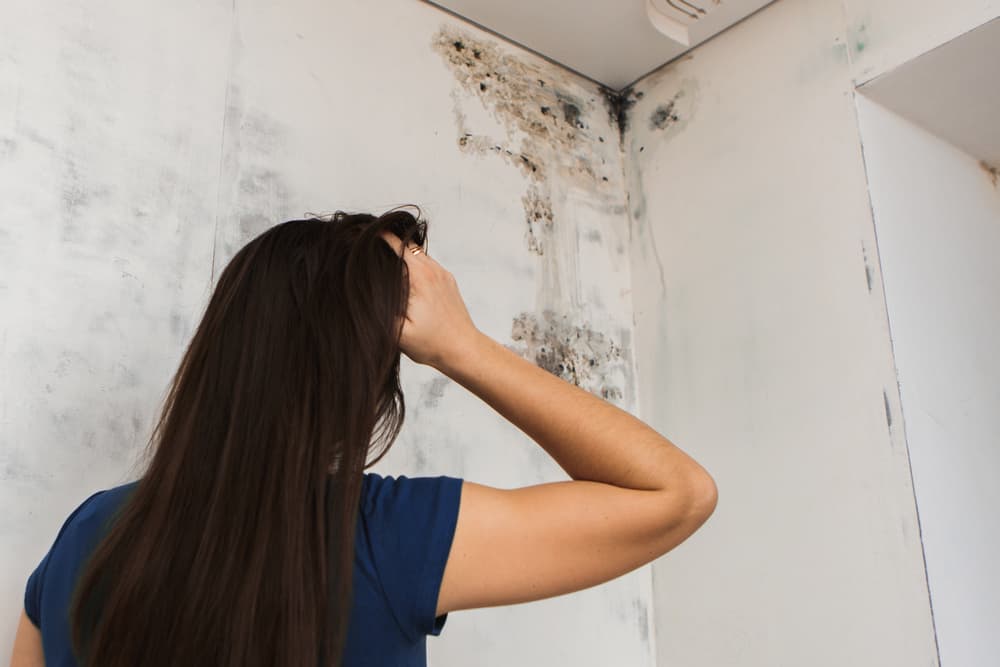
The inspection starts before we touch a wall. We ask about your property’s history — any flooding, water intrusion, past repairs, how old the structure is, and what symptoms or signs brought you to this point. In Riverhead, that conversation often involves the Peconic River, a coastal-facing property in Wading River, or an older home in the downtown hamlet with plumbing that’s been repaired more than once. That context shapes where we look first.
From there, we move through a documented five-point process: air testing to capture airborne spore counts, swab sampling from surfaces where growth is visible or suspected, a water intrusion inspection to trace moisture back to its source, moisture level readings throughout the structure, and full photographic documentation of everything we find. We also run indoor-versus-outdoor air comparisons so you can see whether your interior spore levels are actually elevated relative to the environment outside — that comparison is what turns raw data into a real answer.
Where the situation calls for it, we bring in infrared thermal imaging to find moisture and mold activity behind walls and under floors without tearing anything apart. In a town with as much older housing stock as Riverhead — farmhouses in the outer hamlets, century-old residential blocks downtown — that technology regularly finds problems that a visual inspection would miss entirely. Everything goes to an accredited lab. You receive a written report with the results, what they mean, and a clear recommended path forward.
Ready to get started?
A basic visual walkthrough isn’t a mold inspection — it’s a starting point. What you receive from us is a complete mold assessment: air quality testing for airborne spore counts, surface swab sampling, moisture mapping, water intrusion tracing, infrared thermal imaging where needed, and a full written report backed by accredited laboratory analysis. That report is structured to hold up in a real estate transaction, an insurance claim, or a conversation with a contractor about what needs to come out.
New York State law requires that mold assessors and mold remediators be separately licensed — and that a post-remediation clearance test be completed before a project is considered finished. We meet both requirements. Our NY DOL licenses are current and searchable. If you’ve been quoted by a company that can’t point you to their license number, that’s worth knowing before you let them into your home.
Riverhead’s property types run the full range — older residential homes in the downtown hamlet, agricultural structures in Jamesport and Aquebogue, waterfront properties in Riverside and Flanders, and commercial buildings along the Route 58 corridor near Tanger Outlets. We’ve worked in all of them. The inspection adapts to what the property actually is, not a checklist built for a generic suburban house. And because we also handle remediation and reconstruction, if the inspection turns up something serious, you’re not starting over with a new contractor.
It does — and it’s one of the more specific risk factors we see in this area. The Peconic River drains over 74 square miles of watershed before it empties into Peconic Bay, and properties along its banks deal with groundwater levels that rise significantly after heavy rain or storm events. Basements flood. Crawl spaces stay saturated for days or weeks. And because older homes in the downtown hamlet were often built without modern moisture barriers, that water has places to go that you can’t easily see.
Mold begins growing within 24 to 48 hours of a moisture event. If your property near the river has taken on water — even once, even years ago — and you’ve never had a professional mold inspection done, there’s a real chance something is growing in a space you haven’t looked at closely. A residential mold inspection in Riverhead, NY gives you a documented baseline so you know what you’re actually dealing with, not just what you can see on the surface.
Most professional mold inspections in the Riverhead area fall somewhere between $300 and $1,000, depending on the size and complexity of the property. A smaller residential home in the downtown hamlet will typically land on the lower end. A larger property — a farmhouse in Jamesport with multiple outbuildings, a waterfront home in Wading River with a finished basement, or a commercial space along Route 58 — will take more time and more sampling, which moves the number up.
What’s worth keeping in mind is that the inspection is always the least expensive part of a mold problem. Remediation costs typically run between $1,150 and $20,000 depending on how far the growth has spread. And if mold is discovered during a real estate transaction without prior documentation, home values can drop 20 to 37 percent — sometimes more. The inspection cost is what buys you the information to make a decision before the problem gets bigger or more expensive.
These terms get used interchangeably, but they’re not the same thing. A mold inspection is the broader process — a trained assessor examines your property for visible mold, moisture sources, water intrusion points, and conditions that support mold growth. Mold testing refers specifically to the collection and lab analysis of samples: air samples for airborne spore counts, or swab samples from surfaces. Testing is part of a thorough inspection, but an inspection without testing is just a visual walkthrough.
In New York State, the person performing the mold assessment and the person performing remediation must hold separate licenses issued by the NY Department of Labor. This rule exists specifically to prevent a company from both diagnosing the problem and profiting from fixing it without any independent verification. When you work with a licensed mold assessor in Riverhead, you’re getting an objective evaluation — the lab results show what’s there regardless of what anyone would prefer the outcome to be. That objectivity is the whole point.
For most properties in this area, yes — and it’s one of the more important steps a buyer can take before closing. Riverhead sits at the gateway to the North Fork, and a significant number of properties changing hands here have been in the same family for decades. Older ownership histories often mean deferred maintenance, aging plumbing, and crawl spaces or basements that have experienced water intrusion more than once without professional remediation. You won’t find that in a standard home inspection report.
A pre-purchase mold inspection gives you lab-verified documentation of what’s actually in the structure before you’re legally committed to it. If mold is found, you have options — negotiate a price reduction, require remediation as a condition of sale, or walk away. If the inspection comes back clean, you have a documented baseline that protects you going forward. Given the property values in this market and the age of the housing stock across Riverhead’s hamlets, skipping this step is a risk that rarely makes financial sense.
It can, and it often does — sometimes at a scale that surprises property owners who haven’t looked closely. Riverhead contains more than 20,000 acres of farmland, more than half of all remaining farmland on Long Island. Many of those properties include older agricultural structures — barns, storage buildings, equipment sheds — that were built without the ventilation or moisture management systems you’d find in a modern residential structure. Poor airflow, organic materials like hay and wood, and ground-level moisture create near-ideal conditions for mold growth.
The concern isn’t just structural. If agricultural buildings are used for storage, equipment maintenance, or any kind of regular human activity, elevated mold spore counts in those spaces are a real health exposure. A commercial or residential mold inspection that includes outbuildings gives you the full picture of what’s happening across the property — not just the main house. If you own or are purchasing agricultural land in Jamesport, Aquebogue, or Calverton, it’s worth including those structures in the assessment.
This is one of the most important questions you can ask — and the answer is straightforward. New York State requires all mold assessors and mold remediators operating in the state to hold a current license issued by the NY Department of Labor. These licenses are publicly searchable through the NY DOL’s online contractor lookup tool. If a company can’t give you their license number or you can’t find them in that database, they are not legally authorized to perform mold inspection work in New York.
This matters more in Riverhead than you might expect. When you search for mold inspection in this area, some of the most visible results come from companies based in the Hudson Valley or New Jersey — not Long Island. They may have a service page targeting Riverhead, but they’re not local operators, and you should verify their NY licensing before scheduling anything. We hold both the Mold Assessor license and the Mold Remediator license through the NY DOL. Both are current, both are verifiable, and both have been maintained continuously as the state program has evolved since it took effect in January 2016.
Useful Links
Other Services we provide in Riverhead