
Hear from Our Customers
When you call for a mold inspection in Smithtown, NY, you’re not just getting someone to walk through your house and shrug. You’re getting a documented answer — specific mold species identified, spore concentrations measured, moisture sources located, and a written report with lab results that tells you exactly what you’re dealing with and what to do about it. That’s the difference between guessing and knowing.
More than half of the homes in Smithtown were built between 1940 and 1969. That’s not a minor detail — it means aging basement waterproofing, decades of plumbing that may have leaked silently inside wall cavities, and original building materials that absorb moisture far more readily than anything installed today. The mold risk in a 1958 Kings Park colonial is genuinely different from a newer build, and an inspection that doesn’t account for that isn’t doing its job.
Smithtown also sits along the Nissequogue River corridor, with North Shore communities like Kings Park and Head of the Harbor exposed to Long Island Sound humidity throughout the warmer months. Add in documented flooding events — including the August 2023 storm that dropped over nine inches of rain, breached the dam at Blydenburgh County Park, and caused the Nissequogue headwaters to crest at Paul T. Given Park — and you have a community where mold risk is not hypothetical. It’s seasonal, it’s structural, and it’s worth taking seriously.
We’ve been serving Long Island homeowners for over three decades — through nor’easters, flooding seasons, and every type of water damage and mold scenario that Suffolk County throws at a home. This isn’t a franchise. It isn’t a call center routing your job to whoever’s available. We’re an established local company that has operated continuously since before most of our current competitors existed.
Every technician on our team holds IICRC certification — not just the owner, every technician. We also carry both the New York State Mold Assessor License and the Mold Remediator License, which have been legally required in New York since 2016. Those credentials are verifiable through the NY Department of Labor, and any mold inspection company you hire in Smithtown should be able to say the same.
From the mid-century neighborhoods near the Smithtown Bull to the waterfront communities along the Nissequogue River, we know Long Island’s housing stock, its flooding patterns, and the specific conditions that drive mold growth here — not in some generic market, but in the exact communities you live in.
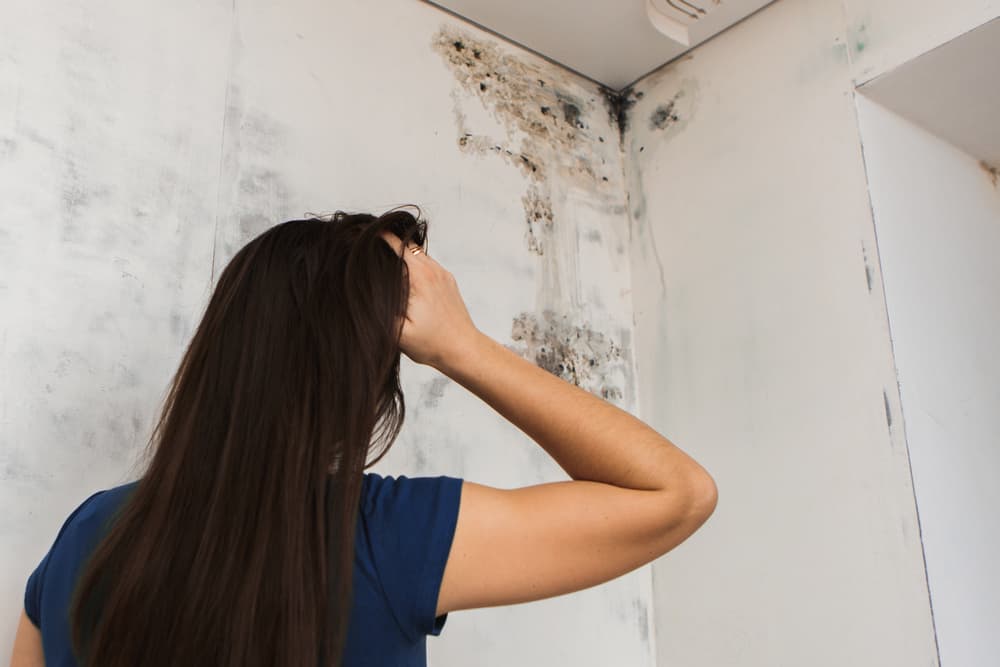
The inspection starts with a thorough walkthrough — but it doesn’t stop there. We use a five-point process that covers air testing, surface swab sampling, water intrusion inspection, moisture level measurement with calibrated instruments, and full photographic documentation of every mold source found. Each air and surface sample goes to a certified, accredited laboratory for analysis. You don’t get a verbal opinion. You get a written report with lab results, mold species identification, spore counts, and plain-language remediation recommendations.
For Smithtown homes specifically, infrared thermal imaging is one of the most important tools in our process. In a community where the majority of homes have original plaster walls, older insulation, and building assemblies that haven’t been opened in 40 or 50 years, thermal imaging detects moisture and mold activity behind surfaces that a standard visual inspection simply cannot reach. If there’s a problem inside the wall of a Nesconset colonial or beneath the flooring of a St. James cape, this is how it gets found.
Once the inspection is complete and the lab results are back, you get a full written report that documents everything — what was found, where it is, what species are present, and what remediation looks like. If your situation involves an insurance claim, we handle the documentation and communication with your carrier from the start. You don’t have to translate mold inspection findings to an adjuster on your own.
Ready to get started?
Most mold inspection companies hand you a report and walk out. If remediation is needed, you’re on your own to find a separate contractor, verify their credentials all over again, and hope both companies are working from the same understanding of the problem. We don’t work that way. We can take a Smithtown home from initial mold inspection through full remediation — and if mold has compromised structural materials like drywall, framing, or insulation, through complete reconstruction as well. One licensed, insured team handles the entire scope.
This matters in Smithtown because the homes here aren’t new. Attic mold in a Kings Park house with original 1960s insulation, basement mold in a Hauppauge property that flooded during last summer’s storms, wall cavity mold in a Commack home with plumbing that’s been slow-leaking for years — these aren’t simple surface cleanups. They involve older materials, potentially compromised structure, and the kind of scope that benefits from a team experienced in both assessment and full restoration.
We also serve the commercial market within Smithtown’s borders. The Hauppauge Industrial Park — one of the largest industrial parks in the country, with over 1,300 companies and roughly 55,000 employees — sits within the township, and commercial mold inspection and remediation for those facilities is part of what we handle. Residential or commercial, the Suffolk County line is 631-587-5300, and we’re available around the clock.
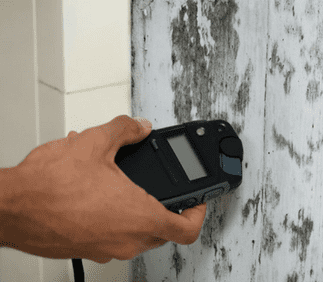
Mold inspection costs in Smithtown generally run between $300 and $1,000, with comprehensive inspections — including air testing, surface sampling, thermal imaging, and a full written lab report — landing toward the higher end of that range. The Long Island market tends to price at or above the national average, which is around $670 for a thorough inspection.
What drives the cost up isn’t padding — it’s the scope of what’s actually being tested. A basic visual walkthrough with no sampling tells you almost nothing actionable. In a community where the majority of homes were built before 1970 and mold frequently develops inside wall cavities, beneath flooring, and in aging attic insulation, you need air samples, surface samples, and lab analysis to get a real answer. When you’re protecting a home worth $700,000 to $900,000 or more, the difference between a $300 inspection and a thorough one is not the place to cut corners.
The clearest signs are a persistent musty smell that doesn’t go away after cleaning, visible discoloration on walls or ceilings that keeps coming back, or unexplained respiratory symptoms — chronic congestion, coughing, or sinus issues — that improve when you leave the house and return when you come back. Any of those patterns is worth taking seriously.
In Smithtown specifically, two situations come up repeatedly: homes that experienced basement flooding after heavy rain events, and older homes where slow plumbing leaks have gone undetected inside walls for years. If your basement took on water during a storm — especially given the flooding history this area has seen along the Nissequogue River corridor — a professional mold inspection within the next few weeks is genuinely worth doing, even if you dried everything out quickly. Mold can begin colonizing wet materials within 24 to 48 hours of water intrusion, and it doesn’t stop just because the visible water is gone.
Yes, and this is one of the most important things to verify before you hire anyone. Since January 1, 2016, New York State has required all mold assessors and mold remediators operating in New York to hold current licenses issued by the NY Department of Labor. This applies to every job performed in Smithtown, Kings Park, Hauppauge, and every other hamlet within the township — no exceptions.
You can verify any company’s license status directly through the NY DOL’s online contractor license search tool. Look for both a Mold Assessor License and a Mold Remediator License — two separate credentials for two separate scopes of work. A company that holds one but not the other is operating outside the legal scope for part of what they’re offering. We hold both, and both are verifiable. Before you schedule with anyone, spend two minutes confirming their license status. It matters.
It’s not too late, but the longer you wait, the more established a mold colony can become — and the more material damage accumulates behind the scenes. Smithtown saw significant flooding in August 2023, when a single storm produced over nine inches of rainfall and caused the Nissequogue River headwaters to crest at Paul T. Given Park. Homes that took on water during that event, or during any subsequent storm, are legitimate candidates for a professional mold inspection even months later.
Mold that develops after a flooding event doesn’t always announce itself immediately. It can grow inside basement wall assemblies, beneath flooring, and within insulation for months before you notice a smell or visible discoloration. An inspection using air sampling and thermal imaging can detect active mold growth in those hidden areas regardless of how much time has passed since the water event. If your basement flooded and you’re not sure whether it was fully remediated correctly, an inspection now will tell you exactly where things stand.
Yes — and in most Smithtown homes, that’s exactly where the real problem is. Mold that’s visible on a surface is typically the end result of a moisture problem that’s been developing inside a wall, beneath a floor, or within an attic assembly for a long time. By the time you can see it, it’s usually already well-established behind the surface you’re looking at.
We use infrared thermal imaging during mold inspections in Smithtown to detect moisture and mold activity in areas that a visual inspection cannot reach. This technology identifies temperature differentials in wall and ceiling surfaces that indicate moisture presence — even when there’s no visible sign of a problem from the room side. Combined with air sampling, which captures airborne mold spores that may be circulating from a hidden source, the inspection process is designed specifically to find what isn’t visible. In a community where more than half the homes have original plaster walls and building assemblies that haven’t been opened in decades, this capability isn’t optional — it’s the whole point.
Yes, and the case for it in Smithtown is stronger than in most markets. The median home price here is well above $700,000, and the housing stock skews heavily toward mid-century construction — the type of home most likely to have accumulated moisture damage inside walls, beneath bathrooms, and in attic spaces over 50 to 80 years of seasonal humidity cycling. A standard home inspection covers a lot of ground, but mold assessment is a specialized scope that requires air sampling, surface testing, and lab analysis to do properly.
A mold problem discovered after closing becomes your problem entirely — financially and logistically. Remediation costs range from roughly $1,150 on the low end to $20,000 or more for serious infestations, and a significant mold issue can reduce a home’s resale value by 20 to 37 percent. In a competitive market where Smithtown homes move quickly and buyers sometimes feel pressure to skip additional inspections, a pre-purchase mold inspection is one of the most straightforward ways to avoid a very expensive surprise. We can schedule inspections to work within real estate transaction timelines and provide written lab reports that hold up in negotiations and legal proceedings if needed.
Useful Links
Other Services we provide in Smithtown