
Hear from Our Customers
Atlantic Beach sits at sea level, flanked by Reynolds Channel to the north and the Atlantic Ocean to the south. That’s not just a beautiful location — it’s a near-constant source of moisture that works its way into crawl spaces, wall cavities, and HVAC systems year after year. Most of the homes here were built in the 1950s and 60s, long before vapor barriers and modern moisture management were standard. That combination — old construction, high groundwater, and salt air — creates conditions where mold doesn’t need an invitation.
If your Atlantic Beach home was impacted by Hurricane Sandy, there’s a real chance moisture got sealed inside walls during the rapid rebuild. More than a decade later, that mold may still be there, quietly affecting your air quality. A thorough inspection tells you what’s actually happening inside your home — not just what’s visible on the surface.
And if you use your Atlantic Beach home seasonally, you already know what a closed-up house looks like in spring. A professional mold inspection gives you a documented, lab-backed answer before you open the windows and assume everything’s fine.
First Response Restoration and Cleaning Inc. has been working in Nassau County for over 31 years, with deep roots in the Atlantic Beach community and surrounding barrier island neighborhoods. That’s not a number thrown around for marketing — it means we’ve assessed homes on the South Shore, worked post-storm jobs after nor’easters, and understand exactly what coastal construction looks like from the inside out. We know what happens to a 1958 crawl space when Reynolds Channel floods. We’ve seen it.
Our owner holds a New York State Department of Labor license for both mold assessment and mold remediation — which is required by law in this state. Every technician on our team is IICRC certified, not just the person who answers the phone. When we show up to your Atlantic Beach home, the person walking through your door is fully credentialed.
We’re also available 24 hours a day, seven days a week. Coastal homes don’t have business hours for emergencies — and neither do we.
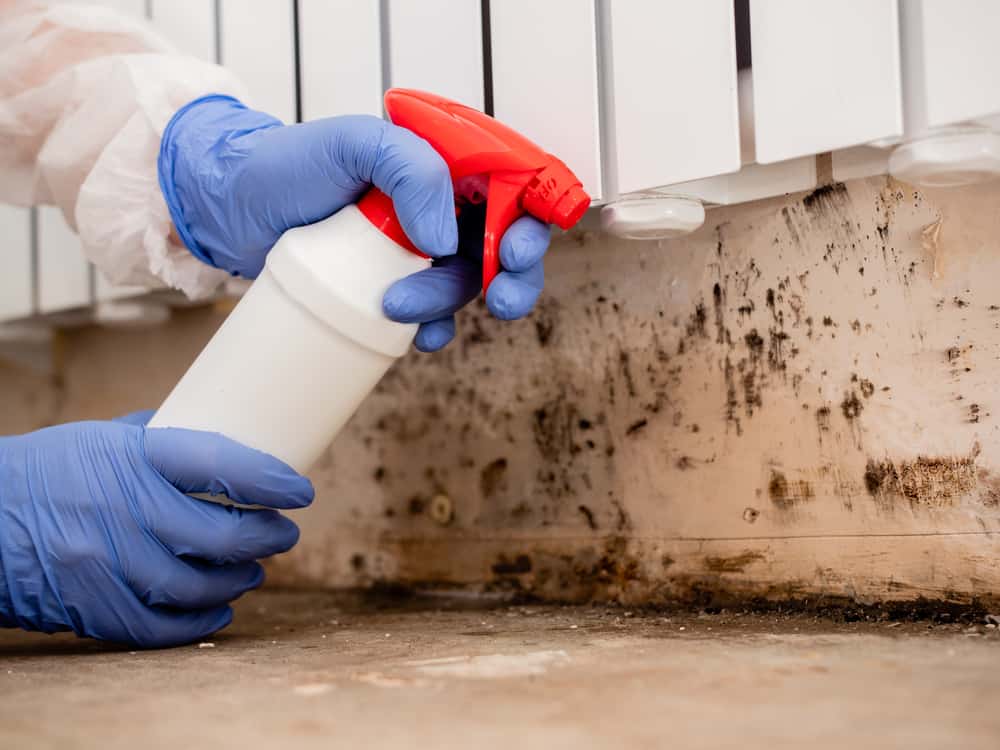
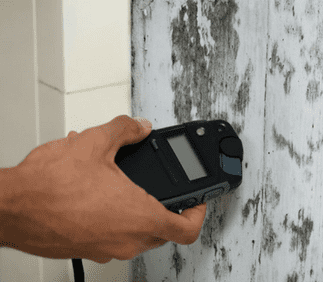
When we arrive at your Atlantic Beach home, we don’t start with a clipboard and a flashlight. We start with a full moisture assessment — because in a barrier island environment, the source of mold is almost never just one thing. We measure moisture levels throughout the home, assess water intrusion points, and use infrared technology to scan walls and ceilings for hidden temperature differentials that indicate moisture behind surfaces. This matters in Atlantic Beach specifically because so much of the mold risk here is invisible — inside wall assemblies, beneath flooring, inside ductwork.
From there, we collect air samples and surface swabs. Those go to a certified third-party laboratory — not an in-house kit, not a visual estimate. You get actual spore counts, species identification, and a comparison of indoor versus outdoor air quality. That’s the documentation that holds up with insurance companies and real estate attorneys.
Once the lab results come back, you receive a written report with photographs, moisture readings, identified mold sources, and a clear remediation plan if one is needed. New York State law requires mold assessors to be separately licensed from remediators, and we hold both — so if remediation is the next step, you’re already working with a company that can see it through without starting over.
Ready to get started?
A mold inspection in Atlantic Beach, NY isn’t a simple walk-through. The inspection covers air testing, surface swab sampling, water intrusion assessment, moisture level measurement, infrared scanning for hidden mold, internal-versus-external air particle comparison, photographs of all identified mold sources, and a full written lab report with remediation recommendations. Every step exists because coastal homes — especially older ones built on sand, at or near sea level — have more places for moisture to hide than most inspectors are trained to find.
This is particularly relevant for Atlantic Beach homes that have crawl spaces. The Pebble Cove townhome development, older single-family homes along Bay Boulevard and Seaside Boulevard, and properties that sit close to Reynolds Channel are all in environments where sub-slab moisture is a real and recurring issue. If you’ve noticed a musty smell that comes and goes, that’s not something to wait on — it typically means mold is already established somewhere you can’t see.
For homeowners in the middle of a real estate transaction, our lab-backed inspection report meets the documentation standard that buyers’ attorneys and insurance underwriters require. And because we’re a full-service restoration company, if the inspection finds something that needs to be addressed, you don’t have to start the search over. We handle it — from the first air sample to the final clearance test.
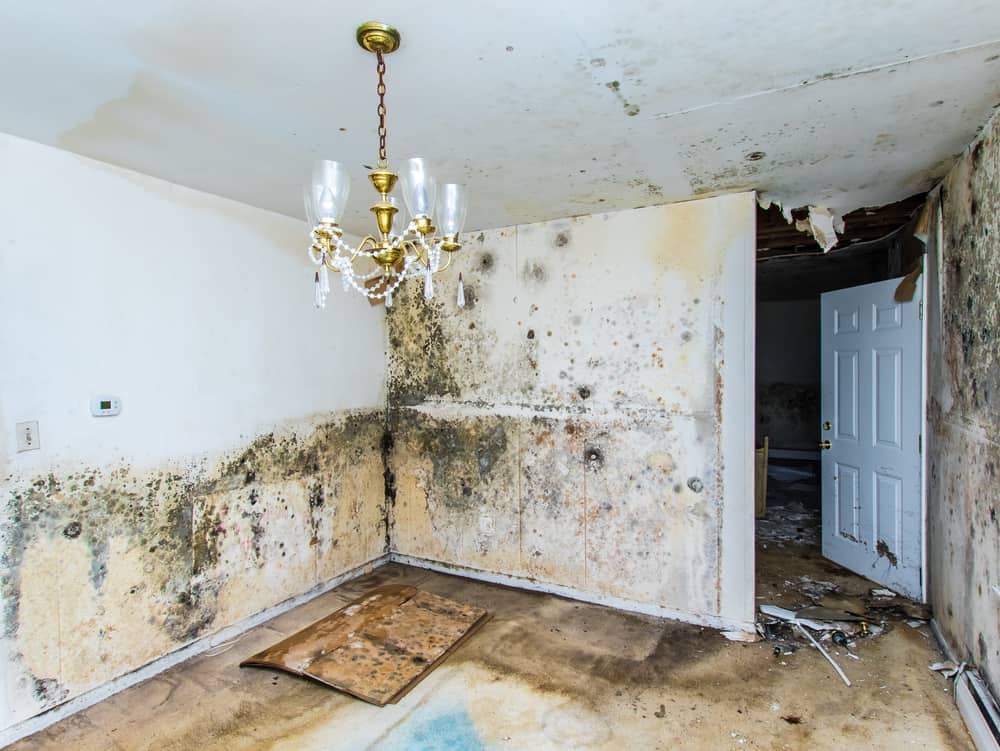
It’s a legitimate concern, and the answer is yes — it’s possible. Hurricane Sandy produced storm surges of 8 to 9 feet along the Southern Nassau County shore, with documented inundation of 3 to 5 feet in barrier beach communities including Atlantic Beach. Many homes were flooded, repaired quickly, and closed up before they were fully dried. When moisture gets sealed inside wall assemblies during a fast rebuild, it doesn’t disappear — it creates the conditions mold needs to grow.
More than a decade later, that mold may still be present inside your Atlantic Beach walls, beneath your flooring, or inside your HVAC system. It may not be producing visible signs on surfaces, but it can absolutely affect your indoor air quality. The only way to know for certain is an inspection that uses infrared scanning to detect hidden moisture and lab-tested air sampling to measure what’s actually in your air — not just what you can see.
If your home was impacted by Sandy and has never had a professional mold assessment with thermal imaging and lab testing, that gap in documentation is worth addressing — especially if you’re planning to sell, refinance, or rent the property.
Nationally, mold inspections average around $670, with a typical range of $303 to $1,043 depending on the size of the home, the number of samples collected, and the complexity of the inspection. For a barrier island home in Atlantic Beach — where you may need infrared scanning, multiple air samples from different areas of the home, crawl space assessment, and HVAC evaluation — expect to be toward the middle to upper end of that range for a thorough job.
What’s worth understanding is that the inspection cost is almost never the real financial question. Mold remediation averages $1,150 to $3,400 nationally, and in severe cases — like a home with mold inside wall assemblies or a contaminated HVAC system — costs can reach $20,000 or more. In a market where Atlantic Beach homes carry median household incomes above $161,000 and real estate values among the highest in Nassau County, the cost of missing a mold problem is far greater than the cost of finding it early.
Yes. Since January 1, 2016, New York State law under Article 32 of the Labor Law requires anyone performing mold assessment or mold remediation for pay to hold a valid New York State Department of Labor license. This applies to all work performed in Atlantic Beach, whether in an incorporated village or an unincorporated area. In 2025, the state has been actively auditing compliance, with fines reaching $10,000 for unlicensed work.
This matters to you as a homeowner for a practical reason: a mold inspection report from an unlicensed assessor carries no legal standing. It won’t be accepted by your insurance company for a storm damage claim, it won’t satisfy a buyer’s attorney in a real estate transaction, and it won’t hold up if you ever need to document remediation work for future sale or refinancing. Before anyone enters your Atlantic Beach home to conduct a mold inspection, ask to see their NYS DOL license number and verify it.
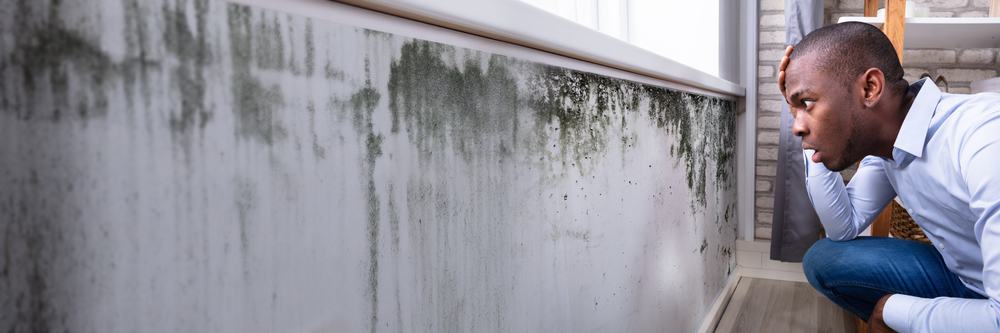
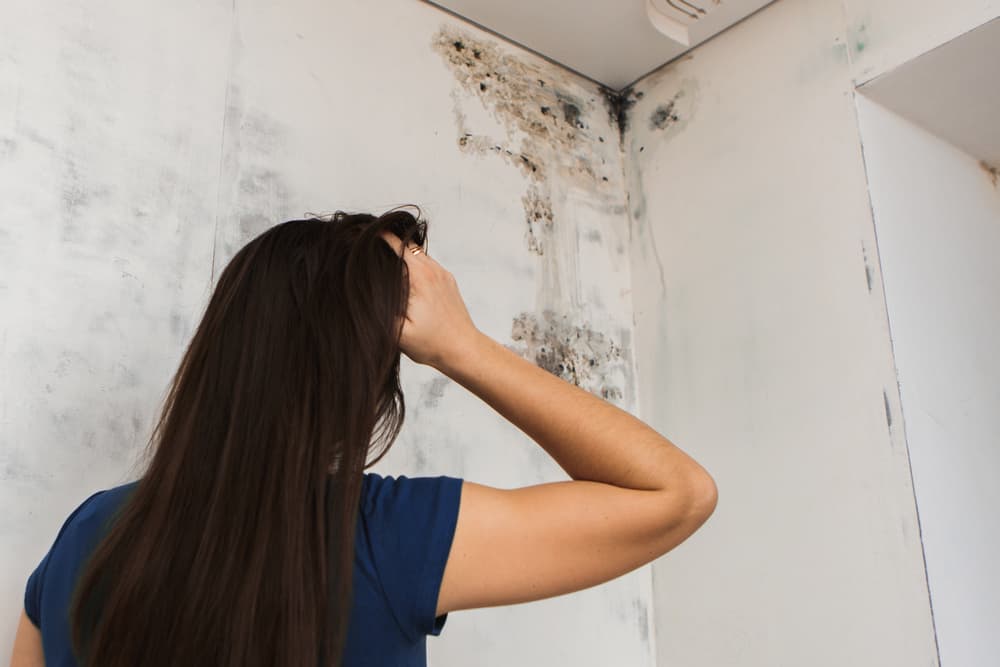
The most common sign is a musty or earthy smell that hits you when you first open the door — especially after a home has been closed through winter. That odor is mold off-gassing, and it usually means there’s an established colony somewhere in the home, not just surface-level growth. Other signs include visible discoloration on walls or ceilings, condensation staining around windows, and any soft or warped areas in flooring or drywall that suggest moisture has been sitting.
In Atlantic Beach specifically, seasonal vacancy is one of the biggest mold risk factors. When a home sits unoccupied from fall through spring with minimal heat and no dehumidification, the ambient coastal humidity works on the building continuously. A pipe that freezes and thaws, a roof flashing that fails, or a crawl space that takes on water from a high tide event — none of these get caught until someone walks through the door. A pre-season mold inspection before you open the house for summer gives you a clear picture of what developed in your absence.
Crawl spaces on the Long Beach Barrier Island are among the most vulnerable areas in any home we inspect. They sit close to grade level with minimal separation from groundwater, and in Atlantic Beach, that groundwater is influenced by tidal activity in Reynolds Channel. When water levels rise — whether from a storm, a heavy rain, or just a high tide event — moisture can seep into a crawl space from below, creating a persistently damp environment that supports mold growth even when there’s no visible leak.
During a crawl space mold inspection, we physically enter and assess the space, measure moisture levels in the framing and subfloor, collect air and surface samples, and use infrared scanning to identify areas of elevated moisture that aren’t yet visible. If mold is present, it will show up in the lab results. If the conditions are right for mold to develop, we’ll document that as well and explain what needs to be addressed to prevent it. A musty smell coming up through your floors is almost always a crawl space issue — and it doesn’t resolve on its own.
Yes, and this is one of the most common reasons homeowners in Atlantic Beach schedule an inspection. When you’re buying or selling a home on the barrier island — where flood history, storm damage, and older construction are all factors that come up in due diligence — a lab-backed mold inspection report from a licensed NYS DOL assessor is the standard that buyers’ attorneys and real estate professionals expect to see.
Our written report includes laboratory analysis from a certified third-party lab, spore counts, species identification, moisture readings, photographs of all identified sources, and a remediation plan if one is needed. That’s not a form letter — it’s a documented assessment that stands up to scrutiny. For sellers in Atlantic Beach, it removes uncertainty from the transaction. For buyers, it gives you an accurate picture of what you’re purchasing. Given the real estate values in Atlantic Beach and the specific mold risks that come with barrier island construction, having that documentation in hand before closing is a straightforward way to protect a significant investment.
Useful Links
Other Services we provide in Atlantic Beach