

Hear from Our Customers
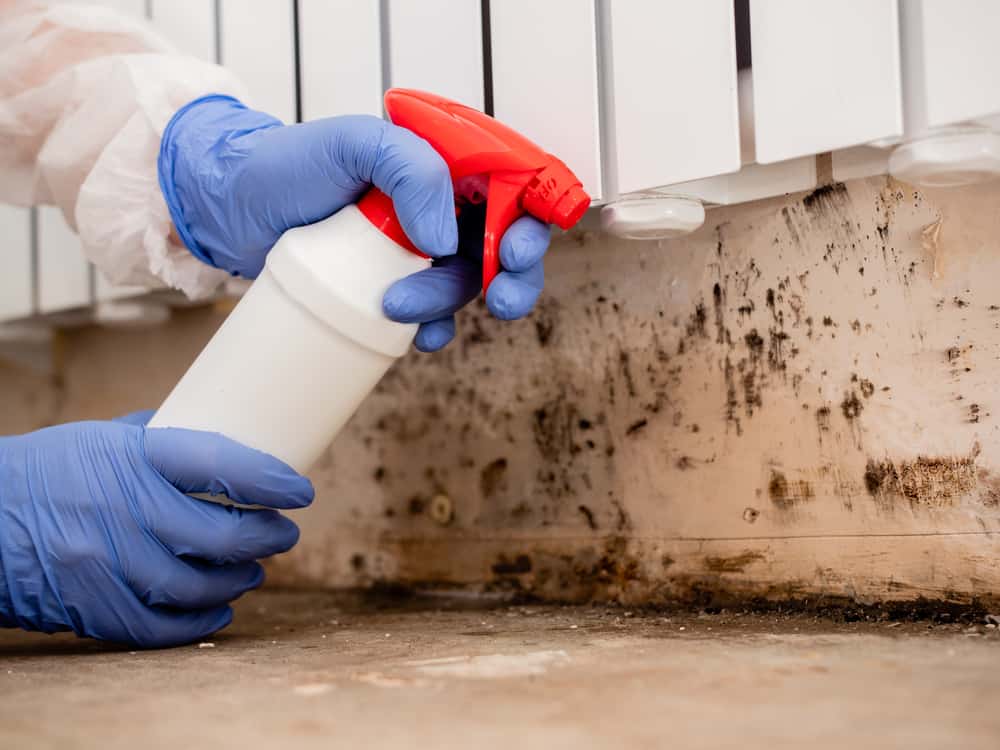
Living on a barrier island means your Island Park home deals with things most Nassau County homeowners never think about — tidal channels on three sides, a water table that never really drops, and a flood history that goes back further than Sandy. Mold doesn’t need a dramatic event to take hold. It needs moisture, warmth, and time. Island Park gives it all three, year-round.
When you get a professional mold inspection in Island Park, NY, you stop guessing and start knowing. You find out whether that musty smell in the basement is a surface issue or something growing inside the wall cavity. You find out whether the crawl space under your 1920s-era home — built long before vapor barriers were standard — has been quietly accumulating moisture for years. You get a lab-backed report that tells you exactly what’s there, what species it is, and what needs to happen next.
That documentation matters here more than most places. Island Park homeowners file insurance claims. They buy and sell homes with complicated flood histories. They deal with contractors who may or may not have done the job right after the last storm. A real inspection gives you leverage — with your insurer, your real estate attorney, and your own peace of mind.
We’ve been working across Nassau and Suffolk counties for 31 years. That means we were here before Sandy, during Sandy, and have been working in South Shore communities ever since — including Island Park and the other barrier island villages along Reynolds Channel that took the hardest hits and got the least attention in the aftermath.
Every technician on our team is IICRC-certified. Our owner, Richard Peterson, holds his NYS Department of Labor license personally — both for mold assessment and mold remediation. That’s not a technicality. Under New York State law, anyone performing mold work for pay must hold that license. We carry it, and every person we send into your Island Park home meets that standard.
We handle the full scope — inspection, remediation, and full restoration — so you’re not coordinating three different contractors across a process that needs to stay connected from start to finish. One call to 516-698-1776 covers it.
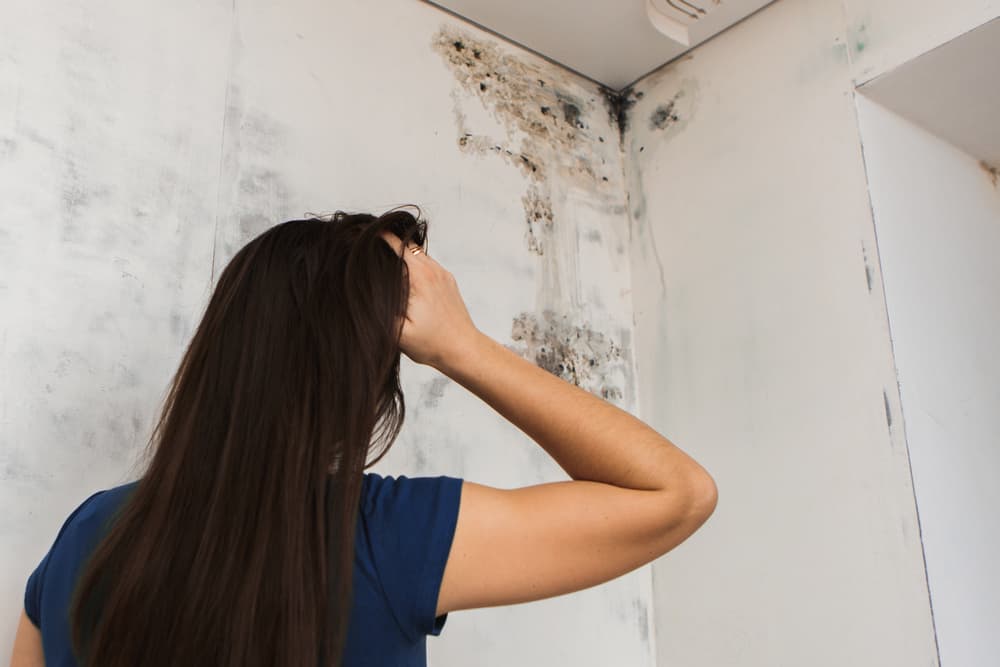
The inspection starts with a full walkthrough — not just a visual scan, but a structured assessment of every area where moisture is likely to enter or accumulate. In Island Park homes, that means the basement, crawl space, attic, and any wall assemblies that have been exposed to flooding, whether from Sandy, a nor’easter, or the chronic drainage issues the village has dealt with for years.
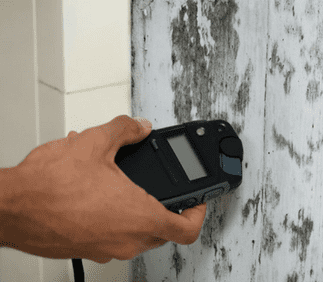
From there, air samples are collected and sent to a certified lab for analysis. Surface swab samples are taken from areas showing visible growth or discoloration. Moisture readings are taken throughout the structure using calibrated instruments, and infrared scanning is used to locate hidden mold inside wall cavities, under flooring, and inside ceiling assemblies — areas completely invisible to the naked eye. This matters enormously in older Island Park homes where walls were closed back up after post-storm drying without anyone confirming the interior was actually clean.
The inspection also compares indoor mold particle levels against outdoor baseline levels — which is critical in a coastal environment like Island Park, where ambient outdoor spore counts near Reynolds Channel are naturally elevated. Without that comparison, an indoor air result doesn’t tell you much. With it, you know exactly where you stand. Everything is documented in a full written lab report with specific findings and recommended next steps.
Ready to get started?
The inspection covers five specific methods: air testing with certified lab analysis, surface swab sampling, water intrusion inspection to identify the moisture source, moisture level measurement using calibrated instruments, and infrared technology scanning for hidden mold. You get all five — not a visual walkthrough with a verbal summary.
This approach is built for what Island Park homes actually deal with. Barrier island construction, 1920s-era resort housing stock, crawl spaces with no vapor barrier, HVAC systems working overtime in coastal humidity — these aren’t generic risk factors. They’re the specific conditions that make a single-method inspection inadequate here. The five-point protocol addresses every entry point and every hiding spot that those conditions create.
The written lab report you receive at the end documents mold species, spore concentration levels, moisture readings, and specific remediation recommendations. That’s the format your insurance company recognizes, your real estate attorney can work with, and your doctor can reference if there’s a health concern involved. If remediation is needed, we handle that too — same company, same standards, no handoff to an unknown subcontractor. For Island Park homeowners navigating complex post-flood situations in a Nassau County FEMA flood zone, that continuity isn’t a convenience. It’s the difference between a clean outcome and a process that falls apart in the middle.
Mold can begin growing within 24 to 48 hours when moisture and humidity conditions are right — and in Island Park, those conditions are rarely far off. The village sits on a low-lying barrier island with tidal channels on three sides and a water table that stays high year-round. When a home floods — whether from a nor’easter, a tidal surge, or the chronic drainage issues that have plagued the downtown area for years — the clock starts immediately.
What makes Island Park particularly tricky is that many homes were flooded during Sandy in 2012, dried out, and repaired — but not necessarily to a standard that eliminated mold from inside wall cavities and crawl spaces. If your home was flooded and the remediation wasn’t thorough, mold may have been growing undetected for years. That’s exactly the scenario where infrared scanning and certified air testing catch what a visual inspection misses entirely.
Yes — and in Island Park specifically, it’s not optional due diligence. Every home in this village has a flood history. The community sits in a FEMA high-risk flood zone, and Nassau County has recorded over 51,000 flood insurance claims totaling more than $2.3 billion in payouts since 1978. When you’re buying a home in Island Park, the question isn’t whether the property has ever been exposed to moisture — it’s whether that exposure was properly addressed.
A pre-purchase mold inspection in Island Park, NY gives you a certified lab report documenting what’s actually inside the home — not just what’s visible on the surface. That report can support price negotiations, give you grounds to request remediation before closing, or confirm that the post-Sandy repairs were done correctly. Median home values in Island Park are around $591,000. Spending a few hundred dollars on a professional mold inspection before closing is one of the most straightforward ways to protect that investment.
Most homeowners pay somewhere between $300 and $1,000 for a professional mold inspection, with the average landing around $670 nationally. In Nassau County, full inspections that include certified lab analysis — which is what you need for insurance documentation or real estate transactions — tend to run toward the higher end of that range. What you’re paying for is accuracy, not just access.
In Island Park, a basic visual walkthrough isn’t enough given the flood history and the age of the housing stock. You need air sampling, surface swabs, moisture readings, and infrared scanning to get a complete picture. That’s what drives the cost — and it’s also what makes the report usable with your insurance company, your real estate attorney, or your doctor. If mold is found and remediation is needed, remediation costs typically range from $1,150 to $3,400 for standard cases, though extensive situations — particularly in older homes with significant hidden growth — can run higher.
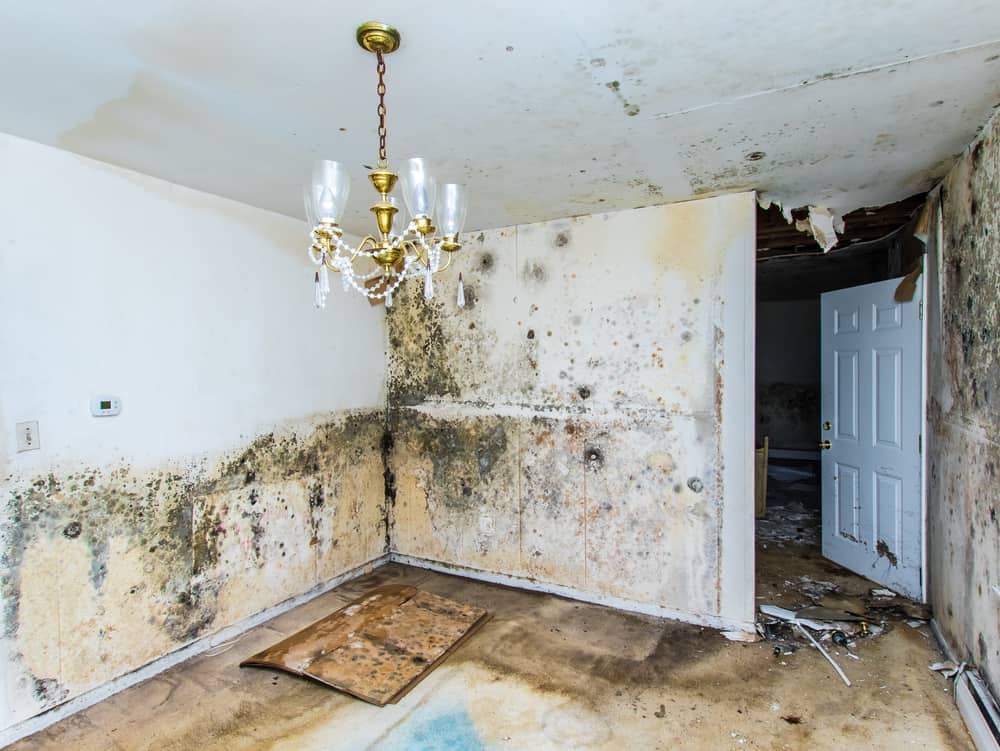
Absolutely — and this is one of the most common misconceptions homeowners run into after flooding. Mold doesn’t need to be visible to be a problem. It grows inside wall cavities, beneath flooring, inside ceiling assemblies, and in crawl spaces — all areas that look completely normal from the inside of a finished room. In Island Park homes, particularly those that were flooded during Sandy and repaired without full interior drying verification, this is a real and underappreciated risk.
Infrared scanning is the tool that changes this equation. It detects thermal anomalies and moisture signatures behind finished surfaces without tearing anything open. When combined with air testing — which measures mold spore concentration in the air you’re actually breathing — you get a complete picture of what’s happening inside the structure, not just what’s visible on the walls. Many Island Park homeowners are surprised to find active mold growth in homes that show no outward signs of a problem.
“Black mold” is the term most people use when they’re worried about Stachybotrys chartarum — the species that gets the most media attention and is associated with serious health effects including respiratory illness and chronic inflammation. But a standard professional mold inspection already tests for it. The lab analysis that comes with a certified inspection identifies the specific mold species present, including Stachybotrys, along with spore concentration levels for each.
What matters more than the species name is the concentration level and the location. A small amount of a common mold species in an isolated area is a very different situation from elevated spore counts throughout a home’s HVAC system or inside multiple wall cavities. The lab report from a professional inspection breaks all of this down clearly, so you’re not left guessing about severity or next steps. In Island Park, where post-flood mold exposure is a genuine and recurring concern, having that species-level documentation is also important if a family member is experiencing unexplained respiratory symptoms and a physician is asking about indoor air quality.
This is one of the most common questions from long-term Island Park residents — and it’s a legitimate one. Sandy hit in October 2012, and while many homes were dried out and repaired in the months that followed, the quality of that work varied significantly. Contractors were overwhelmed, timelines were compressed, and in some cases walls were closed back up before the interior structure was fully dry. Mold that started growing in that window may have continued developing inside the home for years without any visible signs.
The only way to know for certain is a professional inspection that goes beyond the surface. Infrared scanning detects moisture signatures inside wall assemblies that indicate ongoing or historic water intrusion. Certified air testing measures what’s actually circulating in your home’s air. If Sandy-era mold is present — even after more than a decade — these methods will find it. If the inspection comes back clean, you have a certified lab report confirming that. Either way, you’re not guessing anymore, which in a community that’s been through what Island Park has been through, is exactly where you want to be.
Useful Links
Other Services we provide in Island Park