
Hear from Our Customers
When you call for a mold inspection, you’re not looking for a guess. You want to know whether your family is breathing clean air, whether your home’s structure is compromised, and whether what you’re smelling in the basement is actually something to worry about. That’s what a thorough inspection gives you — not a theory, but documented findings you can act on.
North Amityville’s housing stock tells a specific story. Most of these homes were built in the late 1940s through the 1960s, when GI loans opened the door for working families to put down roots here. Those homes are now 60 to 75 years old, and they carry the moisture history of every decade they’ve been standing. Older plumbing, aging insulation, roofs that have been replaced more than once — all of it creates the kind of environment where mold finds a foothold long before you ever see it.
The South Shore humidity that rolls through North Amityville every summer doesn’t help. When ambient humidity stays above 60 percent for weeks at a time and your home’s vapor barriers are original to the Eisenhower administration, the conditions are there. A professional mold inspection tells you what’s actually happening inside those walls — so you can stop guessing and start dealing with it.
We’ve been operating on Long Island’s South Shore for approximately 31 years. That’s not a marketing number — it’s the kind of tenure that only comes from doing the work right, repeatedly, in communities that talk to each other. North Amityville and the surrounding Town of Babylon are word-of-mouth markets. We don’t last three decades here by cutting corners.
We’re based in West Babylon and serve North Amityville directly. We hold both the NY State Mold Assessor License and the NY State Mold Remediator License — the two credentials required by law to legally inspect and remediate mold in New York. Every technician on our team carries IICRC certification, not just the owner.
What that means for you is straightforward: the person who shows up at your door has been trained, tested, and credentialed to the same standard as the person who took your call. And if the inspection finds something that needs to be fixed, we handle that too — remediation, reconstruction, and insurance documentation, all under one roof.
The inspection starts with air testing. Airborne spore samples are collected from inside the home and compared against outdoor baseline samples taken the same day. That comparison is what separates a professional mold assessment from a visual walkthrough — it tells you whether indoor spore concentrations are elevated relative to what’s naturally present outside, which is the actual measure of whether you have a problem.
From there, any visible mold growth is swab-sampled for laboratory identification. We also conduct a systematic water intrusion inspection to find the moisture source — because treating mold without finding the source is just temporary. Calibrated moisture meters measure levels throughout the property, and infrared thermal imaging is used to detect hidden moisture behind walls, under floors, and inside ceilings. In North Amityville’s older homes, where original plumbing is still common and wall assemblies haven’t been opened in decades, that thermal imaging step often finds things that nothing else would catch.
Every finding is photographed and documented. The lab analyzes all samples through an accredited facility, and the final written report translates those results into plain language — what was found, what it means, and what the recommended next steps are. For homeowners navigating an insurance claim after storm-related water damage, that documentation is often exactly what the adjuster needs. We handle that communication too, from the first call through project completion.
Ready to get started?
Every mold inspection we perform in North Amityville, NY covers the full scope: air sampling, surface swab testing, moisture measurement, water intrusion assessment, infrared thermal imaging, and complete photographic documentation. All samples go to an accredited laboratory. The report you receive includes species identification, spore counts, a comparison of indoor versus outdoor levels, and specific remediation recommendations written in language that actually makes sense.
For the roughly 26 percent of North Amityville housing units that are in multi-family structures, there’s an additional layer to consider. Under New York State’s mold licensing law — in effect since January 1, 2016 — commercial mold assessment is legally required before any remediation work can begin in a rental property. If you’re a landlord or property manager in the area, that’s not optional. We hold the licensing to perform that assessment and can provide the written remediation plan required by law before work starts.
For homeowners in single-family residences, the inspection covers every area where moisture tends to accumulate in older South Shore construction — basements, crawl spaces, attics, and the wall cavities around aging plumbing. If remediation is needed after the inspection, we’re licensed and insured to handle that too, along with any structural repairs or reconstruction the work requires. You’re not handed off to someone else. Our credentialed team sees it through.
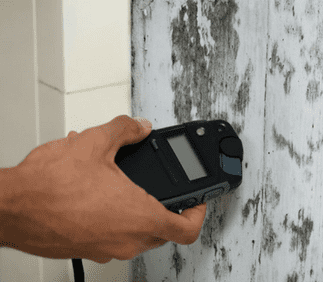
Mold inspection costs in North Amityville, NY typically fall somewhere between $300 and $700 for a residential property, depending on the size of the home and the scope of testing required. Larger homes or properties with multiple areas of concern — a finished basement, an attic, and several living areas, for example — will generally land toward the higher end of that range. Accredited laboratory analysis is included in a professional inspection, and that’s a non-negotiable part of getting results you can actually rely on.
The more useful way to think about the cost is relative to what you’re protecting. Median home values in North Amityville are approaching $490,000. Mold remediation for a serious infestation can run anywhere from $1,500 to $20,000 or more depending on how far it’s spread. A $400 inspection that catches a problem early — before it’s worked its way through a wall cavity or into the subfloor — is one of the better investments a homeowner can make. It’s the cheapest step in managing a mold problem, not an optional add-on.
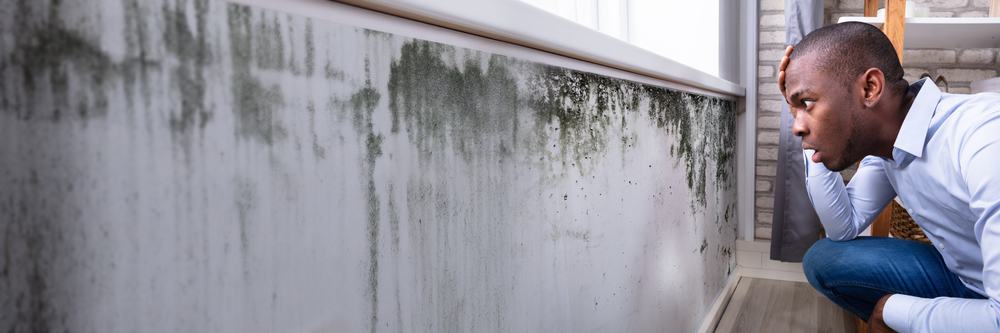
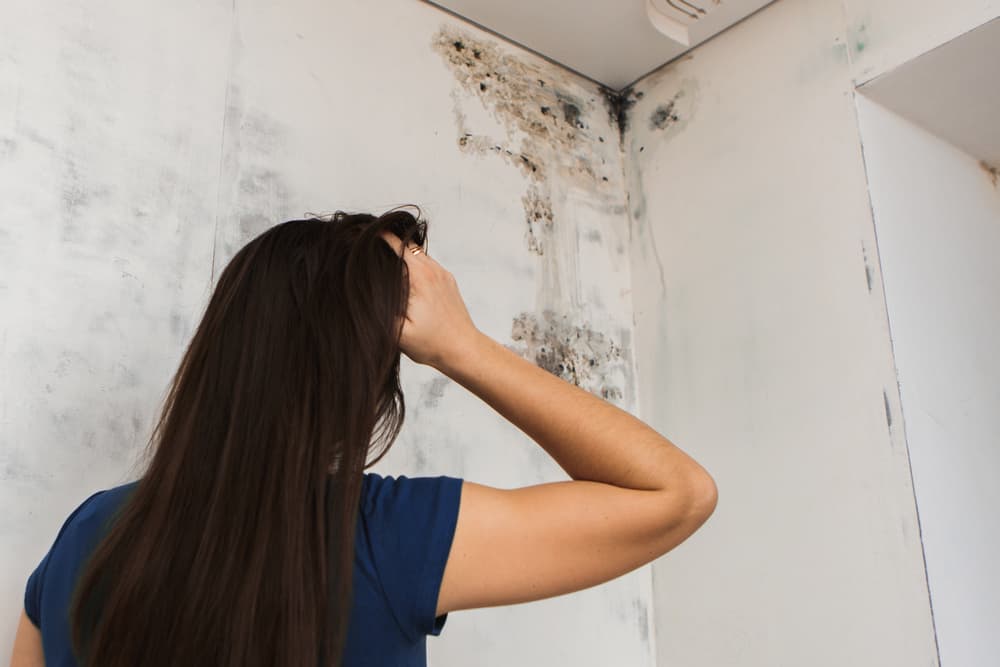
The most obvious sign is visible growth — dark spots on walls, ceilings, or around window frames. But in North Amityville’s older housing stock, the more common scenario is that there’s nothing visible at all. What you notice instead is a persistent musty smell in the basement or a closed-off room, unexplained allergy symptoms that seem worse indoors, or family members with respiratory issues that don’t resolve. Those are the signs that mold is present somewhere you can’t see it.
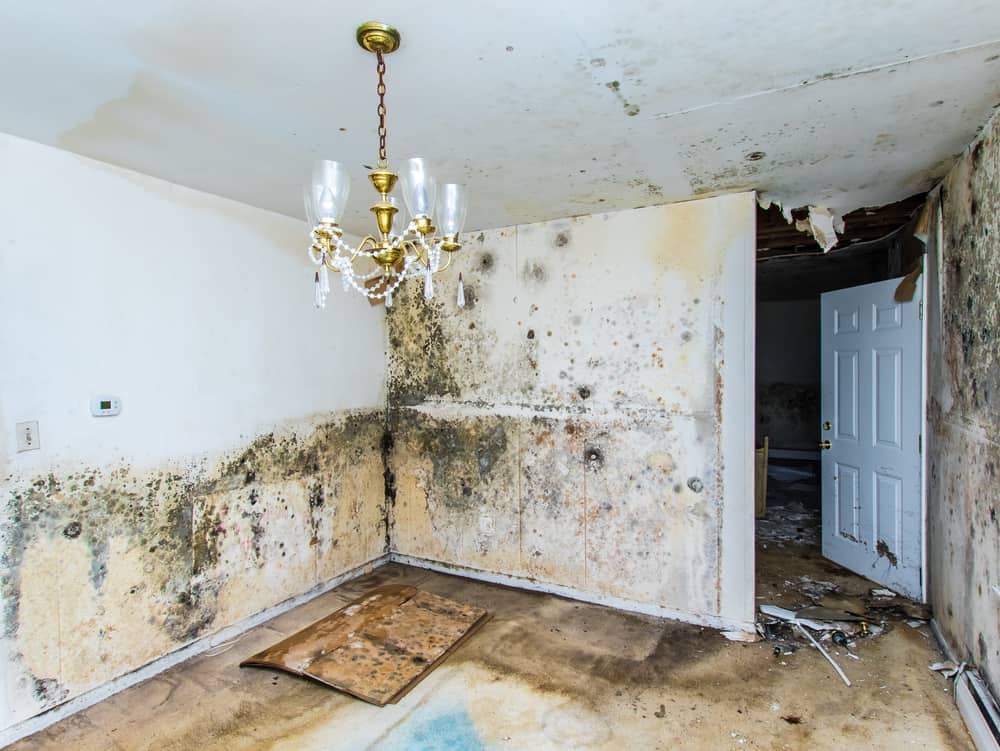
Older homes in North Amityville are particularly prone to hidden mold because of how they were built. Wall assemblies from the 1950s and 1960s weren’t designed with modern vapor barriers, and plumbing that’s been in place for decades tends to develop slow leaks that go undetected for years. Water intrusion after a heavy storm — the kind of nor’easter that regularly hits the South Shore — can work its way into a wall cavity and start growing mold within 24 to 48 hours. If your home has been through any water event and wasn’t fully dried out and inspected afterward, that’s reason enough to get a professional assessment.
Yes, and it’s one of the more important consumer protections available to homeowners in North Amityville. Since January 1, 2016, New York State law has required anyone performing mold assessment or mold remediation to hold a license issued by the NY Department of Labor. The Mold Assessor License covers inspection and testing. The Mold Remediator License covers the actual remediation work. A company cannot legally perform either service in New York without the corresponding license.
This matters because not every company advertising mold inspection services in the area actually holds both credentials. Before you book an inspection, it’s worth asking for the license number and verifying it through the NY DOL’s online contractor search tool — it takes about two minutes and tells you immediately whether the company is operating legally. We hold both the Mold Assessor License and the Mold Remediator License, and both are verifiable. If a company can’t give you a license number on the spot, that’s your answer.
It can, and it’s one of the more common scenarios in North Amityville’s multi-family housing stock. Mold doesn’t respect unit boundaries. It travels through shared wall assemblies, plumbing chases, and HVAC ductwork — which means a moisture problem originating in one unit can show up as elevated spore counts in an adjacent unit within weeks. In buildings where the HVAC system serves multiple units from a shared air handler, contaminated air can circulate throughout the entire structure.
For landlords and property managers in North Amityville, this creates both a health obligation and a legal one. Under New York State’s mold licensing law, a written mold assessment from a licensed assessor is required before any remediation work can legally begin in a rental property. That assessment needs to identify the source of the moisture, document the extent of the mold, and outline a remediation plan. We can provide that full assessment and documentation, and if remediation is needed, we’re licensed to handle that as well — so the process doesn’t stall between the inspection and the fix.
For a typical single-family home in North Amityville, a thorough mold inspection usually takes between two and four hours on-site. The timeline depends on the size of the home, how many areas need to be tested, and whether infrared thermal imaging turns up areas that require closer attention. Older homes — which make up a significant portion of the housing stock in this area — often take longer because there are more areas worth investigating: crawl spaces, older plumbing walls, attics with decades of accumulated moisture history, and finished basements where water has intruded at some point.
After the on-site portion, samples go to an accredited laboratory for analysis. Lab results typically come back within a few business days, after which the written report is prepared and delivered. The report includes species identification, spore concentration levels, a comparison of indoor and outdoor samples, and specific recommendations for next steps. You’re not waiting weeks for answers — but the process does require a few days for the lab work, and that timeline is worth factoring in if you’re dealing with a real estate transaction or an insurance claim with a deadline.
If mold is identified during a home inspection — whether it’s a pre-purchase inspection or one you ordered on your own — the next step depends on the severity and location of the findings. A small area of surface mold in a bathroom is a different situation than elevated spore counts throughout the living areas or mold discovered inside a wall cavity near the main plumbing stack. The written report from a professional mold assessment will tell you which category you’re in and what the recommended remediation approach is.
For buyers and sellers navigating a real estate transaction in North Amityville, mold findings can affect the deal — but they don’t have to kill it. Documented findings from a licensed mold assessor, paired with a clear remediation plan and cost estimate, give both parties something concrete to negotiate around. We can provide that documentation and, if remediation is agreed upon, handle the work and issue a post-remediation clearance report confirming the problem has been resolved. For homeowners dealing with a discovery that ties back to storm damage or a plumbing failure, we also handle insurance communication — so you’re not left translating lab reports for an adjuster on your own.
Useful Links
Other Services we provide in North Amityville