
Hear from Our Customers
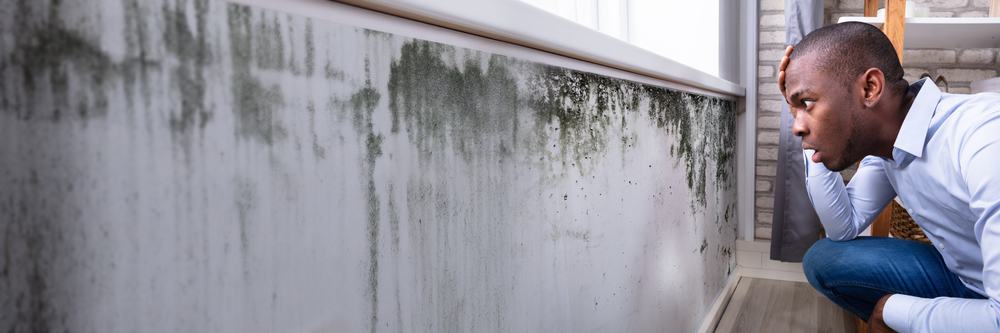
Most homeowners in South Huntington don’t call about mold because they can see it. They call because something doesn’t feel right — a musty smell in the basement after a rainy April, a family member with symptoms that started after a plumbing issue last winter, or a home inspector who flagged something vague and moved on. By the time you’re searching for answers, you’ve already been sitting with uncertainty for longer than you should have.
A proper mold inspection changes that. When we do it right, you don’t walk away with more questions — you walk away knowing exactly what’s in your home, where it’s coming from, and what needs to happen next. That means lab-verified air and surface samples, a moisture source identified and documented, and a written report you can actually read and act on.
South Huntington’s housing stock is predominantly post-war construction — homes built in the 1950s, 60s, and 70s that weren’t designed with modern moisture barriers or ventilation standards in mind. Basements in this area are especially vulnerable during Long Island’s wet springs, when water tables rise and older foundations feel it first. An inspection built around that reality — one that accounts for where moisture actually hides in homes like yours — gives you something a generic walkthrough never will: real clarity.
First Response Restoration and Cleaning Inc. has been serving Long Island homeowners for over three decades. That’s not a marketing number — it means our team has worked inside hundreds of homes in western Suffolk County, including throughout South Huntington and the surrounding Town of Huntington, and we know what aging Long Island housing stock looks like from the inside out.
We hold both a New York State Mold Assessor License and a Mold Remediator License — required by state law since 2016 and verifiable through the NY Department of Labor. Every technician on our team carries IICRC certification. That’s not something we require just from our lead inspector — it’s a standard we hold across the board.
We’re based in West Babylon, connected to South Huntington directly via Route 110 — the same road that runs through the heart of your community. When you call our Suffolk County line, you’re reaching a local team that knows this area, not a national call center routing your job to whoever’s available.
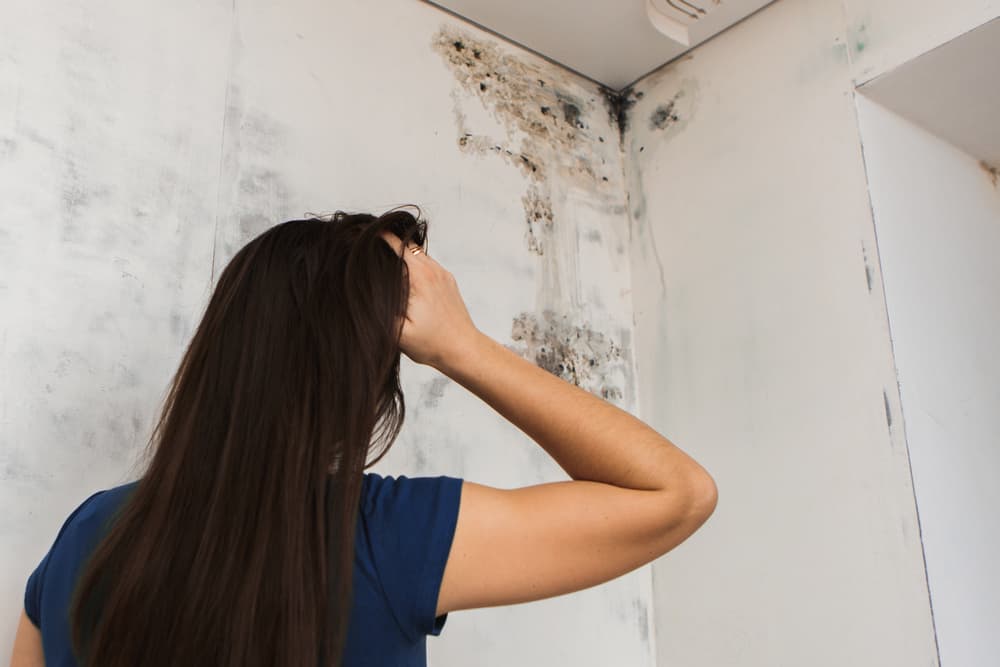
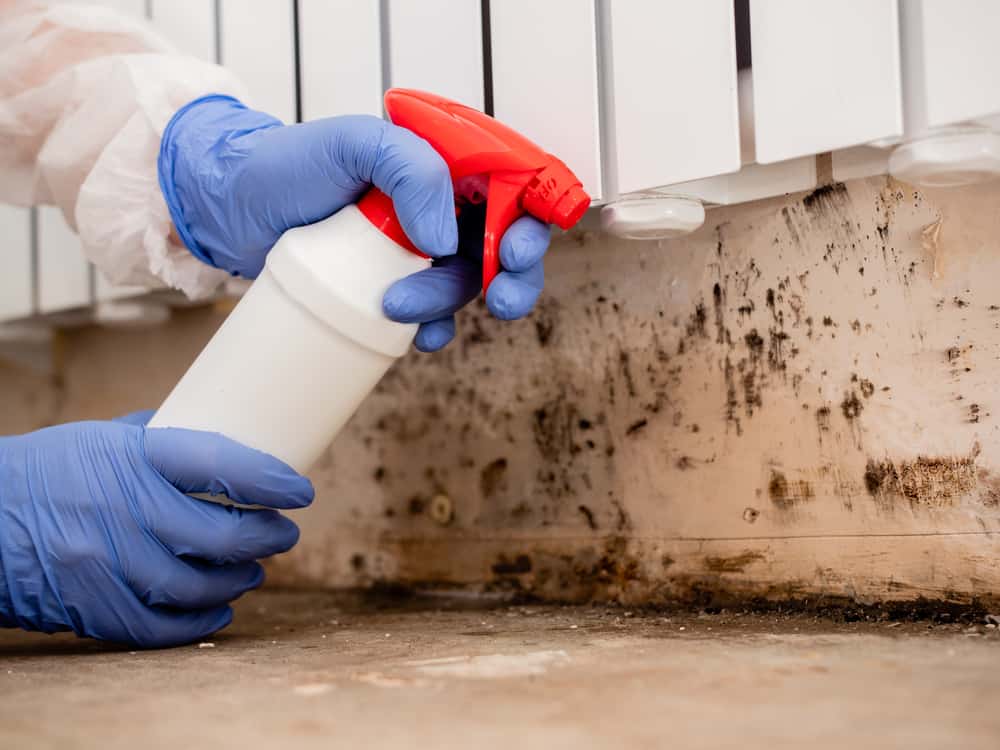
The inspection starts with air testing — drawing samples from inside your home to measure airborne spore levels and compare them against outdoor baseline readings. From there, we collect surface swab samples from any areas of visible concern. Both go to an accredited, independent laboratory. The results are objective. Mold either shows up in the samples or it doesn’t.
While samples are being collected, we’re also running a full water intrusion inspection to trace any active or historical moisture sources — because mold doesn’t grow without a reason, and finding that reason is half the job. We use calibrated moisture meters to measure readings inside walls, floors, and ceilings, and we deploy infrared thermal imaging to detect hidden moisture activity that no visual inspection can catch. In a South Huntington home built in the 1960s with original plumbing and an unfinished basement, that technology isn’t optional — it’s what separates a complete inspection from a partial one.
Everything gets photographed and documented. When the lab results come back, we compile it all into a written report in plain language — not a stack of raw data printouts, but a document that tells you what was found, how significant it is, and what the remediation path looks like if one is needed. New York State law requires that mold assessment and remediation be handled by separately licensed entities, or by a company that holds both licenses. We hold both, which means if remediation is needed, there’s no gap, no second contractor to vet, and no delay.
Ready to get started?
Our mold inspection service covers five core areas: air quality sampling, surface swab collection, water intrusion tracing, moisture level measurement, and full photographic documentation. Every sample is sent to a certified, accredited laboratory — not processed in-house, not estimated visually. The results are documented and defensible, which matters whether you’re dealing with an insurance claim after a basement flood, negotiating a real estate transaction, or simply trying to make an informed decision about your own home.
Infrared thermal imaging is included in the inspection process. For South Huntington’s older homes — many of which have finished basements, original attic insulation, and plumbing that’s been in place for 40 or 50 years — this technology is what finds the mold that’s been growing quietly inside a wall cavity or beneath a bathroom floor for months without anyone knowing it was there.
If the inspection identifies a problem that needs remediation, you don’t have to start over with a new company. We’re licensed for both assessment and remediation under New York State law, and we can carry the project through reconstruction if structural materials are affected. For homeowners throughout South Huntington dealing with the aftermath of a wet season or an unexpected water event, that continuity matters. One team, one point of contact, from the first air sample to the final clearance test.
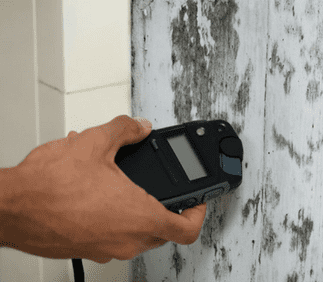
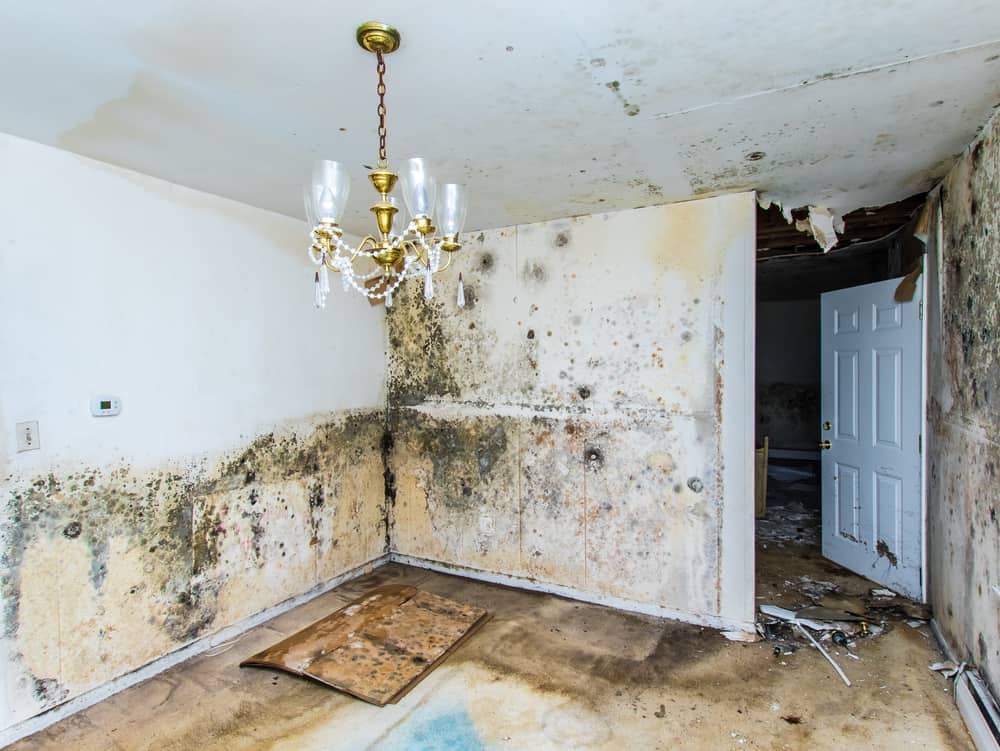
If you’ve had any water intrusion in the last year — a basement that took on water during a heavy rain, a slow pipe leak inside a wall, ice dam damage along the roofline after a rough winter — then yes, a professional mold inspection in South Huntington, NY is worth doing. Mold doesn’t always announce itself with visible growth. In older homes, which make up the majority of South Huntington’s housing stock, it often establishes itself inside wall cavities, beneath subfloors, or in attic insulation long before anyone smells or sees anything.
A professional inspection with air sampling and infrared thermal imaging gives you a documented, lab-verified answer — not a guess. If mold is present, you know exactly where and how much. If it isn’t, you have documentation that confirms your home is clean, which carries real weight in a real estate transaction or an insurance conversation. Either way, you’re not operating on uncertainty anymore.
Mold inspection costs in South Huntington, NY typically fall in the range of $300 to $700 for a residential property, depending on the size of the home and the scope of testing required. Larger homes, homes with finished basements or multiple attic spaces, or properties where multiple areas of concern have been identified may fall toward the higher end of that range.
Homes in the broader Huntington area regularly transact near or above the $900,000 mark. A mold inspection is a small fraction of that value — and the cost of discovering a major mold problem after closing, or after a problem has been growing unchecked for another six months, is significantly higher. Most South Huntington homeowners who’ve gone through the process say the inspection paid for itself before the report was even finished.
These terms get used interchangeably, but they’re not the same thing. A mold inspection is the physical walkthrough — a trained inspector examines your home for visible signs of mold, moisture sources, and conditions that support mold growth. Mold testing refers specifically to the collection and laboratory analysis of air or surface samples to identify what types of mold are present and at what concentration levels.
In New York State, both the assessment and the remediation sides of mold work require separate licenses issued by the NY Department of Labor — a requirement that’s been in place since January 1, 2016. A complete mold inspection should include both the physical assessment and laboratory testing. If a company is offering one without the other, or if they can’t show you a current NY State Mold Assessor License, that’s a gap worth asking about before you book.
Yes — and this is one of the most common misconceptions homeowners in South Huntington run into. You don’t need a flooded basement or a visible leak to have a mold problem. Long Island’s climate brings roughly 45 inches of rainfall annually, with heavy concentration in spring and fall. During those wet seasons, older foundations in South Huntington — many of which were built without modern waterproofing membranes or drainage systems — experience hydrostatic pressure that allows moisture to seep in slowly and silently.
Condensation is another major driver. When warm, humid summer air meets the cool concrete walls of an unfinished basement, or when an attic lacks adequate ventilation, moisture accumulates on surfaces over time. That’s enough to sustain mold growth without a single visible water event ever occurring. Infrared thermal imaging during an inspection is specifically designed to detect this kind of hidden moisture — the kind that doesn’t leave a water stain but absolutely leaves mold behind.
For a typical single-family home in South Huntington, the on-site portion of the inspection generally takes two to three hours. Larger homes, homes with finished basements and attic spaces, or properties where multiple areas of concern need to be assessed may take longer. The goal isn’t to move quickly — it’s to be thorough, and that includes running the infrared thermal imaging scan and collecting samples from every relevant area of the home.
Once samples are collected, they go to an accredited independent laboratory for analysis. Lab turnaround is typically two to five business days. When results come back, we compile them into a written report that summarizes the findings in plain language — what was detected, what the spore counts mean in context, and what the recommended next steps are. You won’t be handed a raw data sheet and left to figure it out. The report is designed to give you a clear picture and a clear path forward.
We hold both a New York State Mold Assessor License and a Mold Remediator License — which means you don’t need to find a second company if the inspection identifies a problem that needs to be addressed. Under New York State law, the assessment and remediation functions must be handled by separately licensed entities, or by a single company that holds both licenses. We hold both.
This matters practically for South Huntington homeowners because coordinating between two separate contractors — especially after a water event or during a real estate transaction where timing is tight — adds friction, delays, and the risk that the two companies’ findings don’t align cleanly. When the same licensed team that inspected your home also handles remediation and, if needed, reconstruction of damaged materials, the process moves faster and the documentation stays consistent from start to finish. One call covers the entire scope, from the first air sample through final clearance testing.
Useful Links
Other Services we provide in South Huntington