
Hear from Our Customers
Most homeowners in Upper Brookville don’t call about mold because they can see it. They call because something feels off — a musty smell in the basement, a family member with unexplained respiratory issues, or a contractor who flagged elevated moisture readings while working on something else entirely. That uncertainty is its own kind of stress, especially when you’re dealing with a home that may have original plaster walls, a stone foundation, and an attic spanning several thousand square feet.
What a thorough mold inspection gives you is clarity. You walk away knowing exactly what’s present, where it is, how concentrated it is, and what needs to happen next. That’s not a verbal opinion from someone with a flashlight — it’s a written report backed by certified laboratory analysis, with species identification, spore counts, and a clear remediation path if one is needed.
For Upper Brookville specifically, that documentation carries real weight. Whether you’re managing a pre-war estate on Mill River Road, buying a property near Planting Fields Arboretum, or dealing with post-storm water intrusion from a nor’easter that pushed water into your crawl space — you need findings that hold up with your insurance adjuster, your real estate attorney, and your own peace of mind. That’s what this inspection is built to deliver.
First Response Restoration and Cleaning Inc. has been serving Long Island homeowners for 31 years. That’s the longest track record of any mold inspection company actively serving Upper Brookville — and it’s not a number we throw around lightly. Three decades on the North Shore means our team has worked inside the kinds of properties that define this village: large estate homes with complex rooflines, carriage houses that haven’t been inspected in years, finished basements that absorbed moisture from one too many wet springs.
Richard Peterson, our owner, holds personal licensure in both mold inspection and mold remediation under New York State’s Article 32 requirements. Every technician on our staff — not just the crew lead, not just the owner — is IICRC-certified. That matters when the person actually walking through your home is the one responsible for finding what’s hidden.
We cover Nassau County through a dedicated line at 516-698-1776, and Upper Brookville is firmly within our home territory. If you’re in the Oyster Bay-East Norwich or Locust Valley school district zones and need answers fast, we’re the team that shows up ready.
When we arrive at your property, we’re not doing a visual sweep and calling it done. The inspection starts with air sampling — both inside and outside the home — so we can compare what’s circulating in your living environment against baseline outdoor levels. That comparison is one of the most telling data points in the entire process, and it’s something a lot of inspectors skip.
From there, we move through the property systematically. Swab samples are collected from any visible growth or suspect surfaces. Moisture readings are taken throughout — walls, ceilings, floors, anywhere water could have traveled and settled. We use infrared thermal imaging to check inside wall and ceiling assemblies without opening them up, which is especially important in Upper Brookville’s older estate homes where original plaster and lath construction can conceal moisture problems that have been building for years. Every area of concern is photographed and documented.
Once samples are sent to a certified laboratory, results typically come back within a few business days. You receive a written report that includes everything — species identification, concentration levels, affected areas, and specific remediation recommendations if they’re needed. If remediation is required, we handle that too. You don’t have to start the search over with a different company.
Ready to get started?
A standard mold inspection protocol isn’t always enough for the kinds of properties in Upper Brookville. When a home sits on 2 to 5 acres, surrounded by the dense woodland canopy that makes this village feel so private, moisture behaves differently than it does on a quarter-acre suburban lot. Soil stays damp longer. Leaf debris clogs gutters and holds moisture against foundation walls. Shaded areas around the home never fully dry out between rain events. Our inspection accounts for all of it — not just the interior, but the full building envelope and any detached structures on the property.
That includes pool houses, carriage houses, and guest cottages, which are often overlooked in a standard inspection but are frequently where mold takes hold first. We also pay close attention to attic spaces, which in large estate homes can span thousands of square feet and, when ventilation is inadequate, become a slow-moving mold problem that goes unnoticed until it’s significant.
Every inspection we perform is compliant with New York State’s Article 32 mold licensing requirements — meaning the report you receive carries legal standing for insurance claims, real estate transactions, and any remediation work that follows. If you’re in the middle of a purchase and need results on a timeline, call us directly at 516-698-1776. We’ll tell you exactly what we can do and when.
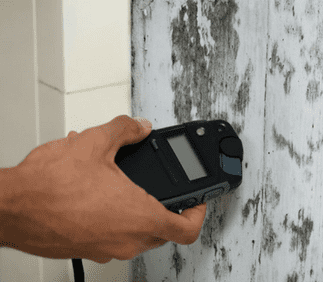
These two terms get used interchangeably, but they’re not the same thing. A mold inspection is a physical assessment of the property — a certified professional walks the structure, takes moisture readings, uses infrared imaging to check inside walls, and identifies areas of concern. Mold testing refers specifically to the sample collection and laboratory analysis that confirms what species are present and at what concentration.
In practice, a thorough mold inspection includes testing as part of the process. What you want to avoid is hiring someone who only does one without the other — a visual inspection without lab results gives you an opinion, not documentation. And in Upper Brookville, where homes are high-value and transactions are often legally complex, documentation is what actually protects you. Our inspection covers both: the physical assessment and the certified lab report, delivered together.
Mold inspection costs typically range from around $300 to just over $1,000, with the midpoint landing near $650 to $700 for an average-sized home. For larger properties — and most homes in Upper Brookville qualify as larger — that range shifts upward. A 6,000-square-foot estate with a finished basement, a multi-thousand-square-foot attic, and one or more detached structures requires more time, more samples, and more thorough documentation than a standard suburban ranch.
The cost reflects the scope of the inspection, not a markup for the zip code. More samples mean more lab fees. More square footage means more time on-site. For a property worth $2 million or more, the inspection cost is a small fraction of what a missed mold problem could cost you in remediation, structural repair, or a failed real estate transaction. Call us at 516-698-1776 and we can give you a clear picture of what to expect for your specific property.
Yes — and this is one of the most common situations we encounter in older estate homes on the North Shore. Many properties in Upper Brookville were built in the early to mid-20th century using plaster over wood lath construction. When moisture gets behind that wall assembly — from a slow roof leak, a condensation issue, or water intrusion through a stone foundation — the organic material in the lath provides exactly what mold needs to grow. It can colonize behind a perfectly intact plaster surface for years before any visible sign appears.
This is precisely why we use infrared thermal imaging as part of every inspection. The camera detects temperature differentials inside wall and ceiling assemblies, which indicate moisture presence even when the surface looks completely normal. It’s a non-invasive way to find what’s hidden without opening walls unnecessarily — which matters a great deal in a historic home where the interior finishes are part of the property’s value. If something shows up on the thermal scan, we follow up with targeted moisture readings and sampling to confirm it.
It’s not legally required, but for a property in Upper Brookville, skipping it is a significant financial risk. The median property value in the village is around $2 million, and individual transactions frequently go well above that. A mold problem discovered after closing — in an attic, a crawl space, or behind a finished basement wall — can easily cost tens of thousands of dollars to remediate properly, on top of any structural repairs.
Pre-purchase mold inspections are particularly important here because of the age and complexity of the housing stock. A home that looks immaculate on the surface may have decades of moisture history behind its walls. The inspection gives you documented findings before you sign, and if something is found, you have a lab-backed report to bring to the negotiating table. Many buyers in the Oyster Bay-East Norwich and Locust Valley school district zones choose Upper Brookville specifically for the long-term investment — a pre-purchase inspection protects that investment from day one.
In Upper Brookville’s housing stock, we most commonly find mold in basements and crawl spaces, attics, and the building envelope around older foundation walls. Basements in estate homes with stone or rubble foundations are particularly vulnerable — these foundation types weren’t built with modern waterproofing membranes, and the surrounding wooded lots retain moisture in the soil year-round. Water finds its way in, and if it’s not managed aggressively, mold follows.
Attics are the other major concern, especially in homes with complex rooflines, multiple dormers, or original slate and tile roofing. Ice dams are common on the North Shore during winter, and when they form, water backs up under the roofing material and saturates insulation and sheathing — creating mold conditions that often don’t become apparent until the following warm season. We also frequently find mold in detached structures like pool houses and carriage houses, which tend to receive less regular maintenance and inspection than the main residence. If your property has any of these structures, they should be part of the inspection scope.
It depends on the cause, and the documentation you have. Most homeowners insurance policies in Nassau County will cover mold remediation when it results directly from a covered water damage event — a burst pipe, an ice dam that drove water into the attic, storm-related flooding. What they typically won’t cover is mold that developed gradually from ongoing moisture issues, poor ventilation, or deferred maintenance.
The inspection report plays a central role in how that determination gets made. An adjuster needs documentation that establishes what caused the mold, where it is, and how extensive it is — and that documentation has to come from a licensed mold assessor, not a general contractor or a verbal assessment. Our written reports are specifically structured to meet the standards insurance companies and their adjusters require, which gives your claim the best possible foundation. If you’re dealing with a post-storm situation or recent water damage in your Upper Brookville home, the sooner you get a certified inspection on record, the stronger your position with the carrier.
Useful Links
Other Services we provide in Upper Brookville