
Hear from Our Customers
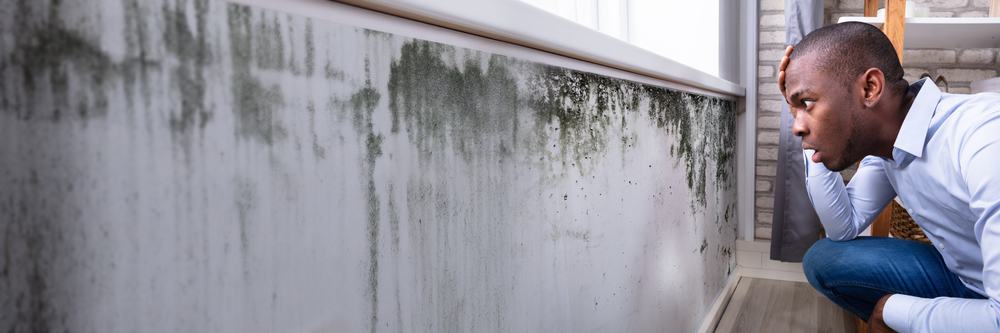
Most mold problems in Wading River don’t start with something you can see. They start behind the drywall in a 1940s-era home that never had a vapor barrier. They start in a crawl space that’s been collecting moisture from the ground for decades. By the time there’s a visible sign, the problem has usually been growing for months — sometimes years.
A professional mold inspection gives you a clear picture of what’s actually in your home. Not a guess. Not a visual scan. Air samples go to an accredited lab, surface swabs document what’s growing and where, and infrared thermal imaging picks up moisture that’s hidden inside wall cavities and under floors — the kind of moisture that a standard walkthrough would completely miss.
For a home worth over $560,000 in Wading River, that information matters. Mold issues can reduce property value by 20 to 37 percent and kill a real estate deal outright. Whether you’re staying put, preparing to sell, or about to close on a purchase, knowing the condition of the home you’re protecting is worth far more than the cost of the inspection itself.
We’ve been working in Suffolk County homes since the early 1990s. That’s 31 years of inspecting properties along the North Shore — from the wooded lots near Wildwood State Park to the older ranch-style homes that line the streets off Sound Avenue in Wading River. This isn’t a franchise. It’s not a call center dispatching whoever’s available. We’re an owner-operated company with deep roots in this county and a team that knows Long Island’s housing stock the way only decades of hands-on work can teach you.
Every technician who walks into your Wading River home is IICRC-certified. We hold both the New York State Mold Assessor License and the New York State Mold Remediator License — verifiable through the NY Department of Labor’s online search tool. If any company can’t show you both of those, that’s your answer before you even pick up the phone.
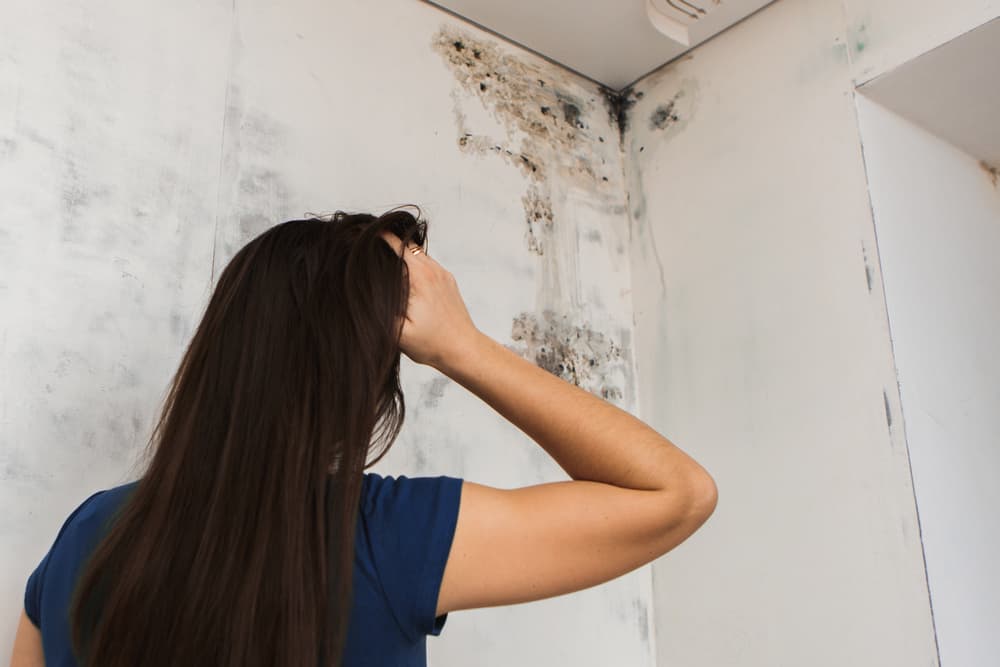
The inspection starts with air testing — drawing airborne spore samples from inside the home and comparing them against an outdoor baseline. That comparison matters because it tells you whether what’s in your air is coming from outside or being generated inside your walls. In Wading River, where ambient spore levels from the surrounding wooded areas and the Sound shoreline are naturally elevated, that internal-versus-external baseline is how you separate a real problem from background noise.
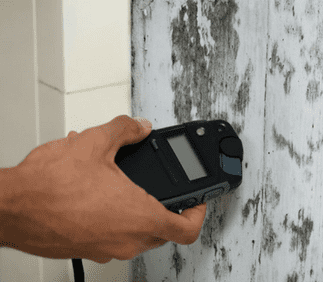
From there, we collect swab samples from any visible growth, and measure moisture levels throughout the home using calibrated instruments. Infrared thermal imaging is used to scan wall cavities, ceilings, and floors for hidden moisture — the kind that lives behind surfaces and doesn’t show itself until it’s caused serious structural damage. This step is especially relevant in Wading River’s older homes, where insulation and wall assemblies weren’t designed with moisture management in mind.
Every finding is photographed and compiled into a written report. Not raw lab data with Latin species names — a plain-language document that explains what was found, where it was found, and what the recommended next steps are. You leave the inspection knowing exactly where you stand.
Ready to get started?
Wading River homes have specific conditions that generic mold inspection checklists weren’t written for. Homes built in the 1940s often have unfinished crawl spaces with exposed soil, aging plumbing, and wall assemblies without vapor barriers. Homes from the 1980s were built tight for energy efficiency — which traps moisture when ventilation systems don’t keep pace. Add in the persistent humidity coming off the Long Island Sound, the dense tree canopy around Wildwood State Park that slows evaporation after rain, and the storm exposure that put Suffolk County under a federal disaster declaration as recently as August 2024, and you have a combination of conditions that demands more than a visual scan.
Our mold inspection in Wading River, NY includes air testing, swab sampling, water intrusion inspection to identify the moisture source, moisture level measurement, infrared thermal imaging, and full photographic documentation — all compiled into a written report with specific remediation recommendations. If the inspection reveals contamination that requires remediation, we’re licensed for that work too. You won’t be handed off to a third party or left to coordinate between separate contractors. The same licensed team that found the problem can resolve it, and we handle insurance documentation from start to finish if a claim is involved.
The honest answer is that you often can’t tell without testing. A musty smell is one indicator, but mold can grow inside wall cavities, under flooring, and in crawl spaces without producing any odor that reaches the living areas. Allergy symptoms that improve when you leave the house and worsen when you return are another common signal — but neither of these is definitive on its own.
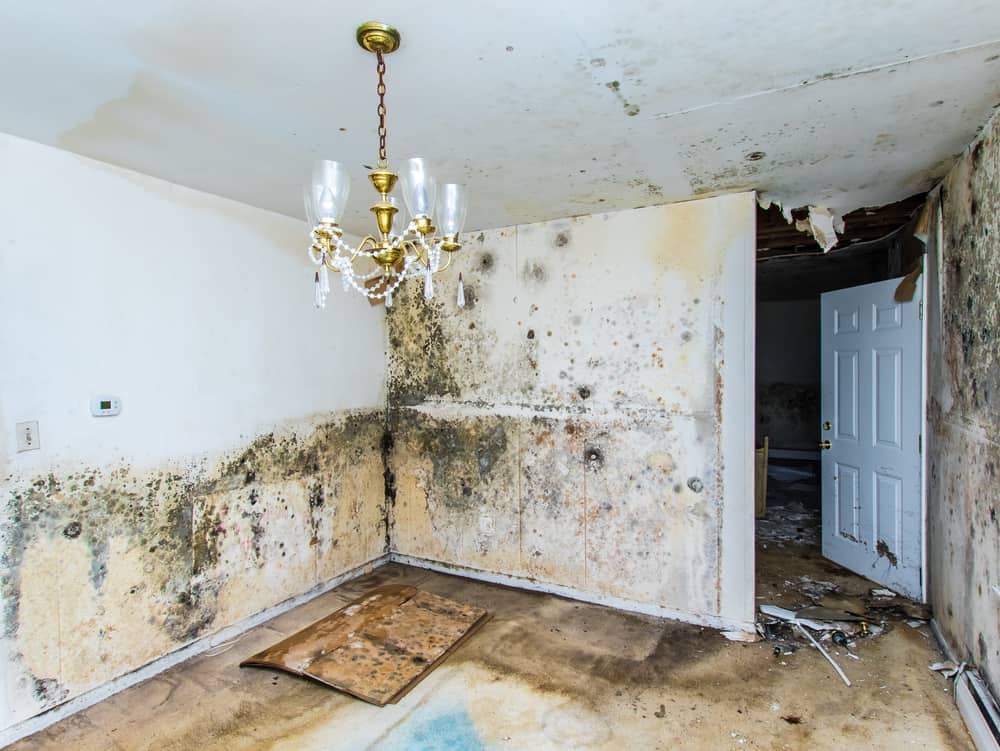
In Wading River specifically, homes built in the 1940s are the ones that tend to surprise people. These properties were constructed before vapor barriers and moisture-resistant materials were standard. Crawl spaces with exposed soil, original wood framing, and aging plumbing systems create conditions where moisture accumulates slowly over decades. By the time you notice something, the growth is often well-established. An air test and a moisture scan are the only way to know for certain what you’re dealing with — and that’s exactly what a professional mold inspection is designed to find.
Mold inspections generally range from $300 to $700 for a residential property, though larger homes or properties with more complex conditions — multiple crawl spaces, finished basements, extensive attic systems — can run higher. The final cost depends on the size of the home and how many samples are collected for lab analysis.
For Wading River homeowners, the more useful number is the comparison. Mold remediation costs anywhere from $1,150 to well over $20,000 depending on how far the contamination has spread. A mold problem that’s caught early — before it migrates into structural materials — is dramatically cheaper to address than one that’s been developing undetected for years. In a market where median home values exceed $560,000, spending a few hundred dollars on a professional mold inspection in Wading River is one of the more straightforward financial decisions a homeowner can make. The inspection either gives you peace of mind or gives you the information you need to act before the problem gets worse.
Yes, and it’s not a minor factor. Coastal proximity means persistently elevated ambient humidity year-round. Salt air accelerates moisture infiltration into wood-framed building materials, and the Long Island Sound shoreline along Wading River’s northern boundary creates conditions where that exposure is essentially constant. In the summer months — when temperatures are warm and humidity is high — mold can develop within 36 hours of a water intrusion event on Long Island, compared to the 72-hour window commonly cited for drier inland climates.
The wooded surroundings near Wildwood State Park add another layer. Dense tree canopy reduces sunlight penetration and slows evaporation, keeping exterior surfaces and soil moisture elevated long after a rain event. Homes that back up to wooded areas or sit in low-lying spots along the North Shore are particularly susceptible to exterior moisture infiltration and subsequent wall cavity mold. If your home is in that category, a baseline mold inspection — even without any obvious signs of a problem — is a reasonable precaution rather than an overreaction.
As soon as possible. Mold begins colonizing within 24 to 72 hours of a water intrusion event, and the longer you wait, the more it spreads. If your basement took on water during one of the nor’easters or heavy rain events that have hit the North Shore — including the August 2024 storm that brought up to 10 inches of rain to Suffolk County and triggered a federal disaster declaration — you’re already in a window where mold growth is likely if the space wasn’t dried out quickly and completely.
The inspection after a flood isn’t just about confirming whether mold is present. It’s about identifying where moisture is still trapped. Water migrates into wall cavities, under flooring, and behind finished surfaces — and if any of those areas weren’t fully dried, they’re actively growing mold right now even if the visible surfaces look fine. Infrared thermal imaging during the inspection identifies those hidden wet areas so remediation can target the actual problem, not just the surface symptoms. Don’t wait for a smell to develop before you call.
It’s not legally required in New York State, but the financial argument for doing it is hard to ignore at Wading River price points. Mold issues can reduce a home’s value by 20 to 37 percent, and roughly half of buyers back out of a transaction when they discover a mold problem — even one that’s already been remediated. On a home valued at $600,000, that’s a potential loss of $120,000 to $222,000, or a deal that collapses entirely.
For sellers, a pre-listing mold inspection gives you the opportunity to identify and address any issues before they show up on the buyer’s inspection report and derail your closing. For buyers, a mold inspection before closing on a Wading River property gives you documented, lab-verified information about the home’s condition — not just the seller’s disclosure. In a community where homes sell at this price level, neither side of the transaction should skip this step. The cost of the inspection is negligible relative to what’s at stake.
Yes. If the mold in your Wading River home is the result of a covered event — a burst pipe, storm water intrusion, or a roof leak from a documented weather event — we manage the insurance documentation process from the initial inspection findings through project completion. That includes communicating with your adjuster, providing the lab results and written inspection report in the format insurers require, and documenting remediation work in a way that supports your claim rather than complicating it.
This matters because insurance claims for mold-related damage can get complicated quickly, especially when the moisture source isn’t immediately obvious or when damage has spread into structural materials. Having a single licensed team handle the inspection, the remediation, and the documentation — rather than coordinating between separate contractors — keeps the paper trail clean and reduces the back-and-forth that tends to slow claims down. If you’re filing a claim related to the 2024 North Shore flooding or any other covered event, having that documentation handled by the same company that did the work is a significant advantage when it comes to getting your claim processed.
Useful Links
Other Services we provide in Wading River