
Hear from Our Customers

The homes in Wheatley Heights were built in an era when attic ventilation was minimal, basement waterproofing was an afterthought, and vapor barriers weren’t standard practice. Fifty years of Long Island humidity later, those decisions matter. If your Wheatley Heights home has a musty smell you can’t trace, a family member with persistent respiratory issues, or a basement that takes on water after a heavy rain, the question isn’t whether mold could be present — it’s where.
A professional mold inspection in Wheatley Heights gives you a documented, lab-verified answer. Not a guess. Not a visual scan. Actual air samples and surface swabs analyzed by an accredited laboratory, paired with infrared thermal imaging that detects moisture and hidden mold activity behind walls and under flooring without tearing anything apart. You get a written report in plain language — something you can use for an insurance claim, a real estate transaction, or just your own peace of mind.
The clay-rich soil throughout the Half Hollow Hills area retains water longer than sandy soil, and that sustained moisture pressure against aging foundation walls is a documented mold trigger specific to this part of Suffolk County. Add aging sewer lines from the 1960s and 1970s that back up during heavy storms, and the conditions are there — whether you can see it or not. An inspection tells you exactly what you’re dealing with in your Wheatley Heights property, so you can make a clear decision about what to do next.
We’ve been serving Nassau and Suffolk County homeowners for over three decades, operating out of West Babylon — roughly three to four miles from Wheatley Heights. This isn’t a national franchise routing calls through a distant office. We’re a locally-owned operation that has inspected hundreds of ranch homes, Cape Cods, and colonials across the Town of Babylon, built in the same 1960s and 1970s construction era that defines Wheatley Heights.
Every technician on our team carries IICRC certification — not just the lead inspector, but everyone who enters your home. We also hold both a New York State Mold Assessor License and a Mold Remediator License, as required by state law since 2016. Those credentials are verifiable through the NY Department of Labor’s online search tool. We’re licensed, bonded, and insured, and we use accredited laboratories for all sample analysis — so what you get back is objective, documented, and legally defensible.
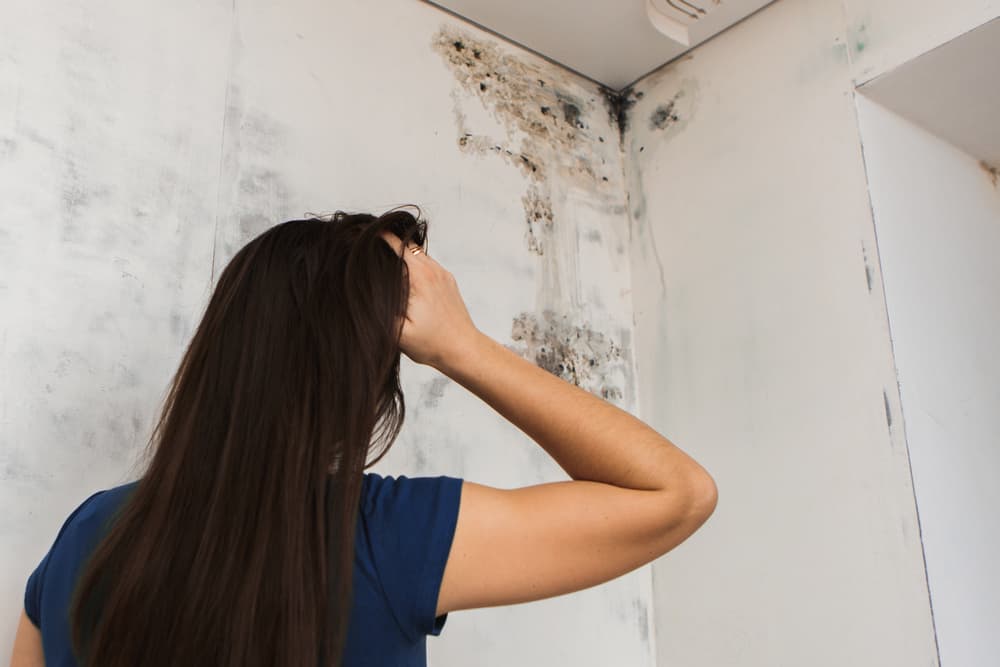
The inspection starts with a full walkthrough of your property — attic, basement, crawl spaces, and any areas you’ve flagged as concerns. In Wheatley Heights homes, that usually means paying close attention to low-pitch ranch rooflines where attic ventilation is limited, basement walls where clay-soil moisture pressure is a known issue, and any spaces adjacent to older ductwork or HVAC components that have been through multiple replacement cycles.
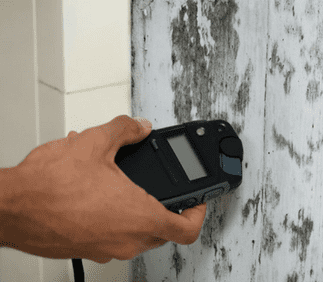
From there, air samples are collected to measure airborne spore concentrations, and surface swabs are taken from any areas showing visible growth or discoloration. Infrared thermal imaging is used throughout to detect moisture anomalies behind walls and under floors — areas that a standard visual inspection simply can’t reach. A calibrated moisture meter documents exact readings at key locations. Every finding is photographed.
All samples go to a certified, accredited laboratory. When results come back, you receive a full written report in plain language — not raw lab data, but a clear explanation of what was found, where it was found, and what it means. If mold is present and remediation is needed, we can handle that too, along with any reconstruction required afterward. You don’t have to coordinate multiple contractors or start the vetting process over again.
Ready to get started?
Our mold inspection service includes five documented components: air testing for airborne spore levels, swab sampling for surface mold identification, a water intrusion inspection to locate the moisture source driving any growth, calibrated moisture level measurements throughout the property, and full photographic documentation of all findings. Infrared thermal imaging is included as a standard part of the process — not an add-on.
For Wheatley Heights homeowners, the most common areas of concern are attic spaces in ranch-style and Cape Cod homes where inadequate ridge ventilation has allowed decades of heat and humidity to accumulate on roof decking and insulation, and basements where the clay-rich soil of the Half Hollow Hills area creates persistent hydrostatic pressure against foundation walls. Both are inspected thoroughly. If you’ve had a basement seep after a storm or noticed a persistent musty smell on your lower level, those are the first places our inspection focuses.
New York State law requires all mold assessors operating in Suffolk County — including Wheatley Heights — to hold a state-issued Mold Assessor License from the NY Department of Labor. We hold that license, along with the Mold Remediator License required for any remediation work. If the inspection identifies a problem that needs to be addressed, we’re already licensed and equipped to move forward without you having to find a separate contractor. The inspection report itself is written to satisfy insurance adjuster requirements, real estate transaction documentation standards, and health department inquiries if any of those situations apply to you.
The cost of a mold inspection in Wheatley Heights generally falls between $300 and $1,000, depending on the size of the property and how many areas need to be sampled. A comprehensive inspection that includes air testing, surface swab sampling, infrared thermal imaging, and a full written lab report will typically land in the $450 to $600 range for a standard single-family home.
That cost needs to be weighed against what you’re protecting. Homes in Wheatley Heights are currently selling in the $500,000 to $700,000 range, and documented mold issues can reduce a home’s resale value by 20 to 37 percent — or cause a buyer to walk away from the deal entirely. A professional inspection is one of the lowest-cost decisions you can make relative to the asset you’re protecting. If mold is found and remediation is needed, catching it early typically keeps that cost between $1,500 and $5,000. Discovering it late — or during a buyer’s inspection — is a much more expensive problem.
Yes — and Wheatley Heights homeowners have specific reasons to pay attention. Most homes in this neighborhood were built between 1960 and 1975, during an era that predates modern vapor barriers, attic ventilation requirements, and basement waterproofing standards. After five to six decades of Long Island’s humid summers and wet winters, those original construction choices create real vulnerabilities specific to Wheatley Heights.
The Half Hollow Hills area sits on clay-rich soil — the same soil that made this part of western Suffolk County a major brickmaking hub in the late 1800s. Clay retains water far longer than the sandy soil found in South Shore communities, which means sustained moisture pressure against basement walls is a documented, ongoing condition in Wheatley Heights. Add aging sewer infrastructure from the 1960s and 1970s that backs up during heavy rain events, and you have a combination of factors that makes mold a legitimate concern — not a hypothetical one. The EPA estimates that at least 50 percent of U.S. homes have damp conditions that can lead to mold growth. In a neighborhood of homes this age, built on soil like this, that number is not abstract.
These terms are often used interchangeably, but they’re not the same thing. Mold testing refers specifically to the collection and laboratory analysis of air or surface samples to identify what mold species are present and at what concentration levels. A mold inspection is the broader process — a physical walkthrough of the property to identify moisture sources, visible mold growth, and conditions that support mold development, which may or may not include testing.
A thorough mold inspection in Wheatley Heights should include both. Testing without a physical inspection tells you mold is present but not why or where it’s coming from. A visual inspection without testing can miss mold that hasn’t yet surfaced — which is common in the low-pitch attic spaces and unfinished basements typical of ranch-style homes in this area. The most useful result you can get is a full inspection with air and swab sampling, infrared imaging to detect hidden moisture, and a written lab report that documents everything. That combination gives you an answer you can actually act on.
Yes. New York State law has required all mold assessors and mold remediators operating in the state to hold licenses issued by the NY Department of Labor since January 1, 2016. This applies to every job performed in Suffolk County, including Wheatley Heights. Hiring an unlicensed inspector isn’t just a risk to the quality of the work — the company is operating outside the law, and any report they produce may not hold up for insurance, real estate, or legal purposes.
You can verify any mold company’s license status through the NY DOL’s online licensed contractor search tool — it takes about two minutes. Look for both a Mold Assessor License and a Mold Remediator License. A company that only holds one of the two is limited in what it can legally do. We hold both, and all our technicians carry IICRC certification on top of those state credentials. Before you schedule with anyone, check their license. It’s a public record and it’s free to look up.
It can — significantly. Research shows that documented mold issues can reduce a home’s resale value by 20 to 37 percent, and as many as half of potential buyers back out of a deal when they discover a property has a mold history, even after remediation has already been completed. In a market where Wheatley Heights homes are selling in the $500,000 to $700,000 range, that’s a substantial financial exposure.
The Half Hollow Hills Central School District is one of the primary reasons buyers choose Wheatley Heights over comparable-priced hamlets nearby. That school district premium is built into your home’s value, and buyers who are paying for it are doing thorough due diligence. A mold discovery during a buyer’s inspection — especially in an attic or basement of a 1960s or 1970s home — is exactly the kind of finding that derails a deal or forces a significant price renegotiation. Getting a professional inspection before you list gives you the chance to address any issues on your terms, not under the pressure of a closing timeline.
Don’t try to clean it yourself first. It’s a common instinct — grab some bleach, scrub the surface, and see if it comes back. The problem is that surface cleaning doesn’t address the moisture source driving the growth, and it can disturb mold colonies in ways that spread spores to other areas of the home before you even know how far the problem extends. In basements and attics specifically, what’s visible on the surface is often a fraction of what’s actually present.
The right first step is a professional mold inspection that identifies the full scope of the problem — not just what you can see, but what’s behind the drywall, inside the insulation, and along the structural framing. In Wheatley Heights homes with basements that have dealt with water intrusion from clay-soil drainage pressure or storm-related sewer backups, mold growth can extend well beyond the initial visible area. Once the inspection is complete and the lab results are back, you’ll have a clear picture of what needs to be addressed, where, and in what order. We can move from inspection to remediation to reconstruction without you having to start over with a new contractor — which matters when you’re dealing with a problem that needs to be resolved completely, not just treated at the surface.
Useful Links
Other Services we provide in Wheatley Heights