
Hear from Our Customers
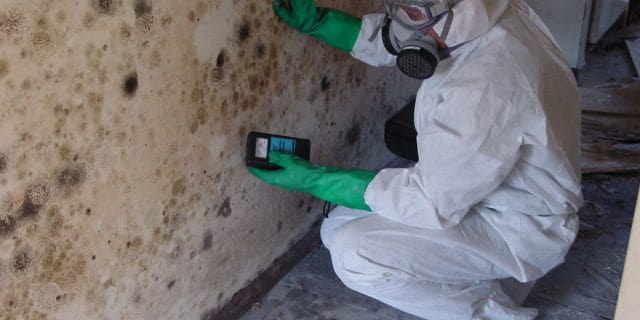
Mold doesn’t just look bad — it affects how your home smells, how the air feels, and in older homes, how the structure holds up over time. When it’s properly remediated, not just painted over or sprayed down, you stop managing the problem and start living without it.
Bellerose Village sits within the Hook Creek Watershed, and homes here — many built between 1910 and the 1940s — were constructed before modern waterproofing, vapor barriers, or crawl space ventilation standards existed. That combination of aging foundations and seasonal groundwater pressure creates the kind of persistent moisture that feeds mold year after year. Addressing it correctly means your basement stops feeling like a liability and starts functioning like usable space again.
The financial side matters too. With median home values in Bellerose approaching $883,000, a documented mold problem can cost you 20% to 37% of your home’s value if it surfaces during a sale. Professional remediation with written lab results and a clear paper trail isn’t just about health — it’s one of the most direct ways to protect what you’ve built in Bellerose.
First Response Restoration and Cleaning Inc. has been serving Nassau County homeowners for nearly three decades. That’s not a marketing number — it means we’ve worked inside the kind of pre-war homes that make up Bellerose Village, and we understand what’s behind the walls, under the floors, and in the crawl spaces of homes that were built when Helen Marsh was still personally overseeing construction on Superior Road.
Every technician we send to your door holds individual IICRC certification. Not just our company — the actual person doing the work. That distinction matters in an industry where it’s common for a certified company to send uncertified crew. We also arrive fully equipped on every call: air movers, dehumidifiers, moisture monitors, and detection equipment on the truck. The job starts when we pull up, not after a second trip.
We’re a Nassau County company with a real local phone line — not a lead-generation site with a New Jersey or out-of-state number dressed up to look local.
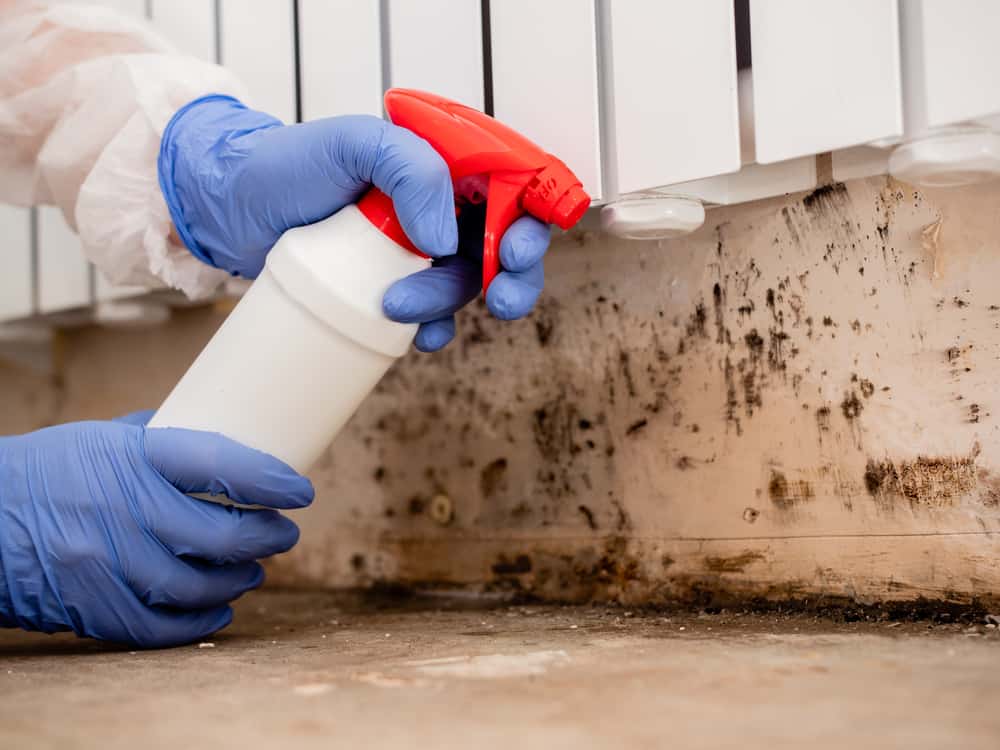
It starts with a thorough inspection. We use a 13-point process that goes well beyond a visual walkthrough — air sampling, swab testing, moisture level readings, infrared scanning for hidden mold behind walls, and a full photographic record of everything we find. Written lab results come back within two to three business days, giving you a clear, documented picture of what you’re dealing with before any remediation work begins.
From there, we contain the affected area to prevent spores from spreading to clean parts of your home, then remove the mold using industry-standard protocols. In Bellerose, where homes often have older plaster walls, exposed-beam basements, and crawl spaces without modern vapor barriers, this step requires more care and more experience than a newer build would. We don’t just treat what’s visible — we address the moisture source driving the growth, whether that’s groundwater seeping through an aging foundation, a slow plumbing leak inside a wall, or inadequate ventilation in an older attic.
If the remediation requires wall removal or structural work, we handle the rebuild too. That means one company, one timeline, and no gap between the restoration crew and the reconstruction crew. For a Bellerose homeowner navigating the Village Building Department’s permit process at 50 Superior Road, having a single accountable contractor makes that process significantly easier.
Ready to get started?
Mold remediation in Bellerose isn’t a one-size situation. A basement that’s been taking on groundwater through a 1930s foundation wall needs a different approach than attic mold caused by poor ridge ventilation in a postwar addition. We assess each situation on its own terms and build the scope of work around what’s actually there — not a preset checklist.
Every project includes the full inspection and lab testing, containment, mold removal to IICRC S520 standards, HEPA air filtration during the process, and a post-remediation verification to confirm clearance. For crawl space mold remediation — one of the most common issues in Bellerose’s older housing stock — we also evaluate whether a vapor barrier installation is needed to prevent recurrence. Attic mold remediation typically involves a ventilation assessment as part of the same visit, since the cause and the fix are directly connected.
We also comply fully with New York State’s 2016 mold law, which prohibits the same company from both assessing and remediating mold on the same property. That law exists to protect you from inflated assessments, and we operate within it. If you need an independent assessment first, we’ll tell you that plainly. Emergency mold remediation is available around the clock — because basement flooding in the Hook Creek Watershed area doesn’t wait for a weekday morning.
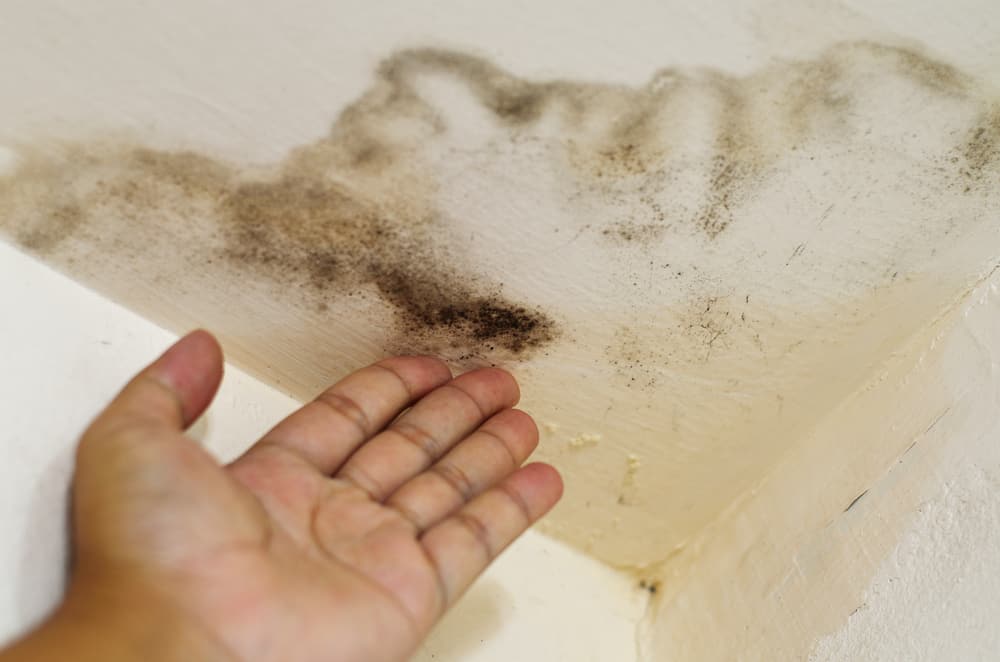
Bellerose Village sits within the Hook Creek Watershed, which means the soil holds more groundwater than many other parts of Nassau County — and that groundwater pushes against basement walls and foundations during heavy rain and spring thaw. Homes built in the 1910s through the 1940s, which make up a significant portion of Bellerose’s housing stock, were constructed before modern waterproofing systems, sump pumps, or vapor barriers were standard practice. That combination creates persistent moisture conditions that mold needs to get established.
Add in Long Island’s humid subtropical climate — hot, sticky summers with consistently elevated indoor humidity — and you have a situation where even a small amount of unaddressed moisture can turn into a visible mold problem within days. Many Bellerose homeowners have noticed musty smells for years and assumed it was just the nature of an old house. Sometimes it is. But often, that smell is the first sign of active mold growth behind a wall or under a floor that hasn’t been looked at in decades.
The honest answer is that cost depends heavily on the scope — where the mold is, how far it’s spread, and what materials need to be removed. For a contained area like a single basement wall or a section of crawl space, remediation typically runs in the range of $1,500 to $4,000. Larger projects involving multiple rooms, attic remediation, or structural material removal can reach $10,000 to $20,000 or more. Whole-house remediation in a severely affected property can go higher.
In Bellerose specifically, older construction materials — plaster walls, wood lath, older insulation — can complicate removal and add to the overall cost compared to a newer home with standard drywall. The good news is that with median home values in Bellerose approaching $883,000, the math on professional remediation is straightforward. Leaving mold unaddressed or improperly handled can reduce your home’s resale value by 20% or more — a potential loss that far exceeds the cost of doing it right. We provide a clear written estimate before any work begins, so you know exactly what you’re looking at.
In most cases, yes — but it depends on the location and severity of the mold, and whether the affected area can be properly contained. When mold is isolated to a basement, crawl space, or a single room, containment barriers and negative air pressure systems allow the rest of the home to remain livable during the process. We’ll be direct with you about what’s feasible in your specific situation before any work starts.
Where it gets more complicated is in older Bellerose homes with open-plan basements or limited separation between the affected area and the living space above. If the HVAC system has been circulating air through a mold-affected zone, we may recommend shutting it down during remediation to prevent spores from spreading through the ductwork — which can affect comfort in the rest of the house. We’ll walk through the containment plan with you during the inspection so you can make an informed decision about whether to stay or step out for a few days.
It matters quite a bit. Mold removal, in the literal sense, suggests that mold can be completely eliminated from an environment — which isn’t accurate. Mold spores exist naturally in the air and in building materials, and the goal isn’t to sterilize your home. The goal is to bring mold levels back down to normal, safe concentrations and remove the active growth that’s causing damage and health risk. That’s what remediation means — it’s a controlled, documented process, not just a cleaning.
The distinction also affects how the work is done. Remediation follows the IICRC S520 standard, which includes containment, source removal, HEPA filtration, and post-clearance testing to verify the work was effective. A company that offers “mold removal” without lab verification or post-clearance testing is essentially asking you to take their word for it. In a home that’s been standing since the early 1900s in Bellerose, where mold can hide inside wall cavities and under original flooring, that’s not a risk worth taking — especially when a home sale or a family’s health is on the line.
The source of moisture isn’t always obvious, and that’s one of the reasons a proper inspection matters before remediation begins. Basement mold in Bellerose most commonly comes from one of three places: groundwater seeping through foundation walls or the floor slab, a plumbing leak inside a wall or under a utility sink, or condensation building up on cold surfaces during humid summer months. Each of these has a different fix, and treating the mold without identifying the source almost guarantees it comes back.
During our inspection, we use moisture meters and infrared scanning to find active moisture even when there’s no visible water present. A wall that looks dry to the eye can still be reading elevated moisture levels that are actively feeding mold growth. In Bellerose’s older homes, where original masonry foundations are common and plumbing runs through walls that haven’t been opened in 50 years, this kind of diagnostic step isn’t optional — it’s the difference between a remediation that holds and one that you’re calling about again in six months.
It depends on the cause of the mold and how your policy is written. Most standard homeowners insurance policies in New York will cover mold remediation if the mold resulted directly from a covered peril — a burst pipe, an appliance leak, or storm-related water intrusion, for example. What they typically won’t cover is mold that developed gradually from a long-term moisture problem that wasn’t reported or addressed, or mold that resulted from flooding, which requires separate flood insurance coverage.
For Bellerose homeowners, this distinction is worth understanding before you file a claim. The village’s location in the Hook Creek Watershed means that some basement moisture events are tied to groundwater and stormwater conditions that may fall under flood-related exclusions rather than standard water damage coverage. We document everything during our inspection — photos, moisture readings, lab results, written reports — and that documentation is exactly what your insurance adjuster will need to evaluate your claim accurately. We’ll walk you through what we found and help you understand how to present it, but we’ll always give you the honest picture of what’s likely to be covered and what may not be.
Useful Links
Other Services we provide in Bellerose