
Hear from Our Customers
When mold is properly remediated — not just surface-wiped, but fully addressed — you stop worrying every time it rains. You stop wondering what’s growing behind the wall you can’t see. And if you’re thinking about selling, you stop dreading the inspection report. In a village where homes trade at over a million dollars, that peace of mind has a real dollar value attached to it.
Hewlett Neck’s position along Woodmere Bay and Brosewere Bay means your home deals with moisture in ways that most Nassau County properties don’t. Bay humidity doesn’t let up in summer. Tidal air works its way into crawl spaces, attic voids, and wall cavities — especially in the older estate-style homes that define this village. That’s not a generic Long Island problem. It’s a specific condition that requires someone who understands waterfront construction, not just standard remediation.
A 20 to 37 percent drop in property value is what studies consistently show when mold goes unaddressed or improperly handled. On a Hewlett Neck home, that’s a potential loss of $200,000 or more. Professional mold remediation isn’t a repair bill — it’s protection on a major asset.
First Response Restoration and Cleaning Inc. has been serving Long Island homeowners for nearly three decades — through nor’easters, through Sandy’s record storm surge across the western bays of Nassau County, and through every season of humidity the South Shore produces. That history isn’t a marketing point. It means we’ve seen what water does to homes like yours, and we know how to fix it the right way.
What sets us apart isn’t just the years — it’s that every technician who walks into your Hewlett Neck home holds individual IICRC certification. Not the company. The person. That’s the industry’s governing standard for mold remediation, and we apply it at the field level, not just on paper.
Hewlett Neck is a small, close-knit village of roughly 160 homes. Reputation travels fast here. We’ve built ours on being straight with homeowners — about what we find, what it costs, and what it takes to fix it for good.
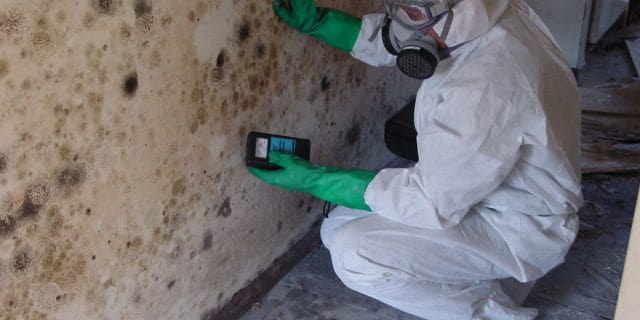
It starts with a thorough inspection — air testing, swab sampling, infrared imaging to find what you can’t see, and moisture readings throughout the affected areas. Within two to three business days, you get a written report with lab results. Not a verbal summary. An actual document you can use for insurance, for real estate disclosure, or simply to understand what you’re dealing with.
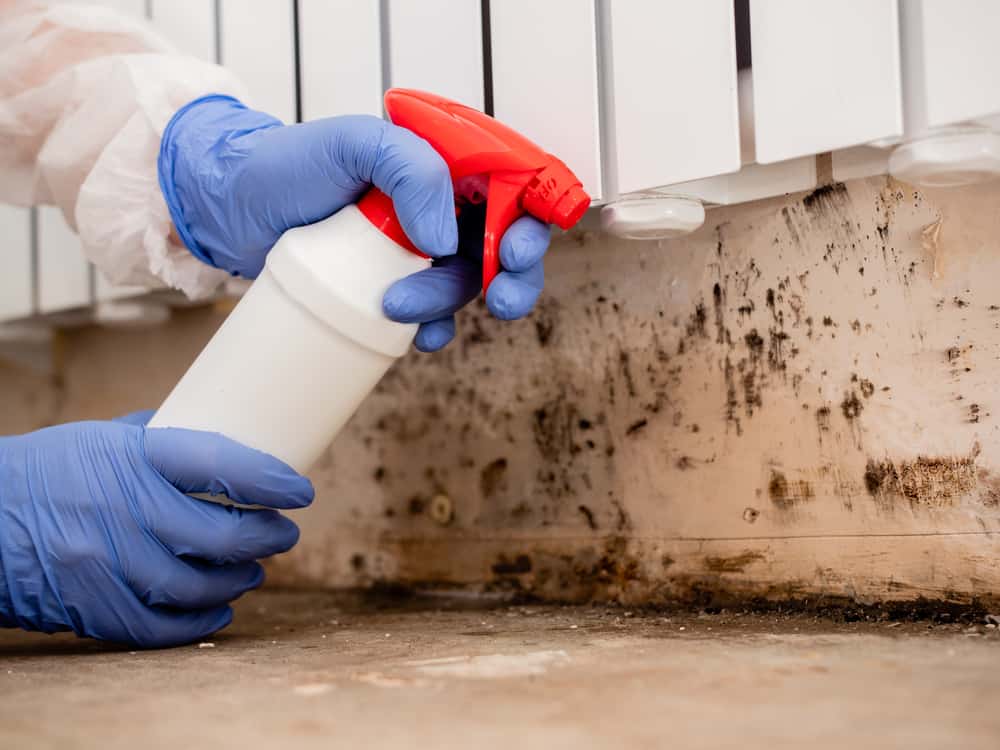
From there, remediation begins with containment. Affected areas are isolated to prevent spores from spreading through the rest of your home. Building materials that can’t be saved are removed. The source of the moisture — whether that’s a foundation issue letting in bay-adjacent groundwater, an aging plumbing leak in an older Hewlett Neck estate, or storm-related intrusion — gets addressed before anything else. Treating mold without fixing the source is a short-term answer to a long-term problem.
Once remediation is complete, clearance testing confirms the work holds up. And if reconstruction is needed — drywall, framing, insulation — we handle that too. One company, start to finish. It’s worth noting that under New York State’s 2016 mold law, the company that assesses your mold cannot be the same company that remediates it. We follow that law and will walk you through exactly what it means for your project before any work begins.
Ready to get started?
Mold doesn’t pick one spot. In Hewlett Neck homes — many of which sit on large lots with crawl spaces, finished lower levels, and attic systems that deal with coastal air year-round — it tends to show up in several places at once. Crawl space mold remediation is one of the most common requests we get from South Shore homeowners, because bay-adjacent soil pushes ground moisture upward constantly. Without proper vapor barriers and ventilation, it’s only a matter of time.
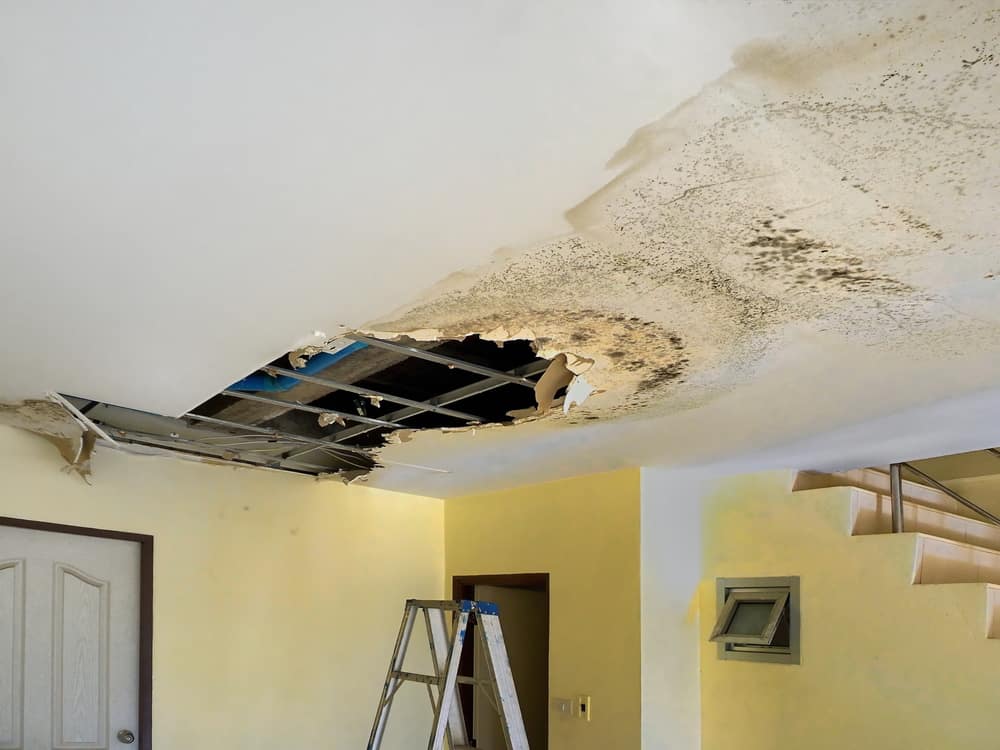
Attic mold remediation is another frequent need here. Long Island’s seasonal temperature swings create condensation cycles in attic spaces, and homes near the water deal with an added layer of salt-laden, moisture-heavy air that accelerates the problem. Basement mold remediation comes into play after any significant water event — and if your home is south of Sunrise Highway in the Five Towns, you already know what a serious storm can do to a lower level.
Emergency mold remediation is available 24 hours a day, seven days a week. If you come home from a trip and find water damage — or if a pipe lets go overnight — the 48-hour window before mold takes hold is not a figure of speech. We arrive with fully equipped trucks: air movers, dehumidifiers, HEPA filtration, and moisture monitoring equipment. Everything needed to start immediately, not on a follow-up visit.
The national average for mold remediation sits around $2,300, but that number reflects a wide range of scenarios. A contained area in a single room is very different from a crawl space that’s been accumulating moisture from bay-adjacent soil for years, or a finished basement that flooded during a storm surge event. For larger Hewlett Neck homes — many of which exceed 4,000 to 7,000 square feet with complex mechanical systems — costs for whole-structure or multi-area remediation can run between $6,000 and $15,000 or more depending on scope.
The more useful frame isn’t the cost of remediation — it’s the cost of not doing it. On a home valued at over a million dollars, a mold problem left unaddressed or handled improperly can reduce resale value by 20 to 37 percent. That’s a potential loss that dwarfs the remediation bill by a significant margin. We provide written estimates based on actual inspection findings, not ballpark guesses over the phone.
Mold removal implies you can simply take the mold away and be done with it. The problem is that mold isn’t just a surface issue — it’s a moisture issue. If you clean what’s visible without addressing what’s causing it, you’re looking at the same problem in a few weeks or months. Mold remediation is the full process: identifying the source, containing the affected area, removing compromised materials, treating surfaces, and verifying through post-clearance testing that the environment is clean.
For waterfront properties in Hewlett Neck, this distinction matters more than it does in inland communities. The moisture sources here — bay humidity, tidal groundwater, aging plumbing in older estate homes, storm-related intrusion — are persistent. Remediation that doesn’t account for those ongoing conditions isn’t remediation. It’s a temporary fix that will cost you again.
Mold can begin forming within 24 to 48 hours of water intrusion under the right conditions. In a waterfront home in Hewlett Neck, those conditions are almost always present — high ambient humidity from Woodmere Bay, warm interior temperatures in summer, and building materials that absorb moisture quickly. That 48-hour window is the EPA’s benchmark, and it’s not conservative. It reflects real-world conditions.
This is why emergency response speed matters so much. If a pipe bursts while you’re commuting into the city on the LIRR Far Rockaway Branch, or while you’re traveling, the damage can be significant by the time you discover it. We’re available around the clock specifically because water damage doesn’t wait for business hours, and neither should your response to it.
It depends on the cause. Most standard homeowners insurance policies in New York will cover mold remediation if it’s a direct result of a covered peril — a burst pipe, a roof leak from a storm, or sudden water damage. What they typically won’t cover is mold that developed gradually from a slow leak that went undetected, or moisture that accumulated over time without a single identifiable event.
For Hewlett Neck homeowners, this is worth paying attention to. Post-storm flooding — especially in a South Shore waterfront community — may fall under a separate flood insurance policy rather than standard homeowners coverage. Flood insurance through FEMA’s National Flood Insurance Program handles water damage from storm surge differently than a standard policy. We can help you document findings clearly so your insurance claim has the evidence it needs, but we always recommend reviewing your specific policy terms with your carrier before assuming coverage.
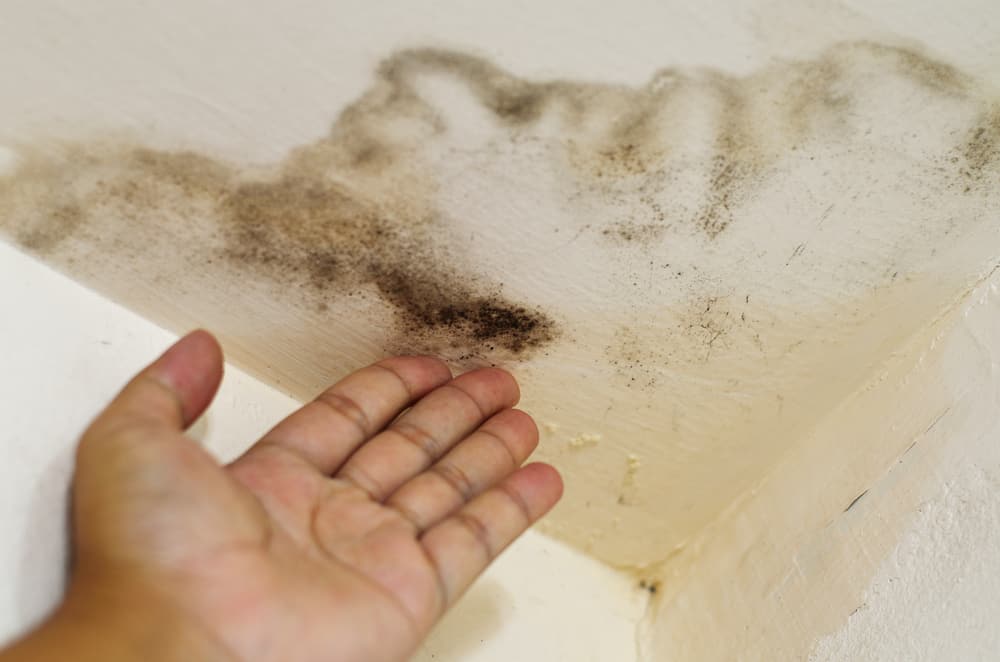
The term “black mold” gets used a lot, and it causes a fair amount of unnecessary alarm. Stachybotrys chartarum — the species most people mean when they say black mold — does require professional remediation, but so does any mold growth that exceeds 10 square feet, regardless of color. The EPA recommends professional handling at that threshold, and for good reason: mold remediation involves containment, proper PPE, and controlled removal to prevent spores from spreading through the rest of your home.
What matters more than the color of the mold is the extent of the growth, the type of materials affected, and the moisture source driving it. In Hewlett Neck homes with older construction and persistent coastal humidity, mold colonies can spread behind walls and under flooring long before they’re visible. Infrared imaging and air sampling during the inspection phase are what tell the real story — not just what you can see with your eyes.
The honest answer is that mold won’t come back if the moisture source is resolved. That’s the part that determines whether remediation lasts. If a contractor removes the mold but leaves a foundation crack that’s letting in groundwater from bay-adjacent soil, or doesn’t address an attic ventilation problem that’s been trapping humid coastal air for years, the mold will return. It’s not a question of if — it’s a question of when.
We begin by finding and fixing the source before remediation work starts. We also conduct post-clearance testing after the job is complete — air sampling and lab analysis that confirms the environment meets clean air standards. That documentation doesn’t just give you confidence. It gives you something in writing that you can show a buyer, an appraiser, or an insurance adjuster. In a village like Hewlett Neck, where homes carry significant value and transactions involve serious due diligence, that clearance report is worth having.
Useful Links
Other Services we provide in Hewlett Neck