
Hear from Our Customers
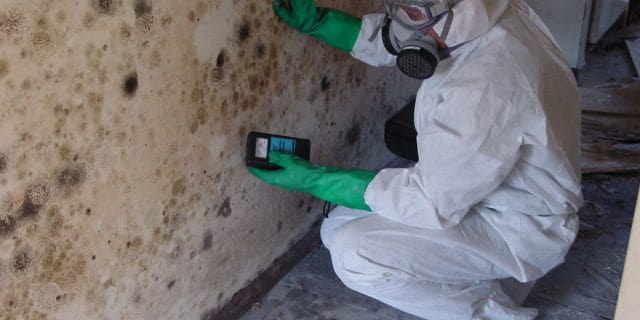
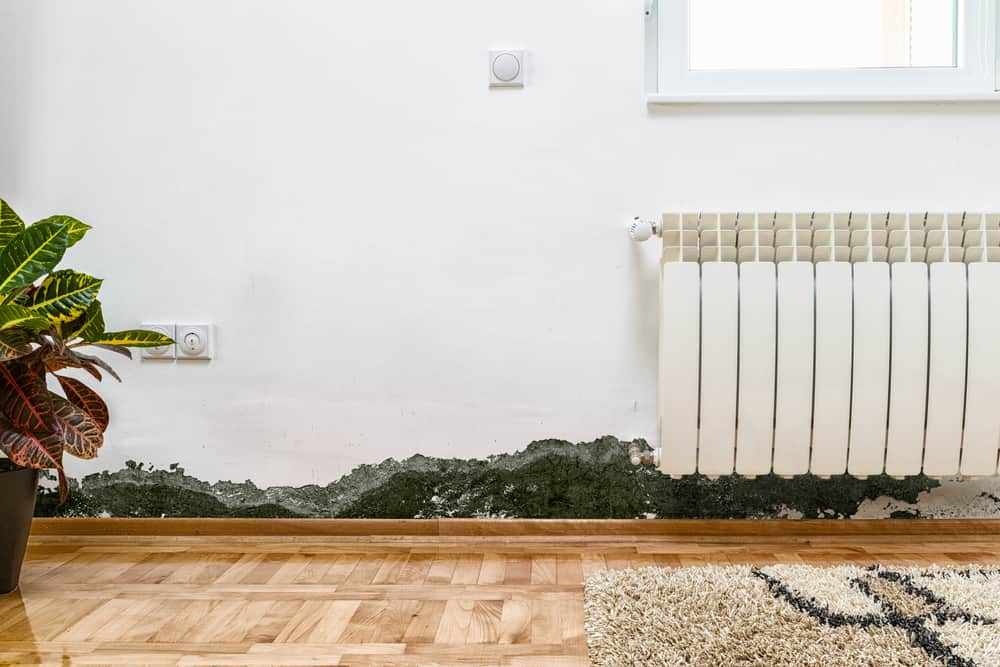
In Matinecock, the mold problem usually isn’t what you can see. It’s what’s been quietly growing behind a crawl space wall, beneath original flooring, or inside an attic that hasn’t been properly ventilated in decades. The historic estates along Duck Pond Road and Chicken Valley Road were built to last — but they were also built long before modern moisture barriers existed. Fieldstone foundations, expansive crawl spaces, and large attic systems are exactly the conditions where mold establishes itself undetected for years.
When remediation is done right, you stop managing a recurring problem and start living in a home that’s actually clear. No more musty odors when you open the basement door in spring. No more wondering whether that dark spot behind the wall came back. And if you’re preparing your Matinecock property for a real estate transaction — which at local price points means serious due diligence from buyers’ attorneys and inspectors — you have the written documentation to back up a clean bill of health.
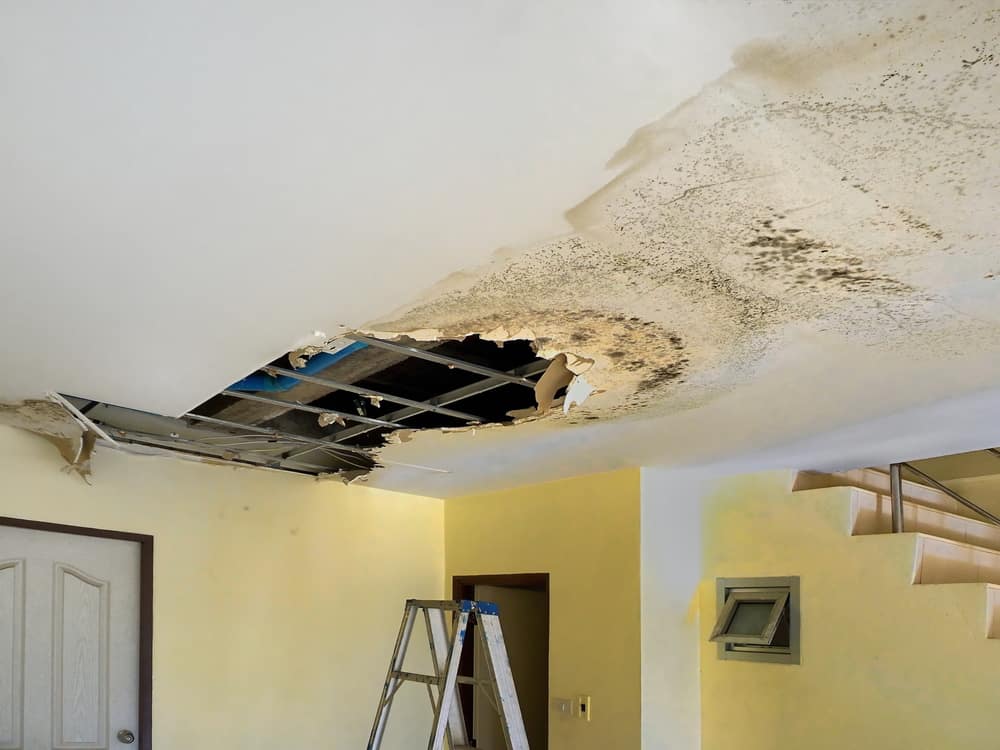
The other thing that changes is your timeline. Mold grows within 48 hours of any moisture intrusion event. A nor’easter that drives water through an aging roof flashing, a sump pump that fails during a spring thaw, a gutter overflow saturating the foundation perimeter — these aren’t hypotheticals in a village built on glacial terrain near Long Island Sound. They’re seasonal realities. Getting ahead of it with a certified team that arrives fully equipped means the difference between a contained remediation and a whole-house problem.
We’ve been serving Nassau County homeowners since the late 1990s. That’s not a marketing number — it’s the kind of track record that only comes from doing the work right, consistently, over time. We hold IICRC certification at the individual technician level, meaning every person who walks into your home has personally completed the industry’s most rigorous training standard — not just our company as a whole.
Matinecock is one of the most demanding service environments on Long Island. Properties here are large, often historic, and built with materials that require careful handling. The village’s tight-knit community of fewer than 800 residents means that reputation travels fast, and a company that’s been working across Nassau County for three decades understands what that accountability looks like in practice.
We maintain dedicated service pages for Matinecock — including mold inspection and water damage restoration — because this community has been part of our territory for years. When you call the Nassau County line at 516-698-1776, you’re reaching a local team, not a national call center routing your job to the nearest available crew.
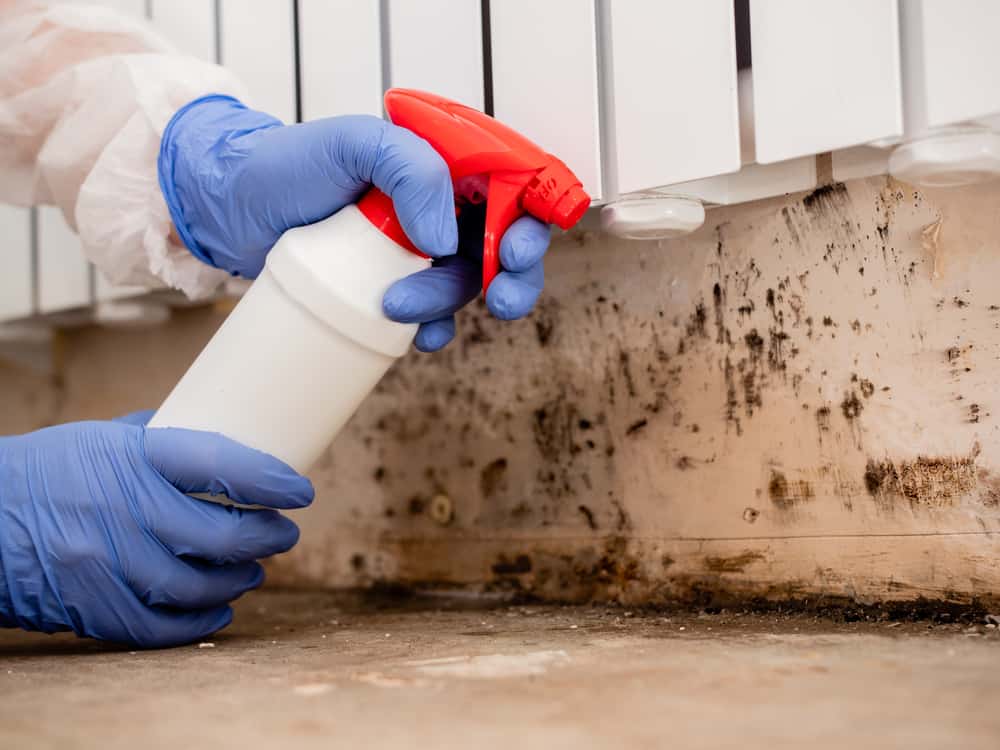
It starts with a thorough inspection. Before any remediation work begins, we identify the source of the moisture — because treating mold without addressing what’s feeding it is a temporary fix at best. In Matinecock homes with fieldstone foundations, aging rooflines, or large crawl spaces, that often means tracing water migration through foundation walls, checking for condensation issues in unconditioned spaces, or using infrared imaging to detect hidden moisture behind walls or beneath rooflines. The inspection produces a written report with lab results within 2 to 3 business days, giving you a documented picture of what’s actually there.
Once the scope is confirmed, the remediation process follows IICRC S520 protocols — the industry’s established standard for mold remediation. That means proper containment to prevent cross-contamination, HEPA filtration throughout the work area, and antimicrobial treatment applied to affected surfaces. Every truck arrives fully equipped with air movers, dehumidifiers, and moisture monitors, so the job starts the moment we arrive — not after a second equipment run.
New York State’s 2016 mold law requires that the company performing the assessment and the company performing the remediation be separate entities. We comply with this law and will walk you through exactly how it protects you. After remediation is complete, a clearance inspection confirms the work is done. And if walls, flooring, or framing need to be rebuilt — which is common in older estate homes where mold has been active for a long time — we handle reconstruction too, so you’re not left coordinating a second contractor to finish the job.
Ready to get started?
Our inspection covers 13 documented checkpoints, including air sampling, surface swab testing, moisture level readings, infrared imaging for hidden mold detection, and a comparison of internal and external mold particle counts. The written report with lab results gives you something concrete — not a verbal summary, but actual documentation you can share with an insurance adjuster, a real estate attorney, or a prospective buyer.
Our remediation services cover the full range of mold types and locations common in Matinecock’s housing stock: basement mold remediation for fieldstone and masonry foundation walls, crawl space mold remediation for the large under-floor areas common in estate-scale footprints, and attic mold remediation for the historic rooflines where inadequate ventilation creates warm, humid conditions year-round. Black mold remediation follows the same containment and HEPA protocol regardless of species — because proper remediation doesn’t change based on what type of mold is present.
For properties with outbuildings — carriage houses, pool houses, guest cottages — we treat those structures as separate remediation environments with their own containment and clearance process. If a seasonally used structure went unheated through a Long Island winter, there’s a real chance mold established itself before anyone noticed. We also handle the post-remediation reconstruction phase, which means replacing drywall, framing, insulation, or flooring that had to be removed during the remediation — all under one contract, with one point of contact from start to finish.
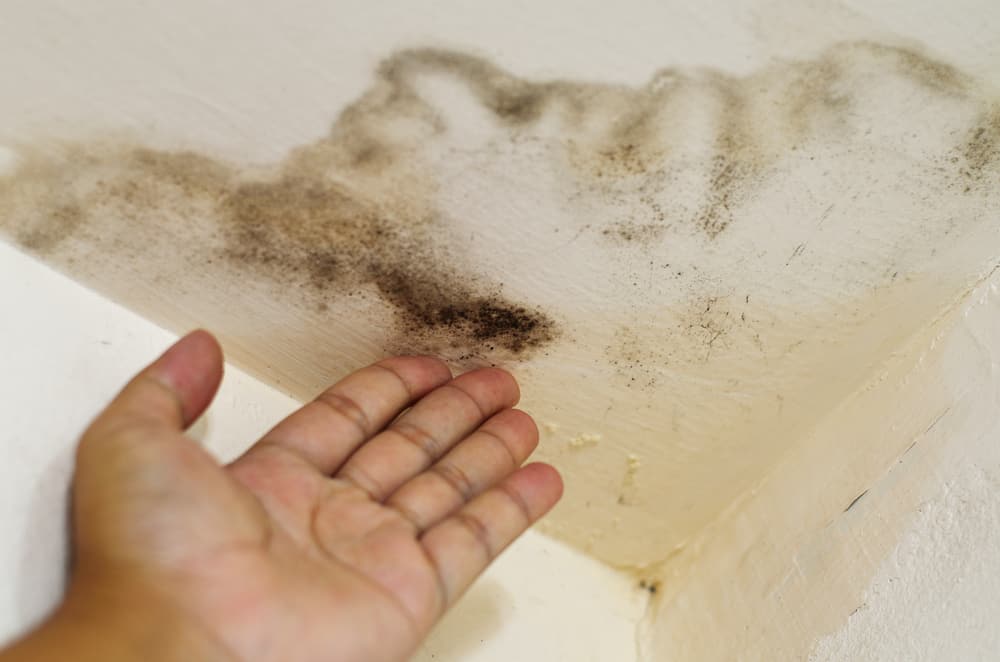
The most common sign is a persistent musty odor — especially in basements, crawl spaces, or attic areas — that doesn’t go away even after airing the space out. In Matinecock’s historic estate homes, mold often develops in areas that aren’t regularly accessed: inside crawl spaces beneath large footprints, behind original plaster or drywall in older sections of the home, or in attic spaces where ventilation hasn’t kept pace with the building’s age.
A professional inspection that includes infrared imaging and air sampling is the only reliable way to confirm whether mold is present and where it’s concentrated. Visible mold on a surface is actually the easier scenario — it’s the hidden growth behind walls or beneath flooring that tends to go undetected the longest and cause the most structural damage by the time it’s found. If your Matinecock home has a fieldstone or masonry foundation, or if you’ve had any water intrusion events in the past few years, an inspection is worth doing proactively rather than waiting for visible signs.
For a standard mold problem in a single area — a basement wall section, a portion of a crawl space — remediation typically runs between $1,200 and $3,800. For larger infestations that have spread across multiple zones or into structural materials, costs can range from $10,000 to $30,000. Whole-house remediation on a severely affected property can reach $50,000 or more, though that’s generally the result of a problem that went unaddressed for a significant period of time.
For Matinecock homeowners, the more relevant financial frame is what an unresolved mold problem costs at resale. A documented mold history can reduce a property’s value by 20% to 37%, and a significant percentage of buyers walk away entirely when mold is discovered during due diligence. On a property valued at $2 million or more, that math is straightforward. Addressing the problem now — with proper documentation and a clearance report — protects the asset, not just the living environment.
The Village of Matinecock operates under its own incorporated village governance, but there is no local mold-specific ordinance beyond what New York State law requires. The most important regulatory requirement is New York State’s 2016 mold law, which prohibits the same company from both assessing and remediating mold on the same property. This is a consumer protection measure that exists because some companies used to inflate their findings to generate more remediation revenue — the law was designed to eliminate that conflict of interest.
What this means practically is that the company inspecting your home and the company performing the remediation need to be separate. We perform remediation and will walk you through how to get an independent assessment completed before work begins. If your property involves any historic structural elements — original plaster, period millwork, masonry — those materials may require additional care during remediation to avoid unnecessary damage, which is something an experienced local contractor handles differently than a crew unfamiliar with North Shore estate construction.
It can — but only if the moisture source that caused it wasn’t fully resolved. Mold remediation that clears the visible growth without addressing why moisture was present in the first place is essentially a temporary fix. In Matinecock homes with fieldstone foundations, aging rooflines, or large crawl spaces that haven’t been properly encapsulated, the underlying moisture pathway often needs to be corrected as part of the remediation process — not treated as a separate problem for a separate contractor.
The way to prevent recurrence is to confirm that the moisture readings in the affected area have returned to normal levels before closing out the job, and to address any identified intrusion points — whether that’s a foundation crack, a failed roof flashing, a drainage issue along the foundation perimeter, or inadequate crawl space ventilation. A written clearance report after remediation documents that conditions are within acceptable ranges. If mold returns after that, it’s a new moisture event, not a failure of the original remediation — and that distinction matters for insurance purposes as well.
A single-area remediation — one basement section or one crawl space zone — typically takes one to three days from containment setup through final clearance. Larger projects involving multiple rooms, attic spaces, or structural material removal take longer, often running five to ten days depending on the scope. For Matinecock properties that include outbuildings like carriage houses, pool houses, or guest cottages, each structure is treated as its own remediation environment and adds to the overall timeline.
The clearance inspection — which confirms that mold levels have returned to normal and the work is complete — happens after the remediation is finished and the area has been given time to stabilize. Lab results from the clearance air sampling typically come back within two to three business days. If reconstruction is needed after remediation — replacing drywall, insulation, or flooring that was removed — that phase follows clearance and is scoped separately based on what was affected. The full timeline from first call to completed reconstruction on a complex estate project can run two to four weeks, though the home remains livable in unaffected areas throughout.
In most cases, yes — particularly for large estate properties where the affected area can be fully contained and isolated from the rest of the living space. Proper containment using negative air pressure and HEPA filtration prevents mold spores from migrating to unaffected areas during the remediation process. If the mold is concentrated in a basement, crawl space, or attic, there’s typically no reason to vacate the main living areas of the home.
The exception is when mold contamination is extensive enough to affect HVAC systems or central air distribution — in that case, running the system during remediation can spread spores throughout the home, and temporary relocation may be the safer choice. We assess this during the inspection phase and give you a clear recommendation before work begins. For Matinecock homeowners with guest cottages or secondary structures on the property, those can often serve as a comfortable alternative during remediation of the main residence if needed — which is a practical advantage of the estate-scale properties common in this village.
Useful Links
Other Services we provide in Matinecock