
Hear from Our Customers
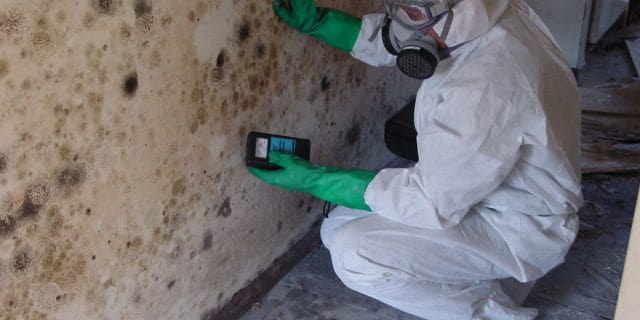
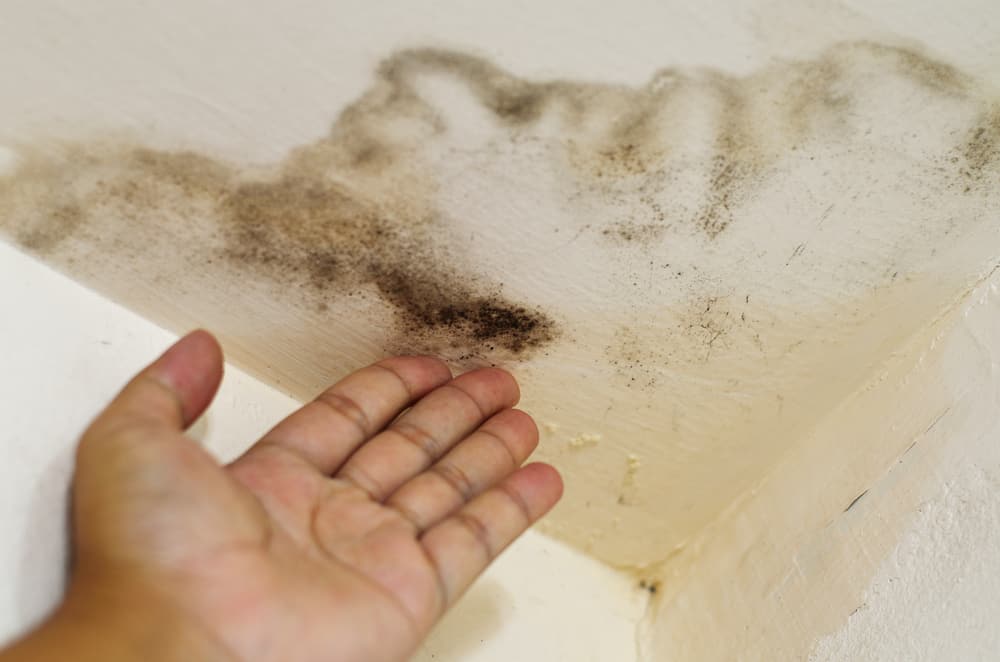
Mold doesn’t announce itself. In a Muttontown home — with expansive basements, crawl spaces running the length of a large footprint, and wooded lots that keep moisture locked in — it can grow quietly for months before you ever see it. By the time it’s visible, it’s rarely just on the surface.
When remediation is done correctly, the difference is immediate and lasting. The air in your home feels different. The musty odor that you’d written off as “old house smell” is gone. More importantly, the moisture source driving the growth has been identified and addressed — not just the mold itself. That’s the part most companies skip, and it’s exactly why mold comes back.
For Muttontown homeowners specifically, that moisture source is often tied to the terrain. Rolling topography, mature tree canopy blocking sunlight from foundation walls, aging drainage systems on large lots, and Long Island’s persistently high water table all contribute to conditions that keep basements and crawl spaces damp year-round. Fixing the visible problem without understanding the property is just a temporary patch. A real remediation changes what’s actually happening inside the walls.
We’ve been serving Muttontown and Nassau County homeowners for close to three decades. That’s not a marketing number — it means our team has worked through nor’easters, basement floods, and the kind of slow-build moisture damage that Long Island’s North Shore climate creates season after season. We know what mold looks like in a wooded estate home near the Muttontown Preserve just as well as we know what it looks like behind the drywall of a newer build in Stone Hill.
What sets us apart isn’t a logo on a truck. Every technician who walks into your home holds individual IICRC certification — not just the company. That distinction matters when someone is assessing a mold situation in a $3 million Muttontown home. You want to know the person doing the work is trained, not just the person who signed the paperwork.
We also handle full reconstruction after remediation when structural materials need to come out. One call, one company, one accountable outcome from start to finish.
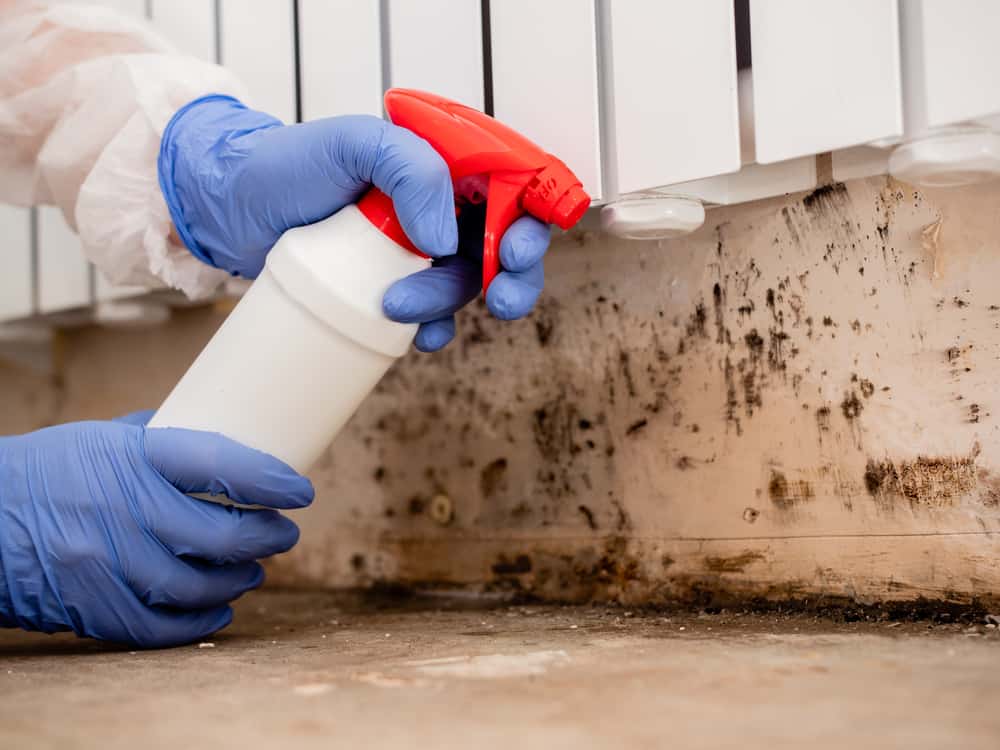
It starts with a 13-point mold inspection. That means air testing, swab sampling, infrared imaging to find mold hiding behind walls and ceilings, moisture-level readings throughout the property, and a full water intrusion assessment. Everything is documented. Lab results come back within two to three business days in a written report — not a verbal summary on the driveway.
Once the scope is confirmed, containment goes up immediately. Our team arrives with fully equipped trucks — air movers, dehumidifiers, HEPA air scrubbers, and moisture monitors loaded before we leave the shop. There’s no waiting for a second trip. On a large Muttontown property, that speed matters, because every hour without containment is more square footage at risk.
Remediation follows the IICRC S520 standard, which means the process is methodical, not rushed. After the work is complete, post-remediation clearance testing confirms the environment is clean — not just visually, but measurably. Under New York State’s 2016 Mold Law, assessment and remediation must be handled independently, which is exactly how we operate. That law exists to protect you, and it’s worth knowing about before you hire anyone. If structural materials were removed during the process, the reconstruction phase begins next — handled by our team, under the same roof.
Ready to get started?
Mold remediation in Muttontown isn’t a one-size scope. A finished basement in a 6,000-square-foot estate is a different job than a crawl space under a newer build, and we approach each property based on what’s actually there — not a predetermined checklist. The inspection drives the scope, the scope drives the process, and the process is documented at every step.
What’s included: the full 13-point inspection with lab analysis, infrared imaging for hidden mold detection, containment setup, HEPA-filtered air scrubbing throughout the affected area, removal and disposal of contaminated materials where necessary, treatment of affected surfaces, and post-remediation clearance testing to confirm the space is clean. If building materials like drywall, insulation, or framing need to come out, reconstruction is handled in-house — no subcontractors, no coordination gap, no finger-pointing between vendors.
For Muttontown properties adjacent to the Muttontown Preserve or sitting on heavily wooded three-acre lots, ambient humidity and organic debris accumulation at foundation perimeters are real contributing factors that we assess during the inspection. Attic mold remediation is also common in this area given the complex rooflines on older estate homes and the ice damming that Nassau County’s winters regularly produce. Whatever the source, the goal is the same: find it, fix it, document it, and make sure it doesn’t come back.
The honest answer is that cost depends entirely on scope, and scope depends on what the inspection finds. Nationally, mold remediation averages between $1,223 and $3,754 for contained situations — but Muttontown properties are rarely small or simple. A large basement, an extensive crawl space, or an attic with a complex roofline can push a project into the $10,000 to $30,000 range, sometimes more.
What matters more than the upfront number is what happens if you don’t act. A mold problem can reduce a home’s resale value by 20% to 37%. On a $2 million to $4 million Muttontown property, that’s a potential loss that makes even a significant remediation cost look like the obvious financial decision. The inspection gives you a clear, written scope before any work begins — no surprises, no pressure, just documentation you can review and act on.
Long Island’s water table is high, particularly along the North Shore where Muttontown sits, and it doesn’t take a major flood event to push moisture through a foundation wall or floor slab. Hydrostatic pressure — water in the ground pushing against your foundation — is a slow, consistent source of moisture intrusion that many homeowners don’t discover until mold is already visible.
On top of that, Muttontown’s wooded lots create a specific set of conditions: shade from mature tree canopy limits the natural drying of soil and exterior walls after rain, and organic debris accumulation in gutters and at foundation perimeters keeps moisture sitting against the structure longer than it should. Nor’easters — which Nassau County sees regularly — compound this with sustained heavy rainfall and occasional flooding. The combination of high water table, shaded terrain, and seasonal storm exposure makes basements and crawl spaces in Muttontown particularly vulnerable to the slow moisture buildup that leads to mold.
It depends on the cause. Most standard homeowners insurance policies in New York will cover mold remediation if the mold resulted from a sudden, accidental covered event — a burst pipe, an appliance leak, or storm-related water intrusion. What they typically won’t cover is mold that developed gradually from long-term moisture issues, deferred maintenance, or conditions that were knowable and preventable.
This distinction matters in Muttontown because many of the moisture sources common to large estate homes — slow foundation seepage, inadequate crawl space vapor barriers, aging drainage systems — tend to develop over time rather than overnight. The key is documentation. A written inspection report with lab results, infrared imaging, and a clear timeline of the water intrusion event gives your insurance adjuster something concrete to work with. Our inspection process produces exactly that kind of documentation, which is one reason homeowners find it useful to have the report in hand before filing a claim.
Mold removal typically refers to cleaning or treating visible mold on a surface — it’s reactive and surface-level. Mold remediation is a broader, more thorough process: it includes identifying the moisture source driving the growth, containing the affected area to prevent spores from spreading, removing contaminated materials where necessary, treating the underlying structure, and verifying through post-remediation clearance testing that the environment is actually clean.
The distinction matters because mold that is removed without addressing the moisture source will come back. It’s not a question of if — it’s a question of how quickly. In a Muttontown home with a large basement or crawl space, returning mold can spread significantly before it’s noticed again. Remediation done correctly eliminates the conditions that allowed mold to grow in the first place. That’s the standard we work to, and it’s why clearance testing at the end of every project is part of the process, not an optional add-on.
In many cases, yes — but it depends on the location and extent of the mold, and whether the affected area can be properly contained. When mold is limited to a basement, crawl space, or attic and our remediation team establishes proper containment with negative air pressure and HEPA filtration, the rest of the home can remain occupied without meaningful exposure risk.
Where it becomes more complicated is when mold is present in living areas, HVAC systems, or spaces that can’t be fully isolated from the rest of the home. In those situations, temporary relocation during the active remediation phase is worth considering — especially in a household with children, elderly residents, or anyone with respiratory sensitivities. During the initial inspection, we’ll give you a straightforward assessment of the contamination scope and what the containment setup will look like, so you can make an informed decision about whether staying is reasonable for your specific situation.
Post-remediation clearance testing is the measurable answer to that question. After the work is complete, air and surface samples are taken and sent to an independent lab. If the results confirm that mold spore levels are within normal range and no active contamination remains, you have documentation — not just someone’s word — that the remediation was successful.
But clearance testing only tells you the job was done right. Whether mold returns depends on whether the moisture source was actually fixed. In Muttontown, where properties sit on large wooded lots with complex drainage, aging foundations, and seasonal exposure to nor’easters and snowmelt, the moisture source assessment during the inspection is just as important as the remediation itself. If the water intrusion pathway isn’t identified and corrected — whether that’s a failing foundation seal, a crawl space without an adequate vapor barrier, or an HVAC condensation issue — the conditions for mold growth remain. Our process addresses both sides of that equation, which is the only way to give you a result that actually holds.
Useful Links
Other Services we provide in Muttontown