
Hear from Our Customers
The air in your home feels different when mold isn’t in it. No more musty smell drifting up from the basement. No more second-guessing whether your kid’s cough is just seasonal or something you should actually be worried about. That shift — from uncertainty to clarity — is what professional mold remediation actually delivers.
New Hyde Park’s housing stock makes this more relevant than people realize. Most homes here were built before modern waterproofing standards existed. Block foundations develop hairline cracks. Crawl spaces under older additions sit without vapor barriers. Attic ventilation systems that predate current building codes trap heat and humidity against the roof sheathing for years before anyone notices. Long Island’s coastal humidity regularly pushes past 60% through the summer — and at that threshold, mold can begin growing within 48 hours of water exposure.
When remediation is done right, you also protect what this home is worth. Median home values in New Hyde Park are approaching $900,000. Documented mold history can cut that value by 20% or more — and half of buyers walk away entirely when they find out. Getting it handled professionally, with written lab results and post-remediation clearance, means you have the documentation to stand behind your home’s value when it matters.
We’ve been serving New Hyde Park and the surrounding Nassau County area for close to three decades. That’s not a marketing number — it means we’ve worked inside the specific housing stock that defines western Nassau County. The hi-ranches off Jericho Turnpike. The Cape Cods a few blocks from the LIRR station. The older colonials with basements that were never designed to handle modern drainage demands.
Every technician on our team holds individual IICRC certification — not just the company as a whole. That distinction matters. It means whoever shows up at your door has personally completed training under the industry’s mold remediation standard, not just worked for a company that has a certificate on the wall. We also operate in full compliance with New York State’s Article 32 mold law, which requires separate companies for assessment and remediation — a consumer protection that not every contractor in Nassau County follows.
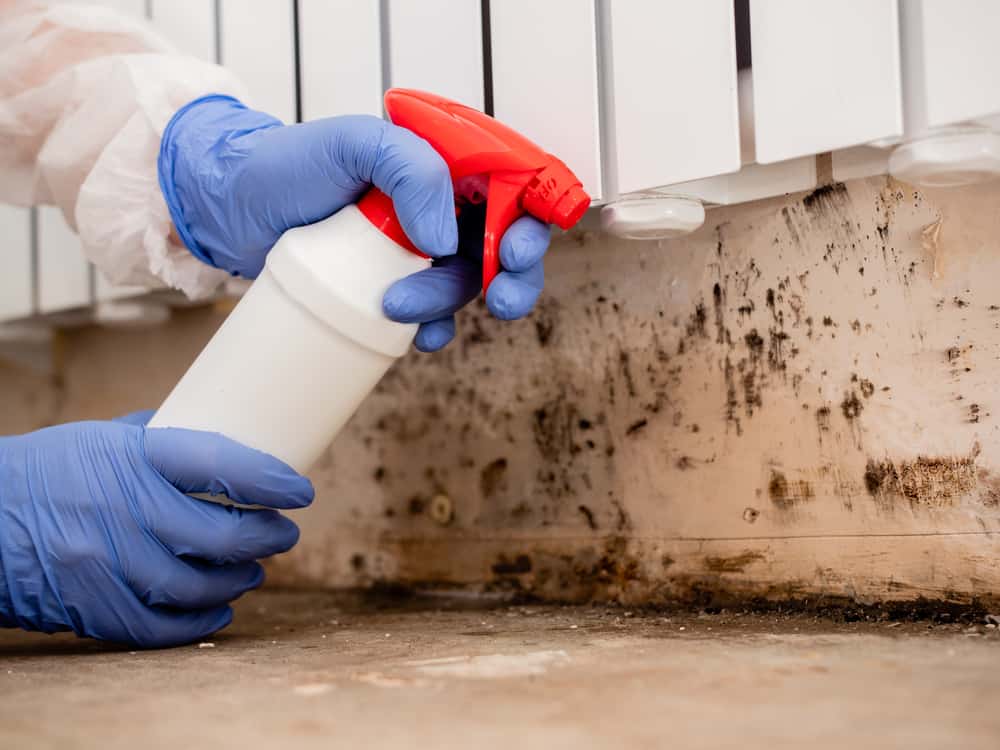
It starts with a 13-point mold inspection. Air samples, surface swabs, moisture readings, infrared imaging for hidden growth behind walls or above ceilings — all of it gets documented. Within two to three business days, you receive a written report with lab results that tell you exactly what’s present, how severe it is, and what needs to happen next. No verbal estimates, no vague assessments.
If remediation is needed, the scope of work is written out before anything starts — as required under New York State’s mold law. Every truck on our team arrives fully equipped with air movers, dehumidifiers, containment materials, and remediation equipment. There’s no waiting for a second crew to show up with the gear. Work begins when the team arrives. Contaminated materials are removed, affected surfaces are treated, and the space is cleared before the job is considered done.
What sets this process apart for older New Hyde Park homes is what happens after the mold is gone. If building materials had to come out — drywall, insulation, flooring — we handle the reconstruction too. You’re not left coordinating between a remediation company and a separate contractor. One call covers the full job, from the initial inspection through the finished rebuild.
Ready to get started?
Mold remediation in New Hyde Park isn’t a one-size situation. The problems showing up in these homes are specific — and the service has to match. Basement mold remediation is one of the most common calls we receive, driven by aging block foundations and drainage systems that weren’t built for today’s storm volumes. Attic mold remediation is another frequent issue in homes where pre-1970s ventilation systems have been trapping moisture against roof sheathing for years without any visible sign until a home inspection or a leaking roof brings it to light.
Crawl space mold remediation comes up often in homes with older additions — spaces that were built without vapor barriers and have been accumulating ground moisture for decades. Emergency mold remediation is available 24 hours a day, seven days a week, because mold doesn’t wait. If a pipe bursts at 11 p.m. or a nor’easter drives water into your basement over a weekend, we respond with the same certified team.
Every job — whether it’s black mold remediation in a finished basement or mold damage repair after a slow roof leak — includes the full documentation package: lab results, photographic records, and post-remediation clearance testing. That paperwork matters whether you’re filing an insurance claim, preparing for a home sale, or just want proof the problem is actually resolved. For New Hyde Park homeowners protecting a home worth close to $900,000, that documentation isn’t optional — it’s the whole point.
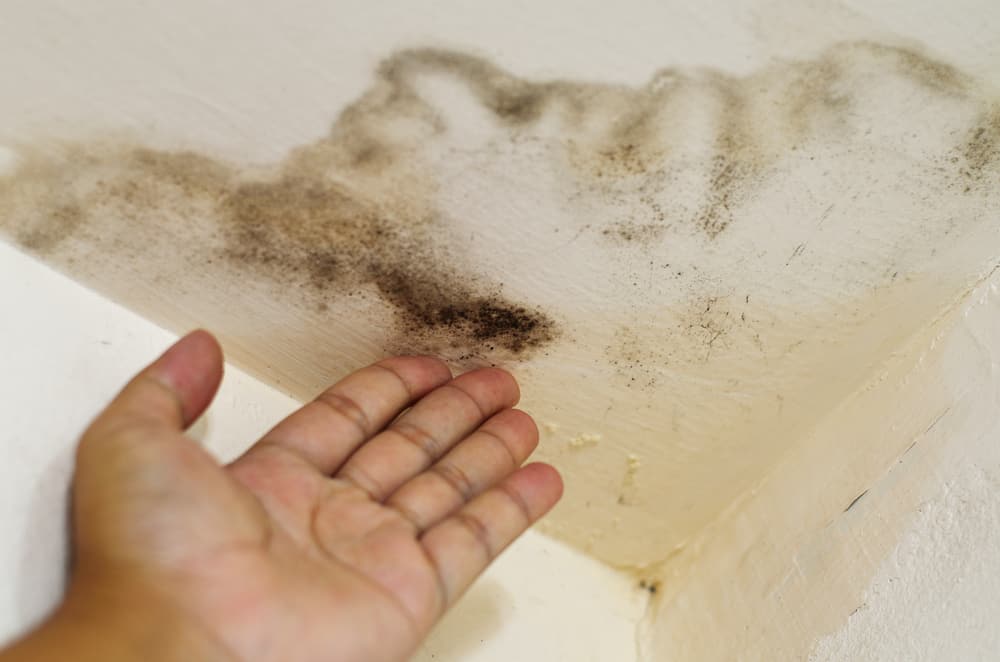
The short answer is age and moisture — and New Hyde Park has both in abundance. A significant portion of homes here were built before 1939, with the majority constructed through the 1960s. That means block foundations that have had decades to develop cracks, plumbing systems with corroded pipes that can leak slowly inside walls for years, and attic ventilation that was never designed to handle the humidity levels Long Island sees today.
Add in the coastal climate — summer humidity that regularly exceeds 60%, the threshold at which mold can begin growing within 48 hours — and you have conditions that put older New Hyde Park homes at real risk. Storm events make it worse. When heavy rain saturates the soil around a foundation or backs up aging storm drains, that water finds its way in. Most of the mold calls we get in western Nassau County trace back to one of these root causes: a slow leak, inadequate drainage, poor attic ventilation, or a crawl space with no vapor barrier. Identifying the source is the first step — because treating the mold without fixing what caused it just means it comes back.
Most residential mold remediation jobs in Nassau County fall somewhere between $1,500 and $6,000, depending on the size of the affected area, how accessible it is, and what materials need to be removed. Basement and attic jobs — which are the most common in New Hyde Park’s older housing stock — can run higher, sometimes up to $15,000, if the contamination is extensive or if significant structural materials need to come out and be rebuilt.
The honest answer is that cost varies too much to give a single number without knowing what you’re dealing with. What doesn’t vary is the value of getting a written scope of work before anything starts. Under New York State’s mold law, a licensed remediator is required to provide a written remediation plan before work begins — so if a company is quoting you a price without a documented plan, that’s a red flag. The inspection report and lab results you receive from us give you a clear picture of what’s present before you commit to anything. That transparency is what lets you make a real decision, not a pressured one.
It depends on the cause. Most homeowners insurance policies in New York will cover mold remediation if the mold resulted from a covered peril — a burst pipe, an appliance leak, or storm-related water intrusion, for example. What they typically won’t cover is mold that developed from long-term neglect, flooding from outside the home, or gradual seepage through a foundation wall.
In Nassau County, where many homes have aging plumbing and basements that are vulnerable to storm-driven water intrusion, the line between a covered event and an excluded one can get complicated. The documentation that comes with a professional remediation — lab results, moisture readings, photographic records, a written remediation plan — is exactly what insurance adjusters need to process a claim. Our inspection process is designed to produce that documentation. If you’re dealing with a water event that you believe should be covered, having a certified company involved from the start puts you in a much stronger position with your carrier.
Mold removal sounds straightforward — you remove the mold. The problem is that mold spores are airborne and exist naturally in every indoor environment. You can’t remove all of them, and any company claiming they can is overstating what’s possible. What remediation does is bring mold levels back to a normal, safe range, address the contaminated materials, and eliminate the conditions that allowed the growth to happen in the first place.
In practical terms, this means containment to prevent spores from spreading to other areas during the work, physical removal of contaminated materials where necessary, treatment of affected surfaces, and clearance testing to confirm the job is done. In a New Hyde Park home — where mold in a basement or attic can spread to adjacent living spaces through HVAC systems or air movement — proper containment during the process is especially important. Remediation done right leaves you with lab-confirmed results and a home that’s actually safe, not just one that looks clean.
In most cases, yes — but it depends on where the mold is, how extensive it is, and how sensitive your household is to mold exposure. For a contained basement or attic job with proper containment barriers in place, most families can remain in the home during the work. If the contamination is in a central living area, near an HVAC system that circulates air throughout the house, or if anyone in the home has respiratory conditions, asthma, or a compromised immune system, temporary relocation during active remediation is the safer call.
This is worth thinking about carefully in New Hyde Park, where many households include children and where a significant portion of residents are healthcare professionals who understand mold’s documented effects on respiratory health. We’ll walk you through the specific situation at your property before work begins — the scope of the job, the containment plan, and an honest assessment of whether staying in the home during remediation is reasonable for your household. There’s no universal answer, but there is always a clear one once the inspection is done.
New York State’s 2016 mold law created a licensing requirement that’s worth understanding before you hire anyone. Under Article 32 of New York State Labor Law, mold assessors and mold remediators must each hold a separate state license — and the same company cannot legally perform both the assessment and the remediation on the same property. This law exists specifically because the “free mold inspection” model — where one company inspects and then sells its own remediation — created obvious conflicts of interest and inflated findings.
You can verify a contractor’s license through the New York State Department of Labor. Ask any company you’re considering for their license number and look it up. Beyond the state license, IICRC certification is the industry’s professional standard for mold remediation training — and it’s worth asking whether the company holds it at the individual technician level or just the company level. We hold individual IICRC certification for every technician on our team, operate under separate assessment and remediation protocols as required by state law, and carry the documentation to back all of it up. In a market where scams are common enough that the state had to pass a law about it, knowing what to ask is the first line of protection.
Useful Links
Other Services we provide in New Hyde Park