
Hear from Our Customers
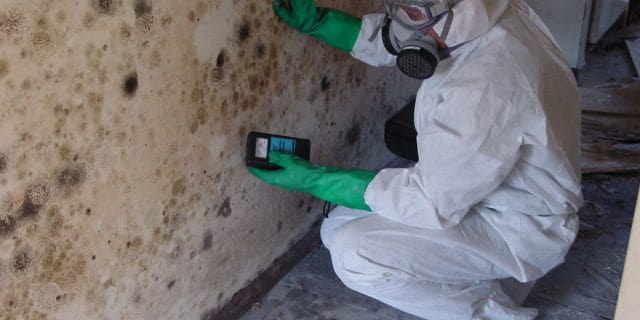
Mold doesn’t announce itself. It grows behind walls, under floors, and inside crawl spaces — quietly — while your home takes the hit. By the time you smell it or see it, the damage has usually been building for weeks. What changes when it’s properly remediated isn’t just the air quality. It’s the confidence that comes with knowing the source was identified and fixed, not just the surface wiped down.
In Sands Point, that matters more than most places. The Cow Neck Peninsula is surrounded by Manhasset Bay, Hempstead Harbor, and Long Island Sound on three sides. Summer humidity here regularly pushes past 70% — well above the threshold where mold accelerates. Homes with older foundations, stone basements, or crawl spaces sitting over coastal soil are especially exposed. When marine air has nowhere to escape, it finds its way into the structure of your home.
And when your home is worth what homes in Sands Point are worth — anywhere from several million to well above that — a mold problem isn’t just a health concern. It’s a real estate liability. Buyers walk away from mold histories. Appraisals drop. Getting ahead of it, with documentation and lab-confirmed clearance, protects the property the same way it protects the people inside it.
We’ve been working in Nassau County for nearly 30 years. That’s not a tagline — it’s the reason we understand what drives mold in Sands Point homes specifically: the peninsula’s water table, the older building stock dating back to the early 1900s, the nor’easters that push water into places it was never supposed to reach, and the seasonal groundwater rise that affects properties throughout the village.
Every technician on our team holds individual IICRC certification. Not the company — each person. That distinction matters when someone is walking through a historic estate off Cow Neck Road or assessing a waterfront property near Barkers Point. The person doing the work is trained, credentialed, and accountable.
When you call the Nassau County line — 516-698-1776 — you’re reaching a local team with local equipment on the truck, ready to move. Not a national dispatch center routing a crew from three counties away.
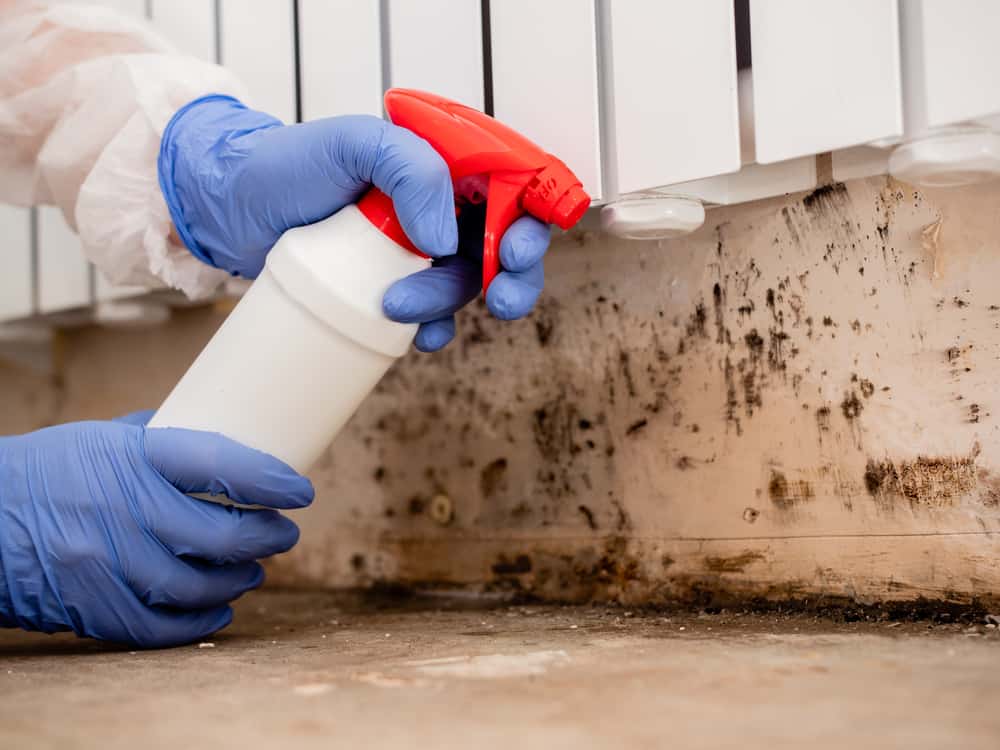
It starts with a 13-point mold inspection. Air samples, swab samples, moisture readings, infrared imaging to find what’s hidden — and a full written report with lab results delivered within 2 to 3 business days. This isn’t a visual walkthrough with a verbal opinion. It’s documented, measurable, and useful for insurance claims or real estate transactions if you need it.
Once the scope is confirmed, remediation begins with proper containment. HEPA filtration, air movers, and dehumidifiers are on the truck before anyone arrives — because in Sands Point, where a single state highway in and out of the peninsula means no time to make a second run for equipment, the job starts when we arrive. Affected materials are removed, treated, and disposed of properly. The moisture source — the actual reason the mold grew — gets addressed. That’s the part most companies skip, and it’s the reason mold comes back.
New York State’s 2016 Mold Law requires that the company performing the assessment and the company performing the remediation be separate entities. We operate in full compliance with this, and with Nassau County’s Environmental Hazard Remediation Program licensing requirements. After remediation, if structural repairs are needed — drywall, framing, millwork, finishes — we handle that too. One company, full scope, no handoff to a second contractor.
Ready to get started?
The inspection covers everything that matters: air quality testing, surface swab sampling, moisture mapping, infrared imaging for mold behind walls or under floors, and a written report with lab analysis. For Sands Point homeowners managing a real estate transaction or an insurance claim, that documentation is the difference between a smooth resolution and a drawn-out dispute. The report is in your hands within 2 to 3 business days — not weeks.
Remediation includes full containment of the affected area, HEPA air scrubbing, removal of compromised materials, treatment of structural surfaces, and post-remediation clearance testing to confirm the environment is clean. For homes with crawl spaces — common in Sands Point given the high water table and coastal soil — encapsulation and moisture control are part of the conversation, not an afterthought. Attic mold, which is a documented issue in older North Shore homes where ventilation hasn’t kept pace with modern insulation, is handled with the same documented process.
Where the remediation requires reconstruction — replacing framing, drywall, original millwork, or period finishes common in Sands Point’s older estate homes — we carry that through to completion. That end-to-end capability is rare. Most remediation companies stop when the mold is gone and leave you to find a contractor for the rebuild. Here, that’s already covered.
The peninsula’s geography is the short answer. Sands Point sits at the northern tip of the Cow Neck Peninsula, surrounded by Manhasset Bay, Hempstead Harbor, and Long Island Sound. That means marine air — consistently humid, especially from June through September — is a constant presence. When outdoor humidity holds above 70% for extended periods, it doesn’t stay outside. It moves into crawl spaces, basements, and attics, especially in homes that weren’t built with modern vapor barriers or moisture management systems.
Many homes in Sands Point date to the early 20th century. The village’s own building regulations acknowledge the peninsula’s high water table, requiring first floor elevations to be set above the highest recorded groundwater level. Older foundations — stone, brick, or early concrete block — are porous by nature. Add the seasonal groundwater rise in spring and the storm surge exposure that comes with Long Island Sound frontage, and the conditions for mold growth are present year-round. It’s not a question of whether moisture finds a way in. It’s a question of how quickly it’s caught and addressed.
Mold removal typically refers to cleaning visible mold off a surface — wiping it down, applying a treatment, and calling it done. Remediation goes further. It identifies where the mold is growing, including areas you can’t see, determines why it’s growing there, removes affected materials when necessary, treats the underlying structure, and addresses the moisture source that caused it in the first place. Without fixing the source, the mold comes back.
In a Sands Point home — where a leaking slate roof, a failing foundation membrane, or a crawl space sitting over saturated coastal soil can drive chronic moisture intrusion — surface-only treatment is a short-term answer to a long-term problem. Professional mold remediation also includes post-remediation clearance testing with lab confirmation, which is what insurance carriers and real estate attorneys actually require. A verbal “it’s clean” doesn’t hold up. A written report with lab results does.
It depends on the cause. Most standard homeowners insurance policies will cover mold remediation if the mold resulted from a covered water damage event — a burst pipe, a roof breach during a nor’easter, or water intrusion from a sudden and accidental event. What they typically won’t cover is mold that developed over time from ongoing moisture issues, like a slow foundation leak or chronic crawl space dampness that went unaddressed.
For Sands Point homeowners, this distinction matters. The peninsula’s exposure to coastal storms and seasonal flooding means that mold events are often tied to insurable water damage incidents. The key is documentation: moisture readings, photographs, lab results, and a clear written scope of work that connects the mold to the water event. That’s exactly what the inspection report we produce delivers. Having that documentation ready when you file the claim — rather than trying to reconstruct it afterward — is what makes the difference between a covered claim and a denied one.
It depends on the scope, but most residential remediation jobs run between one and five days for the active remediation phase. Smaller, contained areas — a section of basement wall, a portion of an attic — can be resolved more quickly. Larger jobs involving multiple rooms, structural components, or extensive crawl space work take longer. In a Sands Point estate home, where square footage often exceeds 5,000 square feet and the structure may include detached carriage houses, outbuildings, or complex attic systems, it’s not unusual for the full scope to take several days.
The inspection and lab results come first — typically within 2 to 3 business days of the assessment. That defines the scope before any work begins, so there are no surprises mid-project. If reconstruction is needed after remediation — which is common in older homes with original millwork, plaster walls, or period architectural details — that timeline extends, but it’s managed by the same team. You’re not starting over with a new contractor once the mold is gone.
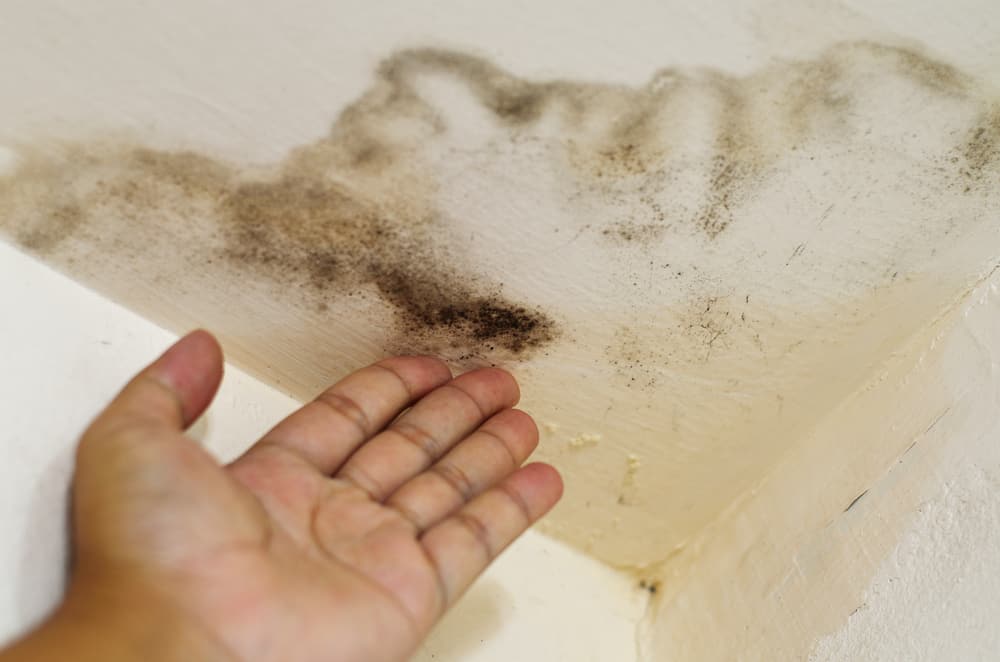
The most obvious sign is visible growth — dark spots, white or gray fuzzy patches on wood joists, or discoloration on concrete block walls. But visible mold is often the late indicator, not the first one. Earlier signs include a persistent musty smell that you notice when you walk in the door or descend to the lower level, increased allergy symptoms or respiratory irritation among people in the home, and humidity readings above 60% in enclosed spaces.
In Sands Point specifically, watch for efflorescence — the white powdery mineral deposits that form on basement walls when water is moving through the foundation. That’s a sign of active moisture intrusion, and where there’s sustained moisture in a coastal environment, mold follows. Crawl spaces over coastal soil are particularly vulnerable because the soil itself holds moisture year-round. If you haven’t had a crawl space inspected since purchasing the home, and the home predates 1980, that’s a reasonable place to start.
The remediation itself — containing, removing, and treating mold — does not typically require a building permit. However, if the remediation reveals structural damage that requires repair or replacement of framing, load-bearing components, or significant portions of the building envelope, that reconstruction work does require a permit through the Village of Sands Point’s Building Department at Village Hall on Tibbits Lane. The village has its own Planning Board, and any work on a historically significant or architecturally detailed property may involve additional review depending on the scope.
At the state level, New York’s 2016 Mold Law requires that all mold assessors and remediators working in New York hold active licenses through the NY State Department of Labor’s Mold Program. Nassau County adds its own licensing layer through the Environmental Hazard Remediation Program. We operate in compliance with all of these requirements. If reconstruction permits are needed following remediation, that process is handled as part of the same engagement — you’re not left to navigate the village’s permit process on your own after the mold work is done.
Useful Links
Other Services we provide in Sands Point