
Hear from Our Customers
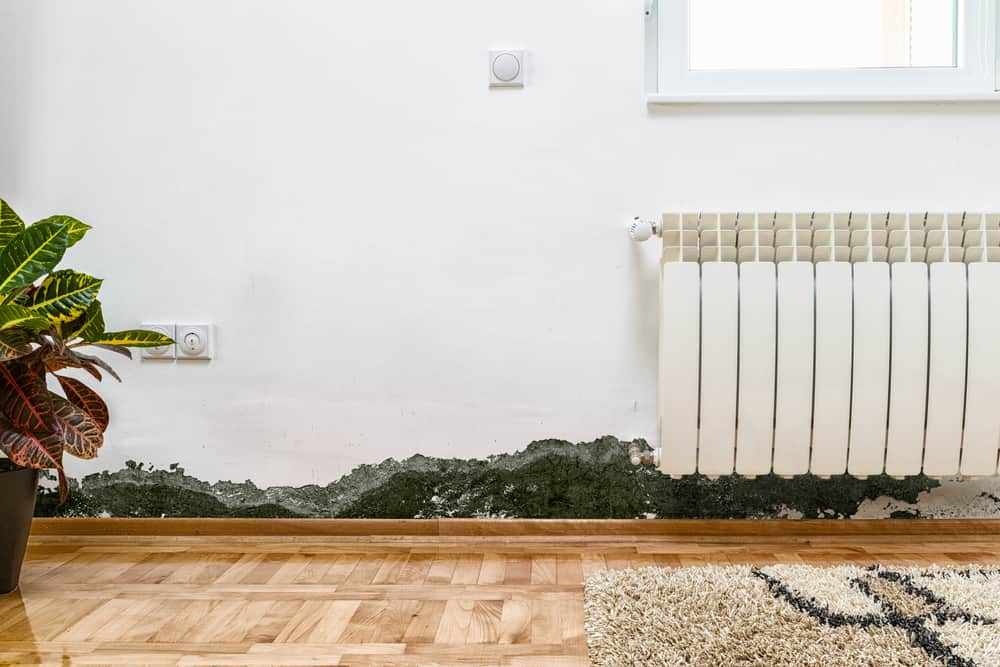
Most homes in Stewart Manor were built between 1925 and the late 1930s. That means concrete block basement walls that absorb groundwater, crawl spaces without modern vapor barriers, and plumbing systems that have been patched for decades. When moisture finds its way in — and in Nassau County’s coastal humidity, it always finds a way — mold doesn’t take long to follow. The EPA puts the window at 48 hours.
When mold remediation is done right, the difference is real and lasting. The musty smell that you’ve been writing off as “old house” disappears. The air in your basement or attic actually feels clean. If you’ve had family members dealing with unexplained respiratory issues or persistent allergies, removing the source matters more than any air purifier you can buy.
There’s also the financial side. A mold problem in a Stewart Manor home — where detached houses regularly exceed $1,000,000 — can cut resale value by 20% to 37%. Half of buyers walk away entirely once mold is disclosed. Getting it handled properly, with documentation that satisfies a real estate attorney or insurance adjuster, protects what is likely your most significant asset.
First Response Restoration and Cleaning Inc. has been working in Nassau County since the late 1990s. That kind of tenure means something in this industry, where companies launch, overpromise, and disappear. We’ve worked in homes throughout Stewart Manor and the Greater Garden City area — homes built in the same era as the ones lining the streets of Stewart Manor, with the same aging foundations, the same basement wall vulnerabilities, and the same crawl space challenges that come with pre-war construction.
What sets us apart isn’t a single credential — it’s the combination. Every individual technician we employ holds IICRC certification, not just the company. Every truck arrives fully equipped, so the job starts when we walk through your door. And when remediation requires tearing out and rebuilding materials, we handle that too — one company, start to finish, no handoff to a separate contractor.
If you’re dealing with mold in Stewart Manor, you deserve a company that’s been accountable to this county for three decades.
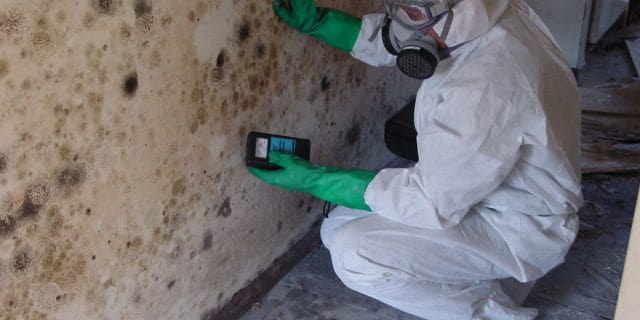
It starts with a 13-point mold inspection. That means air testing, surface swab sampling, infrared imaging to find moisture hiding behind walls, and a full comparison of indoor versus outdoor mold particle levels. Everything goes to a lab. You get a written report with results in 2 to 3 business days — the kind of documentation that holds up with a real estate attorney, an insurance adjuster, or a buyer’s lender.
From there, the remediation scope is built around what was actually found — not a standard package applied to every job. In Stewart Manor’s older housing stock, that often means addressing concrete block basement walls, unventilated crawl spaces, or moisture that’s been sitting behind drywall longer than anyone realized. New York State law requires that the company doing your mold assessment and the company doing your remediation be separate entities — a rule designed to protect you from inflated scopes. We structure our services in full compliance with that law and will walk you through exactly what it means before any work begins.
Once remediation is complete, clearance testing confirms the problem is resolved — not assumed. If the work required removing drywall, flooring, or framing, we handle reconstruction in-house. You’re not left coordinating between a remediation crew and a separate rebuild contractor.
Ready to get started?
Mold remediation in Stewart Manor, NY looks different than it does in a development built in the 1980s. The homes here were constructed during an era before modern vapor barriers, before sealed crawl spaces, and before the waterproofing standards that newer Nassau County communities take for granted. That context shapes every job we take on.
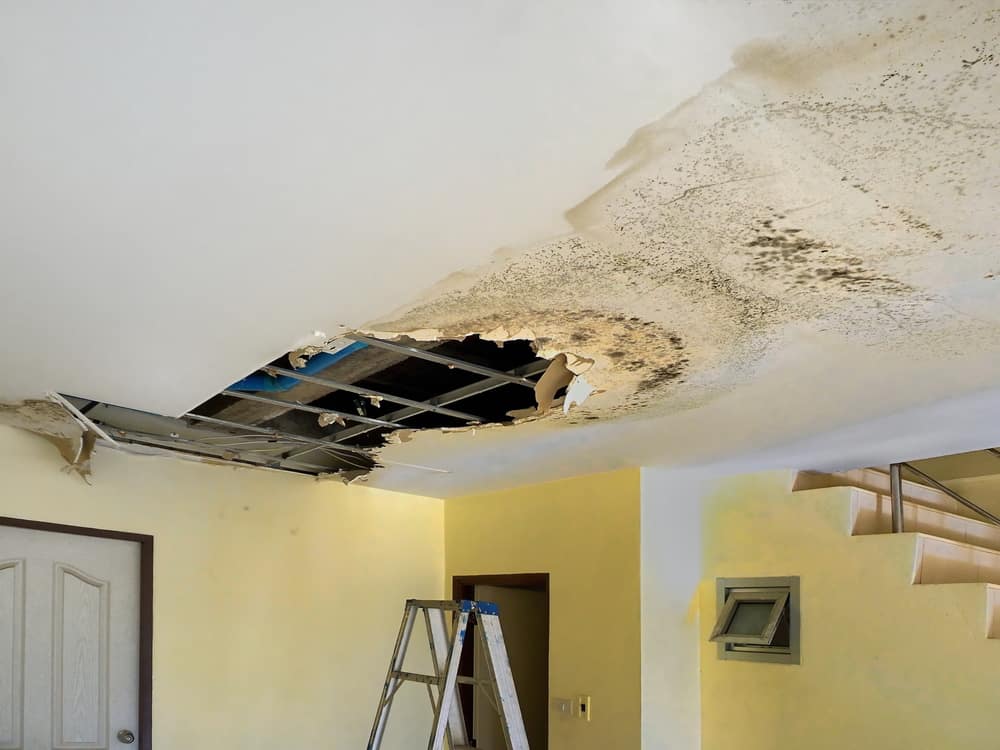
We offer emergency mold remediation 24 hours a day, 7 days a week — because a burst pipe on a Sunday night or a roof leak during a nor’easter doesn’t hold until Monday. Attic mold remediation, crawl space mold remediation, and basement mold remediation are among the most common service needs in Stewart Manor, given the age and construction style of the housing stock. Black mold remediation follows strict containment protocols to prevent cross-contamination during removal. And because Nassau County’s coastal humidity — sitting between Long Island Sound and the Atlantic — regularly pushes indoor moisture levels above the threshold where mold accelerates, we always identify and address the underlying moisture source. Treating mold without fixing the moisture is a temporary fix that becomes a repeat problem.
For homeowners navigating an insurance claim or a real estate transaction, the written lab report and clearance documentation we provide is the kind of paperwork that actually moves things forward. Mold cleanup and remediation, mold damage repair, and full mold restoration services are all handled under one roof — from the first inspection to the final coat of paint.
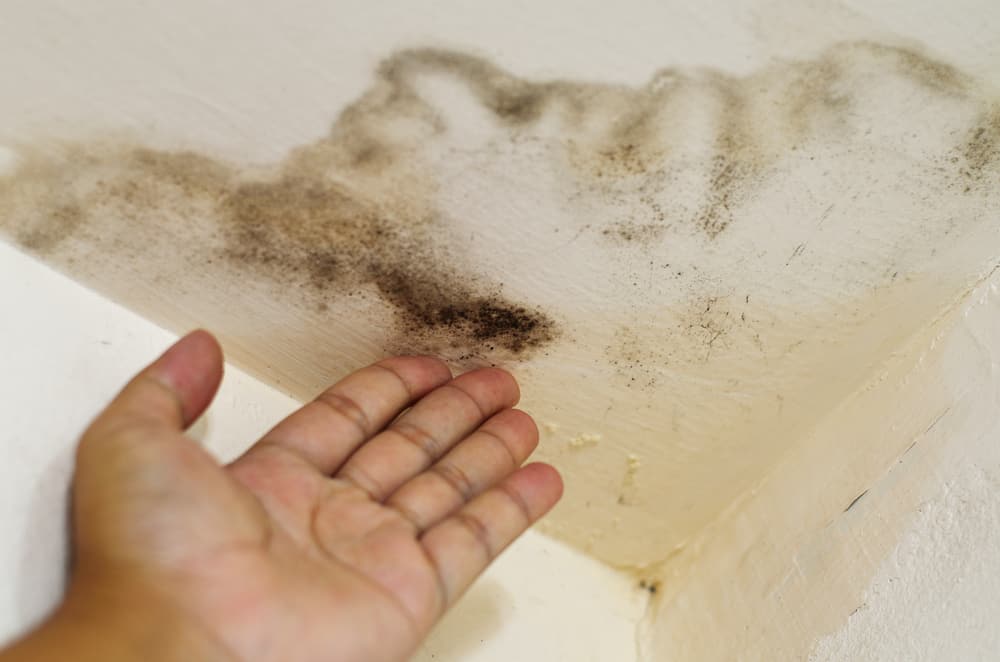
The most common sign is smell — a persistent mustiness in the basement, attic, or a specific room that doesn’t go away no matter how much you ventilate. In Stewart Manor’s pre-war homes, that smell is often coming from mold growing behind concrete block basement walls, inside crawl spaces, or above old insulation in the attic. It’s not always visible, and it’s not always dramatic.
The more reliable path is a professional inspection that uses infrared imaging and moisture meters to find water intrusion behind finished surfaces. Air testing compares the mold spore count inside your home to outdoor baseline levels — a meaningful spike indoors, even without visible growth, is a clear indicator. If your home is over 80 years old and you’ve never had the basement or crawl space inspected for moisture, that alone is reason enough to schedule one.
Mold removal is a term that gets used loosely — and often inaccurately. You can’t truly “remove” all mold from an environment because mold spores exist naturally in the air everywhere, indoors and out. What you can do is bring indoor mold levels back down to normal, safe concentrations and eliminate the active growth. That’s what remediation actually means.
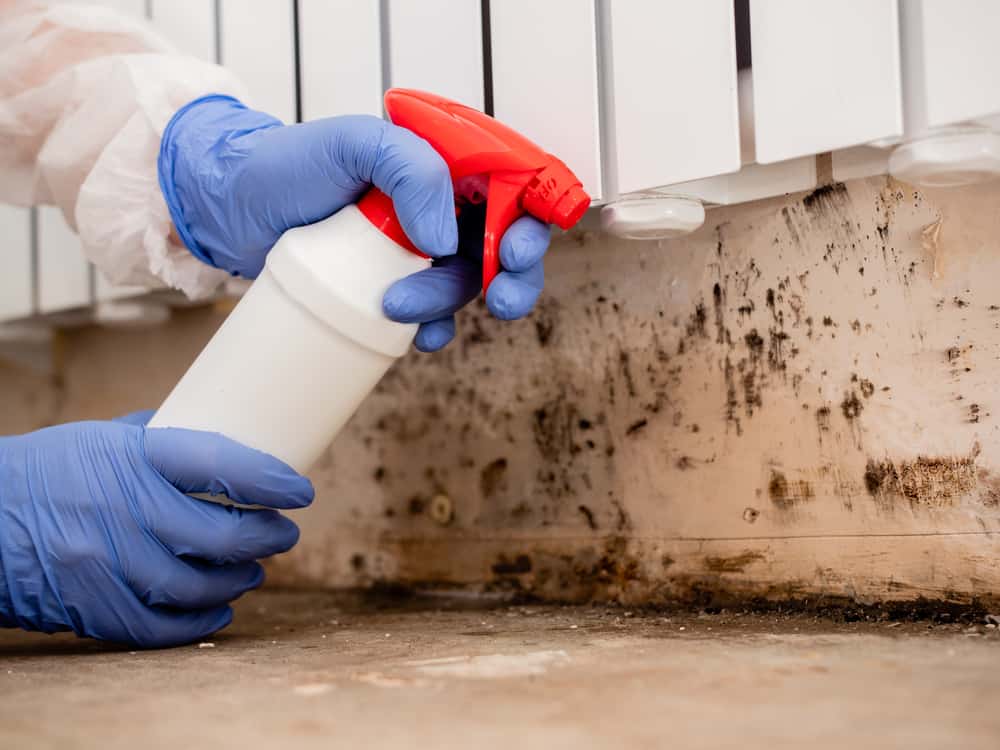
Professional mold remediation in Stewart Manor, NY involves containing the affected area to prevent spores from spreading, physically removing contaminated materials where necessary, applying antimicrobial treatment to affected surfaces, and then verifying through clearance testing that the levels are back within a safe range. It’s a process, not a product. Any company that tells you they can permanently “remove” all mold from a home is either misinformed or not being straight with you. What you want is a company that remediates properly and fixes the moisture source — because without that second step, the mold comes back.
It depends on the cause. Most homeowners insurance policies in New York will cover mold remediation if the mold resulted directly from a covered event — a burst pipe, a roof leak from a storm, or water damage from a sudden and accidental source. What they typically won’t cover is mold that developed slowly over time from a maintenance issue, like a slow plumbing leak or a crawl space that was never properly waterproofed.
In Stewart Manor, where homes are 85 to nearly 100 years old, the line between “sudden event” and “long-term maintenance issue” can get blurry — and insurance adjusters know it. That’s exactly why documentation matters. A written inspection report with lab results, moisture readings, and a clear timeline of when the damage occurred gives you the strongest possible foundation for a claim. We provide that documentation as a standard part of every inspection, and our team can help you understand what your policy likely covers before you commit to any scope of work.
The honest answer is that it varies — and in Stewart Manor’s pre-war housing stock, the variables are real. A contained area of surface mold in a basement, where the moisture source is straightforward, might be resolved in one to two days. A more involved situation — mold behind finished walls, inside a crawl space without a vapor barrier, or spread across multiple areas of an older home — can take several days to a week, especially if building materials need to be removed and replaced.
What adds time in older homes specifically is the inspection phase. Concrete block walls, aged insulation, and decades of patched-and-repaired construction create more places for moisture to hide. Rushing that phase to save a day on the front end usually costs more time on the back end when the problem recurs. The goal is to get it right the first time, and that means not cutting the inspection short just because the visible mold looks contained.
Yes — and this is one of the most underappreciated facts about crawl space mold. Air doesn’t stay in a crawl space. It moves upward through the home through a process called the stack effect, where warm air rising through the living space pulls air in from below. If your crawl space has active mold growth, those spores are cycling into your living areas continuously — even if you never go near the crawl space yourself.
This is particularly relevant in Stewart Manor, where many homes were built before modern crawl space ventilation and vapor barrier standards existed. The Village of Stewart Manor’s municipal code actually requires that enclosed crawl spaces be properly vented, but homes built in the 1920s and 1930s often predate those requirements and were never retrofitted. Crawl space mold remediation in Nassau County homes of this era involves more than treating the surface — it means assessing the ventilation, the vapor barrier situation, and the moisture source before any treatment is applied.
First, don’t panic — and don’t let anyone pressure you into a rushed decision. A mold finding during a home inspection in Stewart Manor is not automatically a deal-breaker, but it does require a proper response. The next step is a professional mold assessment by a licensed mold assessor — separate from whoever would do the remediation, as required by New York State’s 2016 mold law. That assessment gives you a documented picture of what’s actually there, how extensive it is, and what remediation would involve.
From there, you have real information to work with. If you’re the buyer, you can negotiate remediation as a condition of closing or request a price adjustment. If you’re the seller, getting the remediation done properly — with written clearance documentation — removes the obstacle and protects the sale. In a market where Stewart Manor homes regularly exceed $800,000, the cost of professional mold remediation is a fraction of what a failed transaction or a reduced sale price would cost. The written lab results and clearance report that come out of a properly documented remediation are exactly what real estate attorneys and lenders need to move forward with confidence.
Useful Links
Other Services we provide in Stewart Manor