
Hear from Our Customers
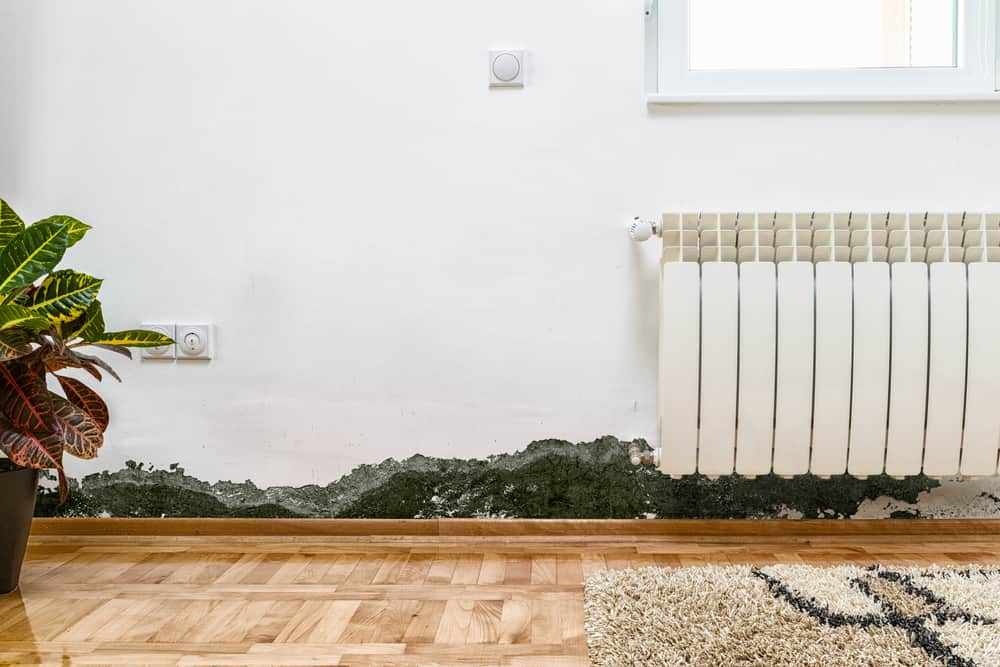
The smell goes away. The dark patches on your basement walls stop spreading. You stop wondering whether it’s safe for your kids to be down there. That’s what a real mold remediation looks like when it’s done correctly — not just surface treatment, but a full resolution of the moisture problem driving the growth in the first place.
Valley Stream sits in the low-lying southwestern corner of Nassau County, right at the edge of Queens, and the water table here is no joke. When heavy rain saturates the ground, that water has nowhere to go but up — through your foundation walls, through your slab, into the framing and insulation your basement walls are built around. Pre-war and post-war Cape Cods and colonials that make up the majority of Valley Stream’s housing stock weren’t built with modern moisture barriers. That combination — old construction, high groundwater, coastal humidity — is exactly why basement mold remediation in Valley Stream isn’t a rare emergency. It’s a recurring reality for a lot of homeowners here.
Getting it handled correctly means the mold doesn’t come back six months later. It means you have documentation if you ever sell. And it means the air your family breathes every day in that home is actually clean.
We’ve been operating in Nassau and Suffolk Counties since the late 1990s. That means we were here during Hurricane Sandy when the western South Shore — Valley Stream included — took the brunt of the storm surge from Jamaica Bay. We’ve seen what that kind of flooding does to homes in this area, and we know exactly what gets left behind when the water recedes and the walls stay wet.
We’re not a national franchise with a local address. We’re an independently owned Long Island company with nearly three decades of continuous history in this region, including Valley Stream. Every technician who walks into your home is individually IICRC certified — not just the company as a whole, but every person on the crew. We also operate in full compliance with both New York State’s Article 32 mold law and Nassau County’s EHRP licensing requirements, which are two layers of regulation that exist specifically to protect you from the kind of remediation fraud that became widespread in this area after Sandy.
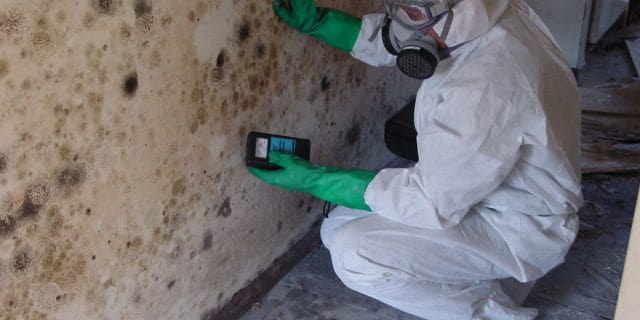
It starts with a 13-point mold inspection — not a quick visual walkthrough, but a thorough assessment that includes air testing, swab sampling, moisture level measurements, and infrared imaging to find what’s hiding behind your walls. You’ll have a written report with lab results back in 2 to 3 business days. That report matters — especially in Valley Stream’s active real estate market, where a documented mold assessment can protect a transaction or help you negotiate confidently.
Once the scope is confirmed, remediation begins with containment. Affected areas are sealed off to prevent spores from spreading to the rest of your home while work is underway. Then the actual remediation happens — removing contaminated materials, treating surfaces, and addressing the moisture source that caused the problem. In Valley Stream, that often means dealing with groundwater intrusion through an aging foundation, not just a one-time leak. If the moisture source isn’t resolved, the mold will return. That step doesn’t get skipped.
After remediation is complete, a separate licensed Mold Assessor — required under New York State’s Article 32 law — returns to conduct a clearance examination before any walls are rebuilt or containment is removed. That clearance report is your proof the job was done right. If reconstruction is needed, we handle that too, so you’re not left coordinating a second contractor to put your home back together.
Ready to get started?
Our inspection covers air quality testing, surface swab sampling, moisture readings throughout the affected area, infrared imaging for hidden mold detection, and a comparison of indoor versus outdoor mold particle levels. Everything is documented in a written report with lab analysis. That’s not a standard offering from most mold remediation companies in the Valley Stream area — most stop at a visual check and a quote.
Remediation includes full containment setup, removal of contaminated materials, antimicrobial treatment of affected surfaces, HEPA air filtration during the job, and post-remediation cleanup. For Valley Stream homes dealing with attic mold — which is common in the older Cape Cods throughout the village where ventilation is poor and summer humidity drives condensation — we adapt the process to the specific conditions of that space. Crawl space mold remediation follows a similar approach, with encapsulation available where ongoing moisture control is needed.
We offer emergency mold remediation 24 hours a day, 7 days a week. If you’ve had a basement flood, a burst pipe, or storm-related water intrusion and you’re watching the clock knowing mold can begin growing within 48 hours, you don’t have to wait until Monday morning. You can reach us directly at 516-698-1776 — a Nassau County line, not a national call center.
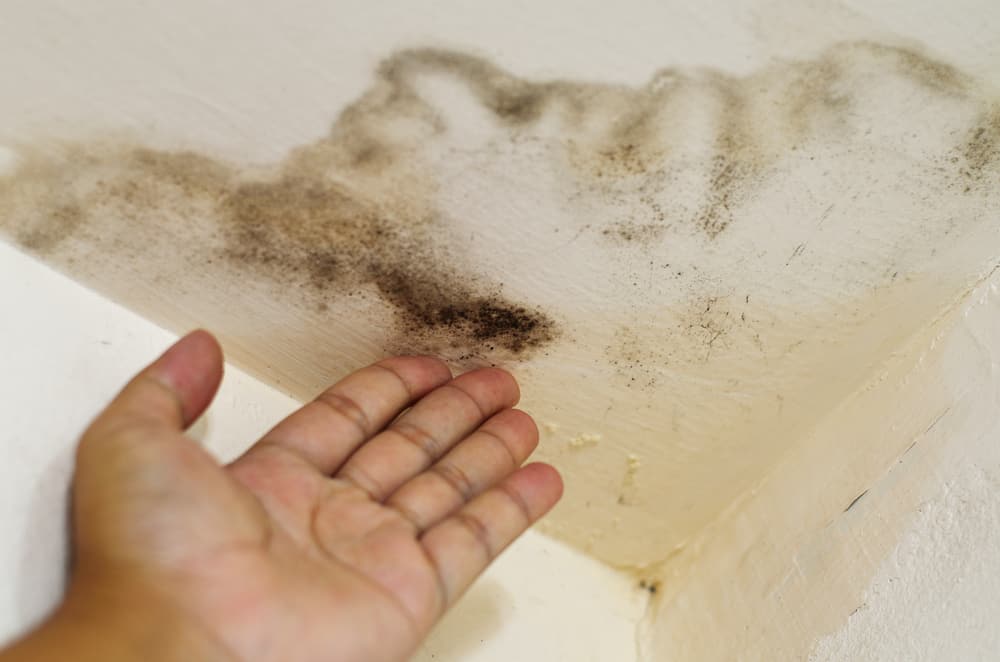
Mold remediation in Valley Stream typically runs between $1,500 and $6,000 for most residential jobs, though the final cost depends on how large the affected area is, where the mold is located, and how much material needs to be removed. A finished basement with mold behind drywall will cost more to remediate than an exposed crawl space, because the remediation process requires opening walls, removing contaminated material, and then rebuilding afterward.
One thing worth knowing in Valley Stream specifically: because the high water table here makes groundwater intrusion a common cause of basement mold, you may also need to address the moisture source itself — whether that’s foundation waterproofing, a sump pump upgrade, or drainage correction. That work is separate from remediation but directly affects whether the mold returns. A company that quotes you on the mold without looking at the moisture source is leaving you with half a solution. We’ll identify both during the inspection so you have a complete picture before any work begins.
It depends on what caused the mold. Most standard homeowners insurance policies in Nassau County will cover mold remediation if it’s a direct result of a covered water damage event — like a burst pipe or an appliance failure. What they typically won’t cover is mold that developed from long-term moisture issues, flooding from the ground up, or deferred maintenance. Since Valley Stream’s high water table makes groundwater intrusion a common scenario, that distinction matters.
The best thing you can do is document everything as soon as you discover the problem — photos, dates, any evidence of the water event that triggered it. Our written inspection report and lab results can also support your claim, because insurance adjusters need documentation, not just a verbal description. If there’s any chance your situation has a covered cause, it’s worth making the call to your carrier before you authorize work. We can walk you through what documentation you’ll need to give your claim the best chance.
Mold removal implies that mold can be completely eliminated from a home — which isn’t accurate. Mold spores are naturally present in the air everywhere, indoors and out. What mold remediation does is bring the indoor mold levels back to a normal, safe range and remove the active growth that’s colonizing your building materials. It also addresses the conditions that allowed the mold to grow in the first place.
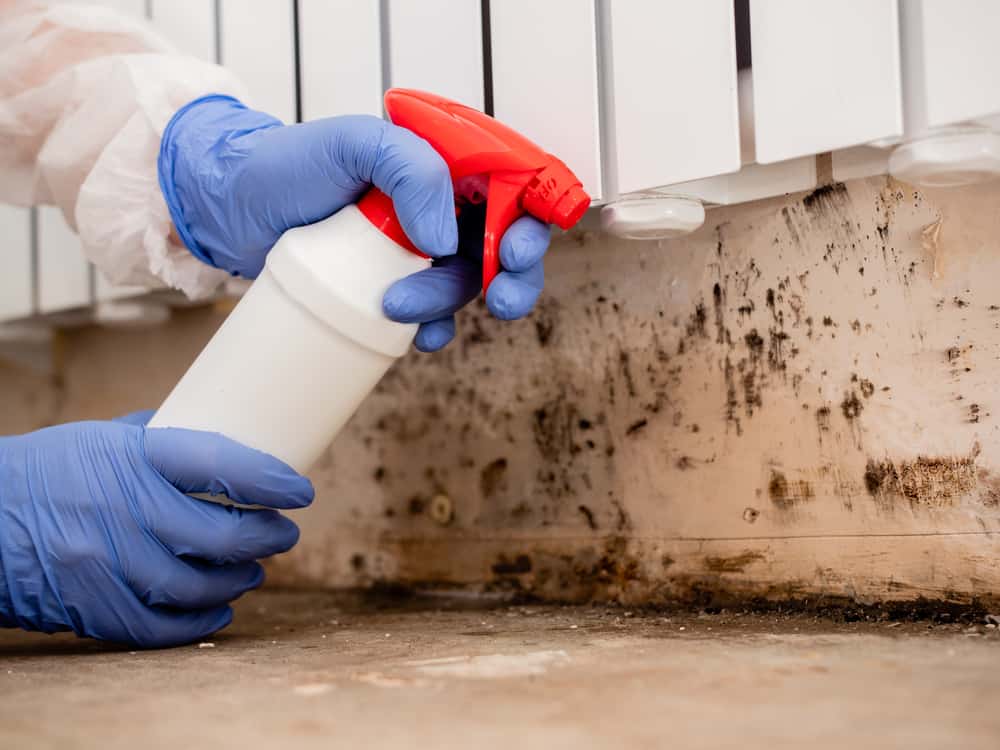
The distinction matters because companies that market “mold removal” are often selling a surface treatment — bleach on visible mold — without addressing what’s behind the wall, inside the insulation, or embedded in the framing. In Valley Stream’s older housing stock, where pre-war and post-war construction used materials that absorb and hold moisture differently than modern building products, surface treatment alone almost always fails. The mold comes back because the moisture was never resolved and the contaminated material was never properly removed. Remediation, done correctly, is a process — not a spray bottle.
Possibly, but the color of mold isn’t actually the most important factor. “Black mold” — technically Stachybotrys chartarum — does appear in Valley Stream homes, particularly in areas with chronic moisture exposure like basement walls, subfloor framing, and behind drywall in finished lower levels. But many other mold species can appear dark or black, and some genuinely dangerous molds are green, gray, or white. Color alone doesn’t tell you what you’re dealing with.
What matters more is where it is, how much of it there is, and what’s feeding it. In Valley Stream basements, the most common driver is prolonged moisture exposure from groundwater intrusion — the kind that happens slowly over time through an older foundation. That sustained wetness is exactly the environment Stachybotrys needs to establish itself. The only way to know what species you’re dealing with is lab testing, which is part of our standard 13-point inspection. Don’t assume it’s fine because it’s small, and don’t assume the worst until you have actual results.
Most residential mold remediation jobs in Valley Stream take between one and five days, depending on the size of the affected area and how deep the contamination goes. A straightforward basement wall situation with limited spread might be completed in a day or two. A job involving multiple areas, attic mold, or significant structural material removal will take longer — and if reconstruction is needed after remediation, that adds additional time.
One thing that’s specific to the New York State process: under Article 32, a licensed Mold Assessor must conduct a clearance examination after remediation is complete and before any containment is removed or walls are rebuilt. That step adds time, but it’s not optional — and it’s actually in your interest. The clearance report is documentation that the remediation passed an independent review. In a community like Valley Stream where home values are close to $620,000, that paperwork has real value if you ever sell or if an insurance question comes up later.
Yes, and it’s a more common concern in Valley Stream than in lower-density communities. The village has a significant number of attached townhouses, duplexes, and multi-unit structures — and mold doesn’t respect property lines. Spores travel through shared wall cavities, floor assemblies, and HVAC systems. If one unit has an active mold problem driven by a moisture source in a shared structural element, the adjacent unit is at risk.
This creates a situation that goes beyond a simple remediation job — it involves coordination between units, potentially between landlords and tenants, and sometimes between insurance carriers. We have experience navigating these situations in Nassau County’s dense residential communities. The process starts the same way: a thorough inspection to understand exactly where the mold is, how far it’s spread, and what’s feeding it. From there, the remediation scope is built around the actual conditions — not a one-size answer. If you’re in an attached home in Valley Stream and you’re smelling something your neighbor isn’t addressing, that’s worth a call.
Useful Links
Other Services we provide in Valley Stream