
Hear from Our Customers
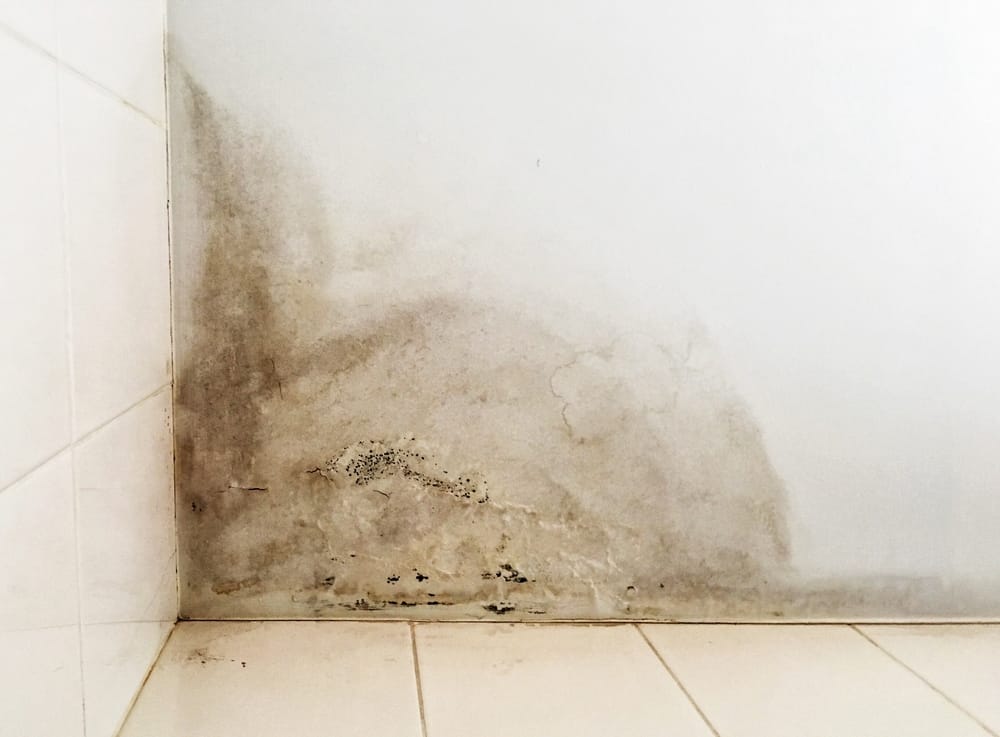
There’s a difference between mold that’s been painted over and mold that’s been properly removed, tested, and cleared by an independent lab. One of those protects your family. The other protects nothing — and will cost you far more when it comes back, or when a buyer’s attorney finds it during due diligence on a $1.7 million sale.
East Hills homes — especially the expanded capes and ranch homes built through the 1950s and 1970s in neighborhoods like Norgate and Canterbury Woods — carry real moisture risk. Older drainage systems, original vapor barriers, and attic spaces that weren’t designed for today’s energy-efficient living all create conditions where mold can grow silently for years before you see or smell anything. The rolling terrain throughout the village also means groundwater pressure against foundation walls varies significantly from one property to the next.
Once we handle mold removal in East Hills correctly, the difference shows up in your air quality, your insurance documentation, your clearance report, and your peace of mind. You’re not just removing a stain. You’re protecting the asset, protecting the people inside it, and making sure you have the paperwork to prove it — whether that’s for an insurance claim, a real estate transaction, or simply your own records.
First Response Restoration and Cleaning Inc. has been serving Nassau and Suffolk County homeowners for over three decades. That’s not a number we throw around lightly — it means we’ve worked through every storm cycle, every housing renovation wave, and every type of Long Island building stock that exists, including the post-war homes that make up a significant portion of East Hills’s residential character.
Every technician who enters your home holds IICRC certification — not just the owner, not just senior staff, but every single person on the crew. We also carry full NYS Department of Labor mold licensing, which is required by law for any company performing mold assessment or remediation in New York. That’s the baseline. What goes beyond it is 31 years of knowing exactly what East Hills homes look like from the inside, and what it actually takes to get the job done right.
We’re available 24/7 and reachable directly at 516-541-0500 for Nassau County homeowners.
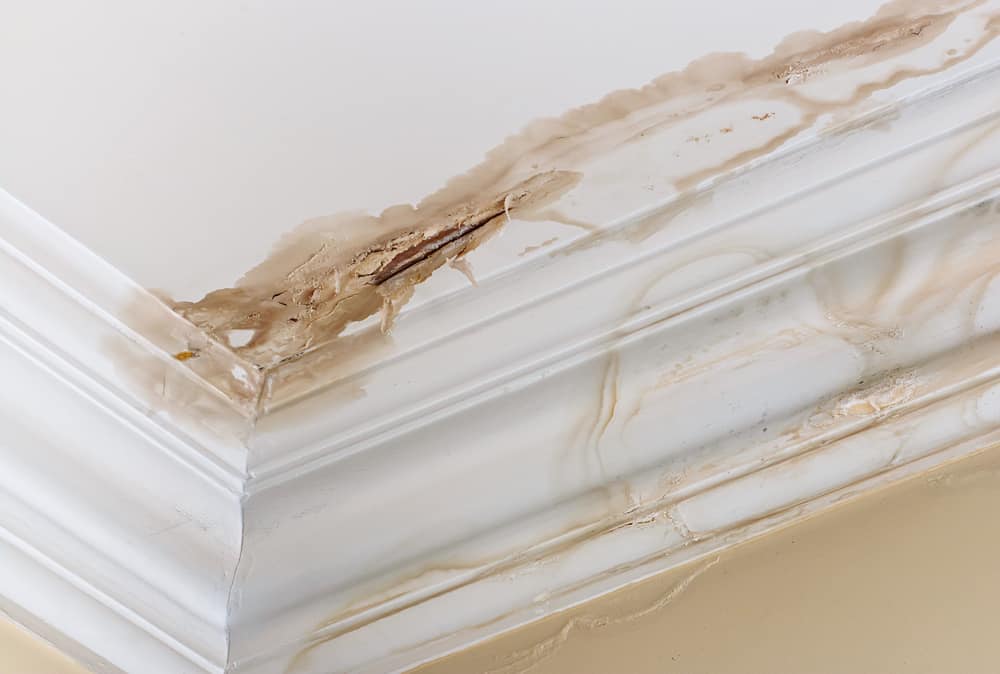
It starts with a 5-point inspection. That means air sampling, surface swab sampling, moisture level measurement, identification of water intrusion points, and boroscopic examination of wall cavities. That last one matters more than most people realize — especially in the older cape cods and colonials throughout East Hills, where mold can be actively growing inside a wall cavity with zero visible signs on the surface. We look inside before we assume anything.
Once the inspection is complete, samples go to an independent laboratory with chain-of-custody documentation. You’ll have a full lab report within 2 to 3 business days. From there, if remediation is needed, we handle the full scope: containment, removal, treatment, and drying. Because we also handle water damage restoration, we address the moisture source at the same time — not as an afterthought. That’s important in East Hills, where the combination of aging infrastructure and the village’s rolling terrain can create drainage issues that won’t stop producing mold until the underlying water problem is fixed.
After remediation, we conduct post-remediation clearance testing through the same independent lab. You receive documented proof that the air and surfaces meet clearance standards. That report is what you keep on file — for your insurer, for a future buyer, or simply for yourself.
Ready to get started?
Mold removal in East Hills, NY isn’t a single service — it’s a chain of steps that only works if every link holds. Inspection, lab testing, remediation, moisture correction, and post-clearance verification all need to happen in the right order, by licensed professionals, with documentation at every stage. That’s what we deliver, whether the mold is in a finished basement in Norgate, an attic above a cape cod in Fairfield, or behind a wall uncovered during a gut renovation in Country Estates.
One thing East Hills homeowners should know: New York State law prohibits the same licensed company from performing both the mold assessment and the mold remediation on the same property. It’s a consumer protection law designed to prevent conflicts of interest, and it means any contractor offering to test and remediate under one roof — on the same job — is operating outside state law. We navigate this correctly and explain it clearly so you’re never in a legally compromised position.
We also offer up to $500 toward your insurance deductible for qualifying water, fire, or mold-related claims — a program no other mold removal company currently serving East Hills provides. Beyond the dollar amount, it signals something more important: we’re confident enough in the outcome to put something on the line alongside you. Black mold removal, toxic mold cleanup, attic mold removal, basement mold removal, crawl space mold removal, and bathroom mold removal are all within scope. If mold is in your East Hills home, we handle it — completely.
East Hills is an incorporated village with its own Code Enforcement Officer and building permit process under Chapter 223 of the Village Code. Whether mold remediation requires a permit depends on the scope of work. If remediation involves replacing plumbing fixtures, opening walls structurally, or making changes that fall under the village’s construction code, a permit will be required — and unpermitted work in East Hills is subject to fines and legalization requirements.
Beyond village-level permits, any company performing mold assessment or remediation in New York State must hold a valid NYS Department of Labor mold license under Article 32 of the Labor Law. This applies to one- and two-family dwellings. Before you hire anyone for mold removal in East Hills, ask for their state license number and verify it. We carry full NYS mold licensing and operate in full compliance with both state law and local village code — so there are no surprises after the job is done.
Mold removal cost varies significantly depending on the size of the affected area, the type of mold, and how far it has spread into building materials. In East Hills, where homes are larger than average and often have finished basements, attic spaces, and crawl areas that require specialized access, costs at the higher end of the typical range are not uncommon for more involved remediation work.
What affects your specific cost most is how early the problem is caught. A small area of mold found during a routine inspection is a fraction of the cost of mold that has spread through a wall cavity or into structural materials over several years. That’s why the 5-point inspection matters — it finds the problem at its actual size, not the size it appears to be on the surface. We also work with your insurance carrier and offer up to $500 toward your deductible for qualifying claims, which helps offset out-of-pocket costs on larger jobs.
Attic mold is one of the most common and least visible mold problems in East Hills homes, and it comes down to the way these homes were built. The ranch homes and cape cods constructed throughout the 1950s, 1960s, and 1970s — which make up a large share of East Hills’s housing stock in areas like Norgate and Strathmore — were designed with attic ventilation standards from a different era. When warm, humid air from the living space rises into an attic with inadequate airflow, it hits the cold roof decking and creates condensation. That condensation, repeated over time, feeds mold growth on the underside of the roof sheathing.
The problem is that you often can’t see it from below. Mold can cover significant portions of roof decking while leaving no visible stains on your ceiling. A boroscopic inspection — where a camera is inserted into the attic cavity — is the only reliable way to assess what’s actually up there without tearing anything apart. If your East Hills home was built before 1980 and hasn’t had an attic mold inspection, it’s worth knowing what’s there before it becomes a much larger remediation project.
No — and this is something every homeowner in East Hills should understand before hiring anyone. New York State law explicitly prohibits the same licensed company from performing both the mold assessment (testing) and the mold remediation on the same property. This isn’t a technicality. It’s a consumer protection provision built into Article 32 of the Labor Law, and it exists specifically to prevent a company from having a financial incentive to find mold and then profit from removing it.
If a contractor in East Hills offers to handle your mold inspection and your mold removal under the same contract, on the same property, they are not in compliance with state law. That creates liability for you as the homeowner — especially if a future buyer, insurer, or attorney reviews the documentation. The correct process involves a licensed assessor conducting the inspection and a separately licensed remediator handling the removal. We operate within this framework and explain it clearly at the start of every engagement, so you understand exactly who is doing what and why.
Mold can begin growing within 24 to 48 hours of water exposure — and Long Island’s storm patterns make this a very real timeline for East Hills homeowners. Nor’easters hitting the North Shore in fall and winter, spring snowmelt overwhelming sump pumps, and summer storms driving water through aging foundation walls are all common triggers for basement flooding in this village. Once water sits in a finished basement — especially one with drywall, carpet, or wood framing — the clock starts immediately.
The critical window is that first 24 to 48 hours. Water extraction and drying within that window can prevent mold from establishing at all. After 48 hours, you’re typically looking at active mold growth that requires professional remediation, not just drying. We operate 24/7 for exactly this reason — because waiting until Monday morning after a Sunday night storm means the mold is already growing by the time anyone shows up. If your East Hills basement has taken on water, call us at 516-541-0500 before you start cleaning up on your own.
At a median sale price of $1,715,000 — up 13% year over year as of early 2025 — East Hills is one of Nassau County’s highest-value residential markets. At that price point, mold is not a minor disclosure issue. Studies consistently show that known mold problems cause home values to drop between 20% and 37%, and roughly half of buyers walk away entirely from a home with a documented mold history. For an East Hills home priced at $1.7 million, that’s a potential loss of $340,000 to $630,000 in negotiating position alone.
What protects you in a transaction is documentation — not just the absence of visible mold, but a lab-confirmed clearance report showing that the air and surfaces in the home meet post-remediation standards. Buyers’ attorneys in this price range routinely request this kind of documentation, and without it, you’re negotiating from a weaker position. If you’re preparing to list a home in East Hills, a pre-listing mold inspection with full lab reporting gives you something concrete to put in front of a buyer — and removes one of the most common reasons high-value transactions fall apart.
Useful Links
Other Services we provide in East Hills