
Hear from Our Customers
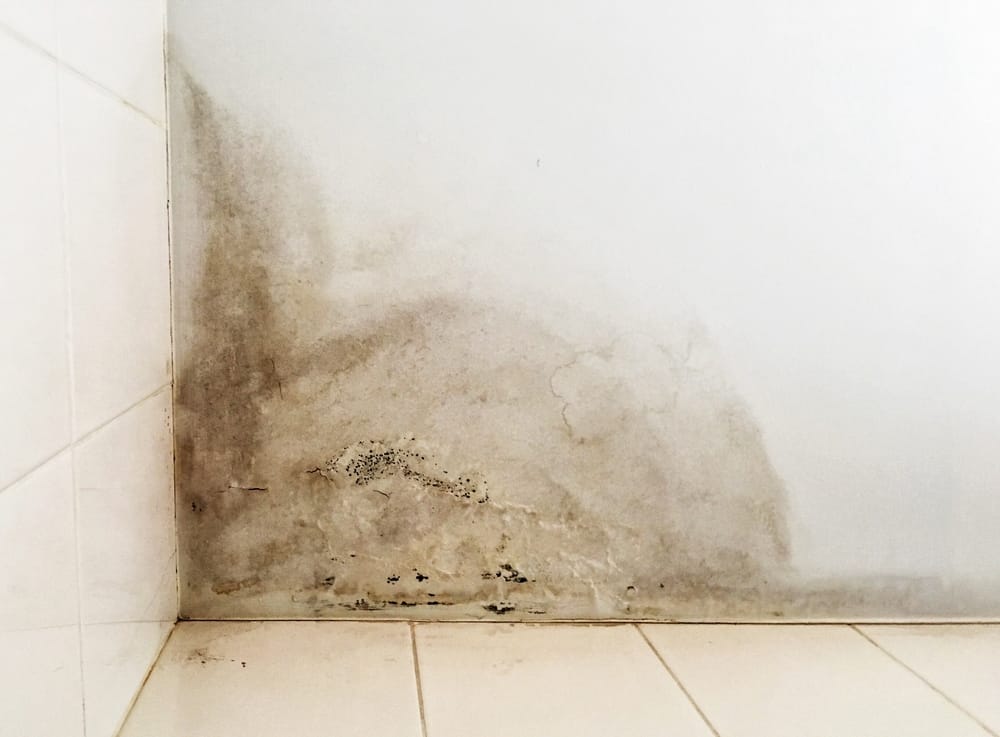
You stop second-guessing the air in your own home. That musty smell in the finished basement isn’t something you learn to live with — it’s a sign that something is actively growing, and it doesn’t stop on its own. When mold is properly removed and cleared, you get your home back. Not just cleaner, but genuinely safer.
For East Massapequa homeowners specifically, that matters more than most people realize. Nearly 96% of homes here were built during the Baby Boom — the 1940s, 50s, and 60s — which means most of the housing stock is now 60 to 80 years old. Original basement waterproofing from that era has long since degraded. Vapor barriers, if they were ever installed at all, are compromised. Mold in these homes isn’t just surface-level; it’s often inside wall cavities, behind finished drywall, and under subfloor materials that have been holding moisture for years.
Add in the canal neighborhoods along the water, where homes sit at or near water level and groundwater rises every time a Nor’easter rolls through, and you have a community where mold isn’t a hypothetical risk — it’s a recurring structural reality. Proper remediation means identifying where the water is coming from, not just cleaning up what it left behind. That’s the difference between a job that holds and one that sends you back to square one in six months.
We’re based in West Babylon — right across the Nassau-Suffolk county line from East Massapequa. We’re not a national franchise routing calls to whoever’s available. We’re a South Shore Long Island company that has been working in these neighborhoods, in these types of homes, through these exact weather patterns, for over three decades.
Every technician who walks into your home is IICRC-certified. Not just the owner, not just the senior staff — every single person on the job. We’re also fully licensed by New York State for both mold inspection and mold remediation, which matters in a state that has specific consumer protection laws around how this work gets done.
We’ve handled mold in postwar ranches off Sunrise Highway, in canal-adjacent homes near the water, and in finished basements that looked completely fine until someone pulled back the drywall. Thirty-one years of Long Island restoration work means very little surprises us — and that experience is what gets your problem solved correctly the first time.
It starts with a thorough inspection — and we mean thorough. Our 5-point protocol includes boroscopic wall cavity examination, air sampling, surface swab sampling, moisture level measurement, and water intrusion point identification. In East Massapequa’s aging postwar homes, mold rarely stays where you can see it. We look inside the walls before we assume we know what we’re dealing with.
Once we’ve identified the scope, remediation begins with containment. We isolate the affected area to prevent spores from spreading to other parts of your home during the removal process. From there, we remove contaminated materials, treat affected surfaces, and address the moisture source that created the problem in the first place — because mold without a water fix is just a temporary solution.
Here’s something worth knowing about New York State law: the same licensed company cannot legally perform both the mold testing and the mold remediation on the same property. That rule exists to protect you from conflicts of interest, and we follow it. After remediation is complete, post-clearance testing is conducted using independent lab analysis. You receive documented results — air samples, surface swabs, and a chain-of-custody report — within 2 to 3 business days. That’s not a verbal assurance. It’s proof.
Ready to get started?
Mold removal in East Massapequa, NY covers more ground than most homeowners expect going in. Whether it’s basement mold removal in a 1950s ranch where the sump pump has been working overtime every spring, attic mold removal in a home with blocked soffit vents and no ridge ventilation, crawl space mold removal in a canal-adjacent property where groundwater never fully recedes, or bathroom mold removal from years of inadequate ventilation — the scope of the job depends on what the inspection actually finds, not what someone assumes from the outside.
Every job includes the full process: inspection, containment, removal, treatment, drying, and post-remediation clearance testing with lab-confirmed results. We also handle the water damage restoration side of the equation, which is where most mold problems in this area originate. Covering the mold without addressing the water source is like patching a roof without fixing the leak.
For homeowners dealing with insurance claims — which is common in this market given the storm exposure and home values along the South Shore — we document everything in a way that holds up with adjusters. Photographs, chain-of-custody forms, lab reports. And if your deductible is the thing holding you back, ask about our program that puts up to $500 toward your out-of-pocket cost on qualifying jobs. No other mold removal company in the Massapequa area offers that.
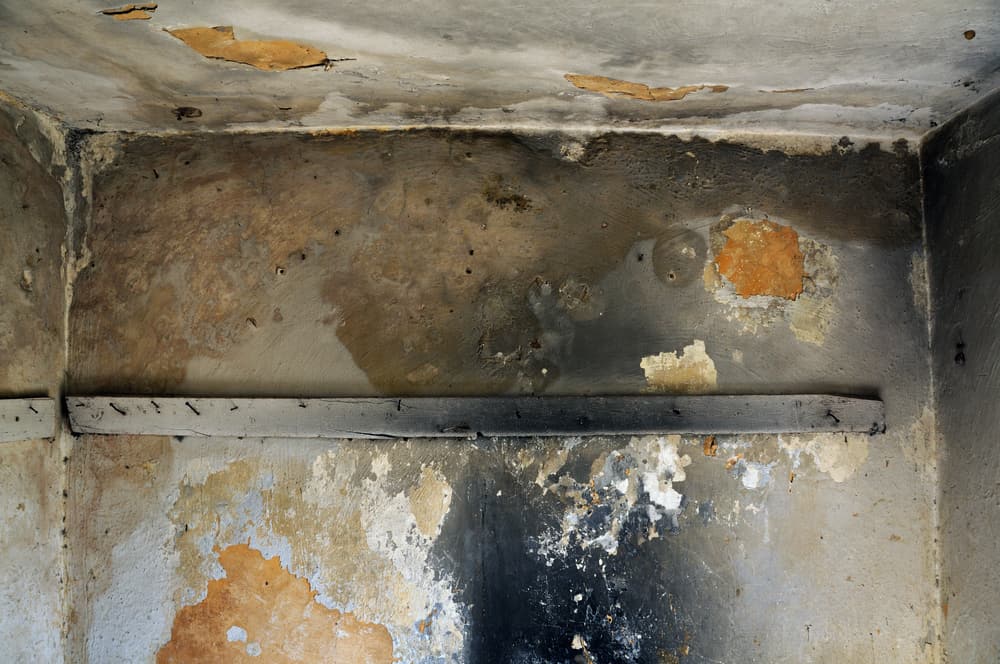
The most common signs are a persistent musty smell, visible discoloration on walls or ceilings, and unexplained allergy or respiratory symptoms that seem worse indoors than outside. But in East Massapequa specifically, the more telling indicator is often the home’s age and history. If your house was built in the 1950s or 60s — which describes the overwhelming majority of homes in this community — and you’ve had any basement water events, a slow plumbing leak, or storm-related moisture intrusion, there’s a real chance mold has developed in spaces you can’t see with the naked eye.
That’s why a professional inspection matters more than a visual check. Our boroscopic wall cavity examination allows us to look inside wall spaces without tearing them open. Air sampling tells us what’s floating in your home’s air supply. Surface swabs confirm what’s present on materials. You don’t have to guess, and you don’t have to tear your house apart to find out. A proper inspection gives you a clear answer — and a documented one.
Mold removal cost in East Massapequa, NY varies based on the size of the affected area, how many surfaces are involved, and whether structural materials like drywall or subfloor need to be removed and replaced. Generally speaking, professional mold remediation runs in the range of $10 to $25 per square foot, with attic, crawl space, and basement work often running toward the higher end of that range due to access and the extent of material involvement. For a typical postwar home in this area, total remediation costs frequently fall somewhere between $2,000 and $6,000 or more, depending on scope.
The most important thing to understand is that the cheapest quote is rarely the right choice when your home is worth $600,000 or more and your family’s health is involved. A job that isn’t done completely — one that misses hidden mold or skips post-clearance testing — will cost you again down the road. We also offer up to $500 toward your insurance deductible on qualifying jobs, which can meaningfully reduce your out-of-pocket exposure on a job of this size.
It depends on the cause. Most homeowners insurance policies in New York will cover mold remediation if the mold resulted from a covered peril — a sudden pipe burst, storm-related water intrusion, or appliance failure, for example. What they typically won’t cover is mold that developed gradually over time due to ongoing moisture issues, deferred maintenance, or flooding from groundwater. For East Massapequa homeowners with canal-adjacent properties or basements that take on water every spring, this distinction matters.
The best way to protect your claim is through thorough documentation from the start. That means photographs of the damage, air and surface sampling results, and a chain-of-custody report that establishes when and how the mold was discovered. We prepare that documentation as a standard part of every job — not as an add-on — because we’ve worked through enough insurance claims on Long Island’s South Shore to know what adjusters actually need to process them. If you’re unsure whether your situation qualifies, call us first. We’ll give you a straight answer.
In New York State, mold inspection and mold remediation are legally separate services — and they cannot be performed by the same licensed company on the same property. This is a consumer protection law designed to prevent a conflict of interest: if the company doing the testing is also the one getting paid to remove it, they have a financial incentive to find mold whether it’s really there or not. It’s a straightforward rule, but not every contractor operating in Nassau County follows it or discloses it clearly.
Mold inspection involves assessing the property, collecting air and surface samples, and sending those samples to an independent laboratory for analysis. Mold remediation is the actual removal and treatment process that follows. Both require separate licensing from the New York State Department of Labor. When you work with a fully licensed company that understands and follows this law, you’re protected. When you work with one that doesn’t, you’re exposed — legally and financially. We’ll walk you through exactly how the process works before anything starts.
Mold can begin developing within 24 to 48 hours of water exposure under the right conditions — and in East Massapequa, those conditions are frequently met. The South Shore’s coastal humidity keeps baseline moisture levels elevated year-round. When you add a basement flooding event — from a Nor’easter, a sump pump failure, a rising water table in spring, or storm surge reaching canal-adjacent properties — the combination of standing water and ambient humidity creates a near-ideal environment for mold to take hold quickly.
The issue for many homeowners is that the visible water gets cleaned up, and the problem seems resolved. But if the structural materials — drywall, subfloor, framing, insulation — weren’t dried thoroughly and quickly, mold is already growing inside them. By the time you smell it or see it, it’s been there for a while. That’s why emergency response timing matters. The faster the water is extracted and the space is dried and dehumidified, the smaller the mold remediation job becomes. We operate 24/7 specifically because in this area, water events don’t wait for business hours.
Yes — and the age of the housing stock here makes it more common than most homeowners expect. With roughly 96% of East Massapequa’s homes built between 1945 and 1964, the structural materials in most of these houses have been cycling through moisture exposure for six to eight decades. Original waterproofing has failed. Vapor barriers are degraded or nonexistent. Ventilation systems weren’t designed with modern indoor air quality standards in mind. These aren’t flaws in any one home — they’re the natural result of time, and they create consistent conditions for mold growth in basements, attics, and wall cavities.
The types of mold most commonly found in Long Island homes include Cladosporium, Penicillium, Aspergillus, and Stachybotrys — the last of which is what most people refer to when they say black mold. Stachybotrys is particularly associated with chronic moisture and cellulose-rich materials like drywall and wood framing, which are exactly the materials found in postwar construction. Any mold growth warrants professional assessment, but black mold removal in East Massapequa, NY requires specific containment and disposal protocols to prevent cross-contamination during the remediation process. Lab analysis from your inspection will identify exactly what you’re dealing with — so the response is calibrated to the actual problem, not a generic assumption.
Useful Links
Other Services we provide in East Massapequa