
Hear from Our Customers
Mold doesn’t just look bad — it changes how your home feels to live in. Musty air, unexplained allergy flare-ups, a basement you avoid without really knowing why. Once it’s properly removed, that changes. Rooms feel cleaner. The air is easier to breathe. You stop second-guessing whether your house is making your family sick.
For Laurel homeowners specifically, that relief matters more than most people realize. The North Fork’s narrow land mass means you’re surrounded by open water on two sides — Peconic Bay to the south, Long Island Sound to the north. That marine humidity works its way into older crawl spaces, uninsulated basements, and attics that were never built to handle it. Mold in Laurel isn’t a one-time fluke situation for most properties here. It’s something the environment actively sets up.
If your home has been sitting vacant through a North Fork winter — or you’ve had water in the basement after a nor’easter — the window between water intrusion and a real mold problem is shorter than most people expect. Seventy-two hours is all it takes for spores to spread. Getting ahead of it, or getting it handled properly once it’s there, is what protects both your family and the value of your home.
We’ve been doing this work across Suffolk County for over three decades. That’s not a number we throw around lightly — it means we’ve been inside hundreds of Long Island homes, including properties throughout Laurel and the surrounding North Fork communities, and we understand what the conditions out here actually do to a building over time.
We’re IICRC certified and fully licensed under New York State’s Article 32 mold remediation law — the one that’s been required since 2016. Every technician we send is trained on proper containment, air filtration, and source removal. We’re also bonded and insured, which matters when someone is working inside your home.
Laurel sits at the western edge of the Town of Southold, and a lot of the homes here reflect that — older construction, crawl spaces that weren’t designed for today’s humidity levels, and in many cases, months of seasonal vacancy that let moisture build without anyone noticing. We’ve seen it before. We know what to look for, and we know how to fix it completely, not just on the surface.
It starts with a thorough inspection. Before anything is touched, we use moisture sensors, particle counters, and thermal imaging to find out exactly where the mold is — including behind walls, under floors, and inside crawl spaces where you’d never think to look. In Laurel’s older housing stock, what’s visible is rarely the whole picture.
Once we know the full scope, we establish containment. Negative air pressure machines and physical barriers go up to make sure spores don’t spread to unaffected parts of your home during the removal process. Then we remove the mold at the source — not just the surface — using HEPA-filtered equipment and methods that meet IICRC S520 standards. If there’s structural material that needs to come out, we handle that too.
After remediation is complete, New York State law requires that a separate, independent assessor perform clearance testing before the job is officially closed. That’s a consumer protection built into Article 32 — and it works in your favor. It means you get objective, third-party confirmation that the mold is gone, not just our word for it. If your Laurel property is in a flood zone near Peconic Bay or Laurel Lake, we’ll also help you document everything properly for your insurance claim, whether that’s a standard homeowners policy or an NFIP flood policy.
Ready to get started?
We handle the full range of mold removal in Laurel, NY across every area where we see problems consistently in North Fork properties. Basement mold removal is one of our most common calls — especially after nor’easters push water up Peconic Bay and into low-lying foundations. Attic mold removal is the other. When heating systems kick on in fall and push warm air into cold attic spaces, condensation forms on the sheathing and mold takes hold fast, often without any visible sign from inside the house.
We also handle crawl space mold removal, bathroom mold removal, and toxic mold cleanup in any area of the home where moisture has created a problem. Black mold removal gets a lot of attention, and for good reason — but any mold growth that’s left untreated is a health concern, regardless of color or species. We treat every job with the same level of care.
For seasonal homeowners and rental property owners in Laurel, we can assess and begin work without requiring you to be on-site for every step. We document everything — photos, moisture readings, air quality data before and after — so you have a complete record of the work. Mold mitigation services don’t end when we pack up the equipment. We make sure you understand what caused the problem and what needs to stay in place to keep it from coming back.
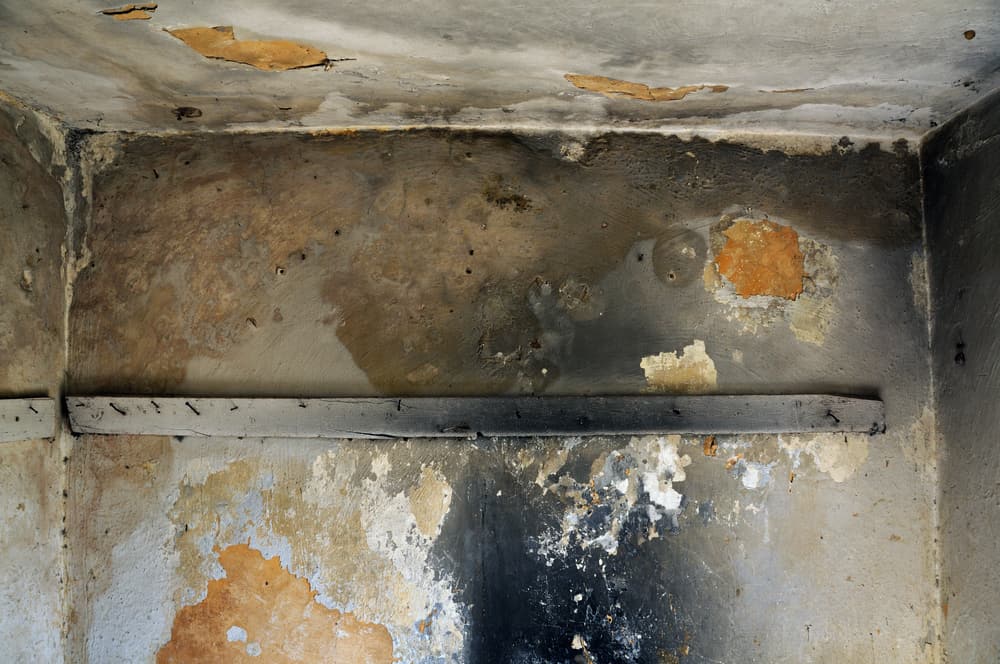
It’s more common than most Laurel homeowners expect, and the location is a big reason why. The North Fork is a narrow peninsula with open water on both sides — Peconic Bay to the south and Long Island Sound to the north. That creates a marine humidity environment that stays elevated through much of the year, and it works its way into building envelopes that weren’t designed to handle it. Older homes with uninsulated basements, crawl spaces, and attics without proper ventilation are especially vulnerable.
Seasonal vacancy makes it worse. A property in Laurel that sits closed up from October through April accumulates moisture with nowhere to go. By the time you open the house in spring, mold that started as a minor issue can be well established in walls, insulation, or structural framing. If you’ve found mold in your Laurel home, you’re not dealing with a fluke — you’re dealing with conditions that are built into the geography of this area.
Cost depends on where the mold is, how far it’s spread, and what materials are affected. For most residential mold removal in Laurel, NY, you’re typically looking at a range of $1,500 to $6,000 for basement remediation, and $1,000 to $4,000 for attic work. Smaller bathroom or crawl space jobs can run $500 to $2,000. These ranges reflect Long Island-level pricing — labor costs and material costs on the North Fork are consistent with broader Suffolk County rates.
What matters more than the starting number is what’s included and how the estimate is structured. A written, itemized quote before any work begins is the only way to know what you’re actually agreeing to. We provide exactly that — the price quoted is the price charged, no additions mid-job. If your mold issue is tied to water damage from a storm or a plumbing failure, there’s a real chance your homeowners insurance covers part or all of it, and we can help you navigate that documentation from the start.
It depends on what caused the mold. In New York, most standard homeowners insurance policies will cover mold removal if it resulted directly from a covered event — like a burst pipe, an appliance leak, or sudden storm water intrusion. What they typically won’t cover is mold that developed from long-term moisture issues, deferred maintenance, or flooding — which is where things get complicated for Laurel homeowners specifically.
Because a number of properties in Laurel sit in or near flood zones along Peconic Bay, flood damage is often handled through a separate NFIP flood insurance policy rather than a standard homeowners policy. Mold that follows a flood event may fall under that coverage instead. The documentation you submit matters enormously — the scope of damage, the timeline, the cause. We work directly with insurance carriers and help you build the paper trail that supports your claim, so you’re not leaving money on the table because of incomplete documentation.
The terms get used interchangeably, but there’s a meaningful distinction worth understanding. Mold removal in the strictest sense refers to physically removing mold-affected material. Mold remediation is the broader process — it includes identifying the source of moisture, containing the affected area, removing the mold, treating surfaces, restoring air quality, and verifying through clearance testing that the job is complete. Remediation is what actually solves the problem.
In New York State, the full remediation process is governed by Article 32 of the NY Labor Law, which requires licensed contractors for both assessment and remediation work. It also requires that the same company cannot perform both the assessment and the clearance testing — those must be done by separate, independent parties. That separation exists to protect you. When you hear a company offer to assess and certify their own work, that’s a red flag under New York law, and it should be.
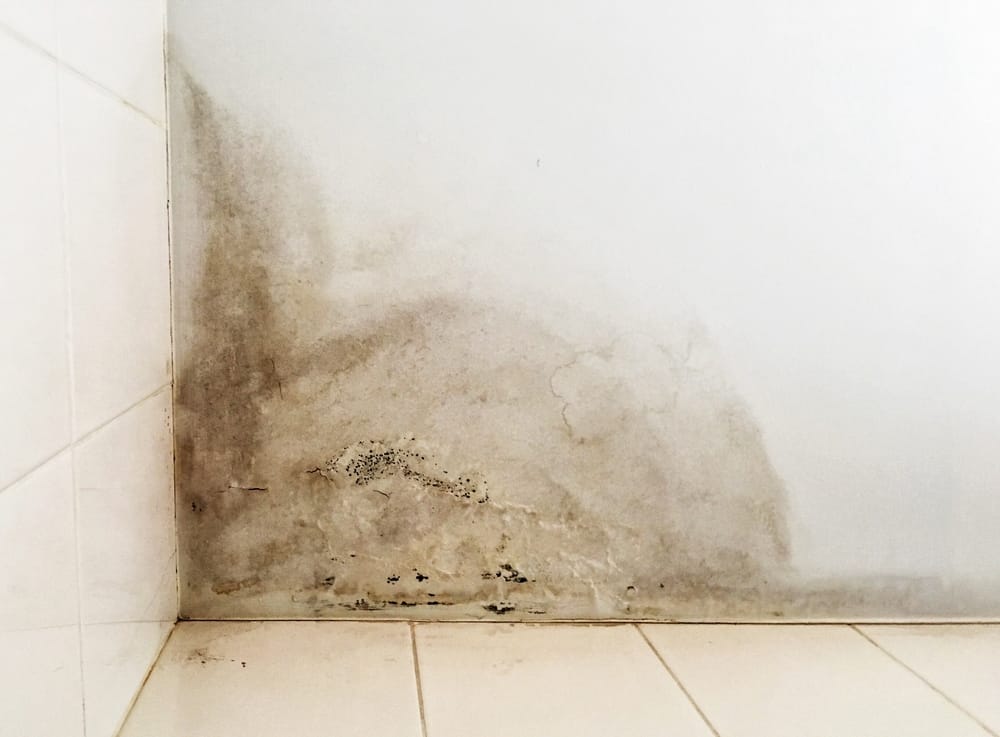
Visually, you can’t tell for certain — and that’s the honest answer. Black mold, or Stachybotrys chartarum, does appear dark greenish-black, but other mold species can look similar and some are just as problematic. Color alone isn’t a reliable diagnostic tool, and neither is smell, though a persistent musty odor is usually a sign that mold is present somewhere even if you can’t see it.
The only way to know what you’re dealing with is through professional testing. Air quality sampling and surface testing can identify the species present and the spore concentration levels in your home. For Laurel properties — especially those with older construction, crawl spaces, or a history of basement moisture — testing is worth doing before you assume the problem is minor. What looks like a small patch of black mold in a bathroom corner is sometimes the visible edge of a much larger colony behind the wall. A proper inspection with moisture detection equipment tells you what’s actually there.
Yes — if the moisture source isn’t addressed, mold will return. This is one of the most important things to understand about mold removal in Laurel, NY specifically. Professional remediation removes the existing mold completely, but it doesn’t change the environment that created it. In a waterfront community on the North Fork, that environment — high ambient humidity, aging building envelopes, seasonal flooding risk — is persistent. Remediation without moisture control is a temporary fix.
What prevents recurrence is addressing the root cause: improving crawl space encapsulation, adding proper attic ventilation, fixing basement drainage, or installing a dehumidification system in areas that stay consistently damp. We walk through that with every Laurel homeowner after remediation is complete — not as an upsell, but because it’s the only way the work we did actually holds. A home near Peconic Bay or Laurel Lake that had mold once will have the conditions for mold again unless something changes structurally. Knowing what to maintain, and what to watch for, is what keeps your home clean long-term.
Useful Links
Other Services we provide in Laurel