
Hear from Our Customers
Most homeowners in West Bay Shore don’t find mold on a random Tuesday. They find it after a nor’easter floods the basement, after a slow pipe leak goes unnoticed for months, or when they finally pull up old flooring and see what’s been hiding underneath. By that point, the problem is almost always bigger than it looks — and that’s just how mold works in older homes this close to the water.
West Bay Shore sits on a peninsula surrounded by the Great South Bay on three sides. That geography means your home deals with a level of coastal humidity that inland Suffolk County communities simply don’t face. When you add a housing stock where most homes were built around 1959 — ranch, hi-ranch, split-level — with original insulation, older waterproofing, and crawl spaces that were never designed to manage this kind of moisture, you get the conditions that make mold a recurring problem here, not a one-time event.
After a proper remediation, the difference is measurable. Air quality testing confirms the spore count is down. The musty smell is gone — not masked. The structural materials that were compromised get removed and replaced, not painted over. And if your home has a high water table issue driving basement seepage, that gets addressed as part of the conversation, not ignored. You walk away with documentation, clean air, and a home that’s actually been fixed.
We’ve been based in West Babylon for over three decades — roughly five to seven miles from West Bay Shore via Montauk Highway. That proximity matters, but what matters more is what those 31 years actually represent: thousands of Long Island homes, hundreds of South Shore basements, and a deep familiarity with exactly what mold looks like in a 1960s ranch home sitting on a high water table a few blocks from the Great South Bay.
We’re IICRC-certified under the ANSI/IICRC S520 Standard for Professional Mold Remediation and fully licensed under New York State Article 32 of the Labor Law — the state regulation that has required licensing for all mold remediation contractors since 2016. That’s not a formality. It’s the legal and professional baseline that protects you, your insurance claim, and your home.
Our customers have specifically noted that the estimate they received before the job was exactly what they were charged — no upsell, no scope creep, no surprises. In a category where that’s rarer than it should be, it’s worth saying plainly.
It starts with an assessment. One of our certified technicians comes to your West Bay Shore home, identifies where the mold is, and — just as importantly — finds where moisture is getting in to feed it. In a peninsula community with a documented high water table, the source is rarely just one thing. It might be groundwater seeping through a foundation wall, condensation building in an attic with poor ventilation, or a slow leak behind a bathroom wall that’s been there for years. Finding all of it matters, because leaving any source unaddressed means the mold comes back.
Once the scope is clear, containment goes up before any removal begins. Negative air pressure, plastic barriers, and HEPA filtration keep spores from spreading to the rest of your home during the work. Contaminated materials — drywall, insulation, subfloor — get removed and properly disposed of. The affected structural surfaces are treated, dried, and documented. Under New York State Article 32, the assessment and remediation must be handled by separate licensed entities, which means you get an independent verification of the problem rather than one company diagnosing and fixing what they say they found.
After the remediation is complete, post-clearance air quality testing confirms the job is done. You receive documentation you can use for insurance purposes, for your own records, or for a future real estate transaction. We also handle the restoration side — drywall replacement, painting, carpet installation — so you’re not left coordinating multiple contractors to get your home back to normal.
Ready to get started?
Mold removal in West Bay Shore covers more ground than most homeowners expect going in. Basement mold removal is the most common call in this area — and for good reason. The high water table means groundwater can push through foundation walls and slab floors even when there’s no major storm involved. A heavy rainfall in spring or fall is enough to create the moisture conditions that feed mold growth behind finished basement walls and under flooring. If your basement was finished in the 1980s or 1990s, there’s a real possibility that mold has been developing behind that drywall for a long time without any visible sign on the surface.
Attic mold removal is the second most common issue in West Bay Shore’s post-war housing stock. Ranch and hi-ranch homes from the 1950s and 1960s have low-pitched roofs with minimal attic space and ventilation systems that were never designed for modern moisture management. In winter, warm interior air hits the cold roof decking and creates condensation — a textbook recipe for mold on rafters and roof sheathing. Crawl space mold removal is equally relevant for homes in this area that have partial crawl spaces with bare earth floors, which allow ground moisture to evaporate directly into the structure year-round.
Bathroom mold removal, toxic mold cleanup following storm flooding, and full water damage restoration are all part of what we handle. If the mold resulted from a covered water event — storm surge, a burst pipe, a sewage backup — our team works directly with your insurance carrier to document the damage properly and coordinate the claim. You get one point of contact from assessment through restoration, not a handoff between three different companies.
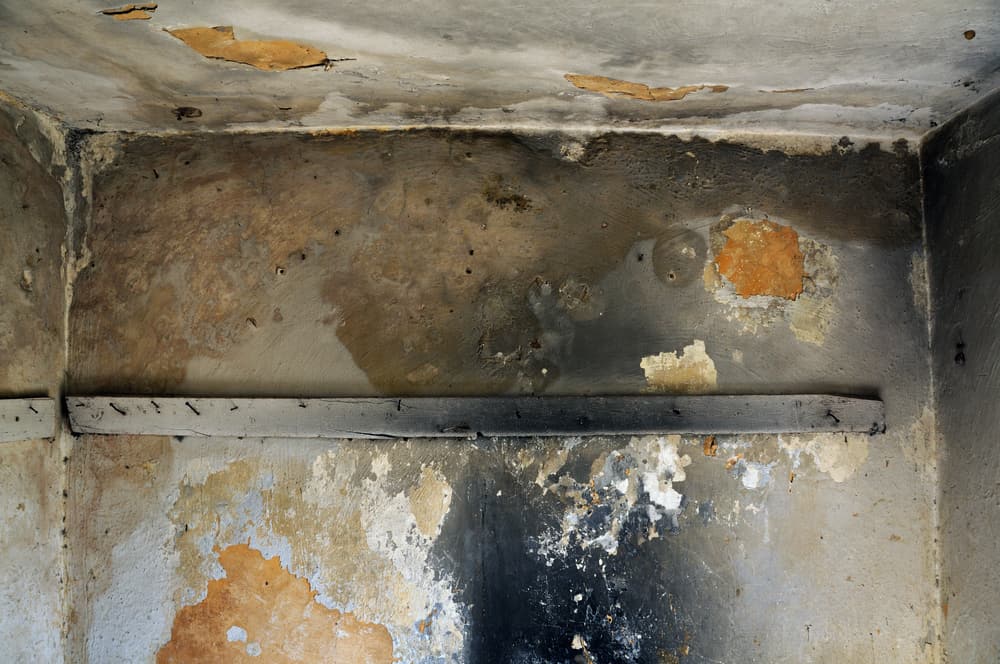
The honest answer is that it depends on where the mold is, how far it’s spread, and what materials need to come out. For most residential mold removal jobs in West Bay Shore, costs typically fall somewhere between $1,200 and $6,000 depending on the scope. Basement mold removal — which is the most common call in this area given the high water table and groundwater seepage risk — tends to run $1,500 to $6,000 depending on whether the basement is finished, how much drywall and insulation is involved, and how far the growth has spread behind the walls. Attic mold removal in the ranch and hi-ranch homes common to this area generally runs $1,000 to $4,000.
What affects the final number most is how long the mold has been there. A small bathroom mold issue caught early is a very different job from a basement that’s been slowly taking on groundwater for two seasons. The best way to get an accurate number is a proper assessment — not a phone estimate based on square footage alone. We provide a clear, written estimate before any work begins, and what’s quoted is what’s charged.
It depends on the cause of the mold, and that distinction matters a lot. Most standard homeowners insurance policies will cover mold remediation if it resulted directly from a covered water event — a burst pipe, a roof leak from storm damage, or water intrusion from a nor’easter that damaged your home’s envelope. What they typically don’t cover is mold that developed from long-term moisture buildup, deferred maintenance, or gradual groundwater seepage — even if that seepage is driven by West Bay Shore’s documented high water table.
After Hurricane Sandy in 2012 and the August 2024 flooding that caused over $41 million in damages across Suffolk County, a significant number of West Bay Shore homeowners had legitimate insurance claims for storm-related mold. The key is documentation: the damage needs to be assessed, photographed, and reported in the format your insurer requires. We handle that process directly — working with your carrier to document the scope, support the claim, and reduce what comes out of your pocket. If you’re unsure whether your situation qualifies, the assessment is the place to start.
Because the moisture source hasn’t been fixed — and in West Bay Shore, that source is often the water table itself. This is one of the more frustrating realities of living on a peninsula that juts into the Great South Bay. The groundwater sits high, and during heavy rainfall, it pushes against foundation walls and slab floors from the outside in. You can clean visible mold off a basement wall, but if water is still seeping through the block or concrete, the conditions for regrowth are still there.
The other common culprit in this area’s post-war housing stock is inadequate ventilation. Ranch and hi-ranch homes built in the 1950s and 1960s weren’t designed with modern vapor management in mind. Humidity from the bay gets into the basement through small cracks, floor drains, and the concrete itself, and without proper dehumidification and air exchange, it accumulates. Effective mold removal in West Bay Shore has to address both the mold and the moisture pathway — otherwise you’re just cleaning the same problem every year.
For smaller, contained jobs — a bathroom wall, a section of basement drywall — most homeowners can stay in the home as long as the work area is properly isolated. For larger remediations involving significant mold growth in a basement, attic, or crawl space, it’s often more practical and safer to stay elsewhere during the active removal phase. The containment setup — plastic barriers, negative air pressure, HEPA filtration — is designed to prevent spores from moving through the rest of the house, but it works best when foot traffic through the work area is minimized.
The honest answer is that it varies by job, and a good contractor will tell you upfront what to expect for your specific situation rather than giving you a blanket yes or no. For West Bay Shore homeowners dealing with post-storm mold after a flooding event, where multiple areas of the home may be affected simultaneously, temporary relocation during the remediation phase is often the right call. We’ll walk you through what the specific job requires before work begins so you can plan accordingly.
The terms get used interchangeably, but there’s a meaningful distinction. “Mold removal” in its literal sense implies taking all mold out of a space — which isn’t entirely possible, since mold spores exist naturally in the air everywhere. What professional mold remediation actually does is bring mold levels back down to normal, naturally occurring concentrations, remove the actively growing colonies and the contaminated materials that support them, and address the moisture conditions that allowed the growth in the first place.
In New York State specifically, mold remediation is a licensed activity under Article 32 of the Labor Law. Any contractor performing remediation for compensation must hold a state-issued license — and the same entity cannot legally perform both the assessment and the remediation on the same project. That separation exists to protect homeowners from a conflict of interest where the contractor diagnosing the problem also profits from the scope of the fix. It’s a consumer protection rule unique to New York, and it’s one worth understanding before you hire anyone for this work in West Bay Shore or anywhere else in Suffolk County.
Post-remediation clearance testing is the only way to know for certain — and it should be performed by an independent third party, not the same company that did the remediation. Under New York State Article 32, the assessor and the remediator must be separate licensed entities, which means the post-clearance verification is already built into a properly run job. Air samples and surface samples are collected after the remediation is complete and sent to an accredited laboratory. If the results show that spore counts are within normal background levels, the clearance is passed and you receive documentation confirming it.
For West Bay Shore homeowners, that documentation matters beyond just peace of mind. If you’re planning to sell your home, refinance, or file an insurance claim related to the mold event, having a written clearance report from a licensed assessor is the kind of paper trail that protects you. Homes in this area — with median values around $670,000 — carry enough equity that cutting corners on verification isn’t worth the risk. We coordinate the full process, including clearance testing through a licensed assessor, so you’re not left tracking down a separate company to close out the job.
Useful Links
Other Services we provide in West Bay Shore