
Hear from Our Customers

When water gets into your home, the damage doesn’t stop when the water stops moving. It keeps working — soaking into drywall, wicking up into subfloors, settling behind baseboards — and within 24 to 48 hours, mold can start forming in places you’ll never see until it’s a much bigger problem. Getting the right team in fast is the difference between a manageable restoration and a months-long remediation project.
For homeowners in East Garden City, that urgency is compounded by something most people don’t think about until it happens to them. The Nassau Hub — Roosevelt Field, the surrounding parking lots, the office corridors along Stewart Avenue — generates an enormous volume of stormwater runoff every time it rains. The Hempstead Plains are flat. There’s no natural gradient pulling that water away from your foundation. It collects, it pools, and it finds the path of least resistance, which is often a basement wall or a floor drain.
On top of that, the residential pockets here are old. The brick colonials near the former Mitchel Field site date to the 1930s. The Cape Cods throughout the surrounding Uniondale area were built in the late 1940s and 1950s. Homes that age have plumbing systems that are well past their design life — and when a pipe fails in a house built 70 or 80 years ago, the walls and floors absorb water in ways that newer construction simply doesn’t. What you get with us is a team that understands both the geography driving the problem and the housing stock it’s happening inside.
We’ve been doing this work on Long Island for nearly 30 years. That’s not a marketing number — it means we’ve responded to water damage in central Nassau through nor’easters, pipe-burst winters, and the kind of summer storms that overwhelm every drain on Stewart Avenue at once. We know what these homes look like on the inside, and we know what it takes to restore them properly.
We’re IICRC-certified, licensed, bonded, and insured. Those aren’t just checkboxes — IICRC certification is the standard insurance adjusters look for when reviewing a claim, and it means our work follows documented protocols that hold up when it matters. With a dedicated Nassau County line and a base in West Babylon, our response times to East Garden City are genuinely local, not dispatched from somewhere out of county.
What you won’t find here is a national franchise operation running crews through a call center. We’re a Long Island company, serving Long Island homeowners, with the track record to back it up.
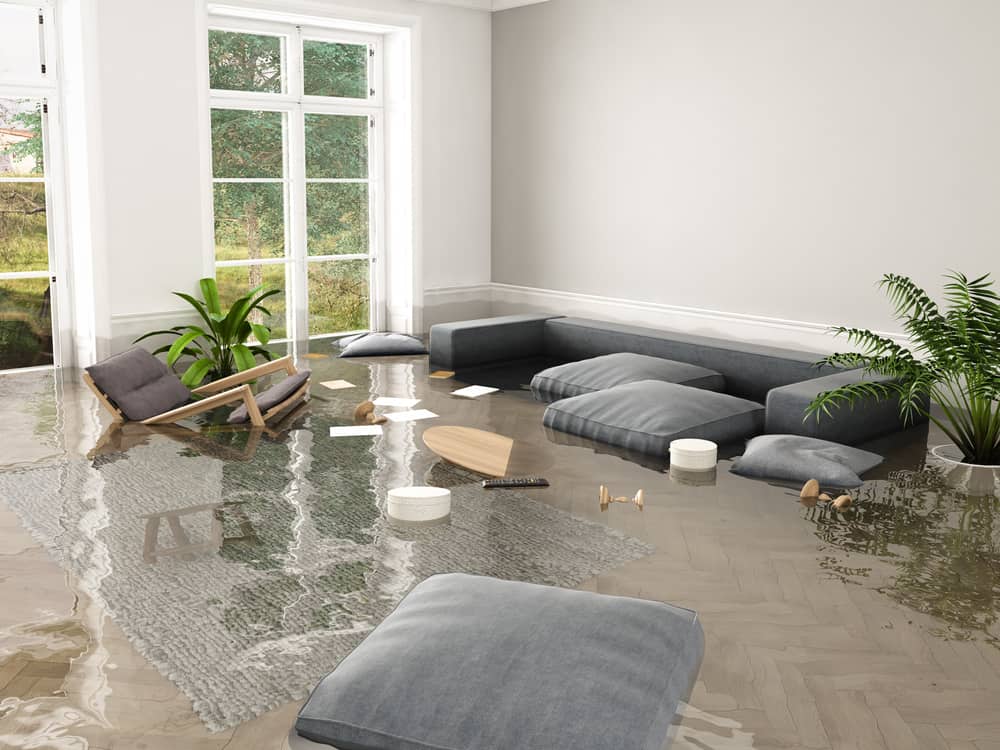
The first call triggers an immediate response. We operate around the clock because water damage doesn’t wait, and neither should you. A technician arrives, assesses the scope of the damage, and begins extraction right away. Industrial-grade pumps and water extraction equipment remove standing water far more effectively than anything consumer-grade — and speed here directly affects what you’ll spend on the back end.
Once the water is out, the real work begins. Moisture doesn’t just sit on surfaces — it travels. In a 1930s brick colonial or a 1950s Cape Cod, it moves into plaster walls, original hardwood subfloors, and structural cavities that a standard fan will never reach. We use professional moisture meters and thermal imaging to map exactly where the water has gone, then deploy industrial dehumidifiers and air movers to pull it out. This phase typically runs three to five days and is the most critical part of preventing mold.
Structural repairs — drywall replacement, framing, any work that touches the building itself — require building permits through the Town of Hempstead, and New York State’s mold remediation law applies to any project over ten square feet. We handle the documentation and work directly with your insurance company throughout the entire process, from the initial damage report through final billing. You don’t have to manage the adjuster relationship on top of everything else.
Ready to get started?
We handle the complete range of water damage scenarios common to East Garden City homes — from burst pipe cleanup in the older residential neighborhoods near Nassau Community College, to flooded basement cleanup after a heavy storm overwhelms the storm drains along the Meadowbrook State Parkway corridor, to sewer backup remediation in homes where aging drain lines have finally given out. Sewer backups are classified as Category 3 contamination, meaning the cleanup protocol is significantly more intensive than a clean-water pipe burst — and it’s more common in neighborhoods with infrastructure as old as what’s found throughout the Uniondale CDP.
For condo and townhouse residents in East Garden City, water damage situations often involve a layer of complexity that single-family homeowners don’t face: damage originating from a neighboring unit, from shared plumbing in the building’s common areas, or from the building’s roof or exterior. These situations involve multiple insurance policies — your individual unit policy, the building’s master policy, and potentially the HOA’s coverage — and sorting out who covers what requires experience navigating multi-party claims. We’ve handled these before.
Our full service scope includes water removal and extraction, structural drying and dehumidification, mold prevention treatment, contents handling, and complete reconstruction once the structure is dry and cleared. Everything is documented throughout for insurance purposes, and billing goes directly to your insurer. One call, one company, start to finish.

It depends on the source of the water, and this distinction matters a lot. Standard homeowners insurance typically covers sudden, accidental water damage from internal sources — a burst pipe, a failed water heater, a washing machine that overflows. That kind of damage is generally covered. What standard homeowners insurance does not cover is flooding, meaning water that enters your home from outside — groundwater, storm surge, or overland flow from a heavy rain event.
In East Garden City, this line gets blurry for a lot of homeowners. If your basement flooded because a storm overwhelmed the storm drains near the Meadowbrook State Parkway and water sheeted toward your foundation, that may be classified as flooding rather than sudden internal damage — and your standard policy likely won’t cover it without a separate flood insurance policy through the National Flood Insurance Program. If the same storm caused a drain line inside your home to back up, that’s a different scenario with different coverage implications.
The safest move is to call us first, before you talk to your adjuster. Proper documentation of the damage source — done by a certified technician — strengthens your claim and reduces the risk of a denial. We handle the insurance coordination directly, so you’re not navigating that conversation alone.
Faster than most people expect. The EPA states that mold can begin developing in water-damaged areas within 24 to 48 hours under the right conditions — and in a home that’s already warm and humid from a summer storm or a winter pipe burst, those conditions are almost always present. Mold spores are already in the air in every home. They don’t need much — just moisture and a surface to land on.
What makes this especially relevant for older homes in East Garden City is that original plaster walls, older wood framing, and period insulation materials hold moisture longer than modern construction materials do. A 1930s brick colonial or a 1950s Cape Cod that takes on water from a burst pipe isn’t just wet on the surface — moisture is absorbed deep into the wall assembly. Consumer-grade fans can dry the visible surface while the interior of the wall stays damp for days, creating ideal mold conditions that won’t show up until weeks later when you start seeing discoloration or smelling something musty.
Professional drying equipment — industrial dehumidifiers, air movers, moisture meters — is specifically designed to address this. The faster you get certified technicians on site, the smaller the mold remediation scope tends to be.
The first thing to do is stop the source if you can. If it’s a burst pipe, shut off the water at the main valve. If it’s an appliance, disconnect it. If the water is coming from outside or through a drain backup, there may not be a shutoff — in that case, focus on what you can move out of the affected area to limit damage to your belongings.
After that, call us before you call your insurance company. This is counterintuitive for a lot of homeowners, but it matters. A certified technician can document the damage properly — the source, the category of water, the extent of moisture intrusion — before anything dries or gets disturbed. That documentation is what your adjuster will use to evaluate the claim, and it’s much harder to reconstruct after the fact.
Do not run residential fans and assume the problem is handled. In East Garden City’s older housing stock, surface drying is not the same as structural drying. Moisture inside walls and under floors will stay there until it’s actively removed with professional equipment — and that hidden moisture is what becomes a mold problem months later. The sooner you call, the more contained the damage stays.
For most residential water damage situations, the drying phase alone takes three to five days with professional equipment running continuously. That’s just the drying — it doesn’t include water extraction, which typically takes one to three days depending on volume, or the repair and reconstruction phase that follows once the structure is confirmed dry.
For a moderate scenario — a burst pipe that affected one or two rooms in a central Nassau home — the full process from initial extraction through finished repairs usually runs about two to three weeks. More extensive damage, particularly anything that involves mold remediation or significant structural repairs, can extend that timeline considerably. Homes with older construction, like the post-war Cape Cods common throughout the Uniondale area, sometimes require more drying time because the original materials are denser and more absorbent than modern drywall and framing.
Structural repairs in East Garden City require building permits through the Town of Hempstead, which adds some administrative time to the back end of the project. We manage this process as part of the full-service scope — you’re not left to figure out permitting on your own while you’re already dealing with a damaged home.
In many cases, yes — but it depends on the scope of the damage, the category of water involved, and which areas of the home are affected. For a localized pipe burst in a basement or a single room, most homeowners can remain in the home while drying equipment runs. The equipment is loud and runs continuously, which some families find disruptive, but it’s generally livable.
Where it becomes more complicated is with Category 3 water damage — sewage backups, groundwater intrusion, or floodwater that’s been contaminated. In those situations, the affected areas need to be isolated and treated with antimicrobial agents, and occupying the home during that process isn’t advisable, particularly for households with children, elderly residents, or anyone with respiratory sensitivities.
Mold remediation, if it’s required, typically involves containment barriers and negative air pressure systems that make the affected areas unusable during treatment. Our technician will give you a clear picture of what to expect during the assessment — including an honest answer on whether temporary displacement makes sense for your situation. We’ll document the displacement recommendation if your insurance policy includes additional living expenses coverage, which many homeowners policies do.
Because the real scope of water damage is almost never obvious from the surface. Two homes with what looks like the same flooded basement can have completely different restoration costs depending on how far the moisture has traveled, what materials it’s affected, and whether mold has already started developing inside the wall cavities. A technician who does a thorough moisture assessment — using meters and thermal imaging to map what’s actually wet — will give you a more accurate estimate than one who walks through and eyeballs it.
In East Garden City specifically, the age of the housing stock is a significant cost variable. Older homes with plaster walls, original hardwood floors, and cast-iron drain lines respond to water intrusion differently than newer construction. Plaster holds moisture longer and requires more drying time. Original hardwood can often be saved with proper drying, but if it’s been wet long enough, it may need to be replaced. These material-specific factors affect both the labor and the timeline, which drives cost differences between estimates.
The other major variable is water category. A Category 1 clean-water pipe burst is the least expensive to remediate. A Category 3 sewage backup — which is more common in neighborhoods with aging sewer infrastructure like those throughout the Uniondale CDP — requires full containment, antimicrobial treatment, and disposal of affected porous materials. That’s a meaningfully different scope. Getting a certified IICRC technician to assess the damage properly is the only way to know what you’re actually dealing with before you commit to a restoration plan.
Useful Links
Other Services we provide in East Garden City