
Hear from Our Customers

Water damage in a Greenvale home isn’t just an inconvenience — it’s a threat to a property that’s likely worth well over $700,000. When the damage is handled right the first time, you’re not just drying out a basement. You’re protecting the investment you’ve built, keeping mold out of walls that were never designed to get wet twice, and making sure your insurance claim holds up when an adjuster shows up.
Greenvale sits on ground that was literally called Cedar Swamp before it was developed. That name wasn’t poetic — it described the wetland character of the soil underneath what is now one of Nassau County’s most desirable hamlets. The water table in this area can sit just a few feet below your basement floor during a heavy rain event. When a nor’easter rolls through and your sump pump can’t keep up, or when a pipe in an exterior wall finally gives after 50 winters, the water doesn’t trickle in — it intrudes. And the older the home, the more places it finds to go.
What you get when the job is done properly is a home that’s genuinely dry — not surface dry, but structurally dry, with moisture readings that confirm it. You get documentation that supports your insurance claim. And you get the peace of mind that comes from knowing a certified team used professional-grade equipment, not a shop vac and a box fan, to solve the problem.
We’ve been serving Nassau County homeowners for close to three decades. That means we’ve responded to burst pipes on Greenvale’s residential streets, handled post-storm flooding in homes along Northern Boulevard and Glen Cove Road, and navigated Nassau County’s permitting requirements more times than most restoration companies have been in business.
We’re IICRC-certified, licensed, bonded, and insured. We work directly with your insurance company and handle the documentation and billing so you don’t have to become an expert in claims processing during the worst week of your year. When you call our Nassau County line — a real 516 number, not a Rochester or New York City area code — you’re reaching a company that actually knows this area.
Greenvale straddles the boundary between the Town of North Hempstead and the Town of Oyster Bay, which means reconstruction permits may involve two different municipal offices depending on which street your home sits on. We know both jurisdictions and handle that complexity without putting it back on you.
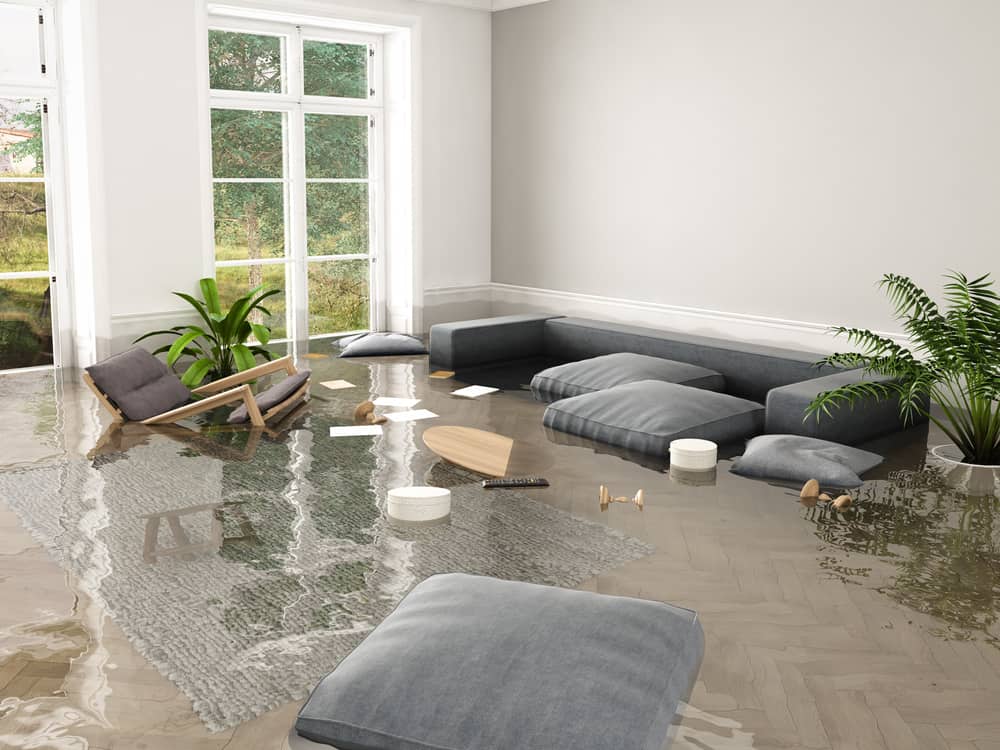
When you call, the first thing that happens is a real conversation — not a form submission. You describe what’s going on, and we dispatch a team. Given that Greenvale’s older homes tend to have finished basements, original hardwood floors, and plaster walls, our first priority on arrival is stopping the source if it hasn’t been stopped already, then getting water out fast. Every hour water sits in a 1940s or 1970s-era home is another hour it’s wicking into materials that weren’t built with modern moisture barriers.
After extraction comes the part most people don’t think about: drying what you can’t see. We use industrial air movers and dehumidifiers to pull moisture out of wall cavities, subfloor assemblies, and structural framing. Moisture meters confirm when materials have reached acceptable levels — not when things look dry, but when they actually are. This matters especially in Greenvale’s older housing stock, where plaster and original millwork can hold moisture long after a surface feels dry to the touch.
Once the structure is dry, the restoration phase begins — repairing or replacing damaged drywall, flooring, insulation, and whatever else the water reached. If the scope requires permits, we coordinate with the appropriate town office, whether that’s North Hempstead or Oyster Bay, depending on where your property sits. Insurance documentation is built throughout the entire process so that when your adjuster needs records, they’re already prepared.
Ready to get started?
Water damage in Greenvale comes from a few predictable directions. Burst pipes are the most common in winter — older homes in the 11548 ZIP code often have supply lines running through exterior walls or uninsulated attic spaces that weren’t built with today’s temperature swings in mind. When a pipe lets go during a cold snap, you’re typically dealing with Category 1 clean water, but it spreads fast through finished spaces. Storm-related flooding — whether from a nor’easter pushing water off Long Island Sound or a summer thunderstorm overwhelming a 50-year-old drainage system — introduces a different set of complications, including potential groundwater contamination and saturated foundation assemblies.
We handle the full range: water extraction and emergency water removal, structural drying, mold remediation, sewage backup cleanup, fire and smoke damage, and full reconstruction. For Greenvale homeowners dealing with flooding from multiple sources — say, a storm that backs up a drain while also driving water through a foundation crack — we assess and address all of it in a single coordinated response rather than treating each issue separately.
The free on-site assessment is where it starts. There’s no cost to finding out exactly what you’re dealing with, and no pressure to commit before you understand the full scope. For a home in this area, where values regularly exceed $700,000 and the housing stock carries decades of deferred vulnerability, knowing the real picture before making decisions is the only responsible starting point.

It depends on the source of the water, and the distinction matters more than most people realize. Standard homeowners insurance typically covers sudden, accidental water damage — a pipe that bursts overnight, a water heater that fails, a washing machine line that gives way. What it does not cover is flooding from external sources like storm surge, groundwater intrusion, or overland flow. For Greenvale homeowners, this is a meaningful distinction because the hamlet’s geology — sitting on what was historically wetland ground — means that during heavy rain events, water can enter basements through foundation cracks or overwhelmed drainage systems, which is often classified as groundwater intrusion rather than a covered sudden loss.
If you live in a designated flood zone, a separate NFIP or private flood insurance policy is what covers that category of damage. We work directly with your insurance company regardless of which policy applies. We document the damage, communicate with the adjuster, and handle the billing directly — so you’re not left trying to figure out which coverage applies while water is still sitting in your basement.
The EPA’s guidance is clear: mold can begin developing within 24 to 48 hours of a water damage event under the right conditions. In practice, mold spores are already present in the air of virtually every home — they just need moisture and a surface to land on. In Greenvale’s older homes, where plaster walls, original wood framing, and mid-century insulation materials are common, those surfaces are exactly the kind that hold moisture and support mold growth quickly.
This is why the timeline from the moment water enters your home to the moment professional drying equipment is running matters so much. A surface that feels dry to the touch after you’ve mopped up with towels and run a household fan is not necessarily dry inside the wall cavity or under the subfloor. By the time visible mold appears — usually 48 to 72 hours after the moisture event — it’s already been growing for a day or more. Professional moisture meters and thermal imaging find what you can’t see, and industrial drying equipment removes it. That’s the difference between a restoration job and a future mold remediation job.
The first thing to do is make sure it’s safe to enter the space. If there’s any chance the water has reached electrical outlets, panels, or appliances, don’t go in until the power to that area has been shut off. Once it’s safe, try to identify the source — an overwhelmed sump pump, a drain backup, water coming through a foundation wall — and stop it if you can. Don’t run a sump pump that’s already failed; get a submersible pump or call for emergency water removal.
After that, call a restoration company before you start pulling up carpet or moving furniture. The reason is documentation. Your insurance claim depends on a clear record of what the damage looked like before anything was disturbed. We can arrive, assess the situation, and begin extraction while simultaneously documenting everything your adjuster will need. In Greenvale, where many basements are fully finished and contain flooring, drywall, and personal property, the difference between a well-documented claim and a disputed one often comes down to what was recorded in the first few hours.
The honest answer is that it depends on the severity and what materials were affected. For a single-room event — say, a burst pipe in a bathroom that reached the subfloor but didn’t spread far — the drying phase typically takes three to five days, and repairs might follow within another week. For a more significant event, like a finished basement that took on several inches of water during a storm, the drying phase alone can take five to seven days, and reconstruction of drywall, flooring, and trim adds additional time after that.
For Greenvale homes specifically, the construction era matters. Homes built in the 1940s often have plaster walls rather than drywall, and plaster holds moisture differently — it may dry more slowly and sometimes needs to be removed rather than dried in place. Homes from the 1970s typically have drywall, but original insulation materials from that era can retain moisture and require removal. A realistic timeline for a moderate basement flooding event in a home of this age is two to three weeks from extraction through final repairs, though we’ll give you a specific estimate after the initial assessment.
Drying things out is one step in a multi-phase process — it’s not the whole job. Professional water damage restoration starts with extraction, then moves into structural drying using industrial air movers and dehumidifiers that pull moisture from inside walls, under floors, and from structural assemblies. Moisture meters and sometimes thermal imaging are used to confirm that materials have reached safe levels throughout — not just on the surface.
After drying, the restoration phase addresses whatever was damaged: drywall, insulation, flooring, trim, and in some cases structural framing. If mold was present or conditions were right for it to develop, antimicrobial treatment is part of the process. Throughout all of it, documentation is being built for your insurance claim — photos, moisture readings, material inventories, and scope-of-work records. What separates a professional restoration from a DIY cleanup isn’t just equipment — it’s the combination of process, documentation, and the ability to identify damage that isn’t visible yet, which is exactly what tends to become a much larger problem six months later.
Yes. We serve the full Greenvale area, including properties near the NYIT campus and the LIU Post area along Northern Boulevard and Glen Cove Road. The hamlet’s proximity to two university campuses means there’s a mix of owner-occupied homes and rental properties in the area, and we handle both. Landlords and property managers dealing with water damage in rental units near the universities have the same need for fast response and proper documentation as homeowners do — especially when tenant displacement and insurance claims are both on the table.
Because Greenvale sits across the boundary of the Town of North Hempstead and the Town of Oyster Bay, properties in different parts of the hamlet fall under different permitting jurisdictions for reconstruction work. Our familiarity with Nassau County’s municipal structure means we know which town office to work with based on where your property sits, without making that your problem to sort out. The free on-site assessment covers the full picture — damage scope, drying plan, reconstruction needs, and insurance documentation — regardless of which part of Greenvale you’re in.
Useful Links
Other Services we provide in Greenvale