
Hear from Our Customers

When water damage hits a Hampton Bays home, the clock starts immediately. The EPA is clear that mold can begin developing within 24 to 48 hours of water intrusion — and in a community surrounded by Shinnecock Bay, the canal, and a water table that rises with every storm, that window closes fast. Getting a certified team on-site quickly is not about being cautious. It is about protecting what you actually have.
What you get on the other side of this process is a home that is genuinely dry — not surface-dry, but structurally dry. Moisture inside walls, under subfloors, and in crawl spaces gets found with professional equipment and eliminated properly. For the older fishermen’s cottages and converted seasonal homes that make up a significant portion of Hampton Bays’ housing stock, this matters more than it does in a newer build. Older materials hold moisture differently, and a job done halfway becomes a mold problem you discover months later.
Beyond the physical restoration, you also get a clean paper trail. Many Hampton Bays properties in FEMA Zone AE carry both a standard homeowners policy and a separate flood insurance policy. Knowing which policy covers which type of damage, and having the documentation to back it up, is where a lot of homeowners get stuck. We handle the insurance coordination directly — so you are not left navigating two policies while also managing a damaged home.
We have been serving Long Island homeowners for nearly three decades. That means our team has worked through every major weather event that has shaped the East End — the nor’easters that routinely flood Dune Road, the post-Sandy recovery that left bayfront neighborhoods underwater for weeks, and the quieter disasters that happen when a pipe bursts in a vacant seasonal cottage in January and nobody notices for a month.
We are based in Suffolk County, with a dedicated 631 number — not a national routing center. Every job is handled by IICRC-certified technicians, which matters both for the quality of the work and for how your insurance claim holds up afterward. We are licensed, bonded, and insured in New York State, which is also a requirement for mold remediation work under New York State Labor Law Article 32 — something that becomes relevant quickly in a community with Hampton Bays’ humidity and water exposure.
This is not a template applied to every flood regardless of where it happened. We know what coastal Long Island water damage actually looks like.
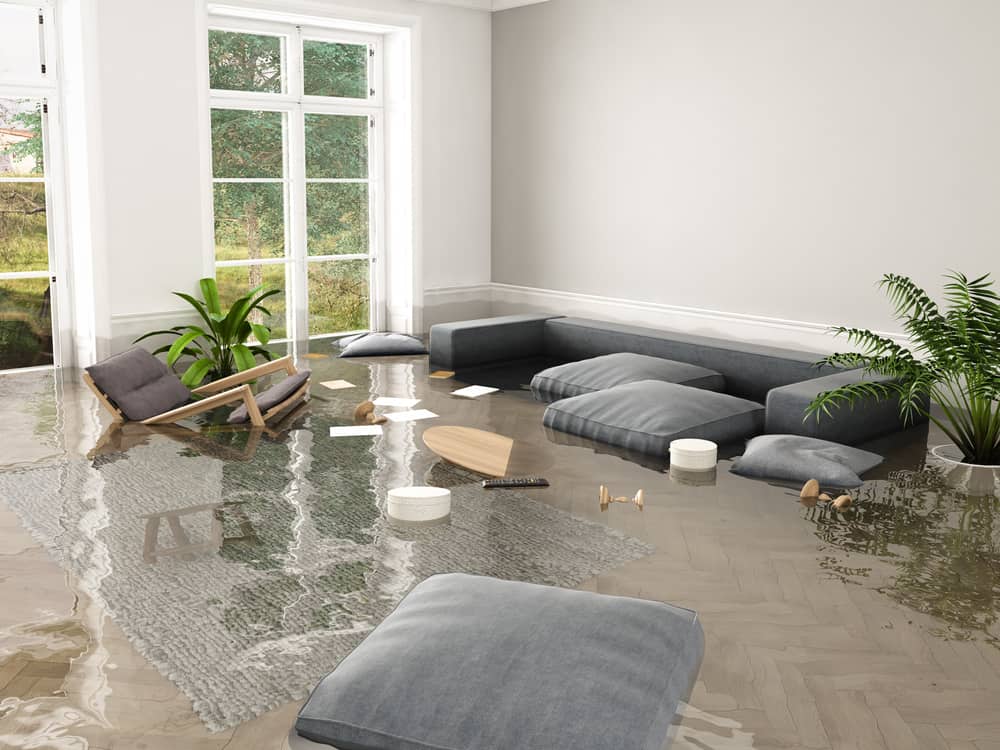
The process starts when you call. Whether it is a flooded basement after a storm pushed water through the Shinnecock Canal corridor, a burst pipe in a seasonal home that sat empty too long, or bay water that came in under the door during a nor’easter — the first step is getting eyes on the situation as quickly as possible. We offer 24/7 emergency response, and the assessment is free.
Once on-site, we use professional moisture meters and thermal imaging to map exactly where the water has traveled — not just what is visible on the surface. In Hampton Bays’ older housing stock, water wicks into wall cavities and subfloor systems that look fine from the outside. Industrial-grade extractors pull standing water first, then air movers and dehumidifiers are positioned to begin the structural drying phase, which typically runs three to five days depending on the extent of saturation.
Throughout the process, everything is documented — scope of damage, moisture readings, drying logs, and photographic records. This documentation is what supports your insurance claim, whether you are filing under a standard homeowners policy or a separate flood policy. For properties in Southampton Town that fall under FEMA Zone AE, proper documentation also matters for substantial-damage determinations, which can affect what repairs are required by local building code. Once the structure is confirmed dry, any necessary reconstruction is handled through us — one call, one team, start to finish.
Ready to get started?
Water damage restoration in Hampton Bays is not a single service — it is a sequence of connected steps that have to be done in the right order to actually work. It starts with water extraction and moves through structural drying, moisture verification, antimicrobial treatment where needed, and then whatever reconstruction is required to bring the space back. We handle all of it, which means you are not coordinating between a water company, a mold company, and a general contractor while also managing an insurance claim.
The specific conditions in Hampton Bays shape how this work gets done. The high water table throughout the hamlet — confirmed across the barrier island corridor, the canal area, and interior neighborhoods like Springville — means basement water extraction often involves hydrostatic pressure intrusion rather than a single flood event. That requires a different approach than surface flooding. Similarly, the older cottages and converted seasonal homes common throughout the hamlet absorb and release moisture on a different timeline than modern construction, and drying protocols have to account for that.
For seasonal homeowners and landlords managing properties remotely, we can coordinate the full scope of work with minimal need for you to be physically present. Everything from the initial assessment through final reconstruction is documented and communicated clearly, and we work directly with your insurance company on billing. If you are also working through a FEMA flood claim alongside a standard homeowners policy, that dual-policy navigation is something we have experience with.

This is one of the most important distinctions to understand before you file a claim. Standard homeowners insurance covers sudden, accidental water damage from internal sources — a burst pipe, a washing machine overflow, a water heater failure. It does not cover flooding. If water entered your home because of storm surge from Shinnecock Bay, ocean overwash on Dune Road, or rising groundwater after a coastal storm, that is considered flood damage and falls under a separate flood insurance policy — typically through the National Flood Insurance Program.
Many Hampton Bays properties, particularly those in FEMA Zone AE designations that apply to bay communities and canal-adjacent neighborhoods, are required to carry flood insurance as a condition of their federally backed mortgage. If you have both policies, the question becomes which policy covers which portion of the damage — and that determination depends on documenting the source and category of water intrusion accurately. This is exactly why working with an IICRC-certified restoration company that documents everything from the start matters so much. We work directly with insurance companies and can help ensure the documentation supports whichever claim or combination of claims applies to your situation.
The EPA’s guidance is clear: mold can begin developing within 24 to 48 hours of water intrusion under the right conditions. In Hampton Bays, those conditions are almost always present. The hamlet’s proximity to Shinnecock Bay, Tiana Bay, and the Atlantic Ocean creates a consistently humid coastal environment, and the high water table throughout the area means that even after visible water is removed, moisture lingers in building materials longer than it would in a drier inland climate.
For older homes — the fishermen’s cottages and post-war bungalows that make up a significant part of Hampton Bays’ housing stock — the risk is compounded. These structures often have less ventilation than modern builds, and materials like older plaster, tongue-and-groove subfloors, and uninsulated crawl spaces hold moisture in ways that consumer-grade fans simply cannot address. Mold can establish in wall cavities and under flooring while the surface looks and feels dry. Professional moisture mapping with thermal imaging and calibrated meters is the only reliable way to confirm that a structure is genuinely dry — not just surface-dry — before the mold window closes.
This is one of the most common water damage scenarios on the East End, and it is almost always worse than it looks at first. When a pipe bursts in a vacant seasonal property and goes undetected for days or weeks — which happens regularly in Hampton Bays when owners are not on-site during the winter months — the damage has time to spread through wall cavities, under flooring, and into structural framing in ways that are not visible on the surface.
The first thing to do is stop the water source if it is still running, then call us immediately. Do not wait to see how bad it gets, and do not assume that running a few fans will handle it. The 24 to 48 hour mold window applies regardless of how long the water has already been sitting — meaning that from the moment you discover the damage, the clock is running on how quickly you can get professional drying equipment in place. We can coordinate the full scope of work remotely if needed, which matters for seasonal homeowners who are not physically in Hampton Bays when the damage is discovered. Everything is documented for your insurance claim from the first day on-site.
The honest answer is that it depends on the scope, but there are reliable general timelines. For a manageable basement flooding event — say, groundwater intrusion from Hampton Bays’ high water table after a heavy rain — the extraction and drying phase typically runs three to five days. A more involved scenario involving storm surge, structural saturation, or water that has been sitting for an extended period can extend the drying phase and add reconstruction time on top of that. A typical project from initial dry-out through final repairs runs approximately two to three weeks for moderate damage.
What can extend the timeline in Hampton Bays specifically is the age of the housing stock. Older building materials dry more slowly than modern construction, and structures with limited ventilation — common in the converted seasonal homes throughout the hamlet — hold moisture longer. FEMA Zone AE properties may also require a substantial-damage determination from the Town of Southampton before certain repairs can proceed, which adds a regulatory step that does not apply to inland communities. We will give you a realistic scope and timeline after the initial assessment, so you are not managing a moving target throughout the process.
The terms get used interchangeably, but they refer to different things — both in terms of the actual work and in terms of how insurance treats them. Water damage restoration typically refers to damage from internal sources: burst pipes, appliance failures, roof leaks, or plumbing backups. Flood damage restoration refers to damage caused by water that enters from outside the structure — storm surge, rising bay water, or surface flooding from a coastal storm event.
In Hampton Bays, this distinction is particularly important because both types of events happen regularly, and they are covered by different insurance policies. The restoration process itself is similar in many ways — extraction, drying, mold prevention, reconstruction — but the documentation requirements differ depending on the source of the water. Category 1 water from a burst pipe is treated differently than Category 3 water from storm surge or sewage backup, both in terms of the remediation protocol and in terms of what your insurance adjuster needs to see. Getting the source and category of water intrusion documented accurately from the start is one of the most important things a restoration company does on day one, and it directly affects how your claim is processed.
In many cases, yes — but it depends on the extent of the damage and what is being remediated. For a contained event like a burst pipe affecting one room or a basement flooding situation that does not involve the living areas, most homeowners can remain in the home during the drying phase. The equipment — industrial dehumidifiers and air movers — is loud and runs continuously, but it does not make the space uninhabitable.
Where staying becomes more complicated is when mold remediation is part of the scope. Mold remediation requires containment barriers and negative air pressure to prevent spore spread during the removal process, and depending on the size of the affected area, the air quality during active remediation may not be suitable for occupants — particularly children, elderly residents, or anyone with respiratory sensitivities. In Hampton Bays, where the coastal humidity and older housing stock can accelerate mold establishment after a flood event, remediation is more often part of the picture than it is in drier inland communities. We will be straightforward with you about whether staying in the home is a reasonable option after seeing the actual scope of the damage — there is no reason to leave if you do not need to, and no reason to stay if the conditions warrant temporary relocation.
Useful Links
Other Services we provide in Hampton Bays