
Hear from Our Customers

When water enters a home in Head Of The Harbor — whether it’s a finished basement off North Country Road, a historic estate near Cordwood Path, or a multi-acre property backing up to Stony Brook Harbor — the damage doesn’t stay on the surface. It moves into walls, under floors, behind original millwork, and into structural cavities you can’t see and a shop fan will never reach.
The result you’re looking for isn’t just a dry floor. It’s a home that’s been properly assessed, thoroughly dried, and documented so your insurance claim holds up.
Head Of The Harbor’s housing stock is not typical post-war Long Island construction. Many homes here were built with original plaster walls, wide-plank wood floors, and complex building systems that respond differently to water intrusion than newer construction. Getting moisture out of those materials requires industrial-grade equipment, trained technicians, and a process that goes well beyond surface cleanup.
What you get when the job is done right is a home that’s genuinely safe, a claim that’s properly supported, and the confidence that hidden moisture isn’t sitting in your walls waiting to become a mold problem six weeks from now.
We’ve been serving Suffolk County homeowners for nearly three decades. That’s not a marketing number — it means we’ve worked through Hurricane Sandy, the 2024 Ernesto flooding that devastated Head Of The Harbor, and every nor’easter and pipe freeze in between. We know what Long Island’s North Shore conditions actually do to homes, and we know how to respond.
Our team covers the St. James area and the surrounding communities, and we’ve worked on the kinds of large, complex, historically significant properties that are common in Head Of The Harbor. IICRC-certified technicians, full licensing, bonding, and insurance, and direct insurance billing are the foundation of every job we take on.
When a water damage event hits a home valued at over a million dollars in a village with its own Architectural Review Board and flood damage prevention ordinance, the restoration company you call needs to know what they’re doing at every step. We do.

The first call triggers an immediate response. We operate 24/7, which matters in a village where access routes can be compromised during storm events — the faster we mobilize, the more damage gets stopped before it spreads.
When our technicians arrive, the first step is a full assessment: moisture mapping, thermal imaging, and a visual inspection of every affected area, including inside walls, under flooring, and in any structural cavities where water may have wicked.
From there, water extraction begins using industrial-grade equipment — not consumer fans, not shop vacs. Commercial dehumidifiers, air movers, and drying systems are positioned based on moisture readings, not guesswork. For older homes with original plaster walls or wide-plank floors — the kind you’ll find on properties along North Country Road or near Cordwood Park — the drying approach is calibrated carefully to avoid secondary damage to irreplaceable materials.
Throughout the process, every step is documented. That documentation matters for your insurance claim, and it matters even more if your property falls within the North Country Road historic corridor, where any exterior alterations require Architectural Review Board approval before a permit is issued.
Once the structure is confirmed dry and any mold risk is addressed, reconstruction begins — from drywall and flooring through full rebuild if needed. One company handles it all, so you’re not coordinating multiple contractors while your home is still compromised.

Ready to get started?
Water damage restoration in Head Of The Harbor covers the full range of what can go wrong in a village like this one. That includes basement water extraction after a nor’easter pushes groundwater through foundation walls, burst pipe water damage from a freeze event in an older home with pipes running along exterior walls or through unheated spaces, and storm damage restoration following the kind of rainfall events the Stony Brook Harbor area has experienced in recent years.
Sewage or cesspool-related contamination is a real concern in Head Of The Harbor, where municipal sewer connections are limited and many properties rely on older septic systems. A cesspool failure during or after a flooding event introduces Category 3 contamination that requires full decontamination protocols, not a standard cleanup.
Every job includes water extraction, structural drying, moisture mapping, antimicrobial treatment where indicated, and complete documentation for insurance purposes. For waterfront properties along Stony Brook Harbor or homes within the 100-foot wetland setback zones defined in the village’s own zoning code, the scope of work is assessed with those regulatory boundaries in mind.
We work directly with your insurance company — handling the communication, the documentation, and the billing — so you’re not navigating the claims process alone while also managing a damaged home. That capability proved its value to a lot of homeowners in this area after the Federal Emergency Declaration that followed the August 2024 flooding.

Standard homeowners insurance typically covers sudden, accidental water damage from internal sources — a burst pipe, a washing machine overflow, a water heater failure. What it does not cover is flooding. If water enters your home from outside — storm surge from Stony Brook Harbor, groundwater pushed through your foundation during a heavy rain event, or surface flooding from a storm like the one in August 2024 — that falls under flood insurance, which is a separate policy through the National Flood Insurance Program.
Head Of The Harbor participates in the NFIP and has its own flood damage prevention ordinance, which means the distinction between covered water damage and uncovered flood damage is especially relevant here. The other common coverage gap is gradual damage. If a slow leak behind a wall has been seeping for months, most insurers will deny the claim on the grounds that the damage wasn’t sudden and accidental.
This is why getting a professional assessment quickly after any water event matters — it establishes the timeline and documents the source, which directly affects whether the claim gets approved. We work directly with insurance companies and handle the documentation and billing on your behalf, which removes a significant amount of the stress from an already difficult situation.
The EPA’s guidance is that water-damaged areas need to be dried within 24 to 48 hours to prevent mold growth. In practical terms, mold spores can begin germinating within the first 24 hours under the right conditions — and a wet basement or a water-soaked wall cavity in a home with limited airflow provides exactly those conditions. Visible mold growth typically appears within 48 to 72 hours, but the microscopic growth that causes health problems and structural damage starts earlier than you can see it.
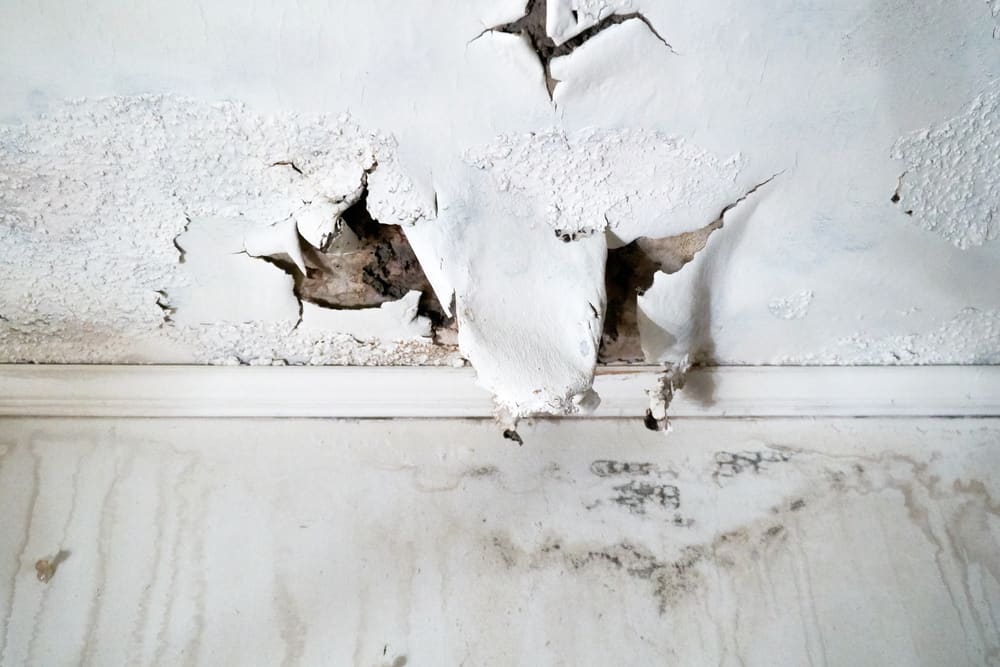
For Head Of The Harbor’s older homes — particularly those with original plaster walls, wood framing from earlier construction eras, or finished basements used as living or working spaces — hidden moisture is the real risk. Consumer-grade fans push air around but don’t extract moisture from inside wall cavities or under flooring.
If the structure isn’t properly dried with commercial equipment and verified with moisture meters, you can have a surface that looks dry while moisture is still active inside the wall. That’s the scenario that turns a manageable water event into a full mold remediation job weeks later, which costs significantly more and causes far greater disruption.
The first priority is safety. If there’s any possibility that floodwater has reached electrical outlets, panels, or appliances, don’t enter the space until power to that area has been shut off. If the water source is a burst pipe or appliance, shut off the water supply immediately — the main shutoff if you can’t isolate the specific line.
Then call us. The 24 to 48 hour window for preventing mold growth starts the moment the flooding stops, not the next morning. Document everything before cleanup begins — photos and video of every affected area, including walls, flooring, contents, and any visible damage. This documentation is the foundation of your insurance claim.
Do not discard damaged materials before an adjuster has had a chance to assess them, and do not attempt to dry the space with household fans and assume the job is done. In a large home with a finished basement — the kind common in Head Of The Harbor — there is almost always hidden moisture behind walls or under flooring that requires professional equipment to detect and remove. Calling us early keeps the scope of damage manageable and gives your insurance claim the documentation it needs.
The timeline depends on the extent of the damage, but for a typical residential water damage event affecting one or two rooms, the drying phase alone takes three to five days using commercial equipment. Water extraction itself is usually complete within one to three days. Full restoration — including any necessary reconstruction of walls, flooring, or structural elements — takes an average of two weeks for moderate damage, though more extensive events involving structural issues or mold can extend that to several weeks or longer.
For the larger, more complex homes that are typical in Head Of The Harbor — properties with multiple finished levels, original building materials, or historic architectural features — the timeline can be longer simply because the drying process needs to be more careful. Rushing the drying of original wide-plank flooring or historic plaster walls to meet an arbitrary deadline creates secondary damage that ends up costing more than the original event.
The goal is to get it right, not just get it done fast. We’ll give you a realistic timeline at the assessment stage so you know what to expect and can plan accordingly.
It depends on the scope of the work. Interior work — drying, water extraction, replacing drywall, refinishing floors — typically falls under standard building permit requirements, which the village processes through its own building department. Any restoration work that constitutes substantial damage under the village’s flood damage prevention ordinance (repairs equaling or exceeding 50% of the structure’s market value) triggers additional requirements under NFIP rules, which Head Of The Harbor enforces as a program participant.
Where the Architectural Review Board becomes relevant is any exterior work associated with the restoration. The village designates the land on both sides of North Country Road as a historic area, with a 500-foot depth on each side. Any exterior alterations within that corridor — window replacement, siding repair, structural modifications visible from the exterior — require ARB approval before a building permit can be issued.
Our documentation process captures the full scope of damage and the proposed restoration approach in a way that supports permit applications and insurance claims. If you’re uncertain whether your property falls within the historic corridor or near the waterfront setback zones along Stony Brook Harbor, that’s something to clarify early in the process, and we can help you understand what’s required.
Head Of The Harbor’s geography makes response time more consequential than it is in a typical suburban neighborhood. The village’s winding, narrow roads — there’s a reason a sign alerts drivers entering the village that roads narrow — were designed for a rural aesthetic, not rapid emergency access. After the August 2024 flooding, Harbor Road, the main thoroughfare for the eastern half of the village, was completely impassable, and the village’s own mayor publicly stated that emergency response times for residents in that part of the village were delayed by five to seven minutes as a result. That road remained unrepaired for over a year.
In a water damage situation, those delays compound quickly. Mold can begin forming within 24 hours, and every hour of standing water increases the load on structural materials and the likelihood that hidden moisture penetrates deeper into walls and flooring. A restoration company that can mobilize immediately — with the right equipment, not a residential-grade response — changes the outcome significantly.
We operate 24/7 with a dedicated Suffolk County team, not a call center routing to wherever happens to be available. When you’re in a village where access can be unpredictable and the stakes on your property are high, that operational readiness is not a minor detail.
Useful Links
Other Services we provide in Head Of The Harbor